

Craft Beer vs Regular French Beer Difference: A Complete Guide

Trying to figure out French beer vs craft beer, it can get kinda confusing. Like, you go to the store or a bar and suddenly everything looks kinda similar, you know. Here is a quick rundown to help you sort it out when you’re there and trying to choose, without overthinking too much.
Key Takeaways
- French beer isn’t a single category; if you’re wondering is French beer craft beer, it actually ranges from traditional styles to modern craft brews.
- ‘Brasserie artisanale’ usually means small-batch, local production, often inspired by Belgian beers.
- ‘Brasserie craft’ often follows American craft trends, using new ingredients and styles.
- Look at the label: complex hop names or terms like ‘IPA’ or ‘Stout’ might point to craft, while simpler descriptions could be more traditional.
- Consider the brewery: smaller, independent brewers are more likely to be crafting unique, experimental beers.
Understanding the Nuances: French Beer vs. Craft Beer
Defining ‘Brasserie Artisanale’ in France
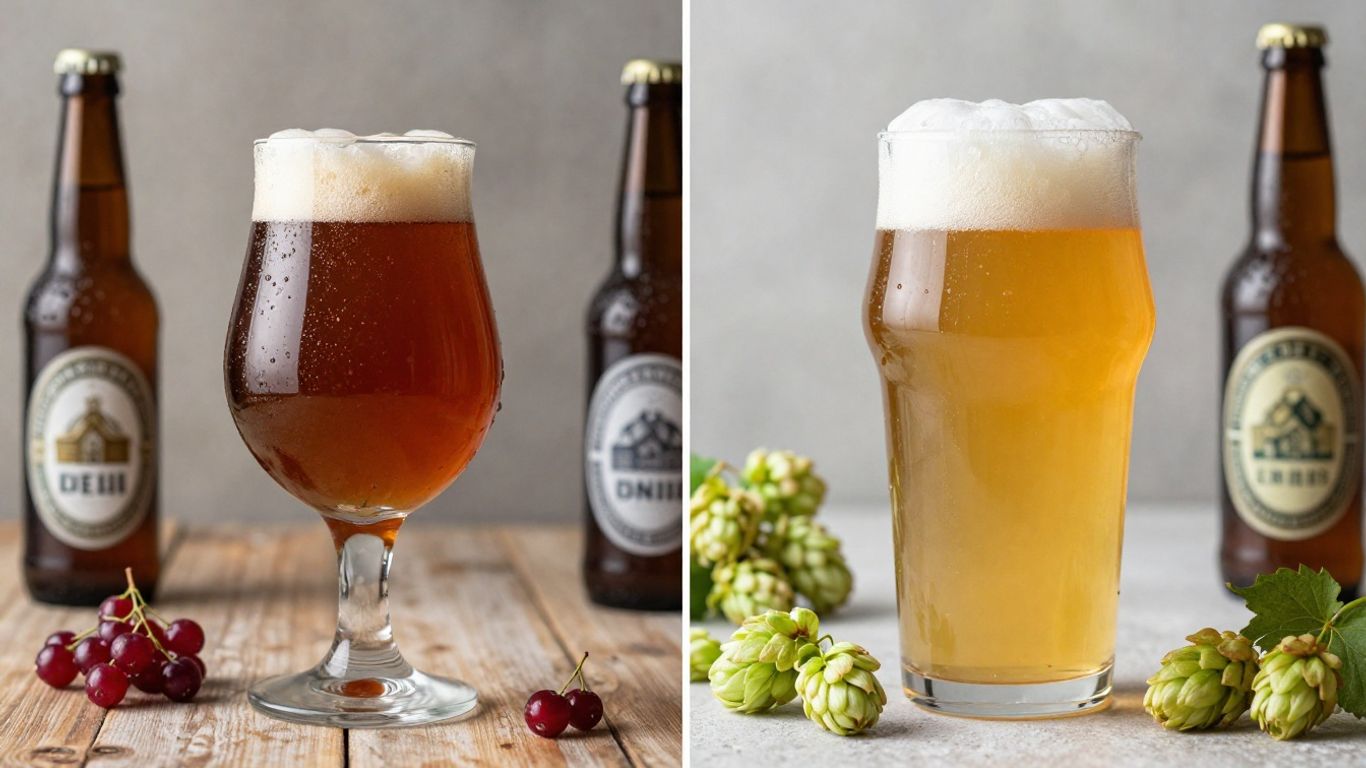
When I first started exploring the beer scene in France, I noticed the term ‘brasserie artisanale.’ It sounds a lot like ‘craft brewery,’ right? Well, it’s a bit more specific. As a general rule, a ‘brasserie artisanale’ is going to focus more on smaller, local production, kind of like they really stay close to where they are.
They often end up favoring classic beer styles, and they take inspiration from Belgian brewing too, like you might hear them talk about a Tripel or a Saison sort of thing. Basically it’s about crafting a beer that connects with the local area, and they’ll usually stick to recipes that have stood the test of time, not rushing or chasing whatever is new for no reason. The emphasis here is on tradition and local roots.
The American Influence on ‘Brasserie Craft’
Then there’s the ‘brasserie craft’ – a term that clearly shows some American influence. These breweries tend to have a broader reach, maybe even national. Their inspiration seems to come mostly from American craft beer trends, so you’ll probably notice more hop-forward recipes, kind of experimental styles such as pastry sours or hazy IPAs, and occasionally labels with very technical hop names that really do not mean much to the average French drinker. They often come in cans, too, which, honestly, many French consumers still associate with mass-produced, less interesting beers.
Key Distinctions in Brewing Philosophy
So, what’s the real difference French beer craft beer enthusiasts notice in how they approach brewing? It boils down to philosophy. The ‘brasserie artisanale’ often prioritizes familiar styles and local ingredients, aiming to appeal to a broader audience, including those who might not consider themselves ‘beer geeks.’ They’re bringing people into beer with styles they recognize.
On the other hand, the ‘brasserie craft’ often ends up courting those enthusiasts— the ‘beer geeks’, who are actively combing through the newest worldwide trends. That usually translates into chasing intense flavors, rather singular ingredients, and beer styles that really push at the edges. It’s a different angle on what beer can become and who it’s meant for. Meanwhile the French craft beer market keeps expanding, and with more than 2,500 independent breweries now up and running across the country, it signals a tangible change in how people consume and what they actually want [c783].
The distinction isn’t always that black-and-white, and some breweries might combine bits of both. I mean it’s less about the strict rule, and more about the general direction, and the main crowd they’re trying to reach, right. Some brewers are now sort of circling back to traditional styles after getting into the more experimental American trends, and along the way they’re starting to see the draw of the familiar flavors again.
Ingredients and Innovation: The Heart of Craft Brewing
When I think about what really puts craft beer apart, I keep coming back to the ingredients and that sort of ready-to-try new things, willingness. It’s not only “follow the recipe” and call it done, nope. For me it’s more like nudging the edges, then watching what occurs, and if it doesn’t work then at least you learned something, and try again.
Emphasis on Quality Raw Materials
For me, the foundation of any great beer, especially a craft one, kind of starts with the basics: malt hops, yeast and water. Craft brewers sometimes go the extra mile to source really good stuff, like for real. This might mean they pull in specialty malts that give the beer a slightly unusual color or flavor, or they look for specific hop varieties for their aroma, and taste. It’s a dedication to quality and you can usually sense it in the end product. I’ve also noticed that a lot of smaller breweries are into local ingredients whenever it’s possible, which adds that extra layer of character and, in a way, supports the community too. It’s a big shift compared with mass-produced beer where cost very often calls the shots on which ingredients get chosen.
The Role of Originality and Complex Recipes
This is where things get really interesting. Craft brewing isn’t afraid of complexity. I’ve seen brewers play with all sorts of adjuncts – fruits, spices, coffee, chocolate, you name it – to create something truly original. It’s about building a layered, perhaps unexpected, flavor profile. Think about a Brett beer, for instance. The fermentation characteristics can be wild, with fruity esters and a subtle tartness from Brettanomyces yeast, resulting in a complex profile. It’s a far cry from a simple lager.
- Experimentation with yeast strains: Beyond standard ale and lager yeasts, brewers explore wild yeasts and bacteria for unique flavors.
- Unique hop combinations: Mixing different hop varieties to achieve specific aroma and flavor notes.
- Adjunct usage: Incorporating non-traditional ingredients like fruits, spices, herbs, coffee, or even wood.
Exploring New Styles and Flavors
Craft beer is always shifting, you know. Some brewers are trying to polish the classic styles into something almost perfect, while others are off inventing new names or giving old favorites a new twist. I’ve been noticing categories like ‘Experimental Beer’ popping up too, and it kind of means anything goes, more or less. That hunger for novelty is what keeps the craft beer world feeling alive.
It’s not only about brewing beer, it’s also about brewing something that feels curious and memorable. This mindset of invention is what makes exploring through craft beer such a rewarding thing, whether you’re in France or just about anywhere else. Basically it’s a journey of discovery, almost like wandering those charming little towns along the southern coast of France, step by step.
The pursuit of novel flavors and unique ingredient combinations is a hallmark of craft brewing. It’s this willingness to experiment, to step outside established norms, that enables the creation of beers that surprise and delight consumers, pushing the boundaries of what beer can be.
Market Perception and Consumer Preferences
Appealing to the General Public vs. Beer Geeks
When I think about how people see beer, it’s pretty different depending on who you ask. For a lot of folks, especially those who aren’t super into beer, understanding Craft beer vs regular beer simply means knowing that craft beer is different from the big, mass-produced stuff. They might grab whatever looks interesting at the store or what a friend recommends. It’s more about a casual drink than a deep dive into styles. Then you have the “beer geeks,” like me sometimes, who are really into the details. We know the difference between an IPA and a DIPA, we still care about hop varieties, yeast strains and the brewer’s specific techniques. This little gap in perception, it is kinda a big deal for breweries that are trying to reach a broader crowd.
French Consumer Habits and Beer Styles
In France, beer has kinda taken a backseat to wine, for a while now. For a long time, the usual French beer was a lager—light, crisp, and easy to drink, even more so than anything else, though these days there are a lot of different French beer types to explore. Just picture the classic French lagers you see in shops and on taps everywhere, they still sit among the most popular French beers. They feel familiar, pretty safe.
Craft beer, with its wilder tastes and more daring styles, is still kind of a newer thing for many French drinkers. It moves slowly, and sure the younger crowds are more open to trying new stuff, but the old habit of choosing lighter, less intricate beers still stays strong in plenty of places. And it’s not rare to walk into a bar with a massive wine menu but only one or two basic beer selections.
The Challenge of Beer Education in France
So, this brings me to the big obstacle I see right away: trying to educate people about beer. Since wine is so deeply baked into French culture, there just isn’t the same kind of broad knowledge around beer styles, the brewing process, or what actually makes a craft beer stand out. When I talk to friends who aren’t really into beer, they usually stare at me, kind of blank, when I toss around words like “sour,” “stout,” or “IPA.” It’s not that they don’t want to learn, it’s more that the information hasn’t shown up easily, or been shared in a friendly, approachable manner.
In France, people’s perception of beer is slowly changing, kind of, and it feels like a journey rather than a quick switch. At first it was mostly familiar lagers, you know the usual, but now more diverse craft styles are coming in, and that needs patience and some education too, not to mention a certain willingness from consumers to wander out past what they already like. It is a cultural shift, and honestly I’m excited to see how this all keeps unfolding over time.
Here’s a quick look at how some common beer characteristics might be perceived differently:
| Feature | Traditional French Lager | Typical Craft Beer (e.g., IPA) |
| Malt Aroma/Flavor | Low, clean, bready | Varies widely, can be complex |
| Hop Aroma/Flavor | Very low, subtle | Medium to very high, diverse |
| Bitterness (IBU) | Low (10-20) | Medium to high (30-70+) |
| Body | Light, crisp | Varies, often medium |
| Innovation | Low | High |
Production Scale and Independence
The Definition of a Small Independent Brewery
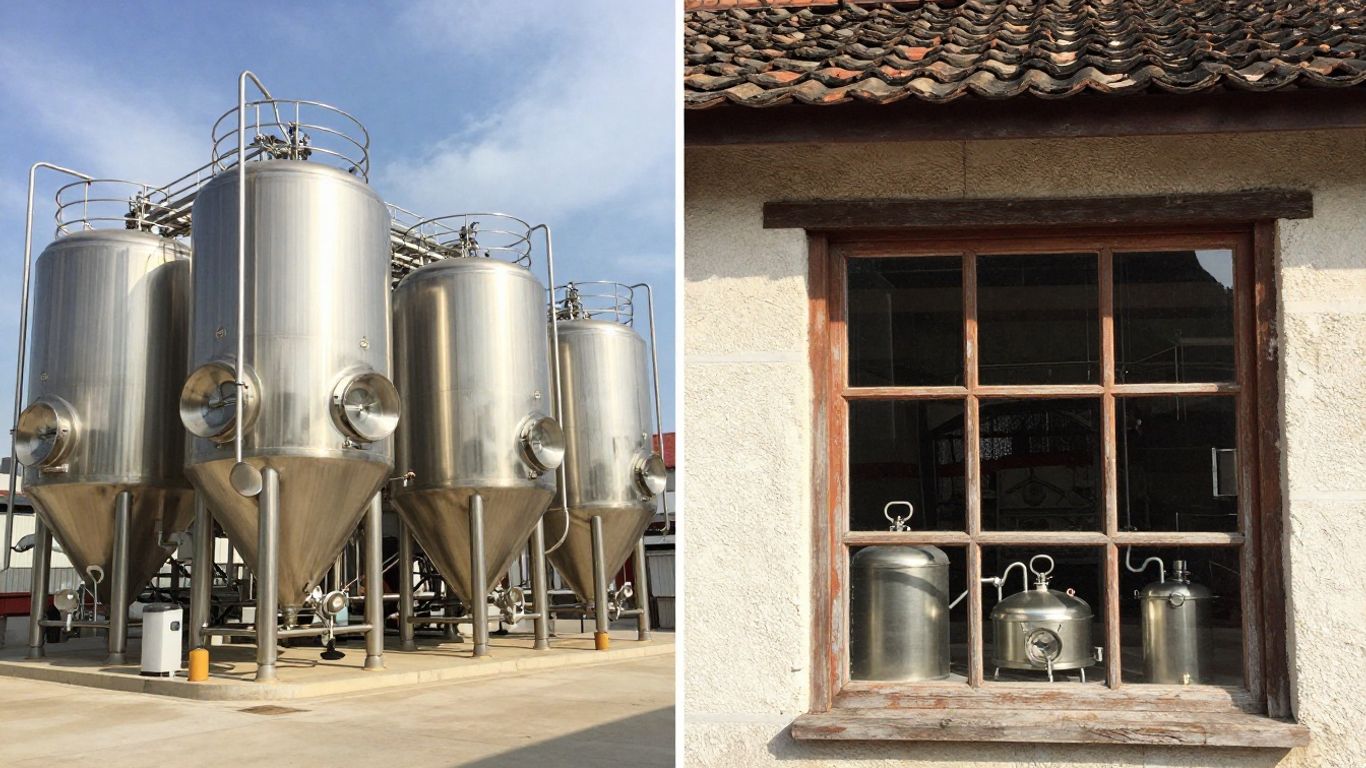
When I think about what makes a brewery truly “craft,” the first thing that comes to mind is its size and who’s really in charge. In France, there’s a legal definition for a “petite brasserie indépendante,” which translates to a small independent brewery. To get this label, a brewery has to be both legally and financially independent. Plus, they can’t be pumping out more than 200,000 hectoliters of beer a year. That’s a pretty big number, but it’s a clear line drawn in the sand.
Distinguishing from Industrial Production
Anything over that 200,000 hectoliter mark? That’s considered industrial production. It’s a label that some folks in the industry aren’t too fond of, arguing that “craft” and “industrial” aren’t always opposing terms. You can have a small brewery that uses pasteurization, for example, or a larger one that focuses on quality ingredients. It really comes down to the market they’re trying to reach and the people they’re selling to.
The Significance of Brewer Independence
For me, the independence part is key. It means the brewers are making the decisions, not some big corporation. They’re the ones choosing the ingredients, experimenting with recipes, and putting their own stamp on the beer. It’s about having the freedom to be creative and not being tied to mass-market demands. This independence often translates into a more unique and personal product.
Here’s a look at how production scales can differ:
| Brewery Type | Max Annual Production (Hectoliters) | Independence Status | Typical Focus |
| Petite Brasserie Indépendante | 200,000 | High | Local, traditional, experimental styles |
| Industrial Brewery | Above 200,000 | Varies | Mass market, consistent product |
The real heart of a “craft” brewery, regardless of its size, often lies in its commitment to originality and the quality of its raw materials. It’s about the brewer’s passion and their drive to create something distinct, rather than just churning out volume.
Historical Context and Modern Evolution
France’s Ancient Beer Traditions
It might surprise some folks, but France actually has a pretty long history with beer. Long before wine became the undisputed king, there were brewing traditions across the country. Think back to ancient Gaul, where simple, often grain-based beverages were made. These weren’t the complex craft beers we see today, of course. They were more like rustic, sometimes sour, fermented drinks. It’s a history that’s often overlooked, overshadowed by the more famous French wine culture. But these early brews laid some groundwork, showing that fermentation and grains were a familiar concept.
The Rise of Craft Beer in the 21st Century
Fast forward a couple of millennia, and we’re seeing a massive shift. The craft beer movement, which really took off in the US and UK, has found a strong foothold in France. It’s not just about replicating American styles, though. French brewers are increasingly looking back at their own heritage, blending old techniques with new ideas. This modern wave is all about experimentation and quality. It’s a far cry from the mass-produced lagers that dominated the market for decades. We’re seeing a real appreciation for diverse flavors and brewing methods, much like the historical beer styles of the past.
Reconnecting with Forgotten Beer History
What’s really exciting to me is how many French craft brewers are digging into the past. They’re not just making IPAs or stouts; they’re also reviving historic French beer types that haven’t been brewed in centuries. This includes things like:
- Grisette: A light, often slightly tart farmhouse ale historically brewed for miners.
- Bière de Garde: A stronger, malt-focused ale traditionally brewed in Northern France for “keeping” or storage.
- Historical Ales: Beers inspired by ancient recipes, sometimes using unique grains or fermentation methods.
It feels like a rediscovery, a way to connect the present with a brewing past that was almost lost. This exploration is leading to some truly unique and delicious beers you won’t find anywhere else. It’s a journey that takes you through regions like the Dordogne, where history is palpable in every stone and story, offering a similar sense of discovery.
The modern craft beer scene in France is a fascinating mix of global influence and local rediscovery. Brewers are not just chasing trends; they’re building on centuries of brewing knowledge, both their own and from abroad. This results in a dynamic and evolving landscape that’s well worth exploring.
Navigating the French Beer Landscape
So, I’ve been trying to get a handle on the French beer scene, and it’s definitely a journey. It’s not quite like the States, where craft beer feels like it’s everywhere and everyone knows the styles. Here, it’s a bit more of a learning curve, both for folks making the beer and for us drinking it.
Understanding French Beer Legislation
When I first started looking into this, I figured there’d be some clear-cut rules, but French beer legislation can be a bit of a maze. It’s not always straightforward to figure out what officially counts as ‘artisanal’ versus something else. This can make it tricky for smaller breweries trying to make their mark and for consumers trying to support them. It seems like the government is still catching up with the whole craft beer boom.
Identifying Authentic Craft Beer Offerings
This is where I really have to pay attention. A lot of places might just call something ‘craft’ to sound good, but it doesn’t always mean it’s made with that passion and creativity I’m looking for. I’ve learned to look beyond just the label.
For me the real sign of a craft beer is when the brewer is obviously experimenting, and they’re using good ingredients too, not just running out the same old thing over and over. It’s really about spotting those breweries that are putting effort in, maybe even working with local French malt, which is a big deal on a global level.
Here’s a quick way I try to spot the real deal:
- Look for breweries that talk about their ingredients: Do they mention specific hops or malts? Are they sourcing locally?
- Check out their beer list: Are there a variety of styles, including some unique ones, or is it just the standard blonde, brune, and ambrée?
- See if they’re independent: Are they part of a larger corporation, or are they a small, dedicated team?
It’s easy to feel mixed up, because the French have such a solid tradition with wine. Beer is still sort of finding its place, and sometimes that means folks aren’t as comfortable with different beer styles as they are with grape sorts. It’s definitely a work in progress though.
Exploring French Craft Beer Bars and Breweries
This is the fun part, honestly. I’ve found some amazing little spots tucked away in cities and even in smaller towns. It’s exciting to discover places that are really dedicated to showcasing French craft beer and popular French beers.
You can stumble upon some really incredible brews, kinda from traditional styles that tip a hat to history, to completely fresh creations, you know. I’ve caught myself actually hunting for beers that lean into French wine heritage too, like grape ales or even ones that are spontaneously fermented. It’s like a whole new world is quietly opening up, and honestly I’m pretty curious to see where it goes next. If you ever end up exploring the coast, you might run into some unexpected treasures, very similar to Brittany’s secret little beaches.
It’s kind of a scene that’s growing for real, and I’m kinda excited to see how it evolves, you know. The passion is there though— that’s the main point, honestly.
Conclusion
So, when you’re out shopping, remember that understanding French beer vs craft beer helps because not all French beer is the same, and ‘craft’ means different things. A ‘brasserie artisanale’ often sticks to traditional styles, maybe with a Belgian twist, and is usually made by smaller, local places. ‘Brasserie craft,’ on the other hand, takes cues from American styles, often featuring bolder flavors and newer, sometimes wilder, recipes. Both have their place, and understanding craft beer vs regular beer can help you pick the perfect brew for your taste. It’s exciting to see how France is embracing both its brewing past and its innovative future.
Frequently Asked Questions
What’s the main difference between ‘brasserie artisanale’ and ‘brasserie craft’?
Think of ‘brasserie artisanale’ as the traditional baker using old family recipes—this explains the difference French beer craft beer drinkers often ask about. They more or less focus on those classic beer styles, with a little wink to Belgian brewing too, and they tend to be tiny, neighborhood operations. “Brasserie craft,” though, feels more like a modern cook playing around with unfamiliar inputs and new methods, kind of taking cues from the American craft beer scene. So they may end up brewing louder, hop-forward beers, or chasing those current favorites like hazy IPAs, or even sweet stouts.
Are French craft beers always hoppy like American ones?
Not necessarily. While a lot of French craft breweries do lean into hoppy styles like IPAs, you’ll also spot them brewing this wide range of other beers, kinda too. Some will stick closer to traditional French or Belgian styles, while others get playful with fruit, spices, or even this wine-like kind of fermentation. The “craft” label kinda just points at them testing something new, or paying attention to quality ingredients, not that they’re all in on hops, every single time.
Does the size of the brewery tell me if it’s craft beer?
Size can be a clue, but it’s not the whole story. Craft breweries are generally smaller than large industrial breweries, so they produce less beer. However, the French government has rules about what counts as a ‘small independent brewery,’ and it’s not just about being tiny. The focus is often more on independence and the brewing philosophy rather than just the number of bottles they produce.
Why do some French beers come in cans, and is that bad?
You might see craft beers, especially those inspired by American styles, packaged in cans. In France, some people still think canned beer is cheap and tastes bad because that’s how big, industrial beers are often sold. But for craft brewers, cans are great because they protect beer from light and air, keeping it fresher. So, a can doesn’t automatically mean low quality; it’s often a choice for better beer preservation.
Is beer a big deal in France like wine is?
If you’re asking like, Is French beer craft beer then, it’s sort of tricky. Beer has a long history in France, going way back to ancient times, and the modern craft brewing thing is only one slice of that whole story. For a long time, wine basically stayed the star, you know. Lately though, craft beer has turned out super popular, and there are tons of smaller breweries popping up everywhere. So even if wine still has the stronger cultural grip, beer is definitely gaining ground, and lots of French people are now genuinely proud of their own craft beer scene.
How can I tell if a beer is an ‘authentic’ craft when I’m buying it?
Look for details on the label! Does it talk about specific hops or interesting ingredients? Does the brewery seem small and independent? Sometimes, the name of the beer itself might give you a hint about whether it’s a classic style or something more experimental. Also, if you’re in a specialized beer shop or bar, the staff can usually point you towards beers made with passion and unique recipes.


