

The Best French Beer Brands: 10 Craft Picks Worth Seeking Out

So, France and beer. I know when most people picture a French drink, they go straight to wine, maybe a cognac, and almost never a pint. But honestly, the country’s brewing scene has quietly turned into something special, and these days there are loads of French beer brands worth chasing down. France now counts well over 2,000 breweries, the most of any country in Europe, and a big slice of those are small craft and microbrewery outfits doing genuinely interesting things.
The good news? You don’t even have to be in France to try a lot of them. Plenty of these labels now export, so you can grab a taste of French brewing from a specialist shop or an online order wherever you happen to be. Below are ten of the best French beer brands I keep coming back to, from a tequila-spiked lager to century-old Flanders ales, with a few notes on what each one actually tastes like.
Key Takeaways
- French beer brands cover a huge spread of styles, from flavoured lagers right through to rich, traditional ales.
- A lot of French breweries now export, so these beers are far easier to find abroad than they used to be.
- If you want a safe starting point, look for popular French beers like Desperados, La Parisienne, and 3 Monts.
- Can’t track down a specific label? No big deal; poking around the local French beer selection is half the fun anyway.
- Some of the best French craft beer now holds its own against the bigger European beer countries; the quality and range have come a long way.
10 of the Best French Beer Brands to Try
Right, let’s get into it. Here are the ten French beer brands I’d point any curious drinker toward, roughly in the order I’d hand them to you at a tasting.
1. Desperados Original
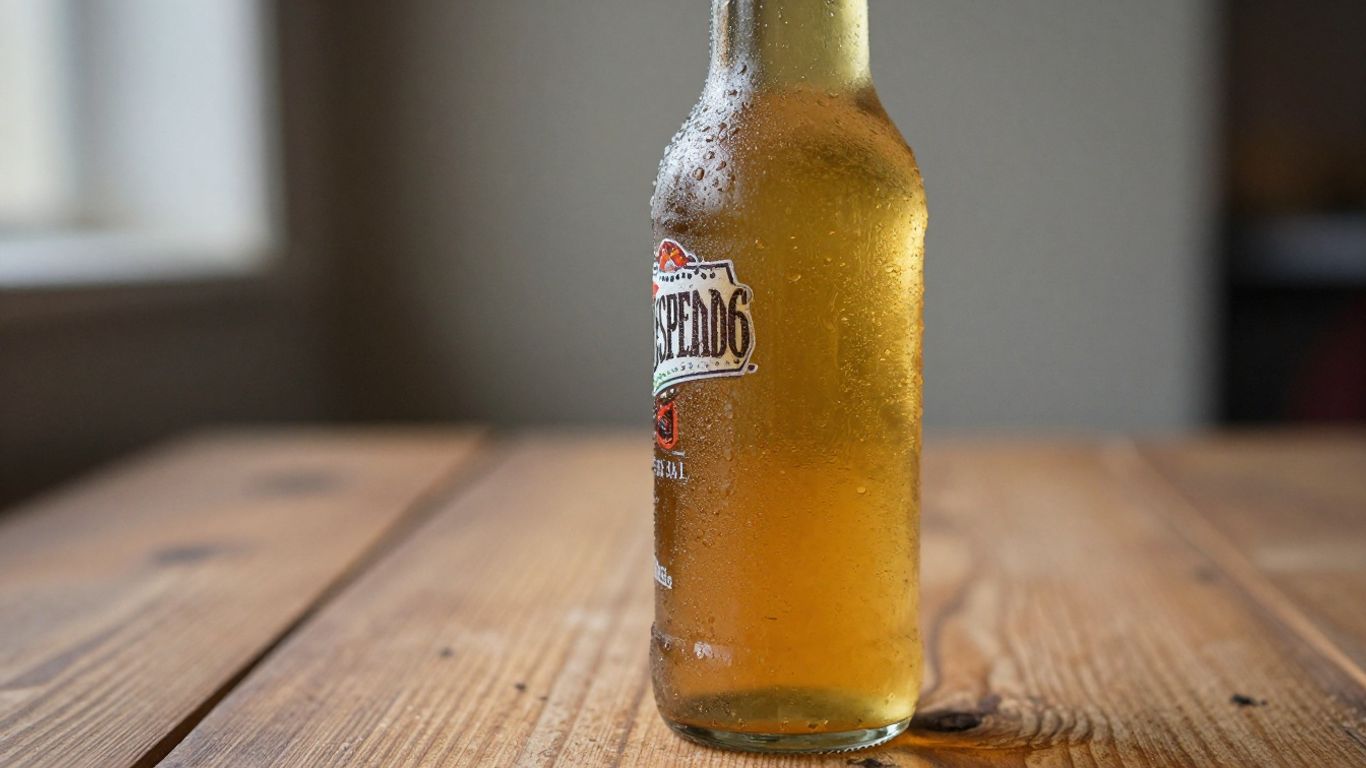
I’ll be honest, I went into Desperados Original a bit of a sceptic. Beer flavoured with tequila? It sounded like a gimmick, fun once maybe, then never again. But I gave it a fair shot, and it kind of won me over.
Underneath it all it’s a lager, infused with tequila, and it pours a clear golden colour with this unmistakable tequila note on the nose. The taste lands somewhere between malt and that little agave kick, then finishes smooth rather than sharp. What surprised me most was that it doesn’t taste fake or syrupy, which was exactly what I’d been bracing for. It’s a bold combination that, against the odds, actually works.
It’s a properly refreshing thing on a warm afternoon, and definitely a step livelier than your standard lager. If you fancy something off the usual path, it’s worth a go, and it’s a neat little example of how French brewers keep messing about with flavour, feeding into the wider French craft beer market.
2. La Parisienne Brune
La Parisienne was one of the first ranges I really fell for when I started digging into French craft, and the Brune is the one that hooked me. It’s brewed up in Pantin, just on the edge of Paris, by a brewery Jean Chancel set up after watching the craft scene explode over in the US. He wanted to bring that energy home to France, and to my mind, he’s pulled it off.
The Brune is a Scotch ale at 5.5% ABV, and it leans hard into those deep, roasted flavours. I got clear hints of coffee bean and dark chocolate, which I’m always a sucker for in a darker beer. It’s full-bodied, smooth across the palate, nicely rounded, and there’s just enough bitterness to stop it tipping into sweet. If you’re easing into scotch ales, or you just want something comforting and full of flavour, it’s a solid shout.
Quick look at the profile:
- Style: Scotch Ale
- ABV: 5.5%
- Flavour notes: coffee, chocolate, roasted malt
- Mouthfeel: full-bodied, mellow, rounded
3. Barge du Canal
Paname Brewing Company had me curious from the first mention. They’re down in the 19th arrondissement of Paris, started by a group of mates who wanted to put proper craft beer in French hands, and they’ve been at it since 2015. They make a fair few things, but Barge du Canal is the one that stuck with me.
It’s an amber IPA with a bit of muscle at 6% ABV, and the balance is what does it for me. You get fruity notes, grapefruit and a touch of lychee, sitting against a soft cereal backbone, crisp but with enough bitterness to keep you paying attention. It’s got more going on than your average lager, and something about it reminds me of wandering into a new neighbourhood and stumbling on a place you didn’t expect. If you’re nearby, hunt the brewery down. It’s a good window into the Paris craft scene, the kind of discovery you make travelling, like finding a tucked-away spot in the Dordogne region.
For me it’s just a really well-made IPA, strong, sure, but never too much. The fruit and grain bounce off each other, the bitterness lands right at the end, and you come away appreciating the work behind it. Easy recommendation if you get the chance.
4. 3 Monts Bière de Flandre
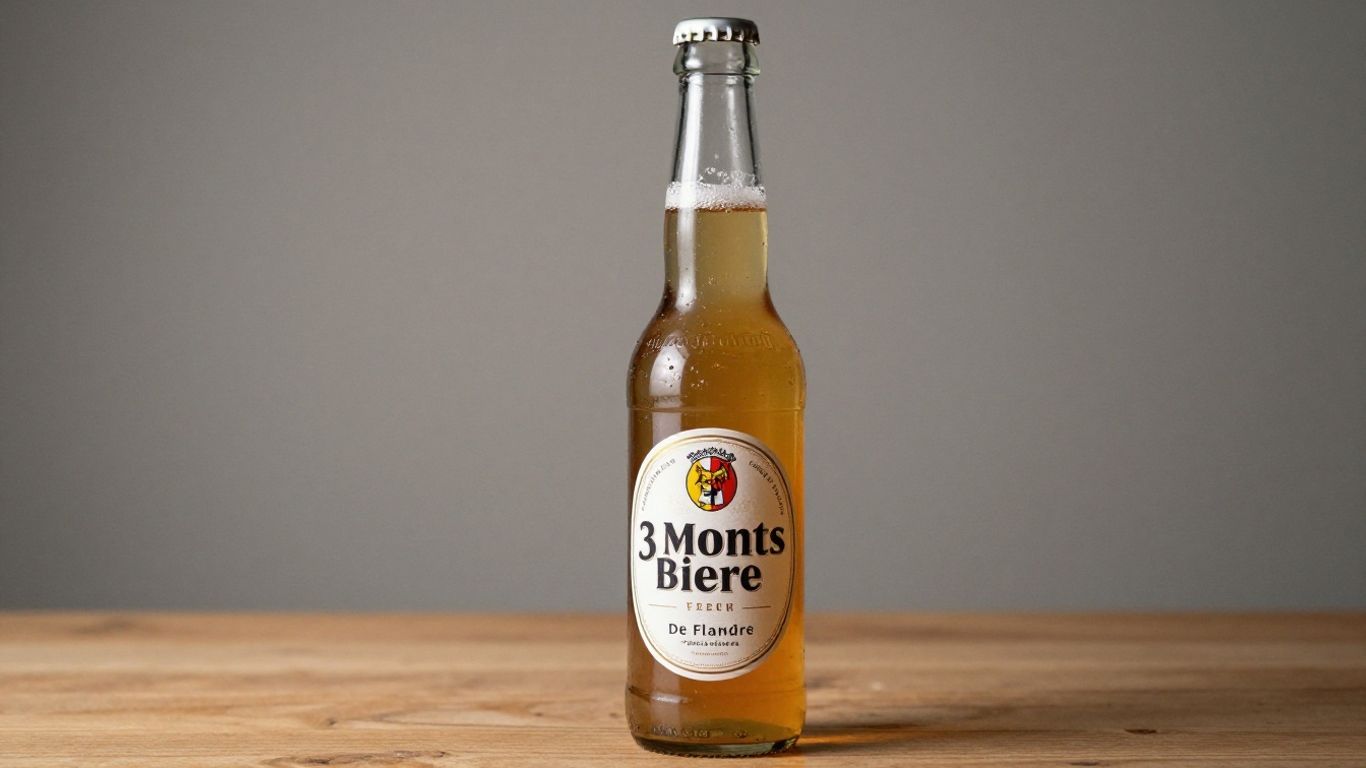
When I want a French beer with actual history behind it, 3 Monts Bière de Flandre is where my head goes. The brewery’s been running for more than a hundred years up in French Flanders, still family-owned, and that pride in the heritage really shows. They’ve got a few ranges, but the Bière de Flandre is the one that stands tall.
It’s a refreshing ale with real backbone. The aroma is malty and yeasty in the best way, properly inviting, with a gentle hop lift and a balance that just sits right. It throws up a thick, satisfying head too. To me it feels like a good honest snapshot of what French beer can be.
What I like is that they’re not chasing trends; it’s not pretending to be anything other than a well-made beer that tastes good. If you want something that feels authentic, with depth but without the heaviness, start here. It’s a lovely example of traditional French brewing.
Here’s what I usually pick up when I drink it:
- Malty, yeasty aroma
- Pleasantly hoppy notes
- Well-balanced flavour
- Thick, creamy head
5. Bapbap Originale
Whenever I’m working my way through the Paris beer scene, Bapbap over in the 11th arrondissement is a non-negotiable stop. They’ve been turning out reliably good brews for years, and the Originale is the pick of the bunch, a pale ale with a little twist that feels properly Parisian.
It’s a high-fermentation pale ale that marries malty sweetness to bright hop notes, taking cues from both Belgian beers (round, a bit spicy) and American pale ales. You land on a nice middle ground: caramel and bread from the malt, then that hop freshness cutting through it. Nothing overcomplicated, just well made and satisfying.
The colour’s a deep golden, and it’s surprisingly handy at the table. I’ve heard it paired with everything from salted-butter caramel pancakes to a cheddar burger, both of which I’d happily put to the test.
And the quick taste rundown:
- Malt profile: notes of caramel and bread
- Hop character: refreshing, with a subtle spiciness
- Overall: a balanced pale ale with a pleasant sweetness and hoppy finish
- Colour: dark golden
6. Jenlain Blonde
Beers from the North of France almost always lead me back to Jenlain. It’s an independent, family-run brewery that’s been going a long while, and the Jenlain Blonde is a genuine standout, a lovely buttercup-yellow colour, with a head that looks inviting before you’ve even tasted it.
On the nose there’s something earthy and rustic, little hints of white flowers and yellow fruit. The first sip is lively, with a bit of spice in there, and it signs off just a touch sweet. I reckon it works equally well on its own as an aperitif or sat next to a plate of food.
For pairings, I’d steer you toward mussels, pork, or other white meats. It slots in beautifully.
7. Château Rouge
Brasserie de la Goutte d’Or caught my interest the moment I heard about them. Based in the Goutte d’Or district of Paris, they’re all in on artisanal, hoppy, spicy beers, and their Château Rouge is the one I keep recommending. It’s got this unusual run of vegetal aromas, red fruit, and spice that I haven’t really met anywhere else. Munich and caramel malts give it roundness; then come these flickers of nutmeg, pepper, gentian, and even a three-pepper note. It’s a busy, complex profile, and oddly enough, it sang alongside Japanese food and a few sharp, mature cheeses. It’s the kind of beer that makes you pause and actually think about what you’re drinking.
I found Château Rouge a real one-off. Not an everyday pint, but if you want character and a bit of a story in the glass, this earns its place, proof of how much French craft brewers are experimenting. If you’re poking around the Paris beer scene, the Goutte d’Or district is well worth a look for this brewery and its neighbours.
8. Kronenbourg 1664 Blanc
For French beers that have genuinely gone global, Kronenbourg 1664 Blanc is right up there. It’s a wheat beer with roots stretching back to 17th-century Strasbourg, though the brewery in its modern form dates to 1952.
It’s built for easy drinking, is light, refreshing, and hazy in the glass, with a smooth, almost creamy feel. The citrus and coriander come through clearly for me, leaving a pleasant, faintly spicy finish. It’s the sort of beer you reach for without thinking on a hot day.
Here’s what I usually clock in with a 1664 Blanc:
- Aroma: delicate hints of fruit and spice
- Taste: a balanced blend of citrus and coriander with a mild sweetness
- Mouthfeel: creamy and smooth, light-bodied
- Finish: clean and refreshing, often with a lingering hint of spice
There’s something quietly funny about a beer being this widely available and still tasting like a little piece of France. It’s a familiar, dependable go-to for me.
9. L’Exaequo
L’Exaequo was another one that pulled me in early. It’s a blonde from La Brasserie L’Excuse, a brewery that got going in 2013 over in the Gers, down in the southwest. Their range has grown since, but L’Exaequo is still the one I single out.
The magic’s in the subtlety. It’s gently infused with juniper berries, which lends a botanical note that never tips into overpowering, plus quiet hints of orange and lemon – not too sweet, not too tart, balanced just so. I found it ridiculously refreshing after a long day. I grabbed a few bottles on a trip through Gascony, and they were perfect for slow afternoons by the pool.
If you’re after a crisp, flavourful blonde, this is a brilliant place to start, and a nice change from the heavier stuff. It plays well with lighter food too, so it’s an easy one to keep around. Honestly, even people who don’t usually bother with craft could get on with it. I’ll be hunting it down again on future trips, maybe while chasing a few other unique experiences around the country.
10. Britt Blonde
I first ran into Britt Blonde on a camping trip in Brittany. Long day of hiking behind me, I wanted something cold and refreshing, and since I’m not really a white-wine person, I gave the beer a punt.
Britt Blonde has a light taste of orange, lemon, and a whisper of caramel, and the brewery works buckwheat flour into it, which I think keeps the bitterness in check. After a day baking in the sun, it hit the spot completely. Britt has been going since 1998 and now sits over several brands, which figures: Brittany is a region that takes its beer seriously, so of course a craft brew like this calls it home.
If you’re ever out that way, go find some of the hidden beaches in Brittany and crack open a Britt Blonde while you’re there. It’s a genuinely nice way to taste a bit of the local character.
Where to Find These French Beer Brands Outside France
Here’s the bit people always ask about: can you actually buy these abroad? Mostly, yes. A good chunk of these French craft beer brands now export, so your best bets are specialist beer shops, the bigger supermarkets with a decent world-beer aisle, and online bottle stores that ship internationally.
Desperados and Kronenbourg 1664 Blanc are the easiest to find more or less anywhere. If French microbrewery beers are what you’re after, the smaller labels like Bapbap, L’Exaequo, or Château Rouge take a bit more hunting, but they’re increasingly out there. And if a specific bottle stays out of reach, treat it as an excuse to explore whatever French beers your local shop does carry. That’s how I found half the ones on this list.
Final Thoughts
So there it is. France might wear its wine reputation on its sleeve, but the craft beer scene underneath is quietly excellent these days, and the best part is you don’t need a plane ticket to enjoy it. Whether you go bold and unusual with a Desperados or settle into something classic like a Jenlain, there’s a French beer brand here with your name on it. Hopefully this points you toward your next favourite. Cheers!
Frequently Asked Questions
Is French beer actually any good?
Honestly, yes. For years it was all about the wine, but France’s craft scene has come on massively. You’ll find everything from light, easy sippers to dark, rich ales, and plenty of it is genuinely excellent. Well worth a try.
What makes French beer brands different?
French brewers tend to borrow from the classics and Belgian styles and American IPAs, then add their own spin, often leaning on local ingredients or flavour combinations you won’t run into anywhere else. That mix of tradition and experimentation is really the signature.
Can I find French craft beers in the US or UK?
You can, yeah. It might take a little searching, but loads of the popular French beers now export. Try specialist beer shops, larger supermarkets, or online. It gets easier every year.
Is Desperados a French beer?
It is, actually. Desperados was created in France and is best known for that tequila twist. It’s widely available and an easy starting point if you’re curious about French beer brands.
Which French beer should I try if I like fruity flavours?
If it’s fruit you’re after, go for a Barge du Canal, which has grapefruit and lychee running through it, or a Britt Blonde with its orange-and-lemon lift. Plenty of French beers balance that fruitiness against a clean finish.
Are French craft beers expensive?
They can run a bit pricier than the big mass-market names, but that’s usually down to better ingredients and smaller batches. Think of it as paying for quality and a bit of a flavour adventure. Prices swing quite a lot depending on where you’re buying, though.