

Exploring the Basque Country: A Stylish Journey Between France and Spain

Tucked in between southwestern France and northern Spain, the Basque Country feels like a place where cultures, kitchens, and coastlines kind of mix together in a natural, easy way. You’ll drift through lovely seaside towns, then you look up and suddenly there are those dramatic Atlantic cliffs.
Meanwhile, the larger cities, full of history and strong identity, keep pulling you in. It’s almost like everything runs on its own rhythm. This trip we’re taking explores those flavors, the scenery, and that particular pace that makes the Basque Country one of Europe’s really captivating destinations, with French elegance on one side and Spanish passion on the other.
So you’re planning a trip to the Basque Country? Just keep in mind a few main things, so you can get the most out of your adventure in that genuinely singular region where France and Spain sort of blend together. It’s not only about seeing, but it’s also more about noticing the little differences too.
Key Takeaways
- The Basque Country is split between France and Spain, offering distinct cultural experiences on each side.
- French Basque towns like Bayonne and Saint-Jean-de-Luz provide a charming, pastoral atmosphere with a strong cultural identity.
- Spanish Basque cities such as Bilbao and San Sebastián are known for their modern architecture, vibrant arts scenes, and world-class cuisine.
- Don’t miss trying local specialities like pintxos, cider, and regional wines, which are a huge part of Basque culture.
- The region boasts stunning natural beauty, from the Pyrenees foothills to the Atlantic coast, offering plenty of opportunities for outdoor exploration.
Discovering The French Basque Country
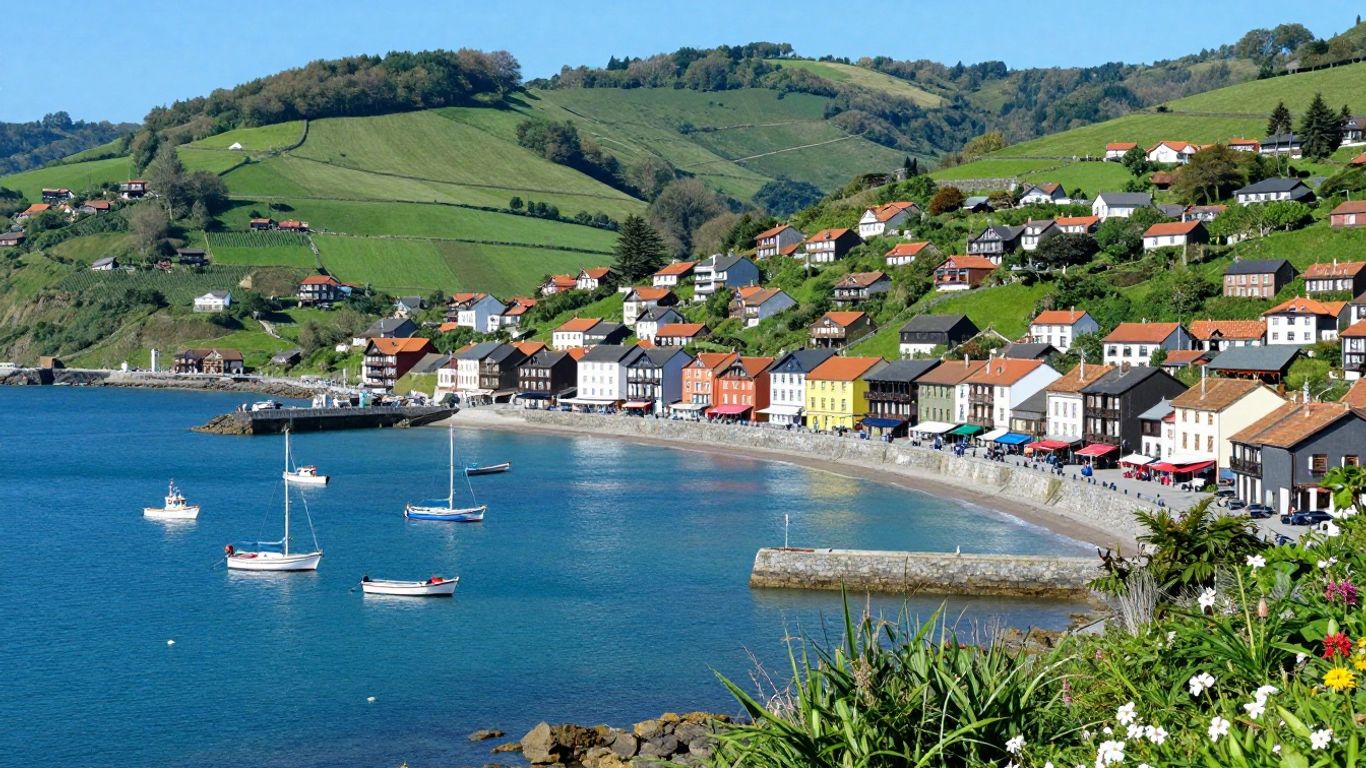
My initial visit to the French Basque Country, the landscape changes slowly almost imperceptibly, it remains etched in my memory as a great French Basque Country travel experience. The view was so beautiful that I felt like I had just stepped into a postcard image, with the rolling green hills blending into the deep blue of the Atlantic, almost like there was a silent agreement between them. And the buildings are quite recognizable here, you just can’t miss them, they are tall narrow houses painted in warm earthy colors, with bright red or green shutters as decorative elements. It’s a visual treat that, right away, tells you you’re somewhere special, somewhere a bit different.
Bayonne: A Blend Of Culture And Charm
It seems that Bayonne, located right at the spot where the rivers Nive and Adour flow into the sea, is a city that truly embodies the spirit of the French Basque country. The old town is kind of a maze of tight little lanes, with those usual Basque houses along the way. I walked around for hours, just wandering and peeking into artisan shops , and somehow the whole atmosphere gets under your skin.
There’s also the cathedral, a big Gothic thing, and yeah it’s really impressive, like a quiet proof of the city’s past wealth, built in part because of whaling back then. On a calm Sunday, the streets were almost too peaceful, but still you could sense the history hovering in the air. It’s one of those spots where French and Basque influences mix together in a pretty natural way. If you want a little local flavor, go to the markets; they’re a solid way to understand what the region is about.
Where to Stay: Bayonne has all sorts of stays, from boutique hotels around the historic center and sort of newer more modern set ups, which fit pretty well for folks who are after a bit of luxury travel in France. If you stay close to the old town, you get rather easy access to many of the attractions, and it just feels simpler to walk around.
Saint-Jean-de-Luz: Coastal Gem With A Rich Past
Honestly, it was only a short trip from Bayonne, but Saint-Jean-de-Luz stole my heart, turning it into one of the best moments of my wandering through the Basque Country. This lovely port town, kind of tucked in a sheltered bay, has a past that seems much rougher than the quiet look it gives off now. Long ago it served as a base for Basque corsairs, basically sea pirates who were allowed to do it under official backing!
And even today you can spot the kind of wealth they hauled back, in the graceful timber-framed buildings along the streets, also around the Place Louis XIV which really feels like the town’s living room. The harbor, is so picturesque, and the beach—perfect for a slow afternoon— shows up in pretty much any Biarritz travel guide as a top suggestion. I ended up using it as a great springboard for cruising around the coastline.
The mix of maritime history and laid back coastal living makes Saint-Jean-de-Luz really appealing, as you can almost picture centuries of stories unfolding right there, without much effort.
Espelette: The Village Of Red Peppers
No trip through the French Basque Country feels really finished without a quick stop in Espelette. This village is pretty well known for its bright red chili peppers, so it becomes one of those must-see moments for anyone doing French Basque Country travel. You’ll spot strings of the peppers drying along the facades of homes all over the place, and yes it’s a bit of a spectacle, particularly in late summer and autumn.
Espelette also has this quaint vibe, with traditional Basque architecture around every corner. Yet it’s still the peppers that kind of steal the whole scene, and give the place its unmistakable character. I’d suggest picking up a few local things that are infused with Espelette pepper too—it brings a lovely, mild warmth to so many dishes. It’s small, sure, but its charm is honestly undeniable. In that way it’s also a nice example of the special local produce you can stumble on across France, and that’s why people call it one of the hidden gems in France.
Where to Stay: While Espelette is small, consider staying in a nearby larger town, such as Cambo-les-Bains, or even back in Bayonne or Saint-Jean-de-Luz, for more options. Espelette is best enjoyed as a day trip.
Navigating The Spanish Basque Country
When I was done exploring the French side, crossing into Spain felt kinda like I stepped into a different but still familiar world. It’s also, like, part of what makes the Basque Country so tempting to wander around. On the Spanish side, called Hegoalde locally, there’s this amazing energy, where old traditions and a more forward thinking vibe seem to overlap. I have to say it really surprised me too, because the diversity there is honestly kind of wild.
Bilbao: Where Industry Meets Innovation
Bilbao was my first stop, and honestly, I wasn’t sure what to expect. I’d heard about the Guggenheim, of course, and it’s as stunning in person as you’d imagine. That titanium structure just gleams against the sky, a real statement piece in a city that’s transformed itself. But Bilbao is, like, so much more than just that famous museum. I spent a good chunk of time kinda wandering around the Casco Viejo (Old Town), getting turned around in those narrow streets, and stopping into these tiny bars for my first real taste of pintxos. The contrast between the older architecture and the newer, kind of modern vibe is really something… too, in a way that surprised me.
Bilbao has done this pretty amazing thing really, reinventing itself, like not in a loud way, but still you can notice it. It’s a city that seems to keep its industrial past in the story, and at the same time it’s staring very firmly into what comes next. Somehow, you can actually feel it in the air too.
Where to stay: For a city break I’d kind of say stay around Casco Viejo for easy access to pintxo bars and historic sites, it just feels convenient. Or go a bit nearer the Guggenheim if modern art is what you’re really after, you know. There are loads of boutique hotels and also apartments available, so it’s not hard to find something decent.
San Sebastián: Culinary Capital And Coastal Beauty
If there’s one place that truly captured my heart, it’s San Sebastián (Donostia). This city is kinda gorgeous, honestly. The crescent-shaped La Concha beach looks like it was picked for a postcard, and the promenade is perfect for a slow wandering. But yeah, I’m not gonna lie, I actually came for the food. San Sebastián is pretty legendary for its pintxos, and I made it my little mission to taste as many as I could. Every bar has its own specialities, sort of, and it’s a great way to try an enormous range of flavors without overthinking it.
Here’s a little tip for your pintxo adventure:
- Don’t be afraid to hop between bars: That’s the whole point! Order one or two pintxos and a drink at each place.
- Look for what locals are eating: Often, the most popular items are the best.
- Try the Gilda: This classic skewer of anchovy, olive, and pepper is a must-try.
Where to stay: Staying around the Old Town, (Parte Vieja) pretty much puts you right in the middle of all that pintxo action, which feels like a good option if you’re doing luxury travel in France. But if you want something more laid back, with sea views that are truly breathtaking, then try to book lodging closer to La Concha beach, yes.
Pamplona: Beyond The Bull Running
Pamplona is famous worldwide for the San Fermín festival, and sure, that’s a big part of who it is, but when I went, it was outside of July, and I ended up loving it even more than I expected. The city looks great all the time, actually, with wide tree-lined avenues and this pleasant old town feel. I spent time walking around the Citadel, the sort of star-shaped fortress, and then I just kind of wandered and soaked up the whole vibe near the Plaza del Castillo. It felt like a place with a real weight of history and pride. But somehow also not swamped by crowds like you might imagine.
It’s easy to dismiss Pamplona as just the bull run. But if you take a minute, go through its quieter pockets, you’ll notice, there’s a city with a deep history and a kind, welcoming spirit. Really, it’s not only about that one big thing, once you wander a bit everything feels more thoughtful, and a little less rushed.
Where to stay: For a city break focused on history and local life, staying within or near the old town walls is ideal. You’ll find a good range of hotels and guesthouses.
Understanding The Basque Identity
When you go to the Basque Country, which sits kind of right across the border between Spain and France, you notice pretty fast it’s not only a geographic region. It feels like a different world in itself, with a background that goes incredibly far back. I recall my first trip, I thought I’d mostly get beautiful coastlines and great meals, but somehow I ended up totally absorbed by the stubborn drive of the Basque people and how they keep their enduring identity. It’s basically a tale of resilience, a living culture that has managed to cling to its own unique character, even after centuries of outside pressures.
A Land Divided, A Culture United
It’s fascinating how this region is split between two countries, France and Spain, yet feels so unified in its spirit. The borders drawn by larger nations didn’t quite manage to erase what makes the Basques, well, Basque.
They share a flag, some similar customs, and most importantly, a language that predates a lot of its European neighbors. That same shared past feels right there, you can almost taste it, whether you’re walking through a busy Spanish city or drifting around a quiet French village. It’s basically a quiet proof that a people can keep their own special identity even when everything is politically split up. If you’re curious about how cultures survive, this is a prime case you don’t want to miss. You can even notice the cohesion in the way they bond over tradition, like the fast, high energy sport of jai alai, it’s kind of hard to ignore.
The Enduring Spirit Of The Basque People
I’ve heard the stories, and like, I’ve seen it myself too how the Basque people dealt with attempts to assimilate them. There were these certain periods, especially when Franco was in power in Spain, where speaking Euskera, the Basque language, was basically banned. And at the same time, a bunch of cultural habits were pushed down, suppressed. It’s kinda hard to picture, but imagine being told that your own native tongue was illegal, like right there, without much discussion. And somehow, still the language endured. It got carried from parent to child, in homes, and also through these discreet gatherings.
Even though that repression was rough, it felt like it helped shape a sharper sense of identity, and not just any identity, but pride. There’s this quiet kind of force in it, this stubborn refusal to let their culture fade away, that really says something about the Basque spirit. A spirit that isn’t really about loud, big announcements, but more about a deep, steady tie to their roots.
Basque Country is a region where history is not merely confined to museums. It is a part of everyday life. In fact, it can be sensed through the way people communicate, the dishes they prepare, and the festivals they hold. This deep connection to their ancestors gives them courage to face the future, along with a steady curiosity rather than apprehensiveness.
Language And Traditions
Euskera is kinda more than just a language, it’s like a cornerstone of Basque identity really. It’s one of the oldest living languages around Europe, and as far as we know it has no close relatives so its survival is even more remarkable than people think. Of course, not all the people speak it fluently nowadays, but the fact that it is there is like a constant reminder of the region’s unique heritage. One can see it on the signs, hear it in the music and almost sense it in the cultural events. Besides, traditions are preserved through various ways and means besides the language itself:
- Gastronomic Societies: These are unique social clubs, often all-male, where members gather to cook, eat, and socialize. They are vital hubs for preserving culinary traditions and community bonds.
- Traditional Sports: Activities like aizkolaritza (wood chopping) and sokatira (tug-of-war) are not just sports. They are cultural performances that showcase strength and heritage.
- Festivals and Celebrations: From local patron saint days to larger regional events, these gatherings are vibrant displays of Basque music, dance, and community spirit.
If you’re looking to see it, for real, consider going during a local festival. Honestly it’s like you can feel the beat, the pulse, of Basque culture in a direct way. For where to sleep you’ll usually find plenty of options, from charming rural guesthouses caseríos to more modern hotels in the cities. And if you stay inside a caserío it can turn into something very immersive, like a proper entry into the traditional Basque way of life.
Culinary Delights Of The Basque Region
When I think about the Basque Country, my taste buds kinda start doing a happy dance, like, automatically. It’s not just about eating or anything, it’s more like a full experience, kind of a way of life. From the second I arrived, I knew this trip would turn into a culinary adventure for real. The food here is seriously next level, and honestly it’s also one of the main reasons, why I keep coming back again and again.
The Art Of Pintxos
Pintxos are often compared to tapas, but trust me, they’re their own thing. Think of them as little works of art, usually served on a slice of bread and held together with a toothpick. You’ll find them displayed like jewels in the windows of almost every bar. My advice? Don’t just choose one or maybe two. Just hop from bar to bar, like ok trying a different pintxo at each place.
Honestly, that’s probably the best way to sample all the little variations and get a feel for the local scene, without overthinking it. Some bars are more famous for certain pintxos, like txangurro (spider crab), or those grilled mushrooms. Also keep your eyes on the ones they write on blackboards because those are usually cooked to order, and yeah, they’re worth the wait no question.
The sheer variety of pintxos is honestly a bit astounding. One moment you are savoring, a perfectly grilled bit of seafood, and the next it turns into a rich and slow cooked meat, or like this simple but still delicious mix of cheese, and jamón. Each bite becomes this small explosion of taste, really quick. It’s like your palate can’t settle, because everything changes so fast.
Savoring Local Wines And Ciders
No Basque meal is complete without a drink to go with it. You absolutely have to try Txakoli, a slightly fizzy, dry white wine that’s poured from a height to create a bit of foam and sparkle. It’s super refreshing, especially with seafood. Then there’s the cider. Basque cider is tart and dry, and the experience of drinking it is a whole event.
When a barrel gets tapped, someone goes “Txotx!” and then everybody comes in quick, with their glasses, like right now. It feels kinda communal and fun, like a whole little ritual to actually enjoy it, not just drink it. If you’re somewhere close to Astigarraga you’ll see a bunch of traditional cider houses, there you can sit down for a meal too, and then take part in the whole thing. I noticed that if you’re ever unsure, it’s better to just watch what the locals do, they really know the method best!
Essential Basque Dishes To Try
Beyond the pintxos, there are some main dishes you just can’t miss. First up is Txuleta, this huge, bone-in aged steak, grilled over an open flame and served rare. Sounds pretty intense, but honestly it’s in a way insanely tender and full of flavor. If you want the real deal, traditional cider houses are often the best places to try it, or so people say.
Another must-try is Bacalao al Pil-Pil, a cod dish where the fish is cooked in garlic infused olive oil until it turns silky and almost, well, kind of jiggly. It sounds plain, but the technique is the whole thing. You can find excellent versions in coastal towns. And for cheese lovers, don’t leave without trying Idiazabal, a smoky sheep’s milk cheese, often served with quince jelly. It’s a perfect end to any meal.
Where to Stay: If you really want that fully immersive, kind of hands-on culinary experience, think about staying in San Sebastián. The place is filled with amazing pintxo bars and restaurants, ranging from laid-back spots to the Michelin-starred kind and all that is in between. And if you prefer something a bit more remote, like a rural vibe, plus you want to be nearer to the cider houses, then search for accommodation around Bilbao, or even out in the countryside near Astigarraga. Lots of agroturismos (farm stays) give you the opportunity to try local produce where it’s actually prepared, right on site, not just served and done.
Adventures Beyond The Cities
Sure, cities like Bilbao and San Sebastián have this undeniable pull but for me, the real magic of the Basque Country sits kinda just outside the city limits. It is where you stumble into those quiet moments, the raw nature, and that sort of authenticity that you cannot really bottle up in a more urban environment. I have spent a fair amount of time roaming around these less-trodden paths, and honestly it’s there where a bunch of my best memories came from.
Exploring the Pyrenees Foothills
If you’re looking for landscapes that make you just stop, and breathe out like you mean it, the foothills of the Pyrenees are the one. Skip the packed routes, seriously; over there you can end up on a track surrounded by nothing much more than rolling grassy hills, the odd sheep here and there, and far away the steady little ring of cowbells.
I still remember a walk near the Baztan Valley, it was kinda misty, the soft sort of haze that makes everything feel a bit magical. The air smelled like wet soil, plus that sharp scent of pine. We took a way that wasn’t properly shown anywhere on my map, and it led us to this tiny, very old stone shepherd hut, like, out of nowhere almost. It was like stepping back through time. And really it’s these in-between moments that make travel feel special, not just the big sights.
Where to Stay: If you really want that immersive feeling, go looking for casas rurales or agroturismos in places like Elizondo or Amaiur. You’ll usually find them run by families, kind of like farmhouses, with rooms available, and they make a great starting point for roaming around the nearby routes. Honestly waking up to the smell of fresh bread and hearing roosters, it’s hard to stop, really.
Coastal Escapes and Hidden Beaches
Everyone talks about the famous beaches, but if you’re willing to put on your walking shoes, you can find some truly spectacular, less-visited spots along the coast. The stretch between Getaria and Zumaia is famous for its dramatic flysch cliffs – it’s like walking through a geology textbook, but way more beautiful. I once sort of stumbled into this small cove near Sakoneta beach after a bit of scrambling down a rocky path, and honestly, it was a little blurry at first. The water kept slamming into these incredible rock formations, kind of roaring, and it was basically only us, plus the seabirds, doing our own thing. It felt untamed and unspoiled, like nobody had really been there for a long time.
Tips for Finding Your Own Beach:
- Check the tides: The Atlantic coast here is powerful. Always know when high and low tides are, especially if you plan to walk along the shore.
- Look for local access points: Sometimes a small, unmarked path is the way to the best spots.
- Pack sturdy footwear: Many of these hidden gems must be a bit of a hike to reach.
The Basque coastline is dramatic and untamed. It’s not always about soft sand and calm waters; it’s about rugged beauty, powerful waves, and a sense of raw nature that’s incredibly invigorating.
The Surreal Landscape of Bardenas Reales
This one is kind of a drive, especially if you’re coming from the coast, but Bardenas Reales in Navarra is really unlike anything else in the Basque Country. It’s more or less a semi desert, a protected natural park, with these incredible almost alien like rock formations shaped by wind and water for thousands of years. It honestly feels like you’ve landed on some other planet.
I spent a whole afternoon just driving around the designated routes, and I was stopping constantly, to take photos, yes. The silence out there, broken only by the wind, is pretty profound. It’s a stark contrast to the green hills and blue seas you end up seeing elsewhere in the region, and well, that’s exactly what makes it so captivating.
Getting There: The easiest way to see Bardenas Reales is by car. You can go through the park on marked dirt roads, and it works quite well. There are also guided tours around, if you would rather not drive on your own, or you want to know more about the geology and history stuff.
Where to Stay: You can do Bardenas Reales as a day trip from Pamplona, but if you stay a little closer, in a town like Tudela, it feels much more relaxed, sort of a slower rhythm. You’ll stumble on friendly hotels and simple guesthouses there, and honestly it’s a good staging area for wandering around southern Navarra.
Experiencing Basque Culture
The Basque Country, straddling that border between Spain and France, has this kind of spirit that is hard to pin down but still impossible to ignore. It’s a place where old customs bump into a more modern way of looking at things, and I ended up getting completely swept up by the whole thing. It’s not just pretty landscapes and amazing food, either. There’s a real identity here, it feels like in the air, like you can actually sense it.
The Thrill Of Jai Alai
One of the most striking things I saw was this game of Jai Alai, like, i dunno… you might have heard of it before, but seeing it in person is kinda a whole other level. The players use a curved basket, called a cesta, to hurl a hard ball at a wall, and the speeds are just insane—over 150 miles per hour. People often describe it as the fastest ball sport in the world, and it really does match that hype. The sound of the ball hitting the wall is like a gunshot, and the agility of the players is honestly astounding, they move so fast it feels unreal. It’s also a sport that’s deeply tied into Basque culture, so watching a match felt like stepping back into a more intense, athletic past, like you’re there for something older but sharper. If you get the chance, try to catch a game; it’s a real spectacle.
Gastronomic Societies: A Taste Of Tradition
Beyond the sports arena, the heart of Basque social life kind of tends to beat in its gastronomic circles, or txokos, and honestly, it feels more personal. These are private, members only places, traditionally with a men only vibe where cooking and eating get treated like real serious work. I was lucky enough to be asked in, and it was really fascinating. It’s not only about the food, even if it was incredible—like communal cooking, shared recipes, and conversation that stays lively.
It’s about community, preserving culinary heritage, and a unique way of life. While some are more exclusive, many are opening up a bit more, and experiencing this tradition offers a genuine glimpse into Basque social customs. You won’t find these in many other places, making it a truly special experience.
Festivals And Local Celebrations
If you want to feel the Basque spirit in full swing, try to time your visit around one of their many festivals, and yeah it really works. These get togethers are loud, colorful, and honestly packed with living energy. Whether it’s a local patron saint day or one of those bigger regional events, there is always something going on, even when you think there won’t be.
I ended up at a small village celebration during my trip, and it was like… pure magic. The air was full of music, people were swaying and dancing right in the streets, and there was this overall warmth, like everyone belonged together. It’s such a good route to get close to the local culture, and to notice the Basques’ proud bond with their heritage. So, when you plan your trip, double check the local listings, because you might end up catching something that sticks with you.
The Basque people seem to have a real deep link to their land, and to the story of it. You can see it in their customs, their language, and the way they just live day to day. It’s this kind of culture that made it through centuries of shifts and outside pressures. Still, it kept its own special character and a sort of inner strength.
Planning Your Basque Country Travel
Getting To And Around The Basque Country
When I first planned my trip, I was a little worried about how to get around, you know? The Basque Country kind of sits across two countries, so it feels a bit like a puzzle at first! But honestly, it’s pretty straightforward, once you’re there. For getting there by air, Bilbao Airport (BIO) is your best choice. It’s modern and pretty easy to navigate, and then from there, picking up a rental car is a solid move if you want to wander outside the main towns. I’ve personally found DiscoverCars to be reliable for landing reasonable rates, especially if you reserve a bit earlier.
If you stay close to the coast or you pass by the bigger towns, the public transport is kind of surprisingly good, you know. The Euskotren regional train line links a lot of spots right along the coast, and then buses come in and cover the missing stretches. It feels more unhurried for traveling, plus you end up noticing more of the countryside, without that usual stress from driving on those twisting roads.
Best Times To Visit:
This is a question I get asked a lot. Honestly, the Basque Country is pretty much a year-round destination, but each season offers something a bit different.
- Spring (April-May): This is when things start to green up, the wildflowers are out, and the weather is usually mild. It’s perfect for hiking and exploring without the summer crowds.
- Summer (June-August): This is peak season, so expect more people, especially on the coast. The weather is generally warm and sunny, ideal for beach days and outdoor festivals. Book accommodation and popular tours well in advance.
- Autumn (September-October): My personal favorite. The light is beautiful, the crowds thin out, and the food scene is in full swing with harvest season. The weather can be a bit unpredictable, but that’s part of the charm.
- Winter (November-March): It can be cooler and wetter, especially inland, but the cities are cozy, and you’ll find fewer tourists. It’s a great time for museum hopping and enjoying hearty Basque meals by a fireplace.
Accommodation Options
Where you stay really depends on the kind of trip you’re after. I’ve tried a few different types, and they all have their merits.
- City Stays: In places like Bilbao or San Sebastián, you’ll find everything from stylish boutique hotels to reliable chain options. Staying centrally is great for pintxo hopping and easy access to sights. I usually look for places within walking distance of the old town or major attractions.
- Rural Charm: For a more authentic experience, I highly recommend looking into agroturismos. These are often working farms that offer rooms. They’re usually in beautiful, quiet locations, and the breakfasts are incredible – think homemade jams and local cheeses. It’s a wonderful way to connect with the countryside.
- Coastal Gems: Smaller towns along the coast, like Saint-Jean-de-Luz, offer charming guesthouses and smaller hotels. These are perfect if you want a more relaxed pace and easy access to the sea.
When you’re packing, think about layers, kind of like a gradual idea rather than just one big thing. The weather can shift really fast out there, especially close to the coast, so don’t be surprised. Comfortable walking shoes are also a must, because you’ll be exploring a lot, mainly on foot, and sometimes it’s cobblestones or uneven paths. And, don’t forget your appetite, yes, literally, because you will need energy for all that wandering, and there you go.
Unique Basque Experiences
Beyond the bustling cities and famous landmarks, the Basque Country holds some truly special spots. These places offer a different kind of magic. They also rank among the hidden gems in France. I always try to seek these out when I visit, as they really give you a feel for the region’s deep roots and enduring spirit.
Visiting the Salt Valley of Añana
This place is kinda something else, and honestly, one of the most unique places to visit in France. Imagine a landscape shaped by centuries of salt gathering. Walking through the Salt Valley of Añana feels like you’re stepping, back into time. The terraces, shimmering white in the sun, really say a lot about how vital that salt was for the region’s story and its economy.
You can just wander around the old salt pans, pick up on the traditional ways of doing things that are still in use today. And yes, you can even taste the different salt varieties. It’s surprisingly calm in mood, yet it hits you hard visually too. The sheer magnitude of human labor pressed into the ground is a little humbling, if I’m being real.
Where to Stay: While there aren’t many options directly in the valley, charming rural guesthouses and small hotels can be found in nearby villages like Salinas de Añana. It’s best to base yourself in a larger town like Vitoria-Gasteiz and make a day trip.
Exploring Rural Villages
If you want to see the Basque Country, like truly its most authentic, you should get off those big main roads and drift into the smaller villages; it’s one of the most unique places to visit in France. You know, spots like Elorrio or Areatza in Bizkaia, or even those little hamlets that are scattered around the French Basque Country, they give you a look at everyday life that feels like it has stayed untouched by time.
There you’ll notice old stone houses, sleepy village squares, and people who are honestly glad to give you a little smile, not just the usual quick service. It’s there that you can really sense the rhythm of Basque culture, farther from the tourist crowds. I stumbled on this amazing tiny bakery in a village close to Saint-Jean-Pied-de-Port, and it served pastries that were unreal… simple in style but somehow perfect.
- Look for the “E” sign: Many villages will have a sign indicating “E” for Euskera, the Basque language, showing its continued importance.
- Visit the local church: Often the heart of the village, these historic buildings tell the community’s story.
- Enjoy a coffee or drink at the local bar: This is where you’ll see daily life unfold and maybe even strike up a conversation.
Discovering Local Artisans
In the Basque Country, there’s this long standing tradition of making things by hand, and honestly hunting down local artisans feels sort of rewarding, like more than just shopping. Be it pottery, textiles, or that solid woodworking you see everywhere, you end up spotting incredible pieces that are done with skill and a lot of heart.
I still remember going to a little workshop in Gipuzkoa, where a woman was hand weaving traditional Basque blankets; the patterns were so intricate and the focus she showed, it was genuinely inspiring. You can use that kind of visit to track down one of a kind souvenirs, the ones that actually carry a story with them. Usually you’ll find these makers at local markets, or sometimes via tourist information centers that quietly promote local crafts and small studios.
If you’re the type who likes unique regional products, you can get a pretty similar vibe by exploring the Pink Granite Coast in Brittany. It’s not the same place, of course. But it has that same feeling of discovering local artistry alongside natural beauty.
The true essence of the Basque Country often lies not in grand monuments. It lies instead in the quiet persistence of its traditions and the warmth of its people. You’ll find it in the smallest villages. You’ll also find it among the most dedicated craftspeople.
Conclusion
The Basque Country, kind of straddling that border between France and Spain, feels like this mix of old traditions with a more modern, a bit flashy vibe. On the French side, the coastal towns are quite charming, while over in the Spanish region you get inventive cities and those food hotspots that never really let you go.
There’s this whole woven tapestry of experiences, just waiting around to be found, and it sounds dramatic but it really is. If you’re pulled in by dramatic landscapes or by lively culture, or even just by the incredible food, this area still manages to promise an unforgettable journey. So, pack your bags and get ready to wander into this fascinating corner of Europe.
Frequently Asked Questions
What’s the best way to get around the Basque Country?
Getting around can be kind of possible in a few different ways. You could fly into big airports like Bilbao, then rent a car if you feel like you want to wander into more rural areas, a bit slower, more scenic. Also, trains and buses tend to work quite well for linking towns up, especially if you’re traveling along the coast, and you don’t have to stress too much. In the end, it depends on where you’re heading and how much freedom, or flexibility, you really need.
Do I need to speak French or Spanish to visit?
Even if knowing a bit of French or Spanish is really helpful, especially on the Spanish-speaking side, a lot of folks around tourist areas tend to speak English. The special tongue here is Euskera, which is the Basque language. You don’t have to know it, but picking up a couple of words can be a good way to show respect.
What is a ‘pintxo’?
Think of pintxos like fancy snacks or small appetizers, usually served on a piece of bread and held together with a toothpick. They’re a big deal in the Basque Country, especially in places like San Sebastián. It’s a fun way to try lots of different flavors without committing to a big meal.
Is the French Basque Country very different from the Spanish side?
Yes, there are differences. The French side often feels a bit more relaxed and traditional, with charming villages and a strong connection to French culture, though Basque traditions remain very much present. The Spanish side, particularly cities like Bilbao and San Sebastián, tends to be more modern and internationally known for its food and architecture.
What are the must-try foods in the Basque Country?
Oh, the food! You absolutely have to try pintxos, of course. Also, look for ‘txuleta’ (a thick-cut steak), ‘bacalao al pil-pil’ (codfish in a garlic and olive oil sauce), and local cheeses like Idiazabal. And don’t forget the cider (sagardoa) and regional wines!
When is the best time to visit?
Spring (April to June) and fall (September to October) are usually great. The weather is pleasant, and there are fewer crowds than in the peak summer months. Summer is lovely too, especially for the beaches, but it can get busy and hotter, as many tips in a Biarritz travel guide suggest.
What kind of activities can I do besides eating?
There are tons to do! You can explore historic cities like Bayonne and Bilbao. You can relax on the beaches near San Sebastián. You can hike in the foothills of the Pyrenees. You can visit unique landscapes like the Bardenas Reales desert. Or you can even watch a fast-paced game of Jai Alai. The coast also offers beautiful walks and chances to see surfers.
Is the Basque Country expensive to visit?
It’s not the cheapest place in Europe, but it’s generally more affordable than places like Paris or Barcelona. You can save money by sometimes eating pintxos instead of full meals, staying in smaller towns, or using public transport. It’s definitely possible to have a fantastic trip without spending a fortune.


