

The Most Charming Medieval Villages in the South of France

When I first started poking around the south of France, it was the obvious stuff that pulled me in: the coast, the vineyards, those postcard lavender fields. But honestly, what really got under my skin was stumbling into the old, winding streets of its mediaeval villages. There’s a particular kind of magic to the mediaeval villages in the south of France, a stepping-back-in-time feeling you just don’t get in the busy cities. These places run on a slower clock, and they hand you the time to actually soak up the history and the beauty around you.
Key Takeaways
- Hilltop villages in France like Èze and Gordes serve up breathtaking views alongside all that historic charm.
- The Languedoc region (now part of Occitanie) is where you’ll find less-crowded, authentic mediaeval towns like Pézenas and Mirepoix.
- Provençal villages such as Les Baux-de-Provence and Roussillon mix dramatic history with a real artistic streak.
- Fortified cities like Carcassonne, a UNESCO World Heritage site, let you walk straight into the Middle Ages.
- Wine-country towns like Saint-Émilion pair centuries-old architecture with a glass of something very local.
Discovering the Charm of Medieval Villages in Southern France
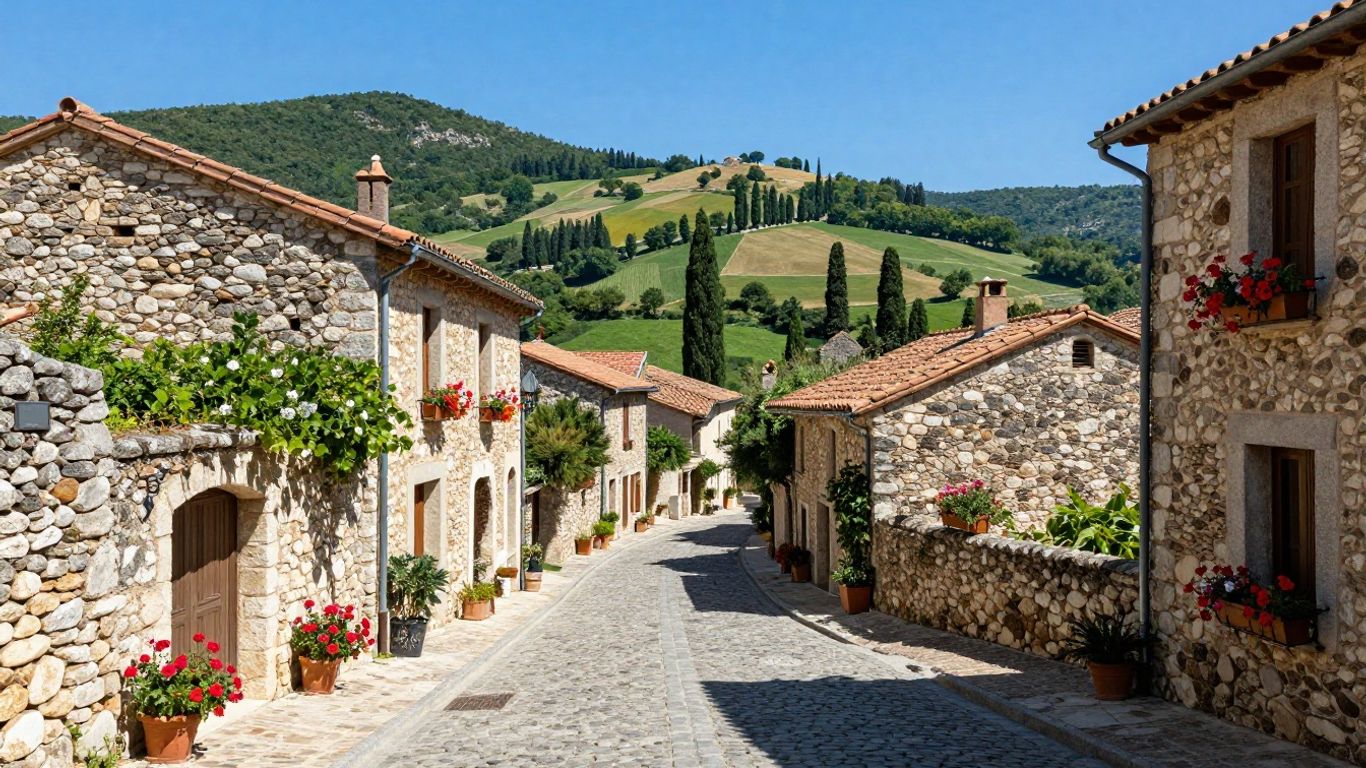
So what is it about these old villages in France that keeps me coming back? Partly it’s the look of the place, all that weathered stone and those impossibly narrow lanes. Mostly, though, it’s the feeling. You slow right down without meaning to.
The Enduring Appeal of Cobblestone Streets
There’s something oddly satisfying about walking on cobblestones that have been worn smooth by centuries of feet. Every stone feels like it’s holding onto a story. I still remember wandering the narrow lanes of Pézenas with the air full of market-day smells, the old buildings with their colourful shutters and overflowing flower boxes looking impossibly alive. It’s the kind of place where you happily lose an hour ducking into hidden courtyards and tiny artisan shops.
- Wear comfortable shoes: Those charming cobbles can be properly uneven.
- Give yourself time: Don’t rush it; the whole joy is in the wandering.
- Look up: The best architectural details usually sit well above eye level.
A Glimpse into Timeless Architecture
The buildings in these villages are basically living museums. Half-timbered houses lean companionably into each other, ancient stone walls have held firm for hundreds of years, and Gothic churches still stop you dead with their stained glass. In Mirepoix, the main square felt like a film set, all timber frames and shady arcades. That these structures are still standing, and still this beautiful, says everything about the craftsmanship that went into them.
Embracing a Slower Pace of Life
Maybe the best thing about these mediaeval villages is the way they quietly insist you slow down. Life moves to a different rhythm here: locals are chatting outside cafes, markets are piled with regional produce, and there’s a general hum of calm. After the rush of normal life, it’s a relief. I caught myself lingering over coffee, watching the world drift past, feeling genuinely at peace. If you’d rather let the train take the strain between them, there are some lovely scenic routes through southern France that link a surprising number of these towns.
Where to stay: a lot of these villages have small boutique hotels or charming guesthouses (chambres d’hôtes) right in the old town. Bedding down inside the medieval walls gives you the most immersive version of the place. Larger towns like Pézenas tend to have more options, including small hotels with parking.
Hilltop Villages in the South of France with Breathtaking Views
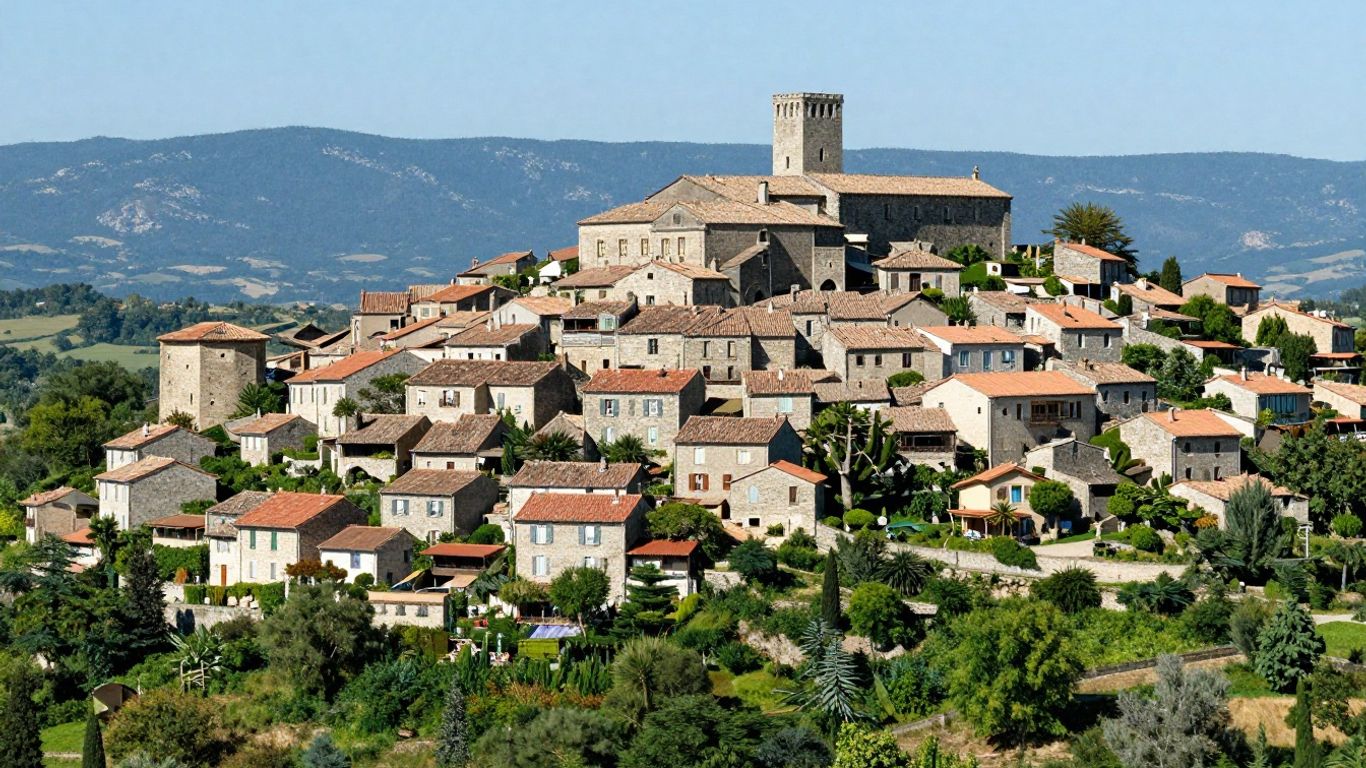
There’s something special about a mediaeval village perched high on a hill, the countryside unrolling beneath it. I’ve always been a sucker for these spots, standing there imagining what life was like centuries ago with the whole world spread out below. The best hilltop villages in France feel like a clean escape from the noise of everything modern.
Èze: Perched Above the Mediterranean
Èze is one of those places that just floors you. It’s a mediaeval village clinging to a rocky crag high above the sparkling Mediterranean, and walking its narrow, twisting streets feels like wandering into a fairytale. Stone houses draped in bougainvillaea pull you steadily upward toward the Jardin Exotique, a cactus garden right at the summit. The views from up there are almost silly: a panoramic sweep of coastline that runs for miles. I remember standing with the sea breeze on my face feeling like I could see forever. It’s a place that makes you fall for the French Riviera all over again.
Where to stay: There are hotels inside the village, but nearby Nice or Monaco give you a wider spread of options and easier transport links. That said, if you can stretch to a room in Èze itself, the after-hours atmosphere once the day-trippers leave is worth the extra.
Gordes: A Jewel of the Plateau de Vaucluse
The first time I saw Gordes, it looked like it had been lifted straight out of a painting. The village is a masterpiece of honey-coloured stone tumbling down a hillside on the Plateau de Vaucluse, and it’s one of the officially recognised Les Plus Beaux Villages de France (the “Most Beautiful Villages of France”), so it’s not just me being soft about it. It’s famous for the view from the road leading in, the one that looks exactly like a postcard. The Renaissance castle at its heart is striking, and the landscape around it is gorgeous. I spent an afternoon just drifting through it and stopping for a coffee in a quiet square.
- Getting there: Gordes is easiest by car, which also lets you explore the scenic Luberon routes. Parking gets tight in peak season, so arrive earlier in the day.
- Must-see: The Abbaye de Sénanque, a Cistercian abbey a short drive away, especially lovely when ringed by lavender in season.
- Local tip: Wander the smaller streets off the main drag; that’s where the real hidden corners hide.
Cordes-sur-Ciel: A Fairytale Above the Landscape
Cordes-sur-Ciel, which roughly translates to “Cordes-in-the-Sky”, earns the name. This fortified village rises dramatically out of the landscape, and once you’re up top, it genuinely feels like you’re on the roof of the world. I went on a clear day, and the views over the Tarn valley were spectacular. The village itself is a maze of steep, cobbled streets lined with ancient houses and artisan workshops, and it’s remarkably well preserved. I kept stopping, partly to catch my breath on the climbs, mostly just to take it all in.
- Getting to the top: walk the steep paths or hop on the little tourist train if you’d rather save your legs for the village itself.
- Artisan crafts: Cordes is known for its glassblowers and painters, so it’s a great spot for genuinely original souvenirs.
- Food: a few lovely restaurants serve local cooking with those huge views. I had a lunch up there I’m still thinking about.
If hunting out special, hard-to-reach places is your thing, the same instinct pays off elsewhere in France, like with these hidden beaches in Brittany.
Exploring the Languedoc Region’s Hidden Gems
When people picture the South of France, their minds tend to jump straight to Provence or the glitz of the Riviera. But let me put in a word for the Languedoc (now part of Occitanie), which offers a similar charm without the eye-watering prices or the crowds. I’ve been a couple of times, once for the wine and once for a barge cruise along the Canal du Midi, and each visit peeled back a bit more of its quiet magic. It’s all the adorable towns, ancient sites, and superb food France is famous for, just at a gentler pace.
Pézenas: A Medieval Market Town
Pézenas, not far from Montpellier, is a town that completely won me over. I’ve been back twice, and it still gets me every time. It once served as a seat of the Languedoc Parliament, and you can feel that old importance in its elegant squares and grand hôtels particuliers. If you can line your visit up with a Saturday, market day is an absolute must.
The square and surrounding streets buzz as locals and visitors gather their weekly shop. My tip: get there by about 9:30 or 10:00 to soak it in before the biggest crowds roll through. Parking in the historic centre can be tight, but there’s usually an overflow lot a short walk away.
Keep an eye out, too, for the themed markets: a Marché Médiéval (mediaeval fair) or a Marché aux Puces (flea market) turn an already lovely town into something special. And the cobbled lanes, the colourful shutters, and the window boxes spilling flowers – it’s a proper haven for artisans, so leave room in your bag for a local craft or two.
Where to stay: look for a charming boutique hotel or guesthouse inside the old town for the full effect and easy early access to that market.
Mirepoix: Stepping into a Storybook Square
Arriving in Mirepoix felt like walking onto a film set, or into the pages of a fairytale. The main square, with its timber-framed buildings leaning gently inward, is so quintessentially French it almost looks unreal. The covered arcades around the edge are perfect for an unhurried stroll, even if the weather isn’t playing nicely. I ended up just parked at a cafe, watching the square do its thing, completely happy.
Abbaye de Fontfroide: A Tranquil Historical Site
Not strictly a village, but the Abbaye de Fontfroide is a Languedoc gem that’s well worth the detour. This former Cistercian abbey is beautifully preserved and wonderfully peaceful. Walk through its cloisters and vast church and you can almost hear the monks who lived here centuries ago. The gardens are gorgeous too, especially in spring and summer. After the lively market towns, it’s a lovely shot of calm and a deep hit of history.
| Feature | Detail |
|---|---|
| Architectural style | Romanesque and Gothic |
| Highlights | Cloisters, chapter house, abbey church, gardens |
| Best time to visit | Spring or early autumn for pleasant weather and fewer visitors |
If you’re planning a trip to this corner of France, I’d really push you to venture beyond the famous regions. The Languedoc serves up an authentic slice of southern French life, rich in history, food, and quiet natural beauty, all of it waiting to be found.
Provence’s Prettiest Medieval Villages
Provence, with its sun-soaked landscapes and lavender fields, hides some of the prettiest villages in the south of France. I keep getting pulled back here, not just for the food and wine but for the sheer charm of its ancient stone settlements. They feel like stepping into a slower, more deliberate time.
Les Baux-de-Provence: Dramatic History and Artistic Spirit
Perched dramatically on a rocky spur in the Alpilles, Les Baux-de-Provence is another of those places that genuinely takes your breath away. It’s regularly counted among the most beautiful villages in the south of France, and standing among the ruins of its castle, looking out over the Provençal countryside, you can hear the echo of old battles and sieges.
What I love most, though, is the artistic streak running through it now. Little galleries and craft studios tuck into the ancient stone, and the unmissable Carrières de Lumières, an old limestone quarry turned immersive art space, projects famous artworks across vast cavern walls set to music. I spent a good hour just peeking into studios, and the whole place feels like creative energy has been pooling here for centuries.
Where to stay: staying right in the village can be pricey, so there are lovely options in nearby towns like Saint-Rémy-de-Provence.
Roussillon: A Village of Ochre Hues
If you want a village absolutely bursting with colour, Roussillon is it. Another official member of Les Plus Beaux Villages de France, it’s famous for its ochre cliffs, and the buildings themselves seem to be made of the same earthy pigment. Walking through feels like wandering a natural art studio, with houses in reds, yellows, and oranges echoing the landscape around them. I always nudge people toward the Sentier des Ocres (Ochre Trail) just outside the village to really take in the geology. It’s an easy walk and a photographer’s dream, but honestly, even just seeing it with your own eyes is unforgettable.
- Wander the colourful streets and admire the unusual architecture.
- Hike the Sentier des Ocres for some genuinely surreal natural scenery.
- Browse the local artisan shops for one-of-a-kind souvenirs.
Lourmarin: A Recognised Beautiful Village
Lourmarin is another gem that’s earned its place on the Les Plus Beaux Villages de France list. It has a more relaxed feel than some of the dramatic hilltop towns, but it’s no less charming. The village circles a Renaissance castle, open to visitors and often hosting cultural events, and it’s a perfect spot to just wander, stopping for a coffee in one of the pleasant squares or poking around the bookshops. It also makes a great base for the wider Luberon, with its vineyards and rolling countryside. You’ll find some lovely wine-tasting country within easy reach.
Where to stay: Lourmarin itself has charming boutique hotels and guesthouses. For a wider choice, look at nearby Bonnieux or Ménerbes.
Fortified Medieval Cities
Carcassonne: A Fortified Medieval City
Stepping into Carcassonne is like walking onto a film set, except it’s all real. The place is enormous, a whole city wrapped in double walls and studded with 52 towers. I still remember the first time it came into view; it genuinely stopped me in my tracks. It feels like you’ve travelled back several centuries.
The scale of the fortifications is a real testament to mediaeval engineering, and wandering the narrow streets you can almost hear the knights and merchants who once filled them. Don’t miss the Basilica of Saints Nazarius and Celsus, whose stained glass is beautiful, and the Château Comtal, which walks you through the castle’s history and defences.
Where to stay: sleeping inside the Cité itself is touristy but unforgettable. For a calmer vibe, hotels just outside the walls give you great views of the city lit up at night.
Medieval Villages Steeped in Wine Heritage
Whenever I think about the south of France, wine is one of the first things that comes to mind. And honestly, some of the most charming mediaeval villages sit right in among the vineyards. There’s a particular magic to wandering ancient streets and then finding yourself surrounded by rolling hills of grapes, knowing the wine you’ll taste later came from right there.
Saint-Émilion: Monolithic Churches and Underground Passages
Saint-Émilion really transports you. It’s a UNESCO World Heritage site, and you understand why the moment you arrive. The town climbs a slope in narrow, winding streets lined with old stone, and its showpiece has to be the monolithic church, literally carved out of a single giant block of limestone.
I remember standing inside, feeling the cool stone and trying to imagine all the history it’s seen. Below the town runs a whole network of underground passages and cellars used for centuries, and taking a tour through them gives you a real sense of how people lived and worked here.
You can’t visit Saint-Émilion without talking wine, of course. Vineyards stretch out as far as you can see, and I’d strongly recommend a tour and tasting. It’s not just about the drinking; it’s about the terroir and the passion behind these world-famous Bordeaux wines. Plenty of local wineries run the experiences, and it’s a great way to connect with the region.
Where to stay: there are charming boutique hotels right in the heart of the mediaeval village. For something more immersive, several nearby vineyard estates offer guest accommodation.
Fronton and Gaillac: Wine-Tasting Regions
Saint-Émilion gets the spotlight, but the Fronton and Gaillac areas have their own charm and seriously good wine, with far fewer crowds. Fronton is known for distinctive reds, often built on the Négrette grape, which lends a lovely floral note. Gaillac has one of the longest winemaking histories in France, dating back to Roman times, and turns out everything from crisp whites to robust reds.
Exploring these felt more like a local discovery. I loved driving through the countryside, pulling in at small, family-run wineries where the winemakers are usually happy to chat and the tastings feel genuinely personal. It’s a more relaxed way to get into French wine culture.
- Fronton: Look for wines with notes of violet and raspberry. They pair beautifully with local charcuterie.
- Gaillac: Try the dry whites, often from Mauzac, and the reds, which can be surprisingly complex.
- Local markets: Don’t miss a town market for regional produce to enjoy alongside your wine.
Conclusion
The south of France is so much more than sunny beaches and big-name cities. It’s a proper treasure chest of history, and its mediaeval villages quietly rank among the prettiest towns in France, the kind of places that drop you straight back into another century. Whether you’re chasing dramatic hilltop views, centuries-old stone, or just the slow pleasure of a cobbled lane and a strong coffee, these towns deliver. So pack a bag, wear comfortable shoes, and go get lost in them. I don’t think you’ll regret it.
Frequently Asked Questions
What makes the mediaeval villages in the south of France so special?
Mostly, they feel like stepping into a storybook. Old stone buildings, winding streets, and a slower pace that’s a world away from the big cities. The history is right there in front of you, not behind glass in a museum.
Are these villages hard to get to?
Some more than others. Many of the hilltop ones are easiest by car, but plenty, like Carcassonne, are reachable by train. It pays to plan your travel a little in advance.
What kind of things can I do in these villages?
Wander and admire the old buildings, browse artisan shops, eat well at small local restaurants, and take far too many photos. Some villages throw in castles, churches, or even underground tunnels to explore.
Which villages are known for their views?
Èze, perched high above the sea, and Gordes, spread across its plateau, are famous for their views. Cordes-sur-Ciel also delivers stunning sights from its hilltop. They’re among the most rewarding hilltop villages in France.
Are there any mediaeval villages famous for wine?
Yes. Saint-Émilion near Bordeaux is a UNESCO site known for its historic underground cellars and surrounding vineyards. The Fronton and Gaillac areas also offer excellent tastings in lovely settings.
What is the Languedoc region like?
Languedoc is a bit less known than Provence but just as lovely, home to beautiful villages in the south of France like Pézenas and Mirepoix, plus historic abbeys. It’s often more affordable and less crowded than the better-known southern areas.
Can I visit a real mediaeval walled city?
Absolutely. Carcassonne is one of the most impressive mediaeval walled cities you can visit; with its double walls and rows of towers, it looks like something straight out of a fairytale.
What are the ‘ochre villages’ known for?
Villages like Roussillon are famous for their vivid colour. Built near huge deposits of ochre, a natural clay pigment, the buildings and surrounding cliffs glow in shades of red, orange, and yellow.


