

Best Day Trips from Lyon You’ve Probably Never Heard Of

Lyon is kinda known most for its food, its long history, and that riverside charm, but honestly the real wonders show up only once you go a little past the city limits. Then a small trip takes you to spots that seem like they’ve never been touched or spoiled by tourists, like silent ancient towns , shady vineyards, magnificent gorges, and mountain villages that very few people actually find out about.
Planning one of the best day trips from Lyon can totally open up a world of new experiences, making this a kind of useful Lyon France travel guide for curious travelers. Here are some of the most interesting places to visit near Lyon you might not have really considered before, offering a mix of culture, history and natural beauty.
Key Takeaways
- The Beaujolais region offers more than just wine, with picturesque villages and historical sites, making it one of the best places around Lyon.
- Perouges is a well-preserved medieval town perfect for a step back in time.
- Vienne boasts impressive Roman ruins and is a significant wine-producing area.
- Tain L’Hermitage is a must-visit for chocolate and wine enthusiasts.
- Beaune is a beautiful town in Burgundy, famous for its wine and historic hospices, and is considered one of the best places around Lyon for a day trip.
-
Beaujolais Region
When I think about the best day trips from Lyon, the Beaujolais region is one of those places that immediately comes to mind. Even though many people only know it for its wine. And yes, the wine is fantastic – if you’re into that, you’ll want to sample the different crus like Brouilly or Fleurie. But honestly, what I love most is the countryside, and like, the area called Les Pierres Dorées. In this part of Beaujolais, it’s dotted with villages built from this warm, ochre-colored stone, so it all gives this really unique look. The streets are usually narrow and winding, and you kind of get the feeling you stepped back in time or something, it’s kinda magical.
One village that really captured my heart is Oingt. Officially the village has been recognised as one of the most beautiful villages in France, and the credit should go to it. It is very beautiful up there and it is also very picturesque for walking around. I have been there during various seasons and I always discover something new. If you happen to be there in September, you might catch the international barrel organ festival, which is quite a sight. Later in the year, around November, it’s all about the Beaujolais Nouveau. And if you’re there in December, keep an eye out for the nativity scenes displayed in almost every window – it’s a lovely local tradition.
Getting to Beaujolais is honestly pretty easy and it just sort of slides into most Lyon travel itinerary, you know, it fits nicely. If you’re driving, it’s around 40 minutes from Lyon, which is very convenient. If you don’t have a car, the train to Villefranche-sur-Saône takes roughly 30 minutes, but then you’ll want to set up a taxi from there to reach spots like Oingt. So yeah, plan a bit ahead, don’t wing it. For wine lovers who’d rather not drive, there are lots of half-day wine tasting trips that leave from Lyon and often make a few stops around the area. It’s a solid way to get a feel for the local vineyards, without having to think about parking or routes, that kind of thing.
Here are a few things I’d recommend doing:
- Explore the “Pierres Dorées” villages: Wander through places like Oingt, Ternand, and Bagnols for their unique architecture and atmosphere.
- Visit a local winery: Even if you’re not a huge wine buff, many offer tours and tastings that give you a feel for the region’s history and culture. Château Montmelas is a nice option.
- Enjoy the local food: Look for a “Mâchon Beaujolais,” a traditional Lyonnais meal often featuring charcuterie and cheese, best enjoyed with a glass of local wine.
The Beaujolais region feels like a really nice little getaway, with those golden stone villages and rolling vine rows, you know? It seems to give you a calmer tempo than a lot of the more famous French places, and that difference is kind of the whole point. Honestly it’s a perfect area for a slow day trip, pretty easy to reach from Lyon too, so you don’t have to overthink it.
Where to stay:
While Beaujolais is nice for a day trip, if you’re trying to stay longer, there are a few really lovely alternatives. Château de Pizay gives you a rather more luxurious kind of stay, with a spa too, or you can look for quaint little chambres d’hôtes in the smaller villages, so it feels more real. And if you’re into wandering around France’s scenic settlements, you might also spot that same cozy spirit in medieval villages down in the south.
-
Perouges
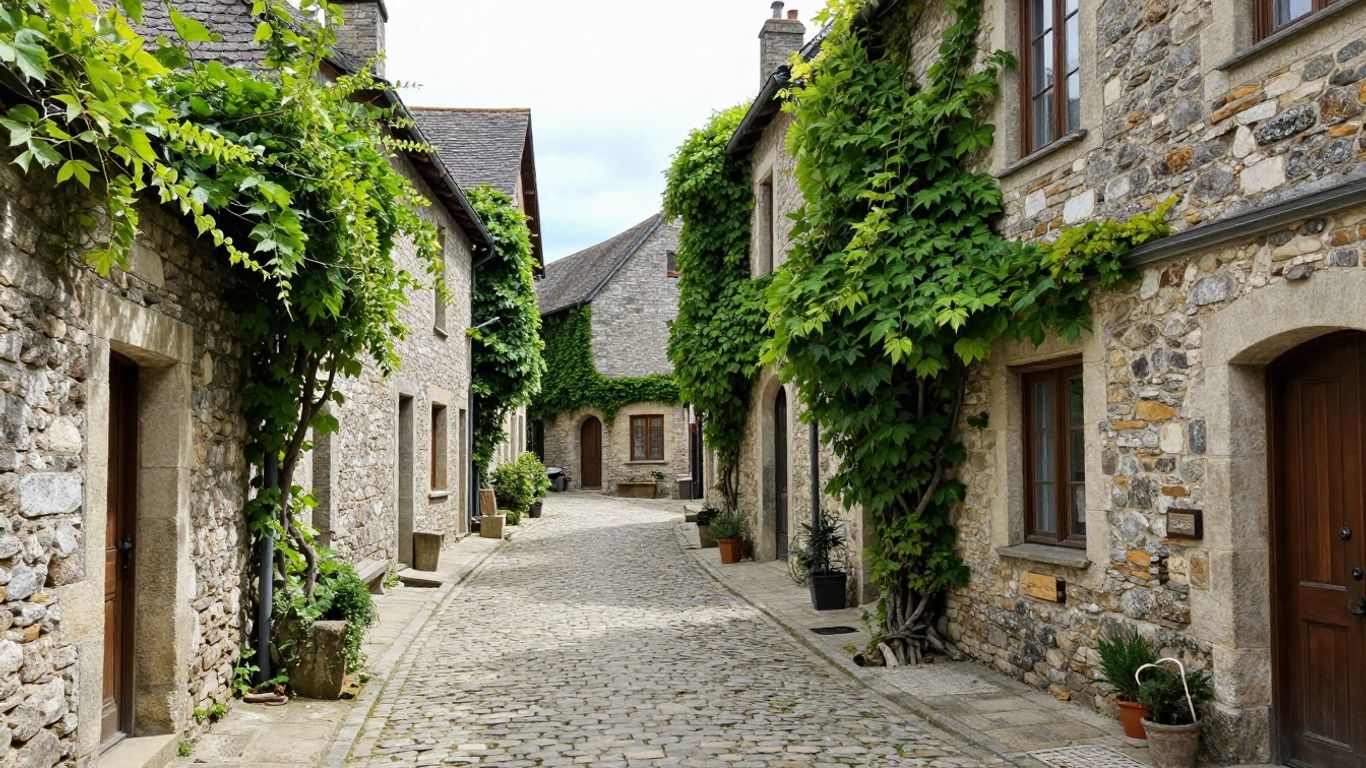
Just a short drive from Lyon, maybe 30 minutes or so, you’ll land in Pérouges. I recall the first visit, it felt like stepping back in time a little, you know. This medieval hilltop village is really well preserved and honestly, it’s one of those spots you might not have heard about yet, but you should absolutely take a look.
The whole town is basically a historical monument, and somehow you can really feel the past in the cobblestone streets, and those old buildings too. When you walk through the main gate, Porte de l’Étang, you kinda get thrown right into another time. There aren’t too many real “attractions” in the typical sense, but honestly that’s part of the charm. More like it’s about letting the mood sink in, just soaking up the atmosphere, and less about ticking off highlights.
Here’s what I usually recommend doing when I go:
- Wander the streets: Just get lost! Explore the narrow lanes, admire the stone houses, and imagine life centuries ago. Don’t miss the Place du Marché, the heart of the village.
- Visit the Church of Saint-Marie-Madeleine: This Romanesque church is a central piece of the village’s architecture.
- Climb the ramparts: If accessible, getting a view from the old walls offers a great perspective on the village and the surrounding countryside.
- Enjoy a meal: There are a few restaurants within the village walls. I recall having a really nice meal at one of them, enjoying some local specialties.
Pérouges is one great example of a medieval village that stayed preserved, honestly you can feel it. The streets are so quiet, and the old architecture, it really gives you this calm detour from everyday life, like a small refuge, and somehow you also get a real link to the past. It makes it a one of a kind day trip stop, not really like the others.
Getting there is pretty straight forward, honestly. If you’ve got a car, it’s an easy drive, nothing too dramatic. Public transport also works, even if it takes a bit longer and you end up doing a short walk from the nearest train station. Still, it’s worth the hustle for that one of a kind experience.
If you need a place to stay close by, there are pleasant options scattered across the nearby countryside, or you can plant yourself back in Lyon and treat it as a day out. And for anyone into historical sites, it really does add to the whole itinerary, like when you’re also bouncing around other regions such as the Dordogne.
Where to Stay:
That said, Pérouges offers only a handful of accommodations. However, you’ll find some lovely small hotels located within the old walls for an authentic experience. On the other hand, Lyon has a vast selection of hotels and apartments to choose from. So it works as a convenient base for day trips.
-
Vienne
When I was going through day trips from Lyon that weren’t the usual suspects, Vienne kept showing up kinda often. It is a place that really surprised me, to be fair. Years ago it was a big Roman city, and you can still really sense that history as you walk around. It doesn’t feel as curated or polished as some of the more famous destinations, but honestly that’s the whole charm in it.
The Roman ruins are scattered all over the place, which is pretty cool. You’ve got the Temple of Augustus and Livia, which is remarkably well-preserved, and the ancient theatre is still used for events today. It is absolutely amazing how things happened back then. In fact, most of my time was spent wandering and coming across some historical pieces here and there.
Here are a few things I made sure to check out:
- Temple of Augustus and Livia: Seriously, it’s right in the middle of town. You can’t miss it.
- Roman Theatre: It’s huge! Imagine sitting there for a show back in the day.
- Pyramide de Vienne: This is a bit outside the main area, a Roman funerary monument.
Worth the walk if you have time. Beyond the Roman stuff, Vienne is also right in the northern Rhône wine region. So, if you’re into wine, you’re in the right spot. I didn’t do a full wine tour, but just being in the area felt nice. There are also some good places to eat. I remember having a really nice meal at a small bistro near the river.
The vibe in Vienne is kinda more laid-back than Lyon, you know. It feels like a real town, where people actually live and work—not just a tourist spot, with that constant “see and go” energy. It’s honestly a welcome change of pace.
Where to Stay:
While Vienne is a great day trip, if you want to stay longer, there are definitely hotels and guesthouses available. I saw a few charming places right by the river. For a day trip, though, it’s super easy to get to from Lyon by train. It takes about 30-40 minutes, making it a really convenient escape. You can find train tickets easily on SNCF Connect.
-
Tain L’Hermitage
When I last visited the Rhône Valley, I made sure to stop in Tain L’Hermitage. It’s a pretty straightforward trip from Lyon, only about 43 minutes by train, which is super convenient if you don’t want to deal with a car. For me, the main draw is kinda the chocolate, and I’d guess for most folks as well. You can straight up smell the Valrhona chocolate in the air as you get nearer to town, like it’s already waiting for you. They also have the Cité du Chocolat, sort of their chocolate museum and production place, so you can see how it all comes together. It’s a fun experience, especially if you like samples – and who doesn’t?
Beyond the sweet stuff, Tain L’Hermitage is also the heart of the Côtes du Rhône wine region. While I didn’t do a full wine tour this time, it’s definitely something to consider if you’re a wine enthusiast. You can visit the headquarters of the wine producers there. I had a really nice lunch in town, enjoying some local food and, of course, a bit more chocolate.
Here’s a quick rundown of what I’d recommend:
- Visit the Cité du Chocolat Valrhona: Get your chocolate fix and learn about how it’s made.
- Explore the town: It’s a pleasant place for a stroll, especially along the river.
- Enjoy a meal: There are some great restaurants offering local cuisine. Consider a wine tasting: If you have time and interest, explore the local wines.
Train travel can be very beautiful, as the route goes through some very nice scenery in parts of the countryside. This way, it offers the most enjoyable scenic trips from Lyon. It also gives off a feeling of quite a relaxing journey, meaning that you can simply take a seat and enjoy the air.
Where to Stay:
While Tain L’Hermitage is pretty ideal for a quick day trip, if you feel like lingering a bit longer there are a couple of hotels right in town. That said, a lot of folks tend to choose nearby Valence or even head back toward Lyon, and just take the straightforward train ride. For a more immersive kind of vibe try tracking down a charming guesthouse out in the surrounding vineyards, but be ready, they sometimes require having a car to reach them.
-
Beaune
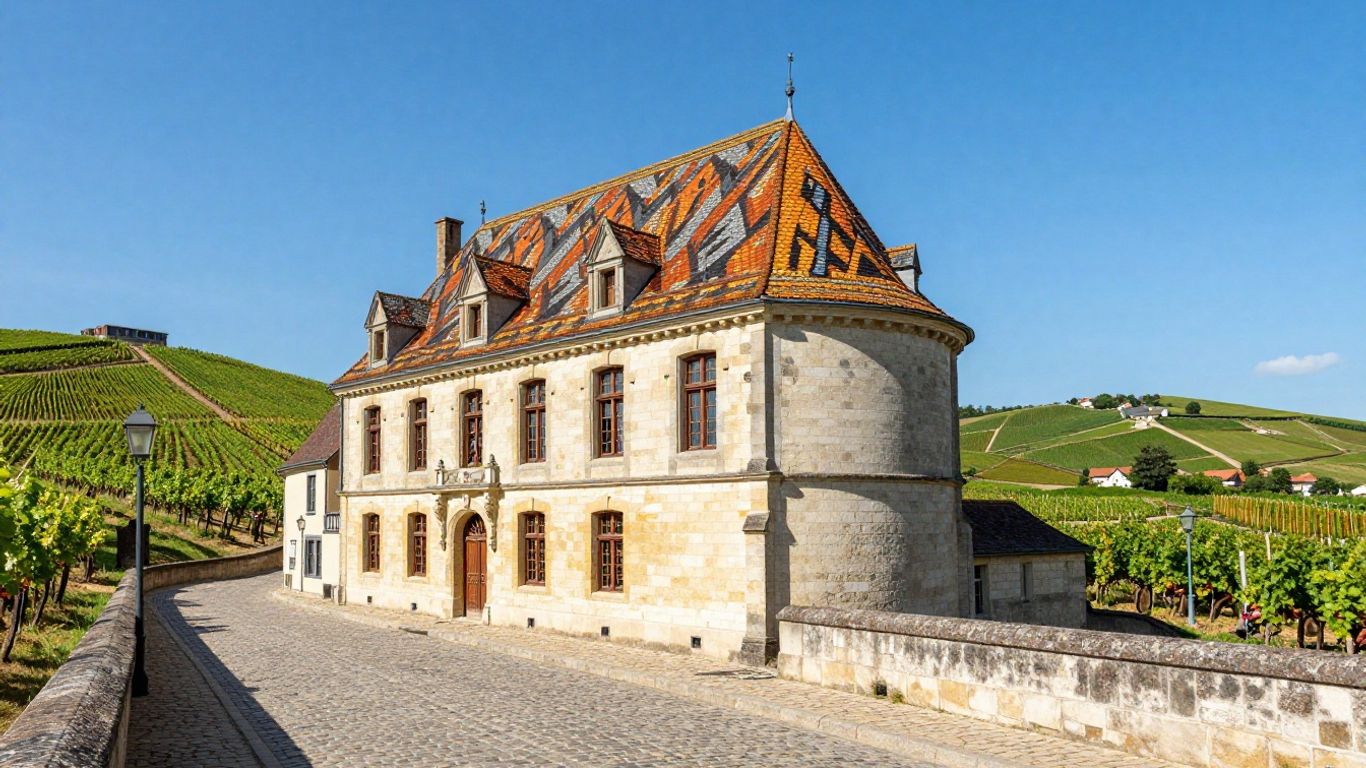
If you’re really into wine, then Beaune is one of those spots you kinda have to see. It’s a bit of a run north from Lyon, like around an hour and a half, or so, but honestly it’s worth it. I went there a few years back and I was genuinely impressed. It’s basically right smack in the middle of Burgundy, so yeah you can picture how the whole wine thing looks and feels.
What I found most attractive about this place is the Hospices de Beaune. It used to be a hospital for the poor and today is a museum. To be honest, it is quite an impressive architectural piece, especially its beautiful roof made of colored tiles. You can wander through the older wards and kitchens and you kinda get a sense for how daily life went back then, without it being too much. They also hold an annual wine auction here that’s pretty famous.
Beyond the Hospices, Beaune is, kinda like a charming town, really. The old streets are perfect for a leisurely walk, and you’ll find lots of wine shops as well as tasting rooms, everywhere it seems. I’d say, it’s really worth doing some wine tasting while you’re there, because many places offer it and it lets you get a feel for the local Burgundy wines. And if you have the time you can even do a trip along the Route des Grands Crus, it winds through nice vineyards and those cozy villages like Pommard and Volnay. The whole thing is a beautiful drive, especially in the fall, it just feels better then.
Here are a few things I’d suggest doing:
- Visit the Hospices de Beaune: It’s the iconic landmark and a must-see.
- Go wine tasting: Explore the local cellars and sample some world-class Burgundy.
- Drive the Route des Grands Crus: Enjoy the scenic vineyard landscapes.
- Explore the old town: Wander through the charming streets and discover local shops.
Beaune is kinda a gem for anyone who is into wine, some history too, or honestly just wants to enjoy a pretty French town. It has a different vibe than Lyon and it feels more anchored in the deep traditions of Burgundy, kind of like you can taste the story there.
Where to Stay:
Accommodations in Beaune are plentiful and varied. There are several beautiful boutique hotels that are conveniently located within the heart of Beaune itself. Alternatively, there are plenty of accommodation choices if you want to have a little bit more peace and quiet, with some of the best options located out in the vineyards around the city. It may be wise to book ahead if you are planning to come at any point during the wine auction season.
-
Forez
Honestly, I have to say the Forez region wasn’t really even on my radar until I started nosing around the least visited corners of Auvergne-Rhône-Alpes. It’s tucked away, not quite on the big tourist route, and that’s precisely why it felt so charming, kinda understated. You get these rolling plains that slowly lean into softer mountains, and then you notice the deep ravines slicing through everything, like the land had a plan, but no hurry. It’s a place where nature is pretty striking, but the culture is just as interesting.
What really caught my eye were the medieval villages and some really unique museums. They sorta stick with old traditions that are still hanging around, like hat making and even cart building, and it just feels like stepping back in time… but you know, in a good way. The entire place is kind of sprinkled with these small pockets of history, craft, and all that.
One place you really can’t skip is the Bâtie d’Urfé, kind of a 16th-century château near Saint-Étienne-le-Molard. The château is lovely of course, but the main highlight, honestly the real showstopper, is its Renaissance grotto. It’s decorated with gods made from sand and seashells – seriously, it’s unlike anything I’ve ever seen. It’s one of those places that sticks with you long after you’ve left.
If you’re looking for a base, Montbrison is a good bet. It’s a small town, but it boasts what many consider France’s prettiest market. And if you have a sweet tooth, you’re in luck – Montbrison is home to two Master Chocolatiers, Philippe Bel and François Pralus. I might have gone there just for the chocolate, no regrets!
Here are a few things I’d recommend checking out:
- Montbrison Market: Go for the produce, stay for the atmosphere. Don’t forget to try the local blue cheese, Fourme.
- Bâtie d’Urfé: The château and its incredible grotto are a must-see.
- Medieval Fortresses: The twin fortresses of Saint-Just and Saint-Rambert offer a glimpse into the region’s past.
- Sainte Croix en Jarez: This is one of those really cool, picturesque villages that feels untouched by time.
The Forez is located in the Loire department (number 42), which can be a bit confusing since there’s another Loire region famous for its châteaux. This Forez is a different beast altogether, offering a more rustic and historical experience.
Where to Stay:
Montbrison is a good central point with charming accommodations. You’ll find smaller hotels and guesthouses that fit the region’s vibe. For a more rural experience, look for places in the smaller villages. Having a car is definitely helpful for exploring the Forez, as public transport can be limited between the smaller sites.
-
Oingt
If you’re looking for some place that feels kinda like stepping back in time, Oingt is basically it. It’s tucked away in the Beaujolais area, and this village is one of those France officially designated “most beautiful villages,” so yeah, I can totally see why. It’s not only the wine that brings people here, although that’s obviously a huge part of the attraction. But what really grabbed me was the stone. The buildings are made from this lovely golden ochre, colored stone, and it gives the whole spot this warm glowing sensation, especially when the sun hits it just right. It’s small, so you can stroll through the narrow, winding streets without too much trouble, really quite easily.
I remember kind of wandering around, peeking into small artisan shops, and thinking like, what could life have looked like centuries back. There’s an honest kind of history here, it feels close. You can also climb up to the old clock tower, for views across the vineyards and countryside all around. It’s not really a spot with a long catalog of ‘must do’ stops, and honestly that works, because the charm is in the slow minutes. More than anything it’s about soaking up the mood and standing there for a while, instead of rushing.
The best time to visit Oingt is, in my opinion, outside of peak summer, if you want a calmer sort of experience. I went in early autumn and it felt pretty near perfect, crisp air, fewer people about and the vineyards were moving into those warm shades of red and gold, sort of like a slow reveal or something.
Here are a few things I enjoyed:
- Wandering the medieval streets: Just get lost and discover hidden corners.
- Visiting the Clock Tower (Tour de l’Horloge): Offers great panoramic views.
- Exploring local craft shops: You can find some unique souvenirs.
- Enjoying a meal with a view: There are a couple of small restaurants with terraces overlooking the valley.
Getting there is pretty straightforward, by car from Lyon it’s around 40 minutes, give or take. If you don’t have your own car, you can hop on a train to Villefranche-sur-Saône, and then you sort out a taxi after, but please reserve it ahead of time! It’s kind of a long walk-ish from the station though, so keep that in mind.
Oingt is the kind of village where you can truly slow down. It’s kind of a perfect escape, if you want to get that real French village feel without the crowds you usually stumble into at some of the more famous places. The honey colored stone, and the calm atmosphere just make the whole thing a kind of unforgettable stop, really.
Where to stay:
Oingt itself is kinda small, so lodging options in the village are limited, mostly charming guesthouses or little inns and so on. If you want more room to choose, you could look at a nearby town like Villefranche-sur-Saône, they have more hotels and it’s still only a short drive away. And if you’re really into wine country, well there are also a few lovely chateaux across the wider Beaujolais area that sometimes offer rooms, depending on the season.
-
Saint-Etienne-Le-Molard
Okay, so Saint-Etienne-Le-Molard isn’t exactly like a household name, even for people who live in France. But if you want something a bit different, a place that feels genuinely off the beaten path, maybe this one. It’s in the Loire department, but not the one you might be thinking of with those super famous châteaux. This is department 42, kind of more rural, and honestly in my opinion, it’s more compelling for a day trip.
I remember visiting this area a few years back, and what really struck me was the quiet charm. It’s not a place with a million tourist attractions, but that’s kind of the point. It feels real. The main draw here, and it’s a pretty significant one if you’re into history and architecture, is the Château de la Bâtie d’Urfé. This isn’t your typical grand castle; it’s more of a Renaissance manor house with a really unique twist – a grotto. Seriously, this grotto is something else, carved right into the rock. It feels like stepping into another world, a bit mysterious and definitely memorable.
Beyond the château, the surrounding Forez region has a certain appeal. It’s a good place to just wander and soak in the countryside. If you’re based in Montbrison, a nice little town nearby with a market people rave about (I can confirm it’s pretty good!), you can explore from there. I found that having a car really makes a difference, for getting around and seeing those smaller villages, you know. It lets you stop whenever something catches your eye, and that’s exactly what you need when you’re wandering around a less traveled area, like not just the main roads.
The grotto at the Château de la Bâtie d’Urfé is the standout feature and worth the trip alone.
Here’s what I’d recommend if you decide to make the journey:
- Visit the Château de la Bâtie d’Urfé: Spend time exploring the manor and, of course, the incredible grotto. It’s quite unlike anything else I’ve seen.
- Explore Montbrison: If you can time your visit with the market day, do it. Even if not, it’s a pleasant town to walk around and grab a bite.
- Drive through the Forez countryside: Just enjoy the scenery. There are small villages and rolling hills that are quite lovely.
This area kind of gives you a peek into a calmer, more historical side of France that a lot of people miss, you know. It feels like one of those places where you can slow down a bit and really appreciate the little details, slowly but surely.
Where to stay:
Saint-Etienne-Le-Molard itself is quite small, so accommodation options are limited. Your best bet is to look in nearby towns like Montbrison. You’ll find a few hotels and chambres d’hôtes (bed and breakfasts) there. If you’re looking for something larger, you might need to head towards Saint-Étienne. However, it’s a bigger city and may defeat the purpose of a quiet day trip.
-
Roanne
Roanne is kind of this tucked away little gem, and to be real I was kinda surprised how much I enjoyed my whole visit. It’s not really on every tourist radar, and that alone adds to the vibe. You know it’s on the Loire River, and there you get a decent blend of history, food culture, and this more easy going atmosphere, like nothing feels overly forced or rushed.
One of the first things that struck me was the town’s link to food, like it was everywhere, not just in the obvious places. It’s really known for its kitchen scene, and you can kind of feel that in your bones. The main market is a solid place to begin, it has local produce and regional specialties, all right there. I stayed a good hour walking about, trying little samples and sort of absorbing the whole vibe.
Past the meals, Roanne also has some really engaging spots from history, kind of beyond what you’d expect. The Saint-Étienne church is notably impressive, and its story runs back for centuries and centuries, it feels like. I also liked wandering along the riverbanks, it’s a tranquil way to watch the town from another angle, sorta. And if you’re the canal type, the Roanne–Digoin Canal is pretty near and it gives pleasant paths for walking, or maybe cycling too, depending how you see it.
For a kind of truly unique experience, maybe try going over to the nearby village of Charlieu, it’s known for its old abbey and pretty much well kept medieval streets, so it feels a bit unreal. This is a quick ride from Roanne, and honestly it’s like stepping back in time without too much fuss.
Getting There and Around
Roanne is accessible by train from Lyon, making it a convenient day trip. Once you’re there, the town center is quite walkable. For exploring the surrounding areas like Charlieu, a local bus or a taxi might be necessary.
Where to Stay:
While Roanne is nice for a quick day trip, if you plan to linger a bit longer there are a few pretty comfortable hotels in the town center. The choices go from budget friendly to a bit more upscale too, generally with good reviews for the way they handle things and also for the location. I personally ended up with a small, charming hotel not far from the market, and it was honestly just right for my brief stay.
Must-Do’s in Roanne:
Explore the vibrant local market. Visit the historic Saint-Étienne church. Walk or cycle along the Roanne-Digoin Canal. Take a side trip to the medieval village of Charlieu.
Roanne gives you a bit of a real French vibe, kind of far from the usual crowds you know. It’s a place where you can savor great dishes, uncover nearby history, and just unwind along the river, without thinking too much about it. Honestly it feels like one of those destinations worth considering if you want something a little different, a bit more low key.
If you’re thinking about a trip where you roam through all kinds of places in France, then the French Alps, with their different regions and scenery, can be pretty appealing. They give you a whole new kind of adventure, like more wild nature and views that feel, honestly, not the same as the rest.
-
Grenoble
When I think about day trips from Lyon, Grenoble often gets overlooked, and honestly, I’m not sure why. It’s a city that really surprised me. It’s nestled right at the foot of the French Alps, which gives it this incredible backdrop. You can get there by train in about an hour and a half, making it a pretty easy escape.
What struck me most about Grenoble is its blend of history and modernity, all set against that stunning mountain scenery. The old town has these charming narrow streets, but then you have the modern architecture and the very cool Vercors mountain range looming nearby. One of the absolute must-dos is taking the ‘bubbles’ – those cable cars – up to the Bastille. The views from the top are just breathtaking, especially on a clear day. You can see the whole city spread out below and the Alps stretching out in front of you. It feels like you’re on top of the world.
Beyond the Bastille, there’s a lot to explore. I spent a good chunk of time wandering through the Jardin des Dauphins, which is right near the Bastille cable car station and offers more great views. The city also has some interesting museums, like the Musée de Grenoble, which has a surprisingly good art collection. And if you’re into science, the town has a strong scientific research presence, though I didn’t get to explore that side too much on my visit.
For food, Grenoble has a good mix. You can find traditional French bistros as well as more modern eateries. I remember having a really nice meal in the old town, enjoying some local specialties. It’s definitely a place where you can find something to suit your taste.
Grenoble offers a fantastic mix of urban exploration and natural beauty, making it one of the most rewarding Scenic trips from Lyon.
Getting There
- Train: The most convenient way is by train from Lyon Part-Dieu station. The journey takes approximately 1 hour and 30 minutes.
- Car: Driving is also an option, taking about the same amount of time, but parking in the city can be a bit tricky.
Where to Stay (If you decide to extend your visit)
While it’s a great day trip, Grenoble also makes a good base if you want to explore the Alps further. There are plenty of hotels, from budget-friendly to more upscale, particularly in the city center.
Grenoble feels like a city that’s aware of its stunning surroundings and has built its identity around them. It’s not just a stopover; it’s a destination in its own right, offering a different pace and perspective compared to Lyon.
Conclusion
Lyon is, like really, a fantastic hub for checking out what’s around it. These little hidden gems are among the best places to visit near Lyon, and honestly they give you a nice break from all that buzz. Whether you’re the type who loves history, or you’re more into wine tasting, or you just want a scenic drive with good views, there’s something for everyone to enjoy. So, go ahead, pack a bag, grab your camera, and get ready to discover that kind of magic that’s sitting just beyond Lyon. This Lyon France travel guide should do the trick. You might even find your new favorite spot before you know it.
Frequently Asked Questions
What are the best day trips from Lyon if I don’t have a car?
No car? No problem! Many places, such as Vienne, Tain-l’Hermitage, and even parts of the Beaujolais region, are reachable by train. Some tours also offer convenient pick-ups from Lyon, making it super easy to explore without driving yourself.
Are there any medieval towns near Lyon that are worth visiting?
Absolutely! Pérouges is a fantastic choice. It’s like stepping into a fairytale with its old stone buildings and charming streets. It’s a popular spot, but still feels like a hidden treasure.
I love wine. What are some good wine regions near Lyon for a day trip?
The Beaujolais region is right next door and famous for its wines. You can also head a bit further south to Tain L’Hermitage, known for its Côtes du Rhône wines. Many places offer wine-tasting tours, a fun way to sample local flavors.
What is there to see in Vienne?
Vienne is really cool because it has a lot of ancient Roman ruins, like theaters and temples. It used to be a big city way back when. Plus, it’s in a wine area, so you can enjoy that too.
Is it possible to visit a chocolate factory on a day trip?
Yes! Tain L’Hermitage is home to the Valrhona Cité du Chocolat. You can learn all about how chocolate is made and, of course, taste some delicious treats. It’s a sweet adventure for sure.
What’s the difference between visiting Beaune and other wine towns?
Beaune is a bit further north, but it’s a beautiful historic town in the heart of Burgundy wine country. It’s famous for its stunning medieval hospital, the Hospices de Beaune, and for offering great wine-tasting opportunities.
Are there any less touristy places to visit near Lyon?
Definitely. The Forez region is less known but offers beautiful nature, medieval villages, and unique museums. Saint-Étienne-le-Molard, with its special château, is a highlight there.
How far are these day trips usually from Lyon?
Most of these places are quite close, often within 30 minutes to a couple of hours by car or train, making them ideal additions to a Lyon travel itinerary. This makes them perfect for a relaxed day out without spending too much time traveling.


