

When to See the Flamingos: The Best Time to Visit the Camargue

Key Takeaways
The Camargue offers flamingo sightings in every season, but the experience changes with weather, water levels, breeding activity, and visitor numbers.
- Autumn and winter are strong choices for larger, quieter flocks.
- Spring brings comfortable temperatures and active wetland life.
- Summer offers feeding activity and breeding displays, but hotter days and more visitors.
- Pont de Gau provides reliable sightings, while the wider park offers wilder encounters.
- Early mornings, suitable clothing, binoculars, and respectful distances improve the visit.
Understanding the Camargue flamingo season
The Camargue is a broad Rhône delta shaped by freshwater, saltwater, lagoons, marshes, and coastal wetlands. Greater flamingos live here throughout the year, so there is no single month when sightings are guaranteed to begin or end. The best choice depends on whether you value large flocks, comfortable walking weather, dramatic behavior, or fewer visitors.
How flamingos live in the Camargue
Flamingos feed in shallow water, sweeping their bills through the mud and water to filter small organisms. They may stand in open lagoons, wade through salt marshes, or gather in groups along the edges of ponds. Their movements can seem slow from a distance, but a feeding flock is constantly shifting as birds search for suitable water and food.
The flat landscape makes birds visible across long distances, although that does not mean they are always close to a path. A quiet stretch of wetland may hold several birds that are easy to miss without binoculars. For broader regional context, the Camargue landscape guide explains how wetlands, salt pans, and reed beds fit together.
Why water levels and food supplies affect sightings
Water conditions strongly influence where flamingos gather. Shallow water is generally useful for feeding, while deeper areas may be less attractive at a particular moment. Rain, evaporation, freshwater flow, and management of wetlands can all change the depth and salinity of individual ponds.
This is why a location that produced excellent sightings yesterday may feel empty today. Treat the Camargue as a living system rather than a fixed wildlife exhibit: scan several ponds, watch the waterline, and allow time for birds to move into view.
When the largest flocks are usually present
Large groups can be seen in several seasons, particularly when local birds are joined by birds moving through or remaining in the region for part of the year. Autumn can be especially rewarding because migrating birds pass through while resident flamingos remain in the wetlands. Winter also offers substantial flocks and often a quieter atmosphere.
Numbers vary by site and conditions, so a large flock is never a promise attached to a particular date. A useful strategy is to spend more than one morning in the area and visit both a reliable observation site and a less managed wetland.
How breeding behavior changes what visitors see
Breeding season brings a different kind of activity. Flamingos may gather in dense groups, perform coordinated displays, preen, and move in unison. These behaviors are fascinating to watch, but nesting areas are sensitive and may be closed or viewed only from a considerable distance.
Visitors should not interpret a quiet flock as an absence of breeding activity. Much of the important work happens away from public paths, and protected areas are designed to give birds room. Patience matters more than proximity when observing courtship or nesting behavior.
The best months to visit the Camargue for flamingos
The Camargue can suit a wildlife trip in any season, though each period has trade-offs. Spring and autumn are often comfortable for exploring on foot, while summer brings long daylight hours but more heat. Winter can be excellent for birdwatching, with fewer visitors and opportunities to observe seasonal displays.
What to expect in spring
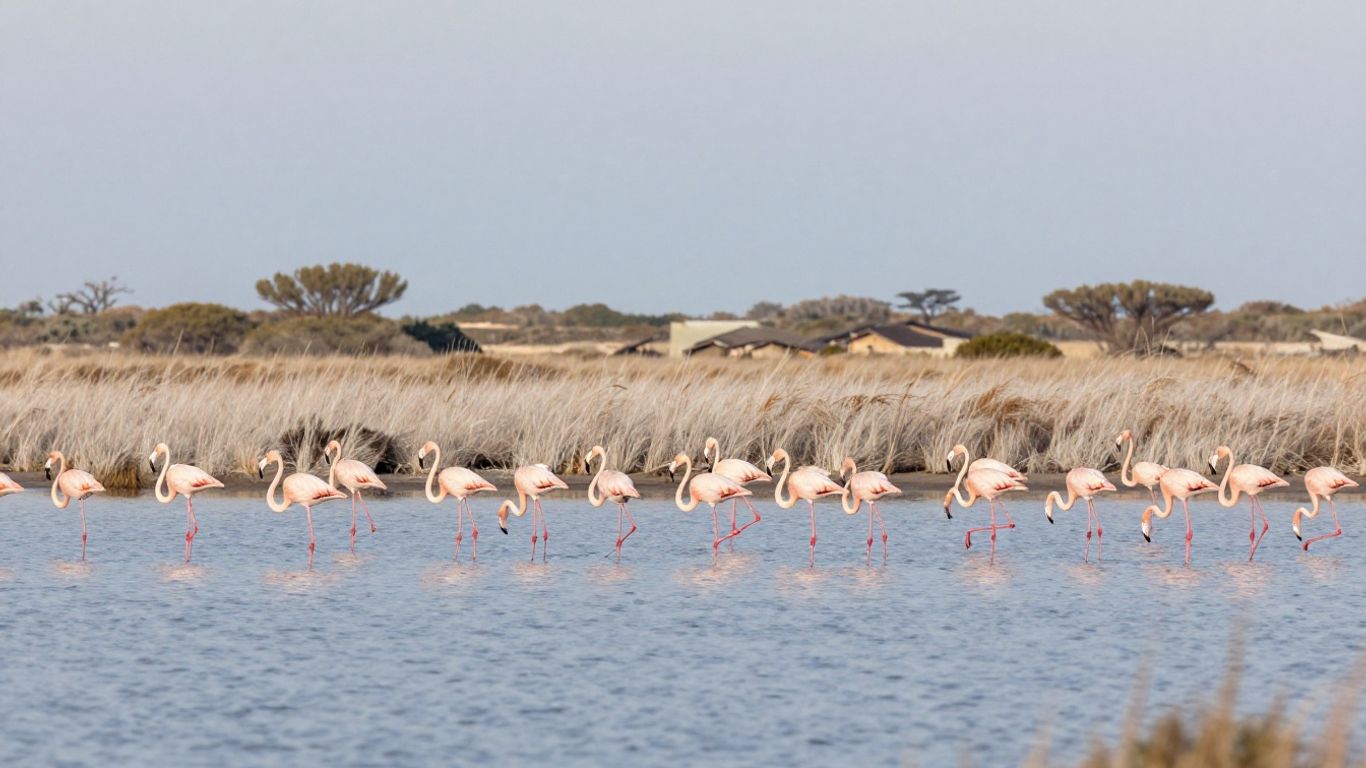
Spring usually combines moderate temperatures with lively wetland activity. Vegetation begins to develop, birdlife is active, and the longer days leave room for several observation stops. Flamingos may be feeding in shallow lagoons or gathering in groups, although their exact locations depend on water conditions.
Spring is a practical option for travelers who want to walk, cycle, or combine wildlife viewing with towns and cultural sites. It is also a good season for visitors who prefer to avoid the strongest summer heat.
Why summer offers active feeding and breeding displays
Summer provides bright light, extended evenings, and plenty of time to explore the delta. Flamingos may be active around feeding areas, and visitors can sometimes observe breeding-related group behavior from designated viewpoints. The heat, however, can build quickly over exposed wetlands.
Plan outdoor observation for early or later in the day, and carry more water than you might expect. Midday can be less comfortable for both people and photography, especially when wind and heat create shimmer above the ponds.
What makes autumn a strong season for large flocks
Autumn is a compelling choice for travelers prioritizing bird numbers and a calmer atmosphere. Migratory movement adds variety to the wetlands, while flamingos that remain in the Camargue continue to use lagoons and marshes. Temperatures are often easier for long walks than in midsummer.
The landscape can also feel less crowded after the main summer period. That extra quiet is useful when watching distant flocks, since sudden noise and movement are less likely to interrupt an observation.
What winter visitors can see
Winter visitors may encounter large groups of flamingos and can sometimes see elaborate courtship displays. The cooler season is often better suited to extended observation, particularly on clear days when the low light gives the birds strong color.
Some services and accommodations operate on reduced schedules, so check opening times before setting out. Bring layers rather than assuming the Mediterranean climate will remain mild throughout the day.
Choosing the best month for your travel priorities
There is no universal answer to the camargue best time to visit flamingos. Your preferred month should reflect the balance between wildlife activity, weather, daylight, and crowd levels. This quick comparison can help narrow the choice.
| Travel priority | Strong season | Main advantage | Main trade-off |
|---|---|---|---|
| Comfortable walking | Spring or autumn | Milder conditions | Sightings vary with water levels |
| Large flocks | Autumn or winter | Resident and passing birds | Cooler, changeable weather |
| Courtship displays | Winter | More visible seasonal behavior | Shorter daylight |
| Long days | Summer | Plenty of time outdoors | Heat and higher visitor numbers |
Use the table as a starting point, then check local access and weather shortly before departure. A flexible schedule is usually more valuable than choosing a supposedly perfect date.
Where to see flamingos in the Camargue
Different sites offer different levels of access, management, and distance from the birds. Some have established paths and dependable viewing areas, while others require patience and a willingness to scan broad wetlands. Moving between habitats gives you a better sense of how flamingos use the delta.
Pont de Gau Ornithological Park for reliable sightings
Pont de Gau Ornithological Park is a practical choice when reliable flamingo viewing is a priority. Its trails pass through wetland habitats, making it easier to spend time observing birds without searching an enormous area from a roadside viewpoint.
It is particularly useful for first-time visitors, families, and photographers who want a structured walk. Arrive with enough time to move slowly, pause at viewpoints, and watch how the birds respond to changing conditions rather than rushing from one stop to the next.
Camargue Regional Nature Park for wild encounters
The wider Camargue Regional Nature Park offers a less predictable experience. Flamingos may be visible from roads, paths, observation points, and wetland edges, but they can also remain far away or disappear behind reeds and the curve of a lagoon.
That uncertainty is part of the appeal. For visitors who want interpretation alongside wildlife watching, a Camargue Nature Reserve tour can provide context about habitats, animal behavior, and conservation without requiring visitors to guess what they are seeing.
Étang de Vaccarès and nearby wetlands
Étang de Vaccarès is one of the region’s best-known wetland areas and a useful place to understand the scale of the landscape. Birds may be spread across the water rather than concentrated beside a path, so a telescope or binoculars can make a significant difference.
Road access and viewpoints vary, and some areas may be restricted to protect wildlife. Confirm current access before traveling and avoid pulling over in unsafe or unauthorized locations.
Salt pans and coastal lagoons around Salin-de-Giraud
The salt pans and lagoons around Salin-de-Giraud create a striking setting for flamingo watching. Shallow, mineral-rich water and open horizons can produce excellent views, although birds may stand far from the road or viewing area.
The Camargue flamingo boat tour is another way to encounter the delta’s lagoons and salt marshes, provided the route and operator follow local wildlife rules. A boat changes the angle of observation, but it should never be treated as permission to approach birds closely.
How different habitats change the viewing experience
A managed park tends to offer clearer trails and more dependable opportunities, while open lagoons reward careful scanning. Salt pans often provide dramatic color and wide views, but distance can be challenging. Reed-lined wetlands feel more enclosed and may reveal other birds even when flamingos are absent.
Choose sites according to the kind of day you want. A short, accessible walk may be ideal for a first visit; a longer circuit or guided outing may suit experienced birdwatchers who are comfortable with uncertainty.
The best time of day and weather for flamingo watching
Timing can change the quality of a sighting as much as the season does. Light, wind, heat, and visitor activity affect both the birds and the observer’s ability to see them. Plan at least one early or late outing, when the wetlands are generally more comfortable and visually calmer.
Why early morning is ideal for quiet observation
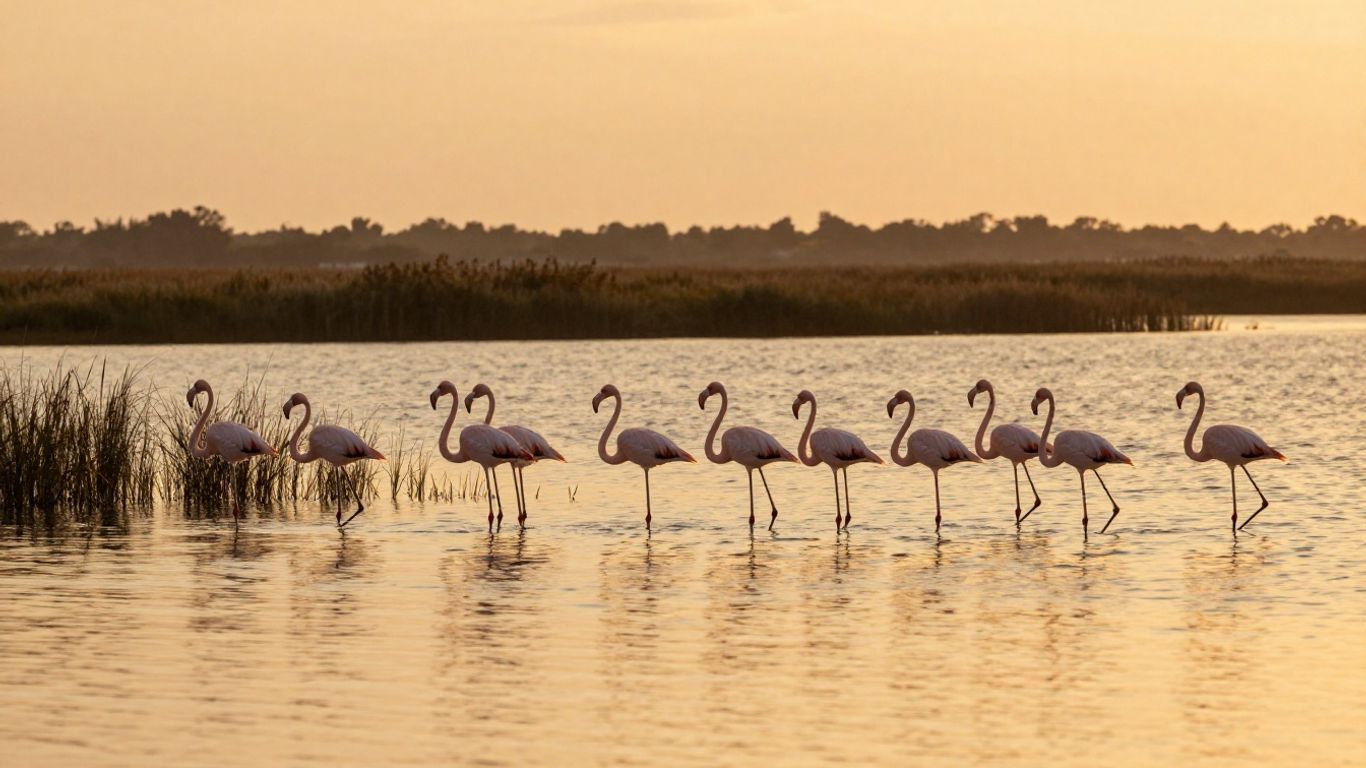
Early morning is often cooler and quieter, especially outside the busiest summer period. Flamingos may be feeding or moving between resting areas, while the low angle of the sun can make their plumage easier to distinguish against the water.
A morning visit also leaves time to change sites if the first lagoon is empty. Check opening hours for managed parks, and remember that rural roads can be narrow, dark, or poorly marked before sunrise.
How evening light improves photography
Late afternoon and evening offer softer light and longer shadows. Flamingos can take on warmer tones, and groups moving across reflective water may create strong photographic compositions without the harsh contrast of midday.
Keep the camera ready but avoid chasing a perfect frame. Birds may turn away, take flight, or move beyond the best light, and that natural change is part of the encounter.
Wind, heat, and visibility in the wetlands
Wind can make exposed lagoons feel surprisingly cold, even on a sunny day. Strong gusts may also ruffle the water and make distant birds harder to identify. On hot, still afternoons, shimmering air can distort the view across long stretches of wetland.
Weather layers, sun protection, and water are therefore practical necessities rather than optional extras. If visibility deteriorates, shift to a shorter walk, choose a sheltered viewpoint, or return later.
How tides and water conditions can influence sightings
The Camargue combines coastal lagoons with managed and natural wetlands, so changing water conditions can influence where birds feed. Tides, evaporation, rainfall, and local water movement may alter the appeal of one area without changing conditions elsewhere.
You do not need to become a specialist in hydrology. Simply treat your itinerary as adjustable and ask local staff or guides where conditions have recently been favorable.
What to do when flamingos are farther from the shore
Distance is common in the Camargue, particularly at open lagoons and salt pans. Start by scanning slowly from left to right, looking for pale shapes, curved necks, and the repeated movement of feeding birds rather than relying on color alone.
Binoculars are the simplest solution, while a spotting scope can help at broad wetlands. If the flock remains distant, enjoy the wider scene and look for other birds; forcing a closer view usually creates disturbance and rarely improves the experience.
Planning a flamingo-watching trip
A successful trip depends on practical choices as much as on seasonal timing. The delta is spread out, public transportation can be limited in rural areas, and weather changes quickly across exposed roads and wetlands. Build in spare time rather than trying to visit every site in one rushed day.
How long to stay for better wildlife encounters
A single day can cover one reliable viewing site and a nearby town, but two or more days allow greater flexibility. You can return at a better time of day, respond to weather, and visit different habitats instead of relying on one pond.
A two-day Camargue itinerary is useful inspiration for combining Pont de Gau, salt landscapes, beaches, and wildlife. Even if you adapt it, the principle is sound: give the wetlands more than one opportunity to reveal themselves.
Choosing between a self-guided visit and a guided tour
Self-guided travel offers flexibility and works well at clearly marked parks. A guide can be more useful in the wider reserve, where local knowledge helps explain access, habitat changes, and animal behavior. The best choice depends on your comfort with navigation and your interest in interpretation.
Book ahead for popular departures and confirm the meeting point, duration, walking requirements, and cancellation policy. Do not assume every tour has the same wildlife focus.
What to bring for comfort and observation
Packing should account for sun, wind, mud, insects, and long periods of standing. The most useful items are simple and easy to overlook, so assemble them before leaving your base:
- Binoculars or a spotting scope
- Water, sun protection, and a hat
- Layers suitable for wind and changing temperatures
- Sturdy shoes with grip for muddy or uneven paths
- A phone, map, or offline directions for rural travel
These basics reduce avoidable discomfort and make it easier to stay in one place long enough for good sightings. The Camargue travel planning guide also covers arrival points, transport, parking, and practical preparation.
Combining flamingo watching with other Camargue attractions
Wildlife viewing pairs naturally with the region’s other experiences. You might visit a coastal beach, explore a historic town, observe white horses and black bulls, or take a slow drive through salt landscapes. Keep the schedule loose enough that a long birdwatching stop does not disrupt the rest of the day.
For travelers interested in local traditions, horseback riding and visits to working ranches offer a different perspective on the delta. The aim is not to collect attractions but to understand how people, water, livestock, and wildlife share the same landscape.
Seasonal differences in crowds, prices, and accommodation
Summer generally brings greater demand, warmer weather, and busier popular sites. Spring and autumn can provide a useful compromise between conditions and crowd levels, while winter may be quieter but have fewer open services.
Reserve accommodation early when traveling during holidays or festivals. The Camargue accommodation guide outlines options ranging from farmhouses and ranches to hotels and glamping, which can help match your base to the sites you plan to visit.
Responsible ways to watch flamingos
Flamingos are wild birds, even when they gather near established visitor areas. Their welfare should guide every decision about distance, access, photography, and noise. A good sighting is one that leaves the birds behaving normally after you depart.
Keeping a safe distance from the birds
Stay far enough away that flamingos continue feeding, resting, or moving naturally. If a group repeatedly lifts its head, shifts away, bunches together, or takes flight after people approach, you are too close.
Use binoculars to replace physical proximity. Never pursue a bird along the shore or enter shallow water to improve a photograph.
Staying on marked paths and respecting protected areas
Marked paths protect fragile habitats as well as visitors. Mudflats, nesting islands, and salt marsh edges can be unstable, and a shortcut may cross an area closed for conservation reasons.
Follow signs, barriers, and staff instructions even when the nearest flock appears just beyond them. Access rules may change with water levels or breeding activity, so rely on current local guidance.
Avoiding disturbance during nesting season
Breeding colonies need space and predictable conditions. Loud groups, drones, dogs off leash, and attempts to approach nests can cause serious disruption, even if the disturbance lasts only a few minutes.
Do not use playback calls or throw food. If an area is closed, regard the closure as part of responsible wildlife tourism rather than an inconvenience.
Using binoculars and cameras without disrupting wildlife
Long lenses and binoculars allow close observation without close movement. Keep voices low, turn off flash, and avoid sudden gestures near viewing points. A tripod can be helpful, but it should not block a path or encourage you to step beyond a boundary.
Photography is best treated as a record of the visit, not a reason to control what the birds do. Sometimes the strongest image is made from a respectful distance.
Supporting conservation and local nature guides
Entrance fees, permitted tours, and local guides can support the people and organizations maintaining access and protecting habitats. Choose providers that explain wildlife etiquette clearly and keep their groups under control.
Ask questions about current conditions, seasonal closures, and the best way to observe without pressure. Discover France Beyond Paris also approaches regional travel through practical destination guidance, which is useful when planning a visit beyond France’s major urban centers. Responsible choices help preserve the Camargue for both wildlife and future travelers.
Conclusion
The best time to visit the Camargue for flamingos depends on your priorities, but autumn and winter stand out for large flocks and quieter observation, while spring and summer offer their own advantages. Choose more than one viewing site when possible, plan around early or late light, and leave room for changing water and weather conditions. Most of all, let the birds set the distance and pace of the experience.
Frequently Asked Questions
What is the best month to see flamingos in the Camargue?
Autumn and winter are often strong choices for large flocks and quieter conditions, while spring and summer can also provide excellent sightings. Local water levels and weather may matter more than the calendar alone.
Can you see flamingos in the Camargue year-round?
Yes. Greater flamingos live in the Camargue throughout the year, although flock size, location, behavior, and visibility change with seasonal conditions.
Where is the most reliable place to see flamingos?
Pont de Gau Ornithological Park is a practical option because its established trails pass through wetland habitats. Wild sightings are also possible across the wider regional park and its lagoons.
What time of day is best for flamingo watching?
Early morning and late afternoon are usually comfortable and offer softer light. These periods can also be quieter than the middle of the day, especially during the warmer months.
Do you need binoculars to see Camargue flamingos?
Binoculars are not essential at every site, but they are highly useful because flamingos often remain far from paths and shorelines. They also let you observe behavior without approaching the birds.
Is summer too hot for a flamingo-watching trip?
Summer can be worthwhile, but heat is strongest around midday. Schedule walks for morning or evening, carry sufficient water, wear sun protection, and expect more visitors at popular sites.
How can visitors avoid disturbing flamingos?
Stay on marked paths, keep a generous distance, avoid noise and flash, never feed the birds, and respect seasonal closures. If flamingos change their behavior because of your presence, move farther away.


