

Alsace’s Most Beautiful Villages That Tourists Always Miss

Part of our Alsace travel guide
Alsace feels like walking straight into a storybook, honestly. This little region, squeezed between France and Germany, has a vibe that’s genuinely hard to pin down. Colorful half-timbered houses, crooked cobblestone lanes, and vineyards rolling on until they blur into the hills.
And sure, a couple of villages get all the fame, but there’s a whole bunch of other gorgeous spots that barely get a mention. That’s what this is really, a wander through the most beautiful villages Alsace has quietly tucked away the ones that might just catch you off guard with how lovely they are. Ready? Let’s go find some proper gems.
Key Takeaways
- Bergheim gives you real medieval Alsace, old fortifications, pastel buildings, and hardly any crowds to fight through.
- Ribeauvillé is popular for a reason: castles on the hill, local crafts, colorful streets, and the whole classic Alsace package.
- Hunawihr is the quiet one, tucked into vineyards with a fortified church and barely a tour bus in sight.
- Kaysersberg does the full fairytale thing: castle ruins, a river running through, and half-timbered houses everywhere you look.
- If you’re searching for “Alsace’s most beautiful villages,” the smaller names like Kientzheim, Niedermorschwihr, and Turckheim are where the quiet magic actually lives.
Discovering Bergheim’s Medieval Charm
Pastel Hues and Half-Timbered Architecture
Stepping into Bergheim feels a bit like wandering onto a film set, except it’s all wonderfully real. The buildings got me first. They’re not just old; they’ve got this character to them, painted in soft, welcoming shades, muted yellows, gentle pinks, and creamy whites, all framed by dark, weathered timber.
It’s the classic Alsace look, sure, but Bergheim somehow makes it feel more intimate. The streets are narrow and winding, and they keep leading you into little squares that practically beg you to stop for a coffee. I just wandered, camera in hand, trying to catch the way the light landed on the old stone and wood. You can really feel the craftsmanship of centuries past here; it’s everywhere.
Exploring the 14th Century Fortifications
What really sets Bergheim apart, and the thing I always point out to friends heading that way, are the medieval fortifications, which are still remarkably intact. You can actually walk along parts of the old ramparts, which surprised me. It’s not some huge imposing castle but more a ring of walls and towers that once kept the village safe.
Several of the gates are still standing too, like the Porte Haute and the Porte Basse, and they’re just fantastic to see up close. Standing next to those ancient stones, you get this real sense of history, like you can almost picture life here hundreds of years back, everyone tucked safely inside the walls. It’s a tangible link to the past, and you don’t find that everywhere.
A Picturesque Introduction to Alsace Villages
If you want a gentle introduction to the charm of Alsace, Bergheim is kind of the perfect opener. It has everything you’d expect: the pretty architecture, the history, and the friendly small-town feel, but with far fewer people than its famous neighbors. It’s the sort of place where you can take your time, soak it all in, and genuinely feel like you found something special.
I usually recommend starting the day here before moving on to the bigger names; it sets the tone beautifully. And if you fancy staying overnight for the full experience, Bergheim has some charming guesthouses of its own, though nearby towns give you a wider spread of options if you’re planning a longer stay hunting hidden places in France like this one.
Ribeauvillé: A Quintessential Alsace Experience
Ribeauvillé is one of those places that just feels right when you’re poking around Alsace. It’s a bit bigger than the tiny tucked-away villages, but it never loses the charm. I remember my first visit, being struck by how it managed to feel grand and intimate at the same time, somehow.
This is a town that wears its history openly, with the ruins of three castles keeping watch from the hillsides above. You can feel the centuries here, from the worn cobblestones under your feet to the proud old winegrowers’ houses.
The Allure of a Larger, Popular Village
It’s definitely a popular stop; you’ll see other visitors around, but Ribeauvillé has this way of absorbing you anyway. It isn’t just a pretty face either; there’s a real living community here. The main street, Grand’Rue, is lined with little shops selling local crafts and, obviously, wine. You can happily lose a few hours just wandering, ducking into cellars for a tasting, and admiring the old facades.
If you want the classic Alsace experience without hiding away in some tiny hamlet, this is a good place to get it. For a calmer visit, go midweek or slightly off-season; that made a real difference for me.
Historical Sites and Local Crafts
One thing that makes Ribeauvillé stand out is how much of its past is still lying around. The three castles, Saint-Ulrich, Girsberg, and Haut-Ribeauvillé, are visible from nearly everywhere in town, and hiking up to them rewards you with incredible views. Down in the village you’ll spot bits of the old town walls and towers, quiet reminders of its medieval importance.
Beyond the history, the crafts are a proper draw too: pottery, textiles, and lots of it with that unmistakable Alsatian flair. And then there’s the wine, of course. Ribeauvillé is known for its Grands Crus, Geisberg and Osterberg among them, and plenty of winegrowers open their doors for tastings, which you shouldn’t skip. Cave de Ribeauvillé is a solid place to start if you’re after some excellent local bottles.
Quaint Side Streets and Colorful Buildings
The main street is lovely, sure, but the real magic of Ribeauvillé, for me anyway, happens when you slip into the smaller side streets. The pace drops right down there, and you start noticing the details: the flower-stuffed window boxes, the ornate door knockers, and the way the half-timbered houses lean slightly towards each other like they’re gossiping.
The colors are pure Alsace, with warm yellows, deep reds, earthy browns, and the Vosges Mountains sitting quietly behind it all. Those little corners are where the atmosphere really soaks in.
Ribeauvillé blends historical weight and everyday local life in a way few towns manage, which is why it’s a standout stop on the Alsace Wine Route. It works for pretty much everyone, history lovers, wine people, or anyone who just likes a beautiful street.
Where to Stay: Ribeauvillé has a decent range of places to sleep. There are charming guesthouses, the chambres d’hôtes, tucked into the old town, which give you a more personal experience, plus several hotels running from comfy mid-range to properly luxurious, many with views over the vineyards or the historic center. Book ahead, especially in peak season; it fills up quick.
Hunawihr: A Serene Vineyard Village
While everyone rushes to the famous neighbors like Ribeauvillé and Riquewihr, I found a special kind of peace in Hunawihr. It sits tucked away, almost shyly, in the middle of rolling vineyards, and honestly it feels like a secret people forgot to share. The buildings here aren’t as brightly painted as in some other villages, but there’s a quiet charm that grows on you fast. It’s the kind of place where you can actually hear the birds and the soft rustle of grape leaves.
Unassuming Beauty Amidst Vineyards
What struck me most about Hunawihr is the setting. The village is cradled by vines that produce some of Alsace’s most celebrated wines, and it feels less like a tourist stop and more like a working village that just happens to be ridiculously pretty. I spent a good hour wandering the lanes, breathing the fresh air, and watching how the houses blend into the landscape like they grew there. A refreshing change from the busier spots, truly.
The Distinctive Church and Grapevines
The star of the village has to be its fortified church, perched up on a small hill. It stands there proudly with vineyards wrapped all around it, and it’s quite the sight. The church itself has this almost austere beauty, and the way the vines seem to climb toward it is really something. It’s the perfect spot to pause and take in the views across the countryside. And if local produce is your thing, there are plenty of chances to sample the wines right here in the village.
A Peaceful Alternative to Popular Neighbors
If you need a break from the crowds, Hunawihr is your answer, simple as that. It gives you the authentic atmosphere of an Alsace village without any of the rush. Slow down, maybe have a picnic with some local cheese and a bottle of something white, and just enjoy the simple beauty of it all. It reminds me of the quieter hidden villages you find elsewhere in France, the ones that reward you for making the extra bit of effort.
Where to Stay: Hunawihr itself is tiny, but there are lovely guesthouses and small hotels close by, often with vineyard views from the rooms. A lot of visitors base themselves in Ribeauvillé or Riquewihr and pop over to Hunawihr when they want the quiet. As always, booking ahead is smart, especially in peak season.
Kaysersberg: A Fairytale Setting by the River
Kaysersberg genuinely feels like it was lifted out of a storybook. I remember my first visit, being struck by how the whole village seemed cradled by the Vosges Mountains, with the Weiss River easing through the middle of it. One of those places where you instinctively slow down and just… take it in.
Medieval Castle Ruins and Scenic Views
An absolute must-do here is climbing up to the ruins of the Château de Kaysersberg. It sits on the hill above the village, and yes, it’s a bit of a climb, but the panoramic views make every step worth it. You can see the red-tiled roofs of the half-timbered houses spread out below, the river winding through the lot. It gives you a real sense of the village’s history and why it mattered strategically back in the day. I spent a solid hour just poking around the ramparts, imagining what life looked like from up there centuries ago.
Charming Half-Timbered Houses
Coming down from the castle, you land right in the heart of Kaysersberg. The main street is lined with these ridiculously photogenic half-timbered houses, painted in a whole spread of colors, warm ochres, soft greens, and cheerful blues, with those dark wooden beams doing all the framing. It’s a postcard around every corner, genuinely. I kept stopping for photos, and honestly you could lose an entire afternoon in the smaller side streets, finding hidden courtyards and balconies dripping with flowers.
Local Pottery and Wine Discoveries
Kaysersberg isn’t only about views and architecture, though; it’s also a lovely place to hunt for local crafts and, this being Alsace, wine. I found some beautiful hand-painted pottery in a small shop near the fortified bridge, the kind of souvenir that actually means something later. And you’re never far from a vineyard here, so there are plenty of shops where you can taste and buy local Alsace wines, especially the Riesling and Gewürztraminer. A bottle on a riverside bench at the end of the day is a pretty perfect way to wrap things up.
Where to Stay: Kaysersberg has options running from cozy bed and breakfasts inside historic buildings to charming little hotels, many right in the heart of the village so you can do everything on foot. Book ahead in peak season; it’s not exactly a secret anymore.
Kientzheim: A Hidden Gem Through the Porte du Lali
On my first Alsace trip I was so locked onto the bigger names like Kaysersberg, which is literally next door, that I nearly missed Kientzheim altogether. Which would’ve been a shame, honestly. This village is much smaller, maybe a tenth the size of its neighbor, but it has this quiet charm that stuck with me long after. Feels like a secret someone let you in on.
Entering the Classically Alsace Old Town
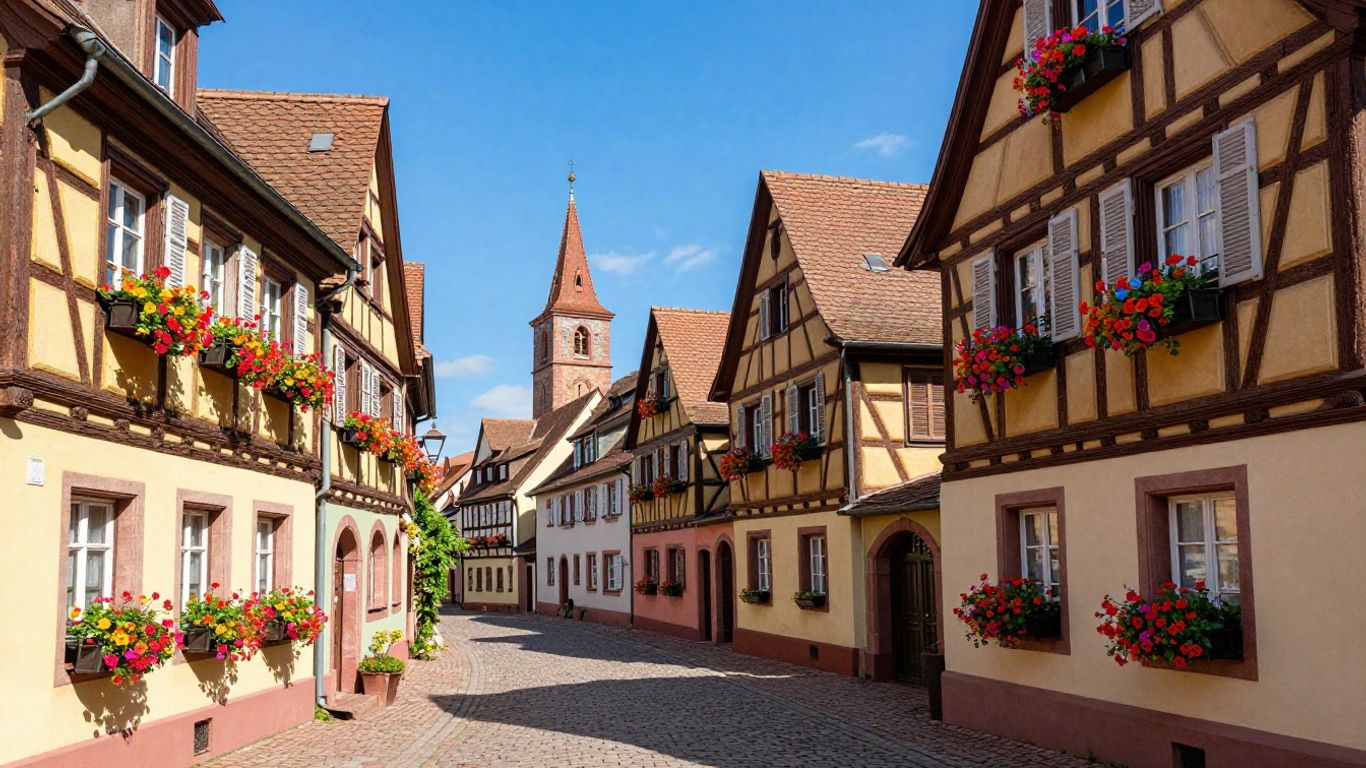
The best way to arrive in Kientzheim is through the Porte du Lali. It’s an old fortified gate, and the moment you pass under it you’re standing in the heart of the old village. The buildings here are exactly what you picture when someone says Alsace has classic half-timbered houses, all leaning a little, painted in lovely muted shades. Nothing flashy about it, just properly picturesque. I always make a point of entering this way; it sets the mood perfectly.
The Exquisite Fountain in Place Lieutenant Dutilh
My favorite spot in Kientzheim has to be the fountain in Place Lieutenant Dutilh. It’s a really lovely, quiet little square with a few small cafes where you can sit and let the world drift by. The fountain itself is beautiful, and it’s the perfect excuse to take a break, order a coffee, and soak up the calm. It’s these small moments, in squares like this one, that make wandering Alsace so special to me.
A Quiet Square for People Watching
That same square is also perfect for some low-key people watching. Unlike the busier villages, Kientzheim gives you room to simply be. Take one of the little tables outside a cafe, order a pastry or a glass of wine, and watch the gentle rhythm of village life roll past. It’s a refreshing change of pace and a good reminder that the most memorable travel moments often happen in the quietest places.
Where to Stay: Kientzheim itself is small and doesn’t do big hotels, but Kaysersberg sits right next door with plenty of choices, guesthouses, small hotels, the lot. Or look at the neighboring villages if you’d rather stay somewhere more secluded. Book early during the busy months; it’s the same story as everywhere along the route.
| Village | Distance from Kientzheim | Accommodation Type Examples |
| Kaysersberg | ~1 km | Hotels, Guesthouses, B&Bs |
| Ammerschwihr | ~3 km | Rural Gites, Farm Stays |
| Turckheim | ~5 km | Boutique Hotels, Apartments |
Niedermorschwihr: Quirks and Crooked Spires
Unique Architectural Features
Niedermorschwihr is a small village, dead easy to miss if you’re rushing between its more famous neighbors. But that’s honestly part of the charm. It doesn’t shout for attention, it sort of whispers its history instead. Look closely at the older buildings and you’ll notice the upper floors jutting out quite a bit over the ground floor. That wasn’t a style choice, not really. Back in medieval times, taxes were often calculated on the footprint of the ground floor, so the clever locals just built outward on the upper levels. A fascinating little peek into historical problem-solving, that.
Medieval Tax Evasion in Building Design
So yes, those overhanging upper stories are basically medieval tax planning in timber form. Imagine designing your house while constantly working out how to shrink your tax bill. The result is this distinctive look you’ll spot in Niedermorschwihr and a few other older villages, and once you know about it, you start seeing it absolutely everywhere. It adds a whole extra layer to appreciating the village’s past and makes you wonder what other workarounds people invented to deal with the rules of their day.
The Distinctive Twisted Spire of Saint-Gall Church
But the real showstopper here, the thing that truly sets the village apart, is the church. Specifically the spire of Saint-Gall Church. Plenty of Alsace villages have beautiful churches, but this spire twists and turns like a corkscrew, and there’s nothing else quite like it in the region. That crooked spire is Niedermorschwihr’s signature, full stop. Why it was built that way is a bit of a mystery; some say it helped the wind slip past, and others reckon it was simply an architectural whim. Either way it’s a memorable sight and a great reason to seek out a village most people drive straight through. If you’re plotting an Alsace road trip, add Niedermorschwihr to the list for a dose of quirky history and one genuinely unique landmark.
Turckheim: Valley Views and Historic Gates
Turckheim sits in a gentle valley, wrapped in fields and vineyards that spread out like a green carpet. The first time I saw it from the surrounding hills, the view was just lovely, mountains rising behind it like a stage backdrop. One of those places that instantly makes you feel like you’ve stepped into a postcard, no effort required.
Picturesque Setting in a Green Valley
The approach into Turckheim gives you some of the prettiest views in the region, honestly. The way the village tucks itself into the landscape, rolling hills on one side and vines on the other, is really something special. It’s peaceful too, and the air feels noticeably fresh, like it’s been filtered through the forest on its way down.
Colorful Half-Timbered Houses
Like most villages around here, Turckheim has those iconic half-timbered houses painted in every shade you can think of. Walking through town, you’ll pass ochre, rose, and sky blue, all set against dark beams, with cobblestones underneath adding to the old-world feel. Every corner is a photo waiting to happen. Easy to lose an afternoon just wandering and staring, which is exactly what I did.
Remnants of Original Fortifications
What really sets Turckheim apart, though, are the remnants of its original fortifications. Three big medieval gates still stand today, which is pretty remarkable when you think about it. Walking through those ancient gateways gives you a proper sense of the village’s history and its old importance. A tangible link to centuries long gone, sitting right there in the middle of everyday life.
Where to Stay: Turckheim is on the smaller side, so it has a handful of charming guesthouses and small hotels rather than endless choice. For a wider selection, nearby Colmar works brilliantly as a base for exploring several villages, and plenty of visitors treat it as the launch pad for their Alsace adventures.
- Charming inns: Small, family-run places inside the old town give you the most authentic stay.
- Guesthouses (chambres d’hôtes): More personal, and the hosts usually hand you the best local tips for free.
- Nearby Colmar: A broader spread of hotels and apartments, handy for longer stays.
Turckheim’s setting really is idyllic, a calm escape with gorgeous natural surroundings and history layered into every street. The mix of its location and those well-preserved medieval features makes it a standout quietly.
Riquewihr: Ascending to a Stunning Clock Tower
Riquewihr is one of those places that feels plucked straight out of a storybook. I remember walking its main street, Rue du Général de Gaulle, for the first time and being genuinely taken aback by how well-preserved everything was. It’s a walled town, so you get that full stepping-back-in-time feeling, somewhere around the 16th century, I’d guess. The buildings are wonderfully colorful, with amazing half-timbered facades and intricate wrought-iron signs hanging over the doors. Easy to see why people claim the animators behind Beauty and the Beast found inspiration here.
A Popular Village with Enchanting Streets
Riquewihr is definitely one of the more popular stops on the Alsace Wine Route, and it can get properly busy in peak season, but it’s popular for a reason. The main street somehow gets more beautiful the further you walk, climbing gently toward the Dolder Tower, this fantastic medieval gate that’s become the symbol of the town.
Go early in the morning or late in the afternoon if you can; it makes everything so much more relaxed and you can actually breathe the atmosphere in. Also, duck into the smaller side streets off the main drag; that’s where the quiet corners and hidden courtyards live.
Local Cuisine and Accommodation Options
You cannot visit Riquewihr without eating; that would be a crime. There are plenty of restaurants and winstubs, the traditional wine taverns, where you can work through the regional specialties. Choucroute garnie is sauerkraut piled with different meats, or tarte flambée, a thin, crispy flatbread that vanishes far too quickly. And obviously the wines, particularly the Riesling and Gewürztraminer.
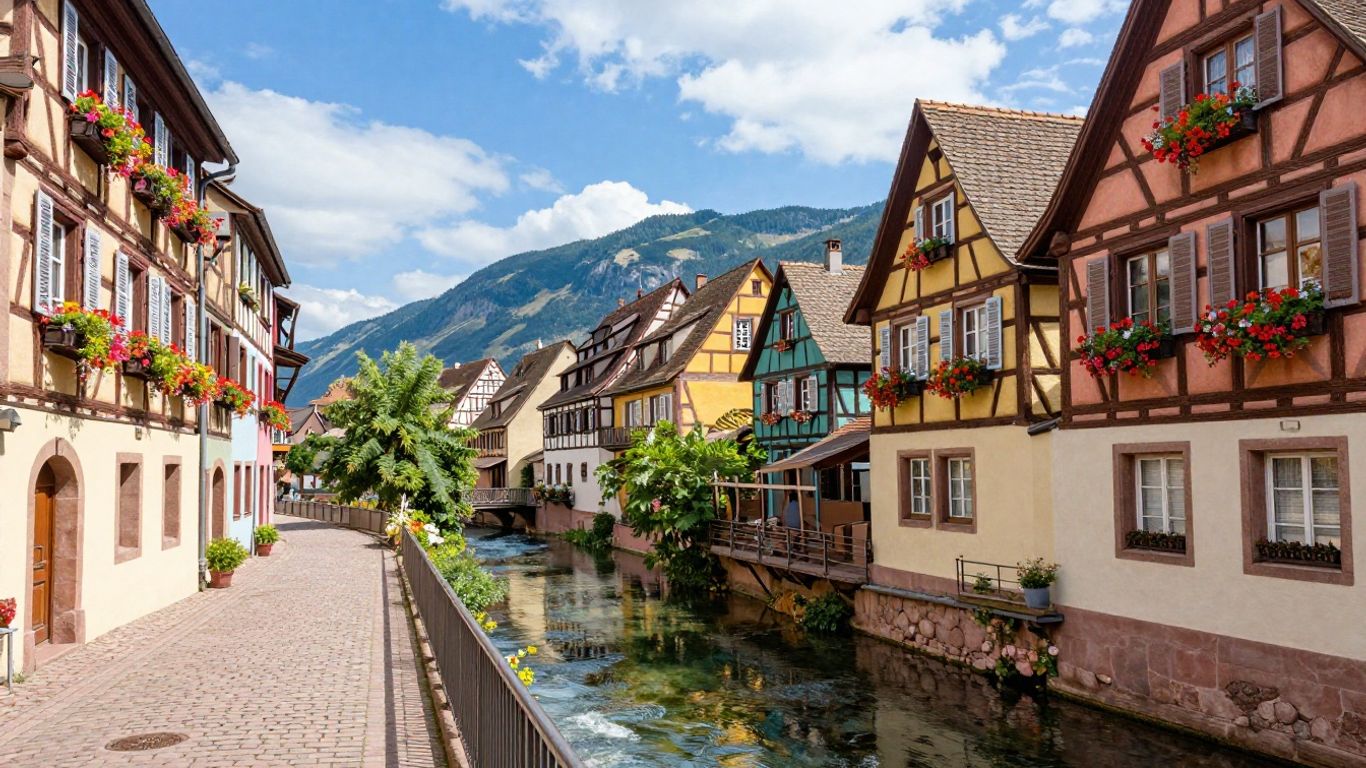
A lot of the houses along the main street are actually wine cellars where you can taste as you go. And if you fancy experiencing the village once the day-trippers clear out, there are numerous hotels and lovely bed and breakfasts around. Staying overnight means seeing Riquewihr in the early morning light or under the stars, which is honestly a bit magical.
Year-Round Festive Charm and Medieval Markets
One thing I love about Riquewihr is that it has its own charm whatever the season. In summer the flower boxes overflow and the shutters are thrown open, so the streets look even brighter. But autumn and winter are when the village really transforms. The smell of mulled wine and roasted almonds drifts through the air, especially around Christmas, and Riquewihr hosts one of the most atmospheric medieval Christmas markets I’ve ever wandered through. It feels genuinely authentic, with handcrafted goods and festive treats, all set against those historic buildings. If that’s your kind of thing, France in the off-season is full of little moments like this.
Riquewihr’s beauty is hard to argue with, a perfectly preserved medieval town that makes you slow down and notice the details. From the clock tower right down to the smallest flower on a windowsill, everything adds to the fairytale of it.
Where to Stay:
- Hôtel Le Saint Nicolas: A charming spot right in the heart of the old town, with comfortable rooms and a proper Alsatian breakfast.
- Gîte Le Rempart: Self-catering apartments tucked inside the ramparts, great if you like a bit more independence.
- Chambres d’hôtes: Private rooms scattered all through the village for a more intimate, local stay. Book well ahead for peak season or the Christmas market weeks, seriously.
Exploring Beyond the Well-Known Villages
Mittelwihr and Bennwihr for Wine Tasting
While the crowds pile into the famous spots, I always make a little detour to Mittelwihr and Bennwihr. These neighboring villages sit quietly among the vineyards and offer a much more relaxed setting for anyone who’s into wine. This is where you actually feel the local wine culture: no hustle, no queues. I found some fantastic small producers here, the kind who pour your tasting themselves and tell you about the vintage while they do it. Don’t miss the chance to try Riesling and Gewürztraminer straight from the source.
Ingersheim’s River Walks and Castle Views
Ingersheim is a touch bigger than some of the other hidden spots, but it offers a lovely change of pace. I particularly enjoyed the peaceful walks along the river that runs through the village, perfect for a slow stroll with nowhere to be. And if you like history with a view, a short trip just outside the village brings you to Castle Wineck, where the ruins give you a peek into the past plus some pretty nice panoramas over the countryside.
Zellenberg: A Compact Village Experience
If you want truly small and charming, Zellenberg is the one. It’s tiny, around 300 residents, which makes it one of the most compact, intimate stops you’ll find anywhere along the Wine Route. Wandering its single main street feels like time travel, in the gentlest way. Perfect spot to grab a coffee and just sit with the quiet. Honestly, when people ask me about French villages to visit that never show up in the glossy brochures, this is exactly the kind of place I mean.
These smaller villages tend to give you a more genuine glimpse of everyday Alsatian life, well away from the main tourist flow. Perfect for anyone chasing a quieter, more personal version of the region.
Where to Stay: Mittelwihr, Bennwihr, Ingersheim, and Zellenberg don’t have long hotel lists, but you’ll often find charming chambres d’hôtes or small family-run inns. Book ahead in the busy months. For more choice, base yourself in Colmar and do easy day trips out to these smaller places.
The Unique Cultural Blend of Alsace
Alsace really does feel like a storybook region, and a big part of that magic is the fascinating tangle of French and German influences. You see it everywhere: in the architecture, the food, and even in how people speak. That blend is exactly what makes Alsace feel unlike anywhere else in France.
A Fusion of French and German Influences
For centuries Alsace was caught in a tug-of-war between France and Germany, and that history left a permanent mark. You’ll notice half-timbered houses that look like they wandered over from a Black Forest village, standing right next to buildings with a more classic French elegance. The language is a mix too; plenty of locals still speak Alsatian, a dialect with deep German roots, alongside their French. That dual heritage is what gives the region its very particular character.
Culinary Delights and Architectural Styles
Food-wise, Alsace is heaven for anyone who loves hearty, comforting cooking. Dishes like choucroute garnie and tarte flambée have an unmistakably German feel to them, but then you get the delicate pastries and world-class whites, Riesling and Gewürztraminer, that carry all the French refinement.
And if beer is more your thing than wine, Alsace happens to be France’s original beer country too, with some brilliant craft breweries hiding between the vineyards. The architecture tells the same story as the food. Charming villages with colorful flower-covered houses straight out of a fairytale, but look closer and you’ll see the sturdy construction and decorative details of German craftsmanship underneath.
- Half-timbered houses: Usually painted in bright colors with dark wooden beams doing the outlining.
- Wrought-iron signs: Intricate, artistic, and quietly one of my favorite details in the whole region.
- Flower boxes: Geraniums spilling off nearly every windowsill, like the villages are showing off a bit.
Being a borderland for so long means Alsace absorbed the best of both worlds and ended up with an identity that feels familiar and surprising at once. A rich, savory meal one moment and a delicate pastry the next, all in a landscape that’s somehow rustic and elegant at the same time.
The Enchanting Alsace Wine Route
The best way to experience this cultural blend, hands down, is driving the Alsace Wine Route. The road winds through picture-perfect villages, past rolling vineyards, and under the odd ruined castle, and you stop at local caves along the way to taste the region’s famous whites. Every village adds its own slightly different flavor of that Franco-German heritage. Many travellers start from Strasbourg and work their way south, which is a lovely way to do it. And if you’re planning the drive as a proper Alsace road trip, it’s worth checking car rental options early so you can explore at your own pace, because trust me, you’ll want to pull over constantly.
Where to Stay: Loads of the villages along the Wine Route have charming guesthouses and small hotels, and staying in one of the smaller towns really lets you sink into the local rhythm. If you want a fuller list of options while you plan, resources covering Alsace’s best towns are handy for lining up your stays.
More Than Just a Pretty Picture
So there you go, a wander through some of the quieter corners of Alsace, the ones that don’t always make the highlight reels. The famous spots earn their fame, no argument, but these hidden places in France give you a much more relaxed way to soak up that odd, lovely French-German blend. Renting a car is honestly the move if you want to do this properly; it lets you drift at your own pace and stop wherever something catches your eye.
Every village has its own little story, its own particular feel, and you could genuinely spend weeks driving around and still keep finding surprises. That’s the thing about hunting down the best villages in Alsace, France, has quietly tucked between its vineyards: the search itself becomes a holiday. Don’t be scared to wander off the beaten path; you might just find your own favorite fairy tale corner.
Frequently Asked Questions
What makes Alsace villages so special?
They’re basically fairy tale material. Colorful houses with exposed wooden beams, the half-timbered style, and cobblestone streets everywhere you turn. And because the region bounced between France and Germany over the centuries, you get this lovely mash-up of both styles in one place.
How can I get around to see these villages?
Renting a car, easily. An Alsace road trip gives you the freedom to stop whenever something pretty appears, and out here that’s pretty much constant. Buses miss half the good stuff.
How much time should I plan for visiting Alsace villages?
You could fill days, honestly weeks. A single day gets you through two or three villages, but if you’re stacking up French villages to visit, plan at least two or three days so you can actually enjoy the atmosphere instead of sprinting through it. Staying overnight in one of the villages is a lovely idea too.
Are these villages crowded?
The famous ones like Riquewihr and Ribeauvillé can get pretty busy, especially at peak times. But loads of the smaller, lesser-known villages stay wonderfully calm, and that’s half the reason to seek them out.
When is the best time to visit the Alsace villages?
Spring and summer are gorgeous, flowers everywhere and sunny skies. But winter is genuinely magical, especially through the Christmas market season, when the villages get dressed up in festive lights and decorations.
What kind of food can I expect in Alsace?
A delicious mix of French and German. Hearty dishes like choucroute garnie, which is sauerkraut with meat, and tarte flambée, a thin crispy pizza-like thing. And do not skip the local wines; that would be a mistake.
Are there any specific villages recommended for wine lovers?
Yes! Some of the best villages in Alsace, France, for wine lovers sit right along the Wine Route. Hunawihr, Mittelwihr, and Bennwihr are surrounded by vineyards and give you brilliant, low-key tasting opportunities.
What makes some villages unique, like Niedermorschwihr?
Niedermorschwihr has some proper quirks. Some of the old buildings are wider on the upper floors than at street level because taxes were once based on the ground floor’s size, clever really. And its church has a distinctly twisted spire, which you won’t find anywhere else nearby.
Planning a trip to Alsace?
Compare hotels, guided tours, car hire and flights in one place.


