

How To Visit Mont Saint-Michel Without The Crowds

Part of our Mont Saint-Michel travel guide
Going to this UNESCO landmark is kind of about timing, and also patience a little bit, so you do not get stuck in those really intense midday crowds that basically define the high season. If you stick with these main strategies, you will end up seeing the island’s real personality and not just the usual fast version. It’s not only about going, but also how and when you go, and even a bit of wandering around.
Key Takeaways
- Prioritize visiting during the shoulder seasons like March or October to drastically reduce visitor density.
- Stay directly on the mount to enjoy the evening and early morning hours before the tour buses arrive.
- Walk the causeway during off-peak hours to appreciate the surrounding bay without battling shuttle crowds.
- Dedicate time to exploring the quiet ramparts and nearby coastal towns, some of the best places to visit in Mont Saint Michel, rather than lingering solely on the commercial Grande Rue.
- Plan your transit by coordinating regional train arrivals or car parking well outside the peak midday transit window.
Choosing the best time to visit
Coming back to Mont Saint-Michel Abbey feels weirdly different, once you peel off the coating of mass tourism that usually clings to the entrance. I learned from my own experiences that the atmosphere changes a lot with the hour and even the month, so what looks like a chaotic shuffle becomes this close, almost private walk through history.
Coordinating trips with the off-peak calendar
I found that traveling in the shoulder months gives the most breathing space, for poking around Mont Saint-Michel France, one of the country’s most gorgeous abbeys. While summer brings long sunny days, the trade-off is often the physical closeness to thousands of other visitors. If you go for early March, well I saw cloudy weather but I also got almost empty cloister hallways, which gave this almost mystical, quiet sort of tone to the stone architecture.
Understanding peak daylight versus evening hours
Most travelers try to hit it around noon, and that’s basically when you should pivot to other stuff. The island is at its most compressed between 11 AM and 3 PM, when the fleet of motorcoaches comes in, or sort of rolls in. I usually spend those hours walking the salt marshes or visiting local villages, returning only when the sun begins to dip, and the day-trippers retreat.
The strategic advantage of early morning arrival
If you manage to wake up before most people in the region, you get this rare, quiet view. I usually set my alarm for dawn, to slip into the streets while they are still being cleaned, and before the delivery trucks begin their rounds. Watching the morning light over the granite walls, without all that chatter in the background, gives me a far deeper sort of connection to the whole site.
Staying late after day-trippers depart the island
There is a special, almost magical transformation at sunset when the last shuttle buses roll off. Watching the street lights flicker on across Mont Saint-Michel while the crowds slowly thin out, is worth the price of a local stay. It kind of reshapes that rushed tourist stop back into a contemplative refuge it was supposed to be, centuries ago.
Selecting the right location for your stay

Finding the right base is essential for keeping your calendar under control while on the mount. A lot of travelers instinctively chase the cheapest option, but hanging out on the island, or being really close to it, gives you this kind of flexibility that other people simply can’t reach. In my experience, this choice sort of controls the whole experience, quality-wise.
Sleeping overnight on the mount for exclusive access
If you’re wondering can you stay overnight at Mont Saint Michel, booking a room inside the medieval walls might feel pricey, but honestly it acts like an investment in solitude or something close. You pay for that rare chance to step out of your hotel door when the moon is up, and then everything turns nearly, completely quiet. The silence feels absolute.
Finding tranquil lodgings in neighboring villages
If you like a quieter, more terrestrial setting, the nearby villages give you a kind of breathy change from the island’s steep, vertical complexity. It’s a bit less dramatic, more settled you know, and that helps a lot. You can find charming guesthouses a few kilometers away that provide a more local, grounded experience. This is a great alternative compared to staying in one of the denser hotel clusters.
The practical benefits of proximity for morning walks
Proximity gives a kind of flexibility in your plan that is hard to fully overstate. If you stay nearby, you can split up your day into morning and evening windows, avoiding the middle of day sun and the busiest crowds in a pretty clean way. Planning well means you can use a sort of logistical hierarchy to get the timing right, like this, for optimal scheduling:
| Time of Day | Expected Crowds | Activity Focus |
| Early Morning | Very Low | Abbey Cloister Visit |
| Midday | Very High | Coastal Path Hiking |
| Late Evening | Low | Rampart Photography |
Using this structured approach ensures you are never stuck in the middle of a massive group movement. It turns a potentially frustrating scramble into a smooth, efficient exploration where you dictate the pace.
Avoiding the high-traffic hotel zones in La Caserne
I tend to skip the heavily built-up commercial hub known as La Caserne whenever possible. While it offers undeniable convenience, it lacks the authentic character of the smaller, surrounding rural towns. You might find a better sense of peace elsewhere, perhaps in a setting that feels closer to the authentic Champagne region regarding local interaction.
Mastering transportation and entry points
Getting to Mont Saint-Michel really feels like one of those logistics things people shrug off, until they are there and then suddenly stuck in a queue. For me, handling the entry point matters as much as figuring out what to look at once you are in. There’s some foresight involved, but, with that said the outcome is a more fluid arrival flow, like less friction overall.
Timing your shuttle bus arrivals to dodge crowds
Most people arrive on the shuttle as soon as they reach the parking lots, creating huge clusters of people at the bus stop. I prefer arriving at the shuttle pick-up point either significantly earlier than the tour groups or waiting for the inevitable afternoon lull. This simple delay often saves half an hour of waiting in line.
Walking the causeway to enjoy a quieter perspective
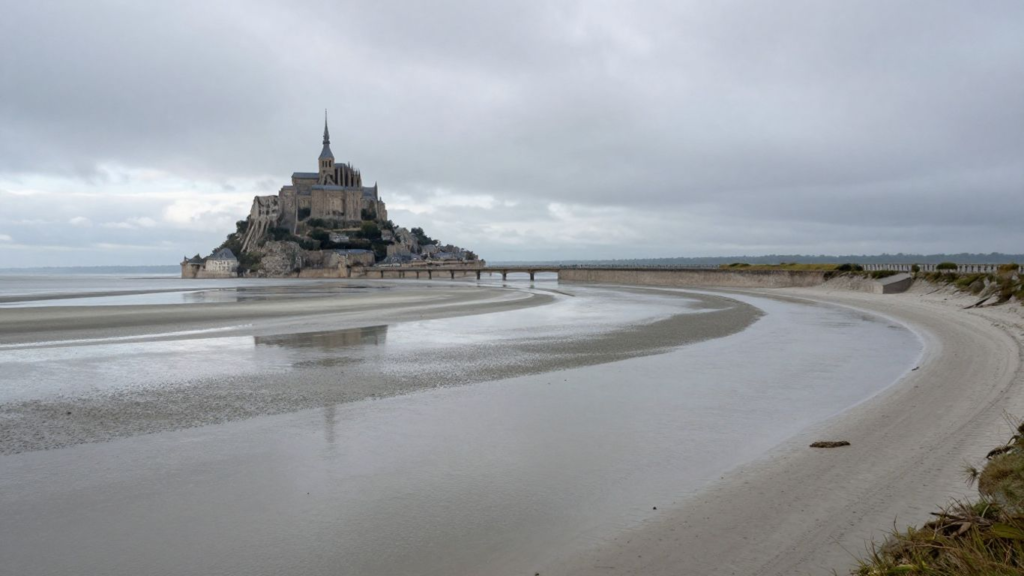
Walking up to the gates is my favorite way to arrive, especially when the tide is low. It gives you a moment of room to think, and also to really take in the massive, granite monolith feeling as it sort of looms there on the horizon. This track usually stays less busy than the shuttle loop, so you can grab photos without having to crop out, well, all the crowd energy. And if you’re the kind who likes to wander by foot, there are plenty of calm campsites farther along the coast too.
Managing arrival times for regional trains and buses
I have learned that coordinating train schedules with local shuttle synchronizations is the hardest part of the trip, you know. If you’re relying on trains, try to land around the mid-afternoon arrivals so you can catch the island on the tail end of that day-tripper cycle. That seems to work best for folks who do not have a car, because it gives you a calm handoff from the station to the mount.
Strategic parking tips for those traveling by car
If you drive in, getting there late during the day is a big advantage for parking. Most people show up in the morning, then they kind of leave around late afternoon, so you can wait to drive in. By doing that you’ll notice it is much simpler to find a space close to the principal transfer spots. It is a simple tactic that reduces stress significantly:
- Arrive after 4 PM to catch the initial wave of departures.
- Aim for the outer lots to avoid the bottleneck of the main shuttle loop.
- Always keep your items organized so you can transition quickly to the shuttle or walking path.
- Check the tide schedule ahead of time to ensure it does not interfere with your planned route.
Navigating the abbey and narrow thoroughfares
Movement through the abbey itself requires a bit of tactical decision-making to avoid the bottleneck of stairs and narrow alleyways. While the main street is inescapable, your patterns through the side paths decide how much peace you actually find.
Prioritizing a morning circuit through the abbey
Heading straight toward the entrance of the Mont Saint-Michel Abbey at the upper part of the hill as soon as it opens is kinda a proven tactic. By the time the general public starts moving up the internal stairways, you will already be halfway through the cloister, looking out across the bay. It helps you avoid that strange sensation of being in a conveyor-belt of visitors, just drifting along you know, and not really experiencing anything.
Steering clear of the busy Grande Rue
This narrow, main thoroughfare is famously overrun, and it often feels like a bottleneck in the middle part of the day. Whenever I want to move from point A to point B, I try to find the side alleys that climb upward or drift downward than the main road, you know. Those routes have fewer shops, sure, but they give a much better sensation of silence, plus historical architecture.
Discovering the quiet serenity of the ramparts
Wandering along the outer perimeter ramparts is one of the best places to visit in Mont Saint Michel, like you get these panoramic views without the hassle of crowds. The stone passageway stays pretty exposed to wind and weather, so most casual day visitors sort of drift back into the sheltered streets, you know, the ones with shops lined up. It ends up being an ideal spot to sit, glance out at the distant horizon, and really feel that sense of solitude, which is what once protected this place.
Timing museum visits to avoid large tour groups
Big tour groups usually shuffle around as whole units, like they’re locked in place, going to museums or little showcases as part of a plan that was already arranged. If you spot a group filing into one small room, then just head to the next place on your list, and then come back, say ten minutes later. Changing your sequence based on the surrounding flow is a skill that keeps the experience fluid.
Exploring the region beyond the main mount
There is so much more to Mont Saint-Michel France than just the island itself. The nearby coastal landscape holds its own unique history and a pretty quiet atmosphere too, that really deserves at least some of your time, if you can manage.
Experiencing bay crossings with a professional guide
If you want to see the bay in a way that most people never do, book a guided walking tour across the sands. It’s a fascinating path to learn about the tide cycles, and there is something profound about standing right in the middle of the bay looking back at the mount, while everyone else is huddled in the commercial village. It really underscores that isolation, that kind of quiet force that shaped local life here.
Discovering the peaceful charm of nearby Pontorson
Pontorson is a great place to base yourself if you want something more local, you know. It does not really have that intense tourist-centric vibe you get in the little villages nearer the causeway, and honestly it is packed with snug, reasonably priced spots to eat. It almost feels like a real community, not just a transit-oriented hub, even if you are mostly passing through, sometimes.
Taking time for hikes along the coastal salt marshes
Walking along the salt marshes gives this sort of quieter, a bit odd but real. You can hear the wind move through things, and also the sheep grazing off in the distance, it feels almost gentle, like the air is thinking. In that low light the colors become surprisingly stunning, in a way you don’t see anywhere else. It was right here that I really grasped the vastness of the Normandy coastline, away from all the concrete, the souvenir shops, and that constant rush.
Engaging with the local atmosphere of neighboring Normandy towns
Spending time in the smaller towns nearby is a great way to find deep, historical context. Each town has its own personality, and the pace is much slower than what you see on the mount. It’s an opportunity to relax, enjoy the regional food, and appreciate why this region is so iconic without always thinking about the next tour bus schedule.
Conclusion
Successfully visiting the mount is a matter of flipping your schedule to favor the quiet hours of dawn and dusk. By remaining flexible and prioritizing the quieter, less-trafficked paths, you can turn a potentially overwhelming experience into a serene and memorable encounter with one of France’s most storied landmarks.
Frequently Asked Questions
Is it possible to visit the mount without a car?
What are the best months to avoid larger tours?
Do I need to buy tickets for the abbey in advance?
Are the ramparts open to the public for walking?
How long should I dedicate to the island visit?
Can you walk around the entire island at high tide?
Are there quiet spots to eat on the mount?
Planning a trip to Mont Saint-Michel?
Compare hotels, guided tours, car hire and flights in one place.


