

Eze Village, France: The Medieval Clifftop Town Above the Mediterranean

Key Takeaways
Èze is a hilltop village on the French Riviera, distinct from the seaside district below it. A little planning makes its steep lanes, gardens, and views easier to enjoy.
- Èze village sits between Nice and Monaco, high above the coast.
- The medieval center is compact, steep, and largely pedestrian-only.
- The Jardin Exotique, historic church, and perfume workshops are key stops.
- Èze-sur-Mer is the coastal district; the train station is not in the hilltop village.
- Arrive early, wear sturdy shoes, and check transport and opening times before setting out.
Where Èze village is and what makes it distinctive
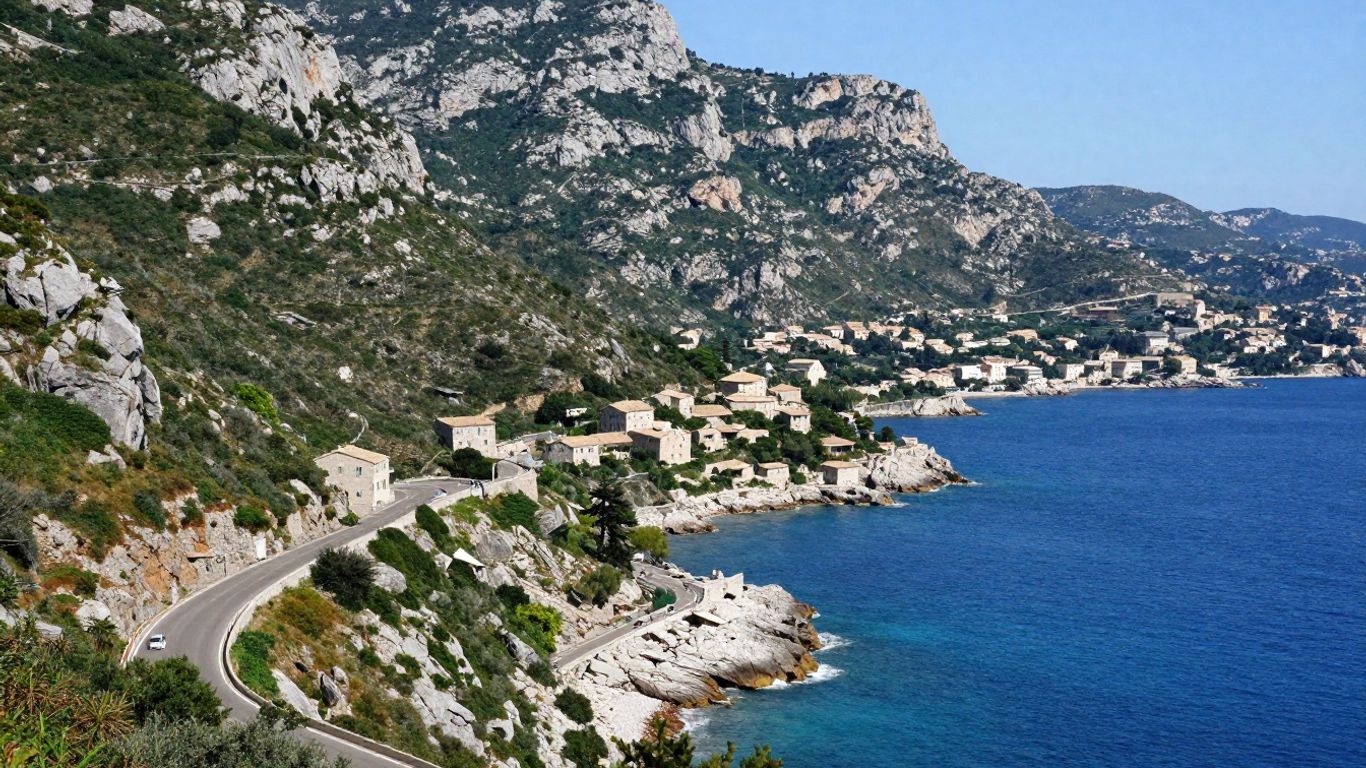
Èze is a small commune on the French Riviera, between Nice and Monaco. The village most visitors picture is perched well above the shoreline, with the Mediterranean visible from its upper lanes and viewpoints. Its location makes it a popular stop on a coastal itinerary, but the climb and narrow streets give it a character quite different from the towns along the water. If you are searching for eze village france, the first distinction to keep in mind is that the hilltop village and the seaside district are separate places.
Its position between Nice and Monaco
Èze lies northeast of Nice and west of Monaco, making it possible to visit from either city as a day trip. The village rises above the coast rather than sitting directly beside the sea, so travel time depends on whether you are going to the hilltop or the station and beach below. For a broader look at the coastline, French Riviera towns beyond Nice offer useful context for planning nearby stops. The setting rewards a little route-checking before departure, especially if you plan to combine Èze with another town.
How the medieval village clings to the mountainside
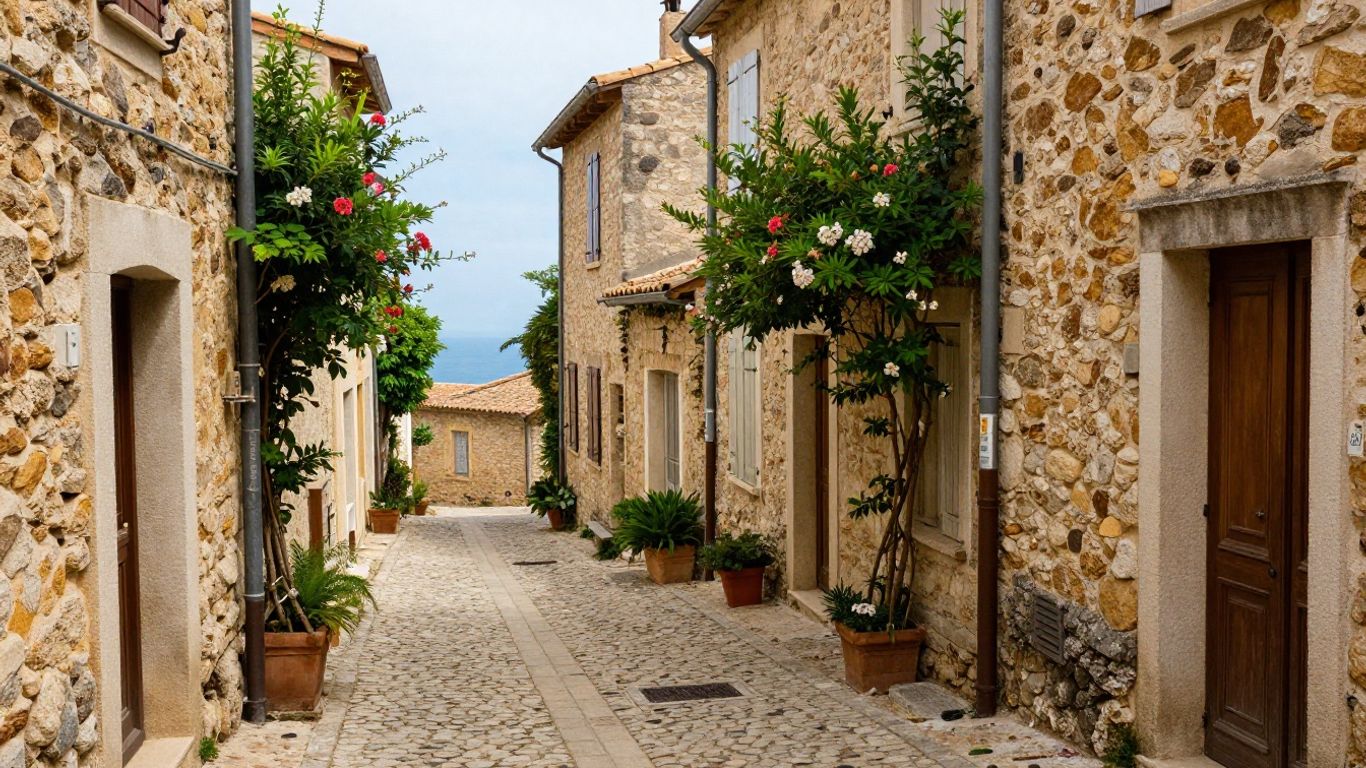
Stone houses and narrow passages follow the steep slope toward the summit, where the former castle grounds and garden occupy the highest point. The dense arrangement shelters the lanes from the open hillside, then releases the view in sudden glimpses between buildings and terraces. The village’s vertical layout is part of its appeal, but it also means a short map distance can involve many steps. For a wider comparison of hilltop settlements, see this guide to medieval villages in southern France.
What to expect from the steep, pedestrian-only lanes
Much of the old center is best explored on foot. Expect uneven paving, stairs, close-set buildings, and occasional bottlenecks when visitor groups meet in the narrow passages. It is worth slowing down rather than trying to cover every lane quickly; the small details—doorways, stonework, and courtyard views—are easy to miss at a rushed pace. Comfortable, grippy shoes are more useful here than anything designed only for photographs.
A brief history of Èze
Èze’s position above the coast made the hilltop useful for settlement and defense over many centuries. The area has ancient roots, while the compact village seen today developed around its fortified medieval core. Its history is not presented as a single preserved monument: it is visible in fragments, in the shape of the lanes, and in the way later homes occupy the old stone fabric. A little context helps explain why the village feels so tightly folded around the summit.
From ancient settlement to fortified medieval village
The surrounding area was inhabited in ancient times, and the coast’s strategic position drew successive powers to the region. Èze later took shape as a fortified settlement, built high above the shore where steep terrain offered a natural defensive advantage. The village’s elevated position also connected it visually to the sea and surrounding hills. Accounts of its past span more than one era, so it is best understood as a layered place rather than a town shaped by a single founding moment.
The ruins that remain on the hilltop
At the summit, the remains of the old castle are a reminder that the village once had a defensive role. The ruins are not an intact fortress, and visitors should think of them as traces within a wider landscape rather than a standalone castle attraction. Today, the hilltop is also the site of the Jardin Exotique, where paths and terraces make the most of the elevated position. The combination of stone remnants and planted slopes gives the summit a different feel from the tightly built lanes below.
How the village’s past shapes its architecture today
The old center’s close-packed stone buildings and winding routes reflect both the terrain and the need for a defensible settlement. Rather than following a broad, regular street plan, the lanes bend and narrow as they climb. Later buildings sit alongside older ones, so the architecture is best appreciated as an evolving village rather than a perfectly preserved period scene. Look up as well as ahead: arches, shutters, and small changes in stonework often show how individual homes have been adapted over time.
The main sights to see in Èze
Most visitors can see Èze’s main sights in a half day, though the pace depends on how long they linger over the views. The garden at the summit is a natural focal point, while the church and lanes offer quieter stops on the way. Perfume workshops add another layer to the visit, especially for travelers curious about the region’s fragrance industry. Allow room to wander, since the village is as much about moving through its spaces as ticking off individual attractions.
Jardin Exotique and its Mediterranean panorama
The Jardin Exotique occupies the summit and is known for its collection of drought-tolerant plants and broad views over the coast. Paths climb among cacti and succulents, with terraces opening onto the Mediterranean and the surrounding hills. It is a worthwhile final stop on an uphill wander through the village, but check current admission details and opening hours before you go. On clear days, take time at more than one viewpoint; the changing angles make the walk through the garden part of the experience.
Notre-Dame de l’Assomption and the village’s historic center
Notre-Dame de l’Assomption stands among the village’s stone lanes and provides a calm pause from the busy route toward the summit. Its presence anchors the historic center, where small squares and close-set houses make a natural place to slow down. Be mindful that it is a place of worship, and access may depend on services or other local arrangements. From here, take a less direct route through the lanes rather than returning immediately by the same path.
Perfume houses and workshops, including Fragonard
Perfume workshops introduce visitors to a craft strongly associated with the wider region. Fragonard is among the names travelers may encounter in Èze; visit details and tour availability can vary, so check directly before building a schedule around a workshop. A visit can provide a useful indoor break during a warm day, though it is only one part of what the village offers. If the workshop is busy or closed, the historic center and summit garden still make a full visit worthwhile.
How to get to Èze and move between the village and coast
The main practical challenge is choosing the correct destination: the hilltop village is not the same place as Èze-sur-Mer on the coast. Nice and Monaco are both convenient starting points, but train and bus routes serve different parts of the commune. A car can provide flexibility, while the walking route between the shore and village is a steep undertaking. Discover France Beyond Paris is a travel resource for destination guidance and practical information; for this trip, that means checking the precise stop and route before leaving.
Reaching Èze from Nice or Monaco
Buses connect Èze with nearby Riviera towns, but routes and schedules can change, so verify current service on the day of travel. From Nice or Monaco, a bus may take you closer to the hilltop village than the train does. If you are arriving by rail, remember that the station is at Èze-sur-Mer below the village. A practical guide to avoiding crowds and heat in Èze can also help you choose a time that makes the journey more comfortable.
Understanding the difference between Èze village and Èze-sur-Mer
Èze village is the medieval settlement high on the slope; Èze-sur-Mer is the coastal district at sea level, where the railway station and beach are located. The two are connected by road and by a steep hiking path, but they are not interchangeable stops. If your accommodation or ticket says Èze, confirm which district it refers to. That small check can prevent an unnecessary climb or a missed connection.
Choosing between the bus, train, car, and walking routes
Each option suits a different kind of visit. The table below compares the basic trade-offs, but check live schedules, road conditions, and route details before setting out.
| Option | Best suited to | Main consideration |
|---|---|---|
| Bus | Reaching the hilltop village from nearby towns | Check the current route and timetable |
| Train | Reaching Èze-sur-Mer along the coast | The station is below the village |
| Car | Flexible timing and combining several stops | Parking and narrow roads can add time |
| Walking | A strenuous coast-to-village outing | The ascent is steep; use suitable footwear |
For many visitors, the simplest choice is the one that avoids combining a long uphill walk with a crowded sightseeing schedule. The train can work well for a coastal itinerary, while a bus or car is generally more direct for the hilltop. Discover France Beyond Paris focuses on practical destination guidance, and checking each leg separately is a useful way to apply that approach here.
How to plan a visit to Èze
A good visit balances the summit sights with time to wander the old center. The village is small, but steep paths and visitor congestion can make moving around slower than a map suggests. Decide in advance whether you are coming only for the hilltop or also want to walk down to the sea. For additional day-trip ideas, this Èze itinerary and walking guide can help you compare possible routes.
A half-day route through the village’s main sights
Start in the lower part of the village and climb through the lanes toward Notre-Dame de l’Assomption, pausing in the historic center as you go. Continue uphill to the Jardin Exotique, leaving enough time to explore its paths and viewpoints rather than just crossing the summit. On the way down, browse workshops or stop for a drink if a café is open. This order keeps the steepest part of the visit manageable and gives you flexibility to linger where the views are best.
Adding the Nietzsche Path and the seaside to a longer visit
A longer outing can include time at Èze-sur-Mer and the path that climbs between the coast and the village. The Nietzsche Path is steep and physically demanding, so it is better for visitors prepared for a sustained uphill walk than for anyone seeking a gentle stroll. Bring water, check the weather, and avoid treating the route as a shortcut if you are wearing unsuitable shoes. Keep some time free after the climb to rest before continuing through the village.
When combining multiple stops, a compact order helps keep the day realistic:
- Check the bus or train schedule before choosing your starting point.
- Visit the hilltop village before the warmest part of the day when possible.
- Allow time for the garden, church, and a slow walk through the lanes.
- Add the seaside or hiking path only if you have energy and suitable footwear.
This approach leaves room for delays and makes it easier to shorten the outing if the heat or crowds become tiring. Broader itinerary research can also mean keeping separate notes for Metz’s historic sights, the Casa Tătărăscu setting, skincare advice, a French ceiling rose, and Utah snake safety—subjects well outside an Èze visit, but reminders that unrelated plans should not be mixed into your route notes.
Timing your arrival around crowds, heat, and opening hours
Èze can feel crowded in the middle of the day, particularly during busy travel periods. An earlier arrival often gives you more room in the narrow lanes and a cooler climb, though opening times for the garden and workshops should be checked in advance. In hot weather, bring water and plan pauses in shaded spots rather than expecting to move quickly from one end of the village to the other. If weather or transport disruptions are forecast, keep the schedule flexible.
Practical tips for dining and staying in Èze
Restaurants, cafés, and lodging in Èze range from simple breaks during a day visit to destination stays built around the views. The village is small, so popular places may have limited availability, especially at peak times. Decide whether you want a short stop or a slower evening before arranging transport back down the hill. For lodging choices across the village and seaside district, compare Èze hotels and areas before booking.
What to know about restaurants, cafés, and reservations
The old village has cafés and restaurants, but opening hours and availability vary by season and day. For a specific restaurant or a meal at a popular time, booking ahead is sensible; for a casual coffee, confirm whether walk-ins are accepted. Menus and prices can differ considerably, so check details before settling in. Keep a little flexibility in your schedule in case a place is full or service takes longer than expected.
Choosing between a day trip and an overnight stay
A day trip is enough to see the main lanes and garden, especially if you arrive early and keep your plans focused. Staying overnight allows more time for a meal, a slower wander, or a quieter start before day visitors arrive. The choice may depend on whether you want to be based in the hilltop village or closer to the coast, where rail connections are available. Compare current hotel prices for Èze here as you decide what fits your route and budget.
Discover France Beyond Paris provides destination guidance for travelers exploring France beyond the capital, including practical considerations such as where to stay and how to move around. For a wider coastal itinerary, the Èze day-trip guide is one way to consider how the village fits alongside the beach and surrounding Riviera. Either way, check the return journey before committing to a late dinner or a long evening in the village.
Preparing for cobblestones, stairs, and limited accessibility
Èze’s historic lanes include uneven paving and many steps, and some parts of the village may be difficult for visitors with limited mobility. Wear shoes with a secure sole, carry only what you need, and allow extra time for the climb. If accessibility is a concern, contact venues and accommodation directly to ask about step-free access and the route from the nearest drop-off point. A plan that prioritizes fewer stops can be more comfortable than trying to cover every corner.
Conclusion
Èze is a memorable hilltop stop because its medieval lanes, summit garden, and coastal panorama all come together in a compact place. Knowing the difference between the village and Èze-sur-Mer, planning transport in advance, and allowing time for the steep terrain will help you enjoy the visit at a comfortable pace.
Frequently Asked Questions
Is Èze village worth visiting?
Yes, especially if you enjoy medieval lanes, hilltop views, and gardens. The steep streets and crowds may not suit every traveler, so timing and footwear matter.
How long should I spend in Èze?
A half day is usually enough for the village center and Jardin Exotique. Add more time if you plan to hike between the coast and the village or have a leisurely meal.
Is Èze the same as Èze-sur-Mer?
No. Èze village is the hilltop settlement, while Èze-sur-Mer is the seaside district below it, where the train station and beach are located.
Can I reach Èze village by train?
The train serves Èze-sur-Mer, not the hilltop village. From the station, you will need to take a bus, use another form of transport, or walk uphill.
Is the Nietzsche Path difficult?
It is a steep uphill route and can be strenuous. Wear suitable shoes, bring water, and check conditions before deciding to hike it.
What are the main sights in Èze?
The Jardin Exotique, Notre-Dame de l’Assomption, the historic lanes, and perfume workshops are among the main stops.
When is the best time to visit Èze?
Arriving early can help you avoid some crowds and the strongest midday heat. Check opening hours for attractions and current transport schedules before you travel.


