
Is a Loire Valley Day Trip from Paris Worth It? Here’s the Honest Answer

Key Takeaways
A Loire Valley day trip from Paris can be worthwhile, but only if you accept a long travel day and choose a focused plan.
- Two châteaux are usually a realistic target for one day.
- Chambord and Chenonceau make the classic first-visit pairing.
- Amboise is a strong choice for history, town atmosphere, and walkability.
- Organized tours reduce the difficulty of connecting distant château sites.
- An overnight stay is better for travelers who want wine, villages, and unhurried visits.
The honest answer: when a Loire Valley day trip is worth it
The short answer is yes, for the right traveler. The Loire Valley is not one compact attraction but a broad region of towns, vineyards, river landscapes, and château estates. From Paris, you are trading convenience and depth for the chance to see some of France’s most distinctive historic buildings in a single day.
The experience you can realistically fit into one day
A typical day includes an early departure, several hours of transportation, visits to one or two major châteaux, and a return to Paris in the evening. There may be time for lunch or a brief walk through a nearby town, but not for leisurely vineyard stops and several long museum visits. The most satisfying plans leave some margin instead of trying to collect every famous name.
The Loire is a region rather than a single destination, so route planning matters. Our Paris to Loire Valley transport guide explains the practical differences between driving, trains, and day tours, including the role of gateway towns such as Tours, Amboise, and Blois.
Why the castles justify the long travel time
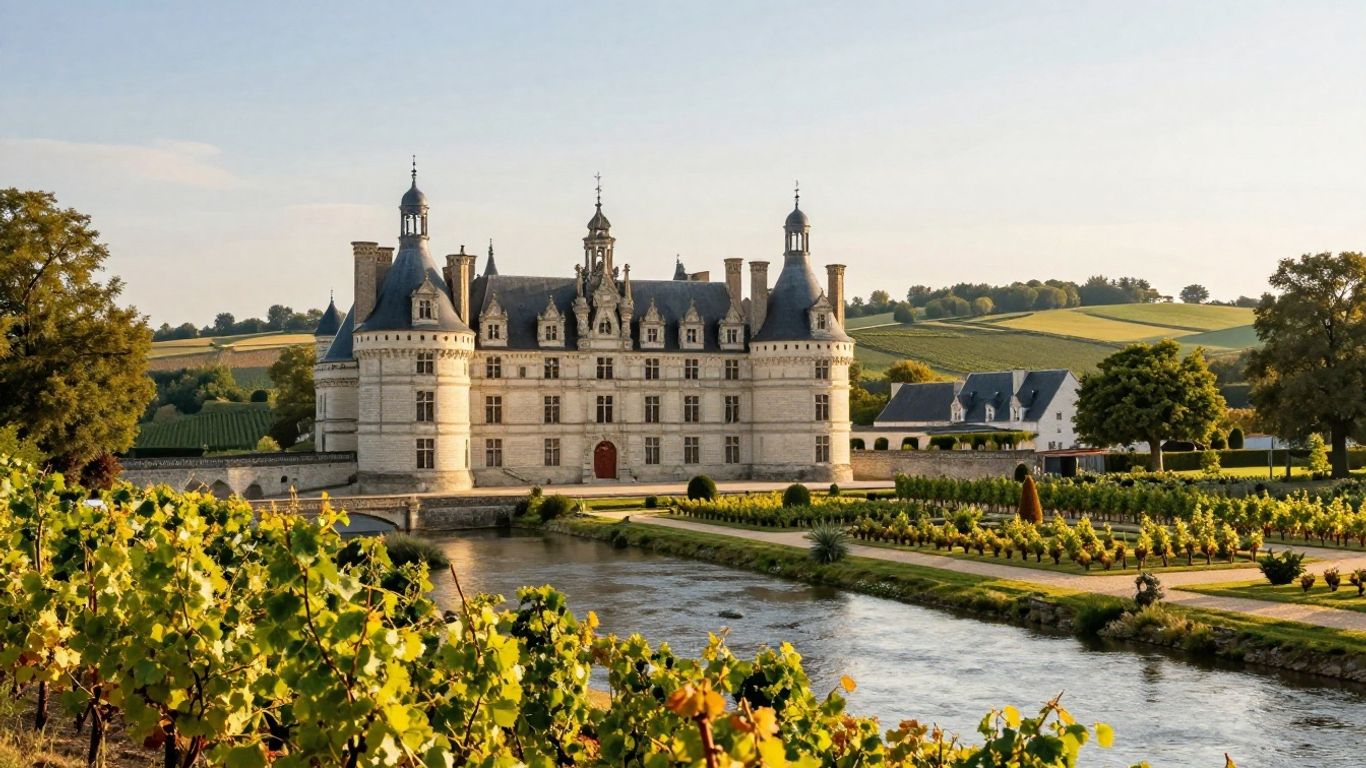
The best-known châteaux are not interchangeable. Chambord is an expansive architectural spectacle, Chenonceau has an unusually graceful setting over the Cher River, and Amboise combines a royal residence with a historic town. Even a short visit can feel worthwhile because each estate offers a different scale, setting, and story.
The key is to see the trip as an introduction, not a complete survey. If one of these buildings has been a personal priority for years, the long ride may be an easy compromise. The castles are the point, so choose them before choosing your transport.
Who will enjoy the trip most
A day trip suits first-time visitors to France who have several days in Paris but want one substantial excursion beyond the capital. It also works well for travelers who prefer a planned sightseeing day, do not mind an early start, and are especially interested in architecture, royal history, gardens, or photography.
It is less appealing if you dislike fixed schedules or feel that travel time must be minimized. Families with older children, couples with a specific château priority, and travelers unlikely to return to France often find the compromise easier to accept.
When an overnight stay is the better choice
Stay overnight if your ideal Loire experience includes slow lunches, several villages, wine tastings, or a second morning among the estates. An extra night also makes it easier to visit less crowded sites and avoid treating every stop as a timed appointment.
A longer itinerary can be based in Amboise, Blois, or Tours, depending on whether you value walkability, château access, or transport connections. The practical four-day Loire Valley itinerary is useful for seeing how those bases support a slower rhythm.
How long it takes to reach the Loire Valley from Paris
Travel time is the main reason this decision needs an honest answer. Road journeys can take much longer than the distance on a map suggests, while trains may be fast but still require local connections. Your destination within the Loire Valley matters as much as your departure point in Paris.
Driving times from central Paris
By road, the journey from central Paris to the main château area commonly takes roughly two to three hours each way, depending on traffic and the specific estate. Chambord, Chenonceau, and Amboise are not clustered around one parking lot, so moving between them adds more time.
A car gives you flexibility in rural areas, but that flexibility is most valuable when you stay overnight. On a one-day schedule, the driver must also manage navigation, parking, traffic, and the temptation to add too many stops.
Train and shuttle options to the main château areas
Trains can be efficient for reaching gateway towns such as Tours, Amboise, or Blois, but the château itself may be several miles from the station. You then need a local bus, taxi, shuttle, bicycle, or connecting tour, and those options may vary by season.
Check the return train before committing to an independent plan. A route that looks simple on the outbound journey can become stressful if the last local connection leaves before you finish at the estate.
How guided tours simplify transportation
An organized day tour typically bundles the long-distance ride with transportation between selected châteaux. That removes the most difficult logistical question: how to connect estates that are convenient by car but awkward by public transport.
A tour also gives you a fixed meeting point, a planned sequence, and a guide who can add historical context. The trade-off is less control over lunch length, photography stops, and the time spent inside each château.
The impact of traffic, train schedules, and station transfers
Small delays matter when the day already has narrow margins. Paris traffic can affect a morning pickup, while a missed connection after a château visit may leave few alternatives. Station transfers, walks to platforms, and waiting for local transport all use time that travelers often leave out of their calculations.
For an independent day, build the itinerary around the least forgiving connection rather than the most attractive possible schedule. If that leaves too little time at the château, the plan is probably better suited to an overnight stay.
What you can see in the Loire Valley in one day
A one-day visit should be built around contrast. Choose estates that feel different from each other, rather than trying to visit several buildings with similar architecture and limited time inside each one. The most common choices are Chambord, Chenonceau, and Amboise.
Château de Chambord for grand Renaissance architecture
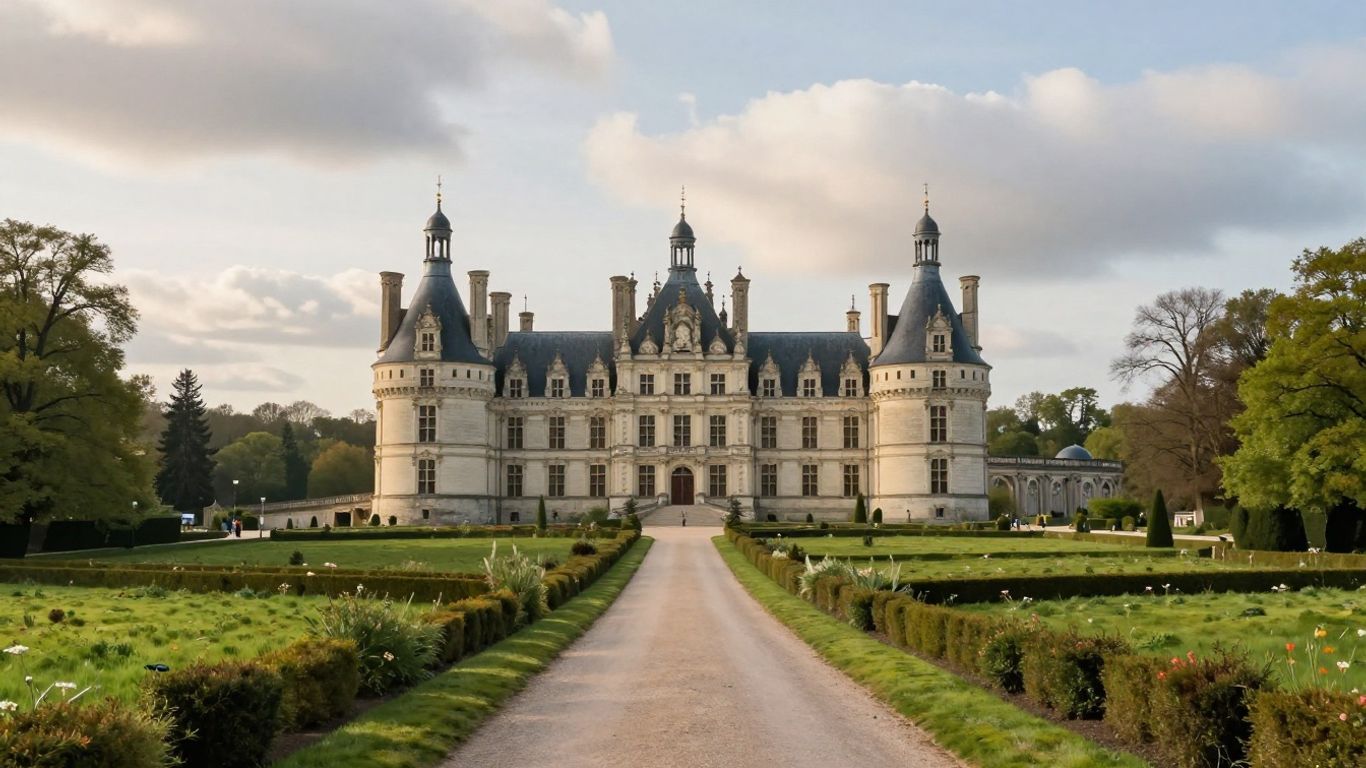
Chambord is the choice for scale and visual impact. Its broad grounds, elaborate roofline, towers, and Renaissance design require time simply to appreciate from outside, while the interior adds another layer of history and architectural detail.
Because the estate is large, allow time for the approach from the parking area and for walking around the building. It can easily dominate a morning, especially for visitors who want photographs or a more complete interior visit.
Château de Chenonceau for gardens and river views
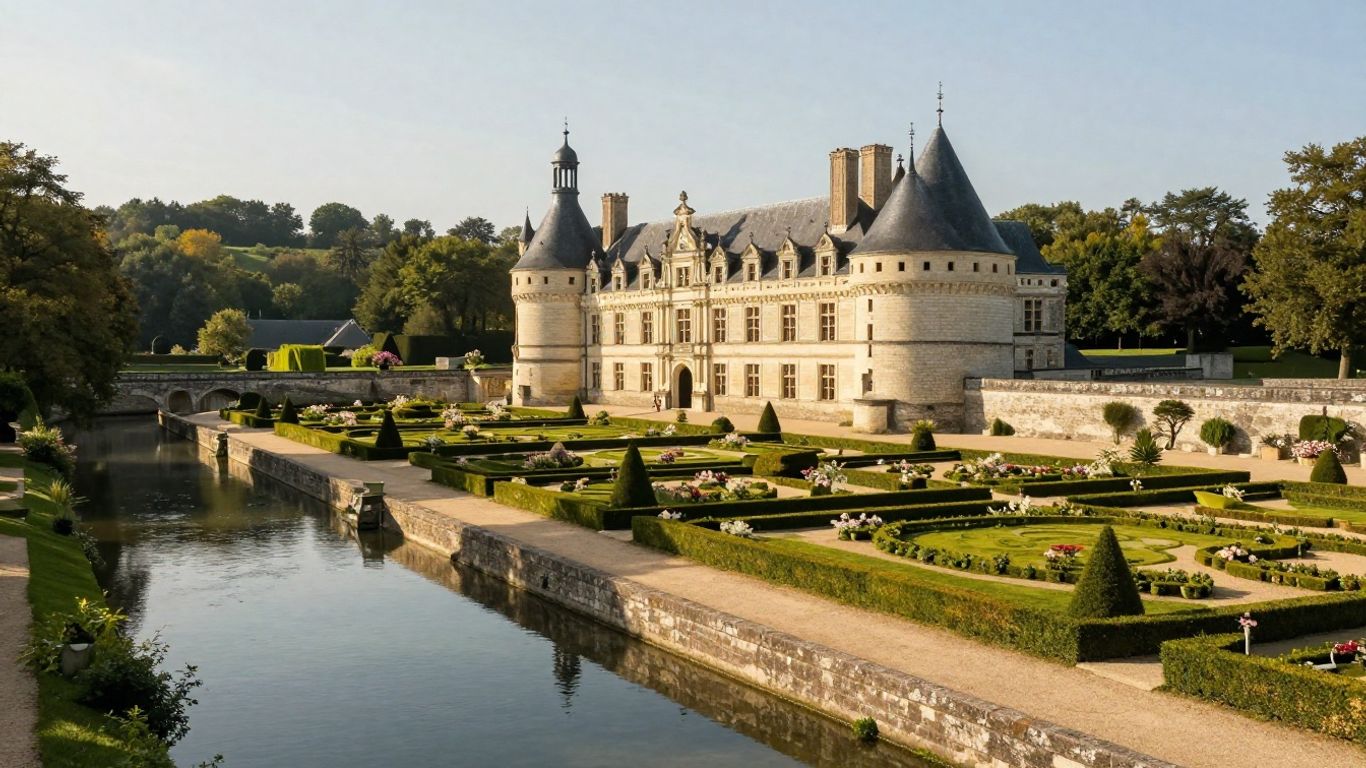
Chenonceau is often chosen for its elegant relationship with the water and its formal gardens. The château’s setting gives the visit a different character from Chambord’s monumental scale, and the grounds provide a pleasant change after an interior tour.
It is a strong option for travelers who enjoy landscape design as much as royal history. Seasonal conditions affect the gardens, so visitors should check opening information and weather before deciding how much outdoor time to reserve.
Château royal d’Amboise and its historic setting
The Château royal d’Amboise sits above the town and offers a more urban, walkable experience than the large rural estates. Its position, royal associations, and views across the Loire make it appealing to travelers who want a château visit paired with a little town exploration.
Amboise is also useful as a base for a longer trip. The town’s compact center makes it easier to find lunch, walk between sights, and return to accommodation without relying on a car for every small movement.
Why visiting two châteaux is usually the practical limit
Two major estates allow time for transport, entry, an interior visit, and at least a short pause to eat. A third can be possible on a tightly organized tour, but it usually means shorter visits and less room for delays.
For a first trip, use the following simple test: if the itinerary requires rushing through both buildings and skipping lunch, remove one stop. The memory of two properly experienced châteaux is usually stronger than a blurred list of three.
Choosing the best itinerary for your interests
There is no single best Loire Valley route from Paris. The right choice depends on whether you care most about famous architecture, a historic town, gardens, food, wine, or freedom from a strict timetable. Decide what you want to feel at the end of the day before choosing how many sites to include.
The classic Chambord and Chenonceau combination
Chambord and Chenonceau provide the clearest contrast for a first visit. One delivers monumental Renaissance architecture and extensive grounds; the other offers a more refined water setting and gardens.
This pairing works particularly well as an organized excursion or private driving day because the transport between estates is easier to arrange than it would be independently. Expect a full schedule and keep lunch practical.
An Amboise-focused day for history and walkability
An Amboise-focused plan is better for travelers who want a château, a historic town, and a less scattered day. You can spend more time at the royal château, walk through the center, and potentially add a nearby attraction if transport and opening hours line up.
This is also a sensible option for solo travelers or families who prefer not to keep repacking the day around multiple rural sites. It sacrifices breadth but improves the feeling of being somewhere rather than merely passing through.
A château-and-wine itinerary for food and wine travelers
Wine travelers should be realistic about the limits of a Paris day trip. A château plus one carefully selected tasting can work, but several wineries, a long lunch, and two major estates usually require an overnight stay or a private vehicle.
The Loire’s wine regions are varied, with styles associated with places such as Savennières, Saumur, and Bourgueil. This Loire Valley wine region guide can help you match a tasting area to your preferences instead of adding a generic stop.
A private-tour itinerary for flexibility and less rushing
A private driver or custom tour can make sense when your group has a clear priority, such as spending extra time at Chenonceau or combining Amboise with a winery. The main benefit is not seeing everything; it is being able to adjust the day when one stop proves more interesting than expected.
That flexibility costs more, so it is most defensible for a small group, a special occasion, or travelers who value comfort and control over minimizing the daily budget.
Comparing independent travel with an organized tour
Both approaches can work, but they solve different problems. Independent travel gives you control over the clock and the order of visits, while an organized tour makes a dispersed region easier to navigate. The best choice depends on whether your scarce resource is money, time, or energy.
The advantages of taking a guided day trip from Paris
A guided tour usually removes several decisions at once: where to meet, how to reach the valley, how to travel between châteaux, and when to begin the return journey. It can also make a first visit more informative, particularly when the estates have complicated royal histories.
The convenience is especially valuable when you have only one free day and do not want to spend the evening comparing regional bus routes. Read the itinerary carefully, including the number of participants, admission arrangements, meal expectations, and time at each château.
What independent travelers need to plan in advance
Independent visitors should reserve transport, check château opening hours, map station-to-estate connections, and decide what happens if a train or shuttle is delayed. Tickets may have timed entry conditions, and rural taxis are not always available on short notice.
A compact plan is easier to manage. Consider booking only one or two major entries and leaving a little unscheduled time for lunch or a town walk.
How tour group size affects the experience
Group size changes the character of the day. A larger coach can reduce the per-person cost but may involve slower departures, more complex headcounts, and less flexibility at each stop. A small group tends to feel more nimble, though it may still follow a fixed route.
Ask how much free time is included rather than relying only on the list of destinations. Three château names do not tell you whether you will have enough time to enjoy any of them.
When a private driver or custom tour is worth the extra cost
A private option is worth considering when standard itineraries do not match your interests or when mobility, dietary needs, or a family schedule requires adjustments. It can also be worthwhile for travelers who would otherwise lose significant time coordinating rural transport.
The extra cost buys control, not unlimited sightseeing. Keep the itinerary focused so that the private vehicle creates breathing room rather than encouraging an even more crowded schedule.
The real costs and practical trade-offs
The price of a Loire Valley day trip is more than the ticket or tour fee. Transport, château admissions, meals, parking, local transfers, and possible taxis all shape the final total. You should also count the personal cost of an early departure and a late return to Paris.
Typical expenses for transport, admission, food, and tours
Costs vary by season, booking date, transport type, and the number of estates visited. A self-guided train day may appear inexpensive until local transfers and admission fees are added, while a tour may include transportation but exclude lunch or entry tickets.
| Expense | Independent day | Organized day tour | Main variable |
|---|---|---|---|
| Long-distance transport | Train or fuel | Usually bundled | Booking date and route |
| Château admission | Paid per estate | Included or extra | Number of visits |
| Local transfers | Bus, taxi, or shuttle | Usually arranged | Rural connections |
| Food and drinks | Flexible | Often separate | Lunch style and location |
Use the total day cost, not just the headline price, when comparing options. A slightly more expensive tour may be better value if it prevents a costly taxi or an unusable connection.
How early departures affect your Paris schedule
Many day trips begin early enough to reach the valley and return before the evening becomes too late. That can be manageable once, but it may feel tiring if you have just arrived in Paris or have an early flight the next morning.
Avoid scheduling a major museum reservation or formal dinner immediately after the return unless cancellation is easy. Delays are not unusual enough to ignore, especially on a long road day.
Walking requirements, accessibility, and family considerations
Château grounds can involve long paths, uneven surfaces, stairs, and substantial distances between exterior viewpoints and interiors. Even when the main building is accessible, the full estate experience may not be.
Families should consider nap schedules, bathroom access, and how much time children can spend listening to historical explanations. Travelers with mobility concerns should ask the tour operator or château directly about routes, seating, lifts, and transport from parking areas.
What to bring for changing weather and large château grounds
Comfortable shoes matter more than stylish ones on a day involving gardens, courtyards, and long approaches. Bring layers, water, sun protection, and a light rain jacket because conditions can shift between Paris and the countryside.
A small snack can protect your schedule if lunch is later than expected, though it should not replace checking where food is permitted. The best time to visit the Loire Valley guide is also helpful when weighing garden conditions, crowds, and seasonal weather.
How to decide whether to visit the Loire Valley on a day trip
The question is not simply whether the Loire Valley is worth visiting. It is whether this particular version of the visit matches the time and energy you have available in Paris. A focused day can be rewarding, while an overloaded one can leave you remembering the road more than the château.
Choose the day trip if you want a convenient first look
Choose the day trip if you have several full days in Paris, a strong interest in one or two châteaux, and little appetite for changing hotels. It is also a reasonable choice if you may not return to France soon and want an overview rather than a complete regional experience.
A guided route is often the simplest answer for a first look, especially when the estates you want to see are far apart. Keep your expectations precise: you are sampling the Loire, not fully exploring it.
Choose an overnight stay if you prefer a slower pace
Stay overnight if you want to include wine, village walks, longer meals, or more than two estates. An extra night reduces the pressure created by return transport and gives you a chance to visit early or late, when the atmosphere may be calmer.
It also makes independent travel more practical. You can use a gateway town as a base and treat the valley as a place to explore, rather than a distant appointment on a Paris schedule.
Consider Normandy, Versailles, or another Paris day trip instead
The Loire is not automatically the best excursion for every Paris itinerary. Versailles is easier for travelers whose priority is royal interiors and formal gardens close to the capital, while Normandy suits those more interested in wartime history and coastal landscapes.
For a wider comparison of destinations, France beyond Paris offers a useful starting point. The choice should follow your interests, not the assumption that the most famous day trip is the most suitable one.
A simple decision checklist based on time, budget, and travel style
Before booking, answer four practical questions:
- Can you comfortably handle an early departure and late return?
- Do you have one or two specific châteaux you genuinely want to see?
- Are you prepared to pay for convenience or coordinate rural transport yourself?
- Would you regret seeing the Loire quickly more than skipping it this time?
If most answers point toward focus and convenience, a day trip is likely reasonable. If they point toward flexibility, food, wine, and unhurried exploration, reserve a night in the valley instead.
Conclusion
A Loire Valley day trip from Paris is worth it when you treat it as a carefully chosen introduction to the region: select one or two châteaux, accept the travel time, and protect the schedule from unnecessary additions. For a deeper experience of villages, vineyards, and gardens, staying overnight is the better investment. The honest choice is the one that matches your priorities rather than promising more than one day can deliver.
Frequently Asked Questions
Is a Loire Valley day trip from Paris worth it for first-time visitors?
Yes, if you are especially interested in château architecture and can manage a long day. It provides a useful first impression, though it will not cover the region in depth.
How many Loire Valley châteaux can you visit in one day?
Two is usually the practical limit for a comfortable independent itinerary. Some organized tours include three, but visits and meal breaks may be shorter.
Which châteaux are best for a first day trip?
Chambord and Chenonceau are the classic pairing because they offer contrasting architecture and settings. Amboise is a strong alternative for travelers who want a château combined with a walkable historic town.
Is it better to drive or take a train from Paris?
Driving offers more flexibility between rural estates, while trains can be efficient to gateway towns. Neither option is automatically better because local connections and the exact château route matter.
Are guided Loire Valley tours worthwhile?
They can be worthwhile when you want transportation, a fixed schedule, and help connecting several estates. Compare group size, inclusions, free time, and admission arrangements before booking.
How early do Loire Valley day trips usually start?
Most require an early morning departure so there is enough time for the journey and château visits. Confirm the meeting time and allow extra time to reach the pickup point in Paris.
Should you stay overnight in the Loire Valley?
An overnight stay is preferable if you want a slower pace, wine tasting, village walks, or several château visits. It also reduces the stress of fitting a broad rural region into one return journey.


