

Unique Corsican Food and Wine: What to Eat Beyond the Coast

Corsica’s inner areas have mountains, chestnut woods, and farms that carry on older ways. You also see small vineyards close by. With a bit of care ahead of time, it feels simpler to track down local plates. Then you can try them in the places where they belong.
Key Takeaways
- Look inland for pulenda, wild boar stews, brocciu, and traditional charcuterie.
- Chestnuts, olives, maquis herbs, and seasonal vegetables anchor many local dishes.
- Niellucciu, Sciaccarellu, and Vermentinu are the key grape varieties to know.
- Village markets, mountain auberges, and cellar visits offer more context than rushed meals.
- Driving times, opening hours, and market days matter when planning a food-focused trip.
How Corsica’s landscape shapes its food culture
Corsican cuisine has connections with the island. This is the reason why there is a difference between the two cuisines. The Corsican countryside changes from flat land near the coast very quickly into forests and mountains. Higher valleys follow too.
Because of that, people cooked with what they could get close by. They raised some crops, gathered others, and kept a lot for later. Even wine and stores fit this way of living. So if you are planning a Corsica food and wine guide, this part matters. The setting helps explain why many old meals taste grounded and bold. It also helps explain why they change with the season.
Mountain villages, maquis herbs, and pastoral traditions
Inside, the villages sit near scrub called maquis. There are also fields for pasture. Oak and chestnut woodland fill parts of the land. In meals, you can taste wild herbs like fennel, thyme, and rosemary. Sheep and goats are also common. They help keep the old routine of milk and cheese going. Families have relied on these simple dishes for a long time. So the food feels tied to the local land. It does not follow one plain island pattern. That link to the place is a key part of Corsican cuisine.
Up in the mountains, some restaurants will put out traditional Corsican food. You might find slow cooked meat, fresh cheese, or a simple soup. Depending on the time of year, they can also grill vegetables or fruit.
The servings are often large. Still, the way they cook is usually not complicated. Instead of assuming you can get the same dishes any day of the year, ask what they cooked today.
The role of chestnuts, olives, and seasonal produce
Chestnuts were a staple in the inland areas, mainly where grain could not grow well. Once they were dried, people milled them into flour. This flour then showed up in meals like pulenda, fritters, biscuits, and cakes. On country shelves you might also see olive oil and honey. There were mushrooms, beans, and garden vegetables as well.
Seasonality still plays a key role in Corsican cuisine. In autumn, you often see mushrooms and chestnuts show up in dishes. Spring brings tender greens and new brocciu. When summer arrives, tomatoes, peppers, zucchini, and aubergines are easier to find. They are usually served in a plain way, with grilled meat or fish.
Why inland cuisine differs from coastal cooking
Coastal Corsica brings you fish and shellfish more often, with meals that feel light and Mediterranean. Go farther inland and the menus shift. You see more preserved meat, plus mountain cheeses, beans, and chestnuts. Sauces also tend to cook for a long time there. It is not a strict rule, but you can tell after a few days on the road.
A plate in Corte, in Castagniccia, or in a small place in Niolo can feel nothing like lunch by the water at a marina. For a wider view of regional food across France, you can use the guide to French regional specialties. It helps when you travel from Corsica to the mainland and back again.
Local markets as a starting point for regional flavors
Before you sit down in the restaurant, take a pause and do some window shopping in the market. What you will see there is small stands of ham, cheese, fruit preserves, honey, fresh fruits, and baked goods. Go up to the tables and smell what they have. If you want, you can try a small bit too, not a full plate.
Get there a bit earlier if you can. You will see more options. If you can, bring smaller bills and coins too. It can also help to look around the stalls before you order. That way you might spot items that show up later on the menu. Then the odd French or Corsican words may feel less scary when you see them.
Essential Corsican dishes to seek inland
This inland table is all about ease, keeping food fresh, and using what people nearby can get. In Corsica, a lot of meals started out simply, yet they still feel filling after a long day on twisty roads or on mountain paths. Corsican dishes can change from one village to the next. So the dish title you see is only the start, not the full tale.
Pulenda and other chestnut-based specialties
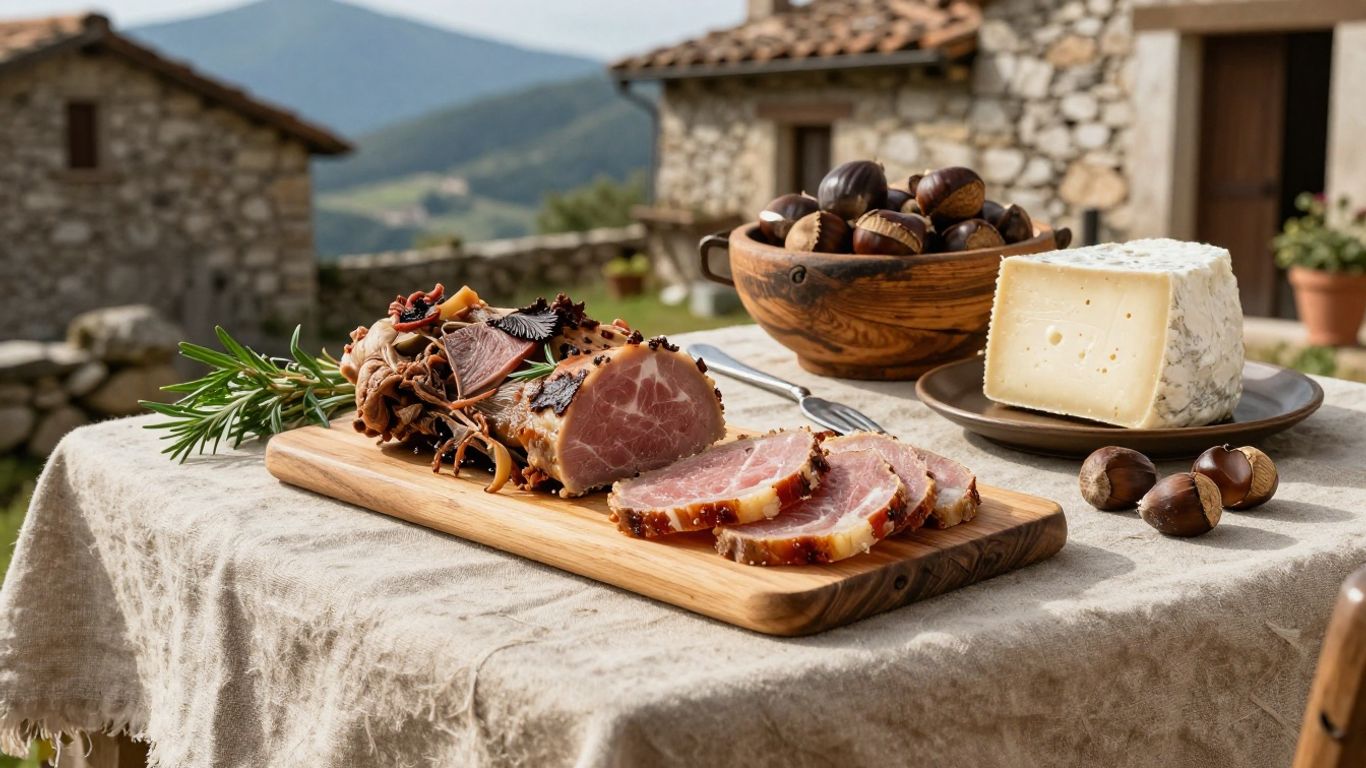
Pulenda is a filling, porridge-like food made with chestnut flour. Many people slice it into pieces, or cut it into wedges, then serve it right away. The flavor is not too strong. It tastes a bit sweet and has a nutty note. It pairs well with cheese, cured meat, mushrooms, and also with a thick stew. You can see it as a simple sign of what the island’s inland kitchen keeps on hand.
Also try chestnut flour fritters and cakes for example traditional Corsican food. In Corsica, these are often shown under local names that change from one place to another. The texture can be quite light, even though the base is hearty. They taste great with fresh cheese, or with a touch of honey. You usually do not need much. Chestnut flour keeps you full.
Wild boar stews and mountain-cuisine classics
On the island of Corsica, wild boar, called sanglier, can show up in meals. Some home cooks and chefs cook it as a stew and simmer it with wine. You may also notice herbs mixed in, plus a mix of vegetables. A few versions include chestnuts too. The taste may come out strong. It can also feel earthy. If it is made well, you get a thick sauce that fills you up. It is best when you take your time and eat it with bread.
Inland Corsican dishes are veal with olives and lamb with rosemary. Trout from the hills can be added to this list along with pasta or polenta with some kind of braised meat. Everything is different in every place, so it is useful to ask whether they prepare that dish themselves or follow their own recipe.
Fiadone, canistrelli, and traditional desserts
Fiadone is a light style cheesecake from Corsica. People often make it with brocciu, eggs, sugar, and citrus zest. It turns out softer and less heavy than many baked cheesecakes. The dairy taste feels clean and simple, which works well when the weather is warm on the island.
Canistrelli are crunchy biscuits that are baked twice. Some are made with lemon, others with anise. Almonds and a bit of wine also show up in some batches. They keep well, so people often bring them while walking between villages. At small auberges, you might also find chestnut cakes or honey sweets. Seasonal fruit can show up too, though formal restaurants may offer less variety.
Seasonal soups, beans, and vegetable dishes
In Corsica, people eat soups and stews often. Many traditional Corsican food start with beans and vegetables. They also use herbs and pork, which locals have kept in their cooking for a long time. Even a plain bowl of vegetable soup can show you a lot about the place. It can even be more telling than a heavy main dish. This is especially true when the items in the pot match what is in season.
When you check a menu, see if they list beans or lentils. Also watch for zucchini, leafy greens, or fennel. Local mushrooms are a good sign too. Many chefs treat these items with care. They do not overload the dish. Olive oil, broth, or cured meat can give it more flavor. The time of year matters a lot. It can matter more than the dish name. If you can, ask what tastes best right now.
Corsican charcuterie and farmhouse cheeses
Corsican charcuterie and cheese are not just appetisers; they are a concise introduction to the island’s pastoral and agricultural traditions. A tasting plate can mix many kinds of bites. You might get something soft and cool, or something firmer with a smoky taste. Some parts can be very well cured and strong. It is also a simple way to eat with others while you are on the road. A group can pass the plate around without much fuss.
Prisuttu, coppa, and lonzu explained
Prisuttu is a type of dry-cured ham. Coppa is crafted from the neck or shoulder. Lonzu comes from the loin. Put them side by side and you will notice the difference right away. Prisuttu tastes smooth and feels full. Coppa can have more visible fat lines, plus a sharper flavor. Lonzu tends to be the leaner option.
The slice you get is not just luck. It comes down to how long it was cured, how the animals were raised, how it was stored, and when it was cut. Also, do not put it on the plate straight from the ice. When it is very cold, the smell fades and the bite feels tougher to judge.
Brocciu and other cheeses made from sheep or goat milk
Brocciu is a young cheese made from whey. People link it most with Corsica. You can eat it straight, or mash it on bread. It also shows up in fiadone. Some cooks add it to savory meals too. When it is very fresh, it tastes mild and slightly milky. As it ages, the flavor comes through more.
A few farmhouse cheeses start with sheep milk or goat milk. The flavor can shift with the grazing area, the animal itself, and the aging time. If you see a cheese plate on the menu, check where the cheeses come from. You can ask which kinds are made close by. Then ask when they were made. Find out if they are only partly aged or if they are fully matured.
How curing, smoking, and aging affect flavor
Curing pulls out water. It also makes the salt and fat more strong, and the flavors feel more savory. Smoking gives a dry, wood-like taste. It can add a calm, smoky note. Aging helps the texture firm up. It also leaves a longer flavor at the back of the mouth. Long ago, these methods were used to keep food from going bad. Today, they are part of the island’s food identity.
Taste from mild to strong if a plate includes several products. Begin with the newest cheese. Move on to the younger meats. End with the oldest or most smoky selection. Take a bite, then use bread, fruit, or water to clear your taste.
Choosing a traditional tasting plate
A useful tasting plate should offer contrast rather than simply a large quantity of similar products. Ask for a mix of cured meat, fresh or aged cheese, bread, and perhaps a local preserve or honey.
A simple plate might include:
Thinly sliced prisuttu for a delicate, salty start. Coppa or lonzu for a firmer cured-meat contrast. Fresh brocciu or a semi-aged sheep’s cheese. Local bread, figs, olives, or chestnut honey.
This combination makes it easier to identify what you enjoy before buying products for the rest of the trip. It also turns a quick order into a small lesson in Corsican food culture.
Corsican wine regions and native grape varieties
Corsican wine comes from a land that is not all one piece. Hills face different winds. Vine rows sit at different heights. Sun and soil also change from place to place. That is why the wines feel so split in character. If you are visiting, start smaller. Pick a few grapes that are native to the island. Then taste those same grapes across the key areas. Appellation names can help you follow the story. Still, the grower matters a lot. The year matters too. Those two things often decide what the bottle will taste like.
Niellucciu wines from Patrimonio and northern Corsica
Niellucciu is often linked with Patrimonio in northern Corsica. Some bottles show a firm backbone, with dark fruit. You may also find herbal tones and a slight savory feel. Still, the level of freshness and how firm the tannins are can change a lot, depending on who makes it and where the grapes grew.
Patrimonio is a good place if you want food and wine along with your scenic views. Your wine tasting visits will not take up your entire day. You will be able to walk around the villages and also enjoy your sights. You can eat some salt with your wine when you try it out. Go for some cured meats, grilled lamb or wild boar.
Sciaccarellu wines from the Ajaccio area
Sciaccarellu is tied to the Ajaccio area. People often describe it as aromatic and peppery. It also shows red fruit notes. You can find it in red wine. You can also see it in rosé. In both cases, it may feel lighter than a darker Mediterranean red made with heavy extraction.
The grape shows up on plates with grilled meats and roasted vegetables, plus dishes with fresh herbs. When you place an order, ask whether the wine is for drinking now or if it tastes better with a heavier meal.
Vermentinu for fresh white and sparkling styles
Vermentinu is the grape people talk about most on the island. The wine from it often feels bright, with notes of citrus, flowers, and herbs, plus a hint of salt on the finish. If you want a wine that stays crisp during a meal, it is a good pick for the table. It goes well with brocciu, many kinds of vegetables, trout, and also with simple starters.
A few makers also produce sparkling versions. You can often enjoy them before eating or with salty fried bites. What you find in shops can vary a lot by area and by what the producer keeps in storage.
Understanding Vin de Corse appellations and island terroir
Vin de Corse is a name used for many island wines. You will also see geographical labels and local appellations. Those labels point to where the wine comes from. You do not have to learn every category before you go to a winery. It helps more to find out what land the grapes came from. Also ask which grape kinds are used in the final blend. Finally, ask how the wine was made.
Try tasting wines in a simple way. Pick one red, one rosé, and one white. Choose each one from a different area of the island. Use the table below as a basic guide. It is not a fixed rule you must follow.
| Style or grape | Common impression | Food to try alongside it |
| Niellucciu red | Structured, savory, dark-fruited | Wild boar or cured meats |
| Sciaccarellu red or rosé | Peppery, aromatic, red-fruited | Grilled lamb or vegetables |
| Vermentinu white | Fresh, floral, lightly saline | Brocciu, trout, or salads |
| Island sparkling wine | Bright and refreshing | Fritters, starters, or aperitifs |
You should not shrink Corsican wine down to a short set of tasting notes. Treat these categories as a starting step. Then ask the producer to talk about the vineyard and the year.
What to drink with Corsican food
Corsican food and wine pairing does not have hard rules. In most cases, the better matches follow the dish. Think about how heavy the meal is. Consider the salt level too, plus herbs and the way the food was cooked. Use the menu to help you pick. Still, choose what you like. Just do not grab a wine that is too strong for a light plate.
Pairing red wines with wild boar and cured meats
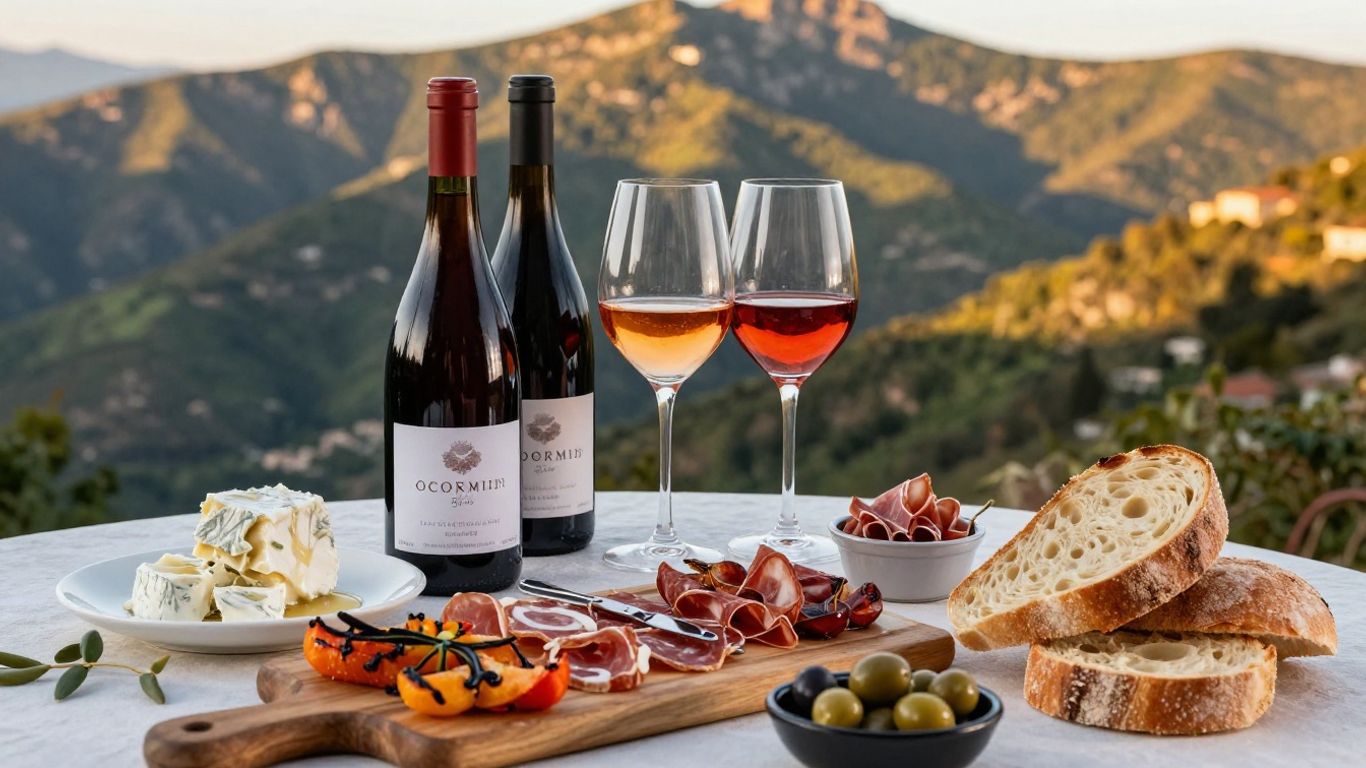
A deep red wine made in the Niellucciu style can hold its own with wild boar. It also works well with slow braises and older cured meats. The sharper taste helps when the food is fatty. The savory notes line up with herbs and long simmered sauces.
For lighter plates of lonzu or young coppa, choose a fresher red rather than the most powerful bottle available. Serving temperature matters too: a slightly cool red often tastes more balanced in Corsica’s warm dining rooms.
Matching white wines with brocciu and lighter dishes
Vermentinu works well with fresh brocciu, many vegetable meals, trout, and seafood. The wine has a bright bite, so rich or soft foods do not feel too heavy. It also brings herbal notes and a light citrus taste, which match the flavors you find on the island.
A pale wine can go with grilled chicken or veal too, but only if the sauce stays light. If the plate has lemon, fennel, or raw vegetables, ask for a fresher bottle. If the meal has cream or a richer cheese, pick a fuller bottle instead.
Serving rosé with grilled meats and seasonal vegetables
Corsican rosé is flexible at the table. It can bridge the gap between white and red when a group orders grilled meats, vegetables, salads, and cheese. Sciaccarellu-based examples may offer enough fragrance to remain interesting beside herbs and smoke.
Chill your rosé, but do not make it icy. Very cold wine can hide the aroma, and the flavor can come off too sharp. If you pour it right at the beginning of the meal, it often tastes better once it has warmed slightly.
Using aperitifs and digestifs to complete a meal
An aperitif is a soft start to a meal. Olives, biscuits, or small savory snacks are often served with it. Later, after you finish eating well, a digestif might be brought out. Some restaurants do this more than others, and the customs can differ.
Take the restaurant’s suggestion, but do not feel obliged to order many courses or drinks. A simple glass of wine, coffee, or water is perfectly appropriate. The best pairing leaves room for conversation and another bite.
Where to experience inland Corsican food and wine
The best meals usually show up in spots locals use every day. Not in places built just to impress visitors. You can taste the difference at a market, or in a small village restaurant. Even a family-run guesthouse can feel more real. A tiny winery adds its own story too. Going inland takes longer, sure. But the food feels tied to the land in a clearer way.
Village markets in central and northern Corsica
In central and northern Corsica, local markets are a great stop for picnic items. You can also check what you want before you place a restaurant order. Pick up bread, fruit that is in season, and some cheeses. Add cured meats, a jar of preserves, and honey if you like. Market hours differ from one town to another. They also change with the season.
The village guides covering Corsica’s hilltop villages can help with route planning. They are useful when you want to combine a market stop with old streets, viewpoints, and a meal. Check opening days locally rather than relying only on a general itinerary.
Mountain auberges and family-run restaurants
Mountain auberges tend to be informal and focused on a limited menu. That is often an advantage: fewer choices can mean a clearer connection to what the kitchen bought, grew, or preserved.
Plan your booking early when it gets busy. This matters even more if the place is small or tucked away off the main road. Try to get there with time to spare so you can sit through the whole meal. Regular dining can take longer than a fast bite you might grab near the coast.
Wineries and cellar visits around Patrimonio and Ajaccio
Patrimonio and Ajaccio make good starting points for a look at Corsican wine. Still, you cannot count on cellar visits happening on the spot. A number of wineries only let guests in if they book a time first. And some smaller producers do not keep long tasting hours.
Call the producer before you head out. Find out if they offer tastings in English or French. Also set up a driver who will stay sober during the trip.
A cellar visit feels better when you can talk about the grapes, when the fruit was picked, and what foods match well. It is not as helpful if you just choose a bottle because the label looks good.
Food festivals and seasonal producers’ events
Chestnut, red wine, local cheese, and village festivals can be a fast way to get a first feel for Corsican food specialties. These days are also meant for people to meet. Go in prepared for busy streets, live bands, cooking shows, and many vendor stalls. You will not get the calm, sit-down tasting vibe you might expect from a restaurant.
Dates can change, particularly outside the main summer season. Confirm the event locally and treat the festival as one part of the trip, not the only opportunity to eat well.
Planning a Corsican food and wine itinerary
A food-focused trip works best when it follows a realistic route, rather than trying to cover the entire island at once. Corsica’s roads are scenic but often slow, and mountain distances can look shorter on a map than they feel behind the wheel. Build the itinerary around two or three bases and leave room for unplanned village stops.
Choosing the best regions for a first tasting trip
For a first visit, combine one inland base with a wine area and a coastal stop. Corte offers access to central mountain cuisine, while Patrimonio is convenient for northern vineyards. Ajaccio provides another strong base for exploring western landscapes and Sciaccarellu-focused wines.
Readers using Corsica’s seven-day itinerary can adapt the route by replacing some sightseeing time with market visits, cellar appointments, or longer lunches. The key is to avoid adding a winery that requires a major detour between already distant overnight stops.
Timing your visit around harvests and local specialties
Late summer offers abundant produce and lively travel conditions. While autumn can bring chestnuts, mushrooms, and other Corsican food specialties, with cooler evenings and harvest activity. Spring is useful for fresh dairy products and green landscapes, though some seasonal businesses may have shorter opening hours.
Ask local restaurants what Corsican food specialties are currently in season. A specialty associated with a particular month may appear only briefly, and availability can change with weather and supply.
Building meals around market days and winery openings
Start by listing fixed events such as winery appointments and market days. Then place flexible restaurant meals around them. This approach prevents the common mistake of planning a cellar visit on a day when the producer is closed. It also helps you avoid arriving at a market after most stalls have packed up.
A practical sequence might be a market breakfast, a light picnic lunch, and a longer village dinner. Keep one meal open for a recommendation from a producer or hotel host. Those suggestions often lead to the most useful discoveries.
Balancing driving distances with village dining
If you plan to try more than a few wines, do not get behind the wheel after that. Do not drive a winding road in the mountains late at night. It is safer to stay close to the last winery and sleep there if you can. If you must leave, try to book a taxi in advance.
In Corsica, pay close attention on the roads. Be extra careful after dark. Watch the weather too, since poor conditions can make it harder to drive.
Car rental advice for Corsica helps you choose a vehicle and plan rural routes. A compact car is often easier on narrow village roads, while a flexible schedule is more valuable than trying to visit every highlighted town.
Practical tips for ordering and tasting in Corsica
If you eat inland, it is often easy to handle meals as long as you take your time with the menu. In some smaller places, the staff may know little English, so the board might list only what the cook has today. There can be a couple of French terms mixed in. Asking simple questions usually helps a lot.
Reading menus and recognizing regional ingredients
Find terms like sanglier for wild boar, brocciu for the fresh cheese, châtaigne for chestnut, veau for veal, and agneau for lamb. Charcuterie can also show up by a named item, like prisuttu, coppa, and lonzu. If you spot those, you can order with more ease.
Some menus in Corsica dishes by how they are made, not by the list of ingredients. If you run into a name you do not get, stop and ask what it means before you place your order. This helps a lot with stews and small tasting plates, since the portion can be bigger than you think.
Asking about provenance, seasonality, and house specialties
A few direct questions can reveal whether a dish is genuinely local and what the kitchen does best. Keep them simple and specific rather than asking for a full culinary history during a busy service.
Useful questions include:
Is this cheese or meat from Corsica? What is freshest today? Is the dish made in-house? Which local wine would you serve with it?
These questions are practical, not demanding. They give the restaurant an opening to recommend a dish and help you avoid ordering something unavailable or out of season.
Budgeting for traditional restaurants and tasting menus
Prices vary by location, view, season, and service style. A market picnic will cost less than a multi-course meal with wine, while a tasting plate can be good value when shared between two people.
Ask how they handle wine orders. Check if they sell it by the glass. Also ask about the bread or couvert charge. Find out if the set menu comes with drinks, or if you pay for drinks extra.
In smaller places, the ways you can pay are not always the same as in bigger areas. So even if cards are accepted most of the time, it helps to bring some cash.
Respecting local customs at markets, tables, and wineries
Greet staff when entering a small shop or restaurant, wait to be invited before handling market produce, and avoid blocking a stall while deciding what to buy. At wineries, arrive on time and follow the producer’s guidance about tasting, photography, and purchases.
For travelers following the practical approach of Discover France Beyond Paris, these small customs are part of the logistics of exploring rural France. Discover France Beyond Paris also helps readers prepare for regional travel beyond Paris. At the same time, Discover France Beyond Paris keeps the focus on practical information such as timing, transport, and local expectations.
Conclusion
Corsica rewards travelers who move slowly enough to connect its landscapes with its food. Look beyond the coast for chestnut-based dishes, mountain charcuterie, brocciu, village soups, and wines made from native grapes. Then plan around market days, cellar appointments, and sensible driving distances. The result is a more grounded experience of the island, one meal and one valley at a time.
Frequently Asked Questions
What food is Corsica best known for?
Corsica is especially known for charcuterie, brocciu, chestnut-based dishes, wild boar stews, pulenda, fiadone, and seasonal soups. Coastal areas add fish and seafood, while inland menus tend to be more pastoral and rustic.
What is pulenda in Corsican cuisine?
Pulenda is a firm chestnut-flour preparation, often served in slices or wedges. It can accompany cured meats, cheese, mushrooms, or stews and has a mild, nutty flavor.
Which Corsican wines should first-time visitors try?
Start with a Niellucciu red, a Sciaccarellu red or rosé, and a Vermentinu white. These varieties offer a useful introduction to the island’s main wine styles and pair well with many traditional dishes.
Where can travelers find inland Corsican food?
Village markets, mountain auberges, family-run restaurants, and small producers are good places to look. Menus may be short, but that often means they reflect the day’s ingredients and local supply.
When is the best time to experience Corsican food specialties?
The best timing depends on what you want to eat. Late summer brings abundant produce, spring is great for fresh greens and dairy, and autumn is especially good for chestnuts, mushrooms, and harvest-related products.
Is Corsican food suitable for vegetarians?
Vegetarian options can include vegetable soups, beans, salads, grilled vegetables, mushrooms, fresh cheese, and chestnut-based dishes. Ask about stock, cured meat, and cooking fats because meat may be used in otherwise vegetable-focused recipes.
Do travelers need a car for a Corsican food and wine trip?
A car helps you reach inland villages, markets, and wineries, especially when appointments span rural areas. Plan conservatively because mountain roads are winding, and avoid combining extensive wine tasting with a long drive.


