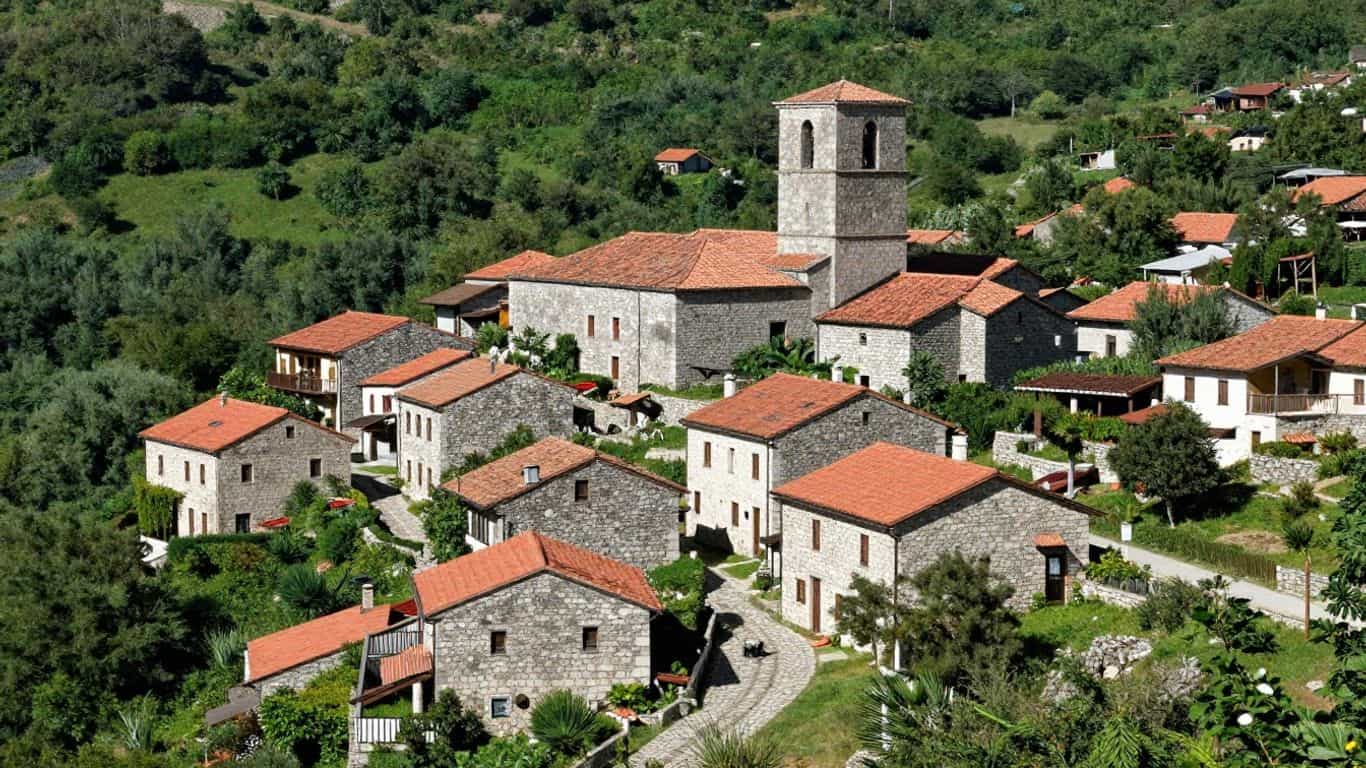

Château de Chambord by Candlelight: Is the Ultimate Night Tour Worth It?

Chambord after dark is not really about checking off rooms. It is more about seeing a well known landmark in a controlled light. For some people the point is the mood. For others it is the sense of a tale. And for a few it comes down to the simple issue of getting to the estate at night.
Key Takeaways
- A candlelit visit to the Château de Chambord offers a quieter, more theatrical alternative to a standard daytime château tour.
- The Renaissance architecture, courtyards, and double-helix staircase at Chambord Castle in France are particularly striking in low light.
- Prices, dates, and start times vary, so check the official event details before committing.
- It is one of the more atmospheric things to do in Chambord for couples, history enthusiasts, and travelers who enjoy cultural events.
- Comfortable shoes, warm layers, and planning make the evening easier.
What the Chateau de Chambord candlelit night tour includes
At Château de Chambord in France, a candlelit evening feels like a full outing, not just a late chance to go inside. Most guests walk through a set of rooms. The light used there, the spoken guide, and the timing between stops shape the mood in a clear way.
The plan may shift with the season or with a special event. For what to expect, rely on the dates and times that are posted ahead of time.
How the evening experience differs from a daytime visit
By day, the Château de Chambord looks clear and lively, like a standard historic site you can step into without trouble. When evening comes, the darker light changes everything. The walk feels slower, and your eyes go to the parts that stand out, like entrances, hearths, stairways, and the sights over the yard. You might not cover as many rooms as you would during a full daytime visit. Still, it can feel tighter in focus, and more personal, as you move through.
The contrast matters in a practical way too, especially if you are deciding between a day visit and an evening one at Château de Chambord. In many evening programs, you have to arrive within a set time or follow a specific path.
A daytime visit is usually more flexible. You can slow down, stop where you like, and keep moving only when you want. So, when you are choosing, it helps to ask what kind of visit you will get. Do you want wider access to the château, or do you prefer a more planned setting?
The candlelit rooms, staircases, and courtyards
Candlelight changes how the interiors read. Stone walls take on warmer tones, carved details emerge gradually, and the contrast between bright flames and dark corners makes familiar rooms feel less static. The courtyards and exterior approaches add another layer, since the château’s scale becomes visible in fragments rather than all at once.
The visit is worth pacing carefully. Stop when you move from one room to the next. Turn back and glance through the open doorways. Let the size and shape of the building sink in. If you want more context for the whole area, read a guide to the Loire Valley’s nicest châteaux. That can help you see where Chambord belongs in a longer day-by-day plan.
Sound, storytelling, and theatrical elements
It depends on the program. Some evenings include spoken interpretation. Others focus on music. A few add short staged scenes. There may also be other small theater moments. With those parts together, the tour feels like it has a flow. The candlelit setting helps, too. People often find the building’s details easier to recall after that. They also mean this is not always the right choice for someone seeking a silent, self-guided walk.
The strongest parts usually support the building rather than compete with it. A short story about the château’s design or occupants can add meaning, while excessive performance may distract visitors who came primarily for architecture. Reading the event description in advance helps set realistic expectations.
How long the tour typically lasts
Allow enough time for the scheduled experience, arrival, security procedures, and the walk back through the grounds or parking area. The advertised duration may cover only the guided or staged portion, not the full evening spent on site. A flexible schedule is especially useful if you are driving from another Loire Valley base.
Do not plan a tightly timed dinner immediately afterwards unless the event provides a clearly stated end time. Nighttime travel through rural areas can take longer than expected, and the quiet setting is best enjoyed without watching the clock.
What makes Chambord atmospheric after dark
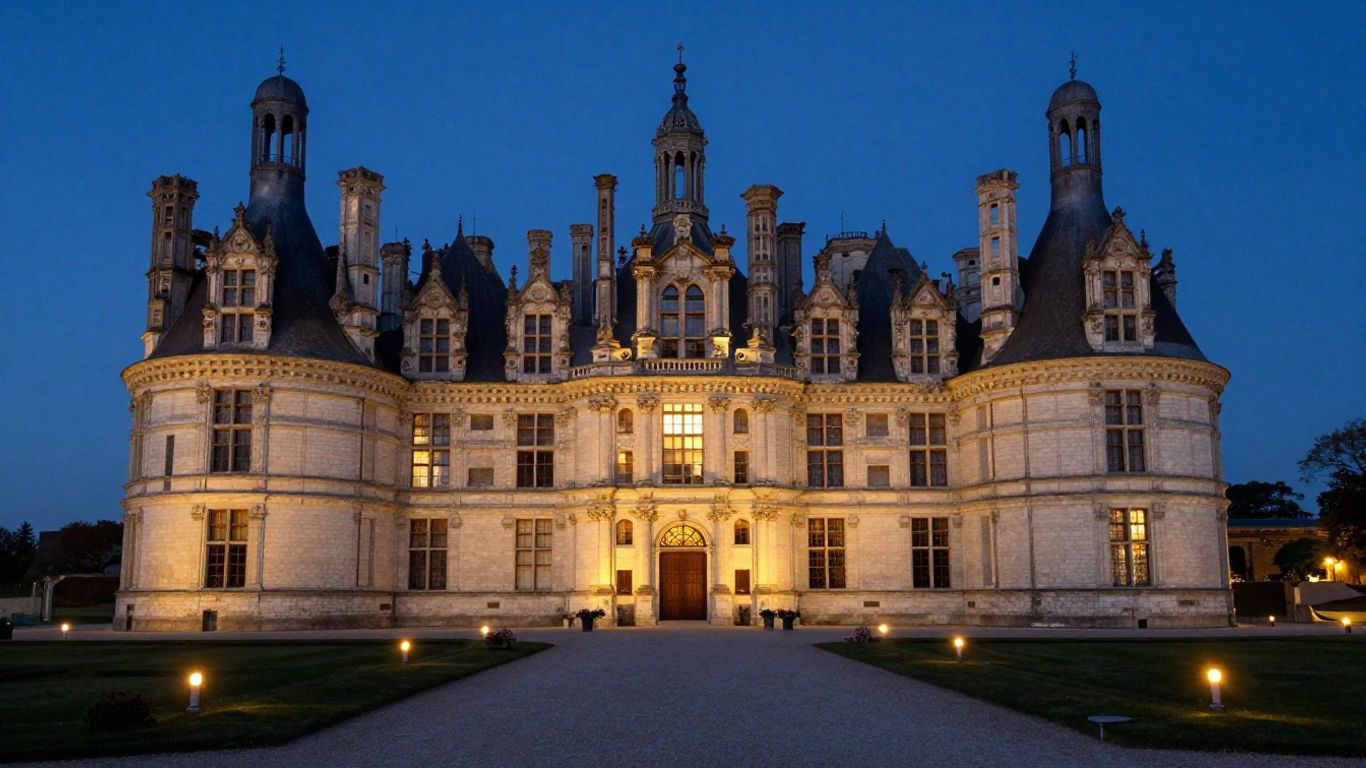
At night, Chambord feels different because of how the buildings meet the dark. Chambord Castle in France is ornate in daylight, with lots of fine details. When the lights are dim, some of those details get lost, but the outlines stand out more. Doors and windows look sharper, and the shadows feel deeper. The end result does not match a daytime tour. It also does not feel like a big outdoor show with bright open space.
Château de Chambord, France, also benefits from the sense of space surrounding the estate. The château does not feel squeezed in by the nearby city. Walking across the grounds can also give the place a lonely feeling. A helpful comparison is the Château de Chenonceau sunset guide. In that case, the shifting daylight shapes what you notice. Chambord at night has a grand, contained mood, but it reads more like a monument.
The château’s Renaissance architecture in low light
Low light simplifies Chambord’s complicated façade into layers of towers, rooflines, dormers, and deep windows. Instead of seeing every decorative feature at once, you notice the building’s outline and the way separate volumes meet. This can make the château feel more like a carefully composed stage set than a single uniform structure.
The contrast hits hardest when you move from a lit patch to a dark one. A lit doorway inside can make the outside look even darker. But if you look at the courtyard, you might only see parts of the roof. How your view shifts is just as important as the candles.
The double-helix staircase as a nighttime highlight
The double-helix stairs are a place people tend to stop at. The design feels strange at first, but watching it in motion helps. Two spiral paths wrap around an open space in the middle. Visitors can meet each other without using the exact same run of steps. When the lights are dim, the shapes do not stand out right away. That makes you look up and down more slowly.
It is also a practical bottleneck. People might meet there, but after hours on the road, the whole place can feel harder to handle. Take a little extra time and walk with care. Don’t rush and don’t treat the stairs like a quick place to snap a picture.
Candlelight, shadows, and seasonal decorations
Candles do not light everything at once. They make little pockets of warmth in the room. Some corners stay dark, and that changes how the space feels. Shadows blur the straight lines on chairs, tables, and stone walls. A few seasonal decorations can bring in extra color or a bit of texture. The overall mood feels rich and calm. Still, this is not meant to show every detail the way strong museum lights would.
That trade-off is part of the appeal. Visitors who want to inspect every object closely may prefer daytime, while those drawn to mood and composition will likely appreciate the restraint. Weather and sunset time can also change how much of the evening begins in natural twilight.
What the experience feels like compared with a standard sound and light show
A candlelit tour usually feels more intimate and place-based than a conventional sound and light show. The focus stays on moving through rooms and understanding the building’s physical spaces, whereas a projection event often uses the façade as a large outdoor screen. Neither format is automatically better; they serve different kinds of attention.
If you like big shows, loud music, and effects you can see from far away, then the sound and light program might feel right. On the other hand, if you enjoy being in older rooms and spotting the little things up close, the candlelit version will probably suit you better.
Is the Loire Valley chateau candlelit night tour worth the cost?
It depends on what you plan to do in the Loire Valley. If you are only looking for a quick look, paid entry may not feel worth it. But if you want more than just walking around after dark, then the ticket can help. You might get a set route, some talk or context, and a mood that is hard to copy at normal times. Still, you should decide based on whether you care about those extras.
Compare the event with your available time, transport costs, and other château admissions rather than judging the ticket alone. The budget Loire Valley travel guide helps put a special evening in context with accommodation, meals, and multiple admissions.
Ticket prices and what admission usually covers
Ticket prices can change based on the day, the age group, the program, and if the night show is a special production. Usually, the ticket lets you into the main scheduled event. Still, dinner might not be part of the deal, and transport and drinks may be extra. Also, you might not get into every area during the day. Always read the current terms before assuming that a standard château ticket applies.
A quick comparison helps you see the difference. Start by looking at the key cost parts, not only the main price listed in the ad.
| Cost or inclusion | What to verify | Why it matters |
| Event admission | Adult, child, and concession rates | Prices may differ by date or program |
| Château access | Rooms and route included | Night events may not open every area |
| Transport | Parking, taxi, or tour transfer | Rural evening travel can add expense |
| Food and drink | Included, optional, or unavailable | Dinner plans may need a separate reservation |
| Booking terms | Changes, refunds, and arrival rules | Fixed-entry events leave less flexibility |
After checking these details, compare the total with a daytime visit plus a separate evening activity. A higher ticket can still be good value for a rare experience, but only when the format matches your interests.
Who is most likely to enjoy the experience
This tour fits well if you enjoy old buildings, local history, and taking photos. You might also like how the nights are set up for special cultural moments. It can feel romantic for couples. Families with older kids may like the thrill of wandering through a well known château once it gets dark. It can also suit repeat visitors who have already seen Chambord in daylight and want a different perspective.
People who prefer unstructured exploration should check whether the event is guided or timed. The more programmed the evening, the less opportunity there may be to wander independently. A little advance research prevents a mismatch between expectations and format.
When the evening tour may not justify the expense
If you are only in the area briefly, the price can seem hard to defend. If you do not enjoy dramatic or stage-like versions of history, you might skip it. If you are already spending money on other big sights, this one can feel like too much.
It is also not great for people who do not like dark indoor spaces. And if you need a lot of help for mobility or access, this event may not meet that need.
Weather and transport can affect the calculation too. If reaching Chambord requires an expensive private transfer, the total may exceed the value of the admission itself. In that case, a daytime visit or an overnight base closer to the estate may be more practical.
How it compares with other Loire Valley night events
In the Loire Valley, you might also find night events like lit garden walks, live music, light shows, or evening strolls at another château. Some programs put you outside more, especially garden events that change with the season. Other options take you inside with a host and more time in the rooms, looking closely at the building features. What you choose can come down to what you prefer most, like the grounds, the show, or the older interior spaces.
Do not choose solely on the promise of the word “candlelight.” Check the route, duration, language, weather policy, and transport arrangements. Those details usually shape the experience more than the label.
Planning your visit to Chambord at night
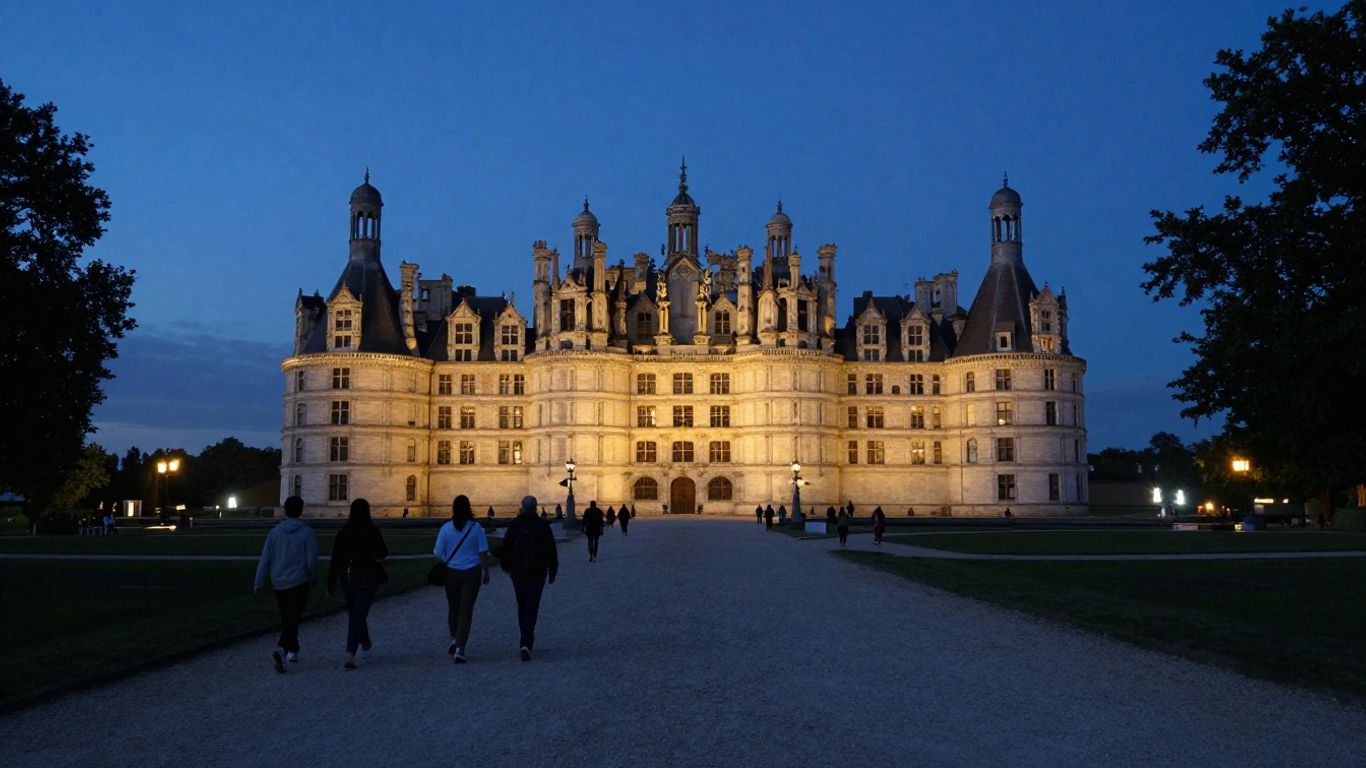
Night trips take more prep than normal sightseeing. The estate is set out beyond the main city area, and buses or trains at night may run less often. Before you go, open the event page close to your travel time. Look for the date and the start time. Also note the entry steps. If anything has changed, you will see it there. Do not forget the trip back. Plan your ride home as carefully as you plan your ticket or admission.
If Chambord is one stop on a wider trip, leave enough daytime flexibility for delays and meals. The practical Loire Valley day-trip planning guide explains why trying to fit too many large estates into one day can make the itinerary feel rushed.
Tour dates, seasonal availability, and start times
Candlelit events are typically seasonal or tied to particular dates rather than offered every evening. Start times shift with sunset and may be staggered to manage groups. A listing from a previous year is not a reliable indication of the current calendar.
For château de Chambord visites, look for the official date range, arrival window, language information, and expected end time. If your trip is built around one evening, confirm the event is running before booking nonrefundable accommodation or transport.
Reservation requirements and ticket-buying options
Booking ahead is the safest option when there are only a few spots for the night. Some events let you pick a time slot, and others ask everyone to show up at the same time so the tour can begin. Have your confirmation ready on your phone. Also check if the event wants a paper ticket.
Read the conditions around late arrival and cancellations. Rural traffic, parking walks, and unfamiliar roads can make a last-minute arrival stressful, especially after sunset. Booking early also gives you a better chance of aligning the event with dinner and accommodation.
Parking, transportation, and arriving before dark
Driving is often the simplest option for reaching Château de Chambord, France, but don’t underestimate the final approach and walk from parking. Arrive with time to park, find the entrance, and orient yourself before the group begins moving. If you are not driving, confirm that a taxi or private transfer will be available for the return journey.
A short pre-arrival checklist keeps the evening manageable:
- Confirm the entrance and parking instructions.
- Save the route and booking confirmation offline.
- Allow extra time for rural roads and walking.
- Arrange the return journey before the event begins.
Once those details are settled, you can focus on the château instead of solving logistics in the dark. Arriving before sunset also gives you a chance to see the exterior transition from natural light to evening illumination.
What to wear and bring for the evening
Choose comfortable shoes with good grip because the route may include stone floors, steps, and outdoor paths. Temperatures can fall quickly after sunset, even when the afternoon was warm, so a light jacket or extra layer is useful. A small bag is easier to manage than bulky luggage.
Take a charged phone with you. Bring your booking details too. If you need any medication for the evening, pack that as well. Plan for the fact that not every section of the route will be warm or well lit. Some parts may feel dim or cool. Wear practical clothing so you stay comfortable. Pick items that fit the setting and do not pull focus away from it.
Choosing between a candlelit tour and other Chambord experiences
When you are in Chambord, there are many things to do in Chambord, you could go to the buildings and the past. You could also catch a planned night event. Some people fit it into a larger trip across the Loire Valley.
Don’t just assume every tour will be new for you. If you already booked other plans, check the details first. That way you do not pay for something that overlaps with what you will do anyway.
There is not one sure way to enjoy the things to do in Chambord. Before you choose what to do there, pause and think about what you really want.
Do you prefer an easy start when you arrive? Or do you care more about how it looks and how it feels?
Some people like a plan that can shift as they walk around. Others want to place the château into a larger trip and keep things calm.
Candlelight tours versus daytime château visits
Going in during the day usually makes it easier to see things clearly. You can also move around on your own more easily. There is often better light for reading signs and looking closely at small details. If you are coming for the first time, this is the safer option. It gives you a solid start and a full overview. A candlelit tour is more selective and atmospheric, with the building experienced through pacing and mood.
If you have plenty of time, it can start to feel like you are repeating yourself if you have Château de Chambord visites. For a lot of visitors, one carefully planned visit is usually plenty. This is even more true if you are also going to other places in the Loire Valley on the same trip.
Candlelight tours versus regular night illuminations
Exterior illumination can be simpler and more flexible because it lets you view the château from outside without committing to an interior program. It is often easier to combine with dinner or a drive through the region. The trade-off is missing the close-up experience of candlelit rooms and staircases.
Choose regular illumination if your main goal is an exterior photograph or a brief evening stop. Choose the tour if you want the building’s interiors and a guided narrative to shape the night.
Candlelight tours versus events at nearby Loire Valley châteaux
Nearby estates offer different scales, settings, and event styles. Some emphasize gardens, riverside views, music, or projections, while Chambord’s strongest quality is its monumental Renaissance architecture. A quieter estate may feel more intimate, but Chambord can provide a greater sense of scale.
The regional châteaux hotel guide can help if you are deciding where to base yourself for several evening events. Staying nearby reduces late driving and makes it easier to choose an event for its character rather than its distance from a distant hotel.
Whether to combine the tour with dinner or an overnight stay
Pairing the visit with dinner usually goes well when the place to eat is not far away. It helps too if the plan for the event is clear and steady. If not, you might end up eating fast before you go in, or sitting through a long drive after you leave. That can spoil the relaxed mood. For people who want to see Chambord in daylight, staying the night is often the better option.
Make the night tour your main plan for the evening. Then build the meal stop or the place to stay around it. This way, if timing slips, you still have options. The whole visit also feels more solid, since it is not tied to a bunch of strict bookings at the same time.
Practical tips for getting the most from the experience
A château visit at night changes with small choices. The season matters a lot. It shifts the weather, the amount of light, and how busy the grounds feel. It also changes how much time you will spend inside versus outside.
Think about where you stand when you look at rooms and halls. Also think about how you move around. If you plan to take photos, decide what you will do ahead of time. Then you can arrive with fewer surprises.
A realistic plan is better than trying to capture every room or event detail. Leave space to observe, listen, and move at the group’s pace.
The best time of year to visit
The right season comes down to how you feel about chill air and busy streets. If you do not mind cooler nights, shoulder months can feel calmer and a bit less crowded. In those periods, some places keep a slower, local vibe.
Summer is easier for being outside, and days feel more pleasant. Still, it can be crowded, and prices or availability may tighten when lots of people want to go. Autumn is a good middle ground for many travelers. You may get earlier darkness without the coldest weather.
Use a seasonal planning resource such as the guide to the best times to visit the Loire Valley, then verify the specific event calendar. General regional advice cannot replace the château’s own dates and operating conditions.
Where to look for photos and memorable views
The approach to Chambord Castle in France, the courtyard edges, and the roofline views from open spaces can all produce strong photographs. Look for moments when candlelight spills through a doorway or when the façade is partly concealed by darkness. A wide shot helps convey scale, but smaller details often communicate the mood better.
Low light makes blur and glare more likely. Take a few deliberate images, then put the camera away for portions of the route. The most memorable view may be one you experience without trying to record it.
Accessibility considerations and mobility limitations
Ask in advance about steps, uneven flooring, outdoor distances, seating, and the route through the château. Old structures can feel easier to handle in the day. At night it is a different story. Light levels drop, and people cannot change how they move in a crowd. Because of that, visitors with limited mobility should check the latest access details first. They should not count on generic daytime notes.
If you use a mobility aid, confirm where it can go and whether assistance is available. A daytime visit may offer more flexibility if the evening route cannot accommodate your needs comfortably.
Rules about photography, children, and personal belongings
Photo rules can change from one event to another. This is common when flash, tripods, or video filming could disturb the show. Try to keep your bags and other items small. In tight staircases and busy spaces, also watch for staff directions.
Kids might like strange or different places. Still, the day is late, the lights are dim, and the whole time feels quiet. That kind of pacing can be hard on younger visitors and they may get tired.
Explain the format before you arrive so everyone knows that the group may need to stay together. If your party needs frequent breaks or early departures, a flexible daytime visit may be easier than a timed evening program.
Conclusion
The Chateau de Chambord candlelit night tour is worth considering when you want atmosphere, architecture, and a structured evening rather than a standard monument visit. It is less suitable for travelers seeking maximum independence, low-cost sightseeing, or a simple exterior view. Check the current schedule, plan your transport carefully, and choose the format that best matches how you prefer to experience historic places.
Frequently Asked Questions
Is the Chambord candlelit night tour worth it?
It can be worthwhile for visitors who enjoy historic architecture, storytelling, and atmospheric cultural events. It’s less valuable if you mainly want unrestricted access or a quick exterior photo.
How far in advance should I book a candlelit tour?
Book as soon as your dates are firm, especially for limited-capacity or seasonal events. Confirm the cancellation and late-arrival rules before paying.
Can I visit Chambord during the day and return at night?
That may be possible, but check the event schedule and ticket conditions. Returning can work well when you have enough time between visits and reliable transportation.
What should I wear to a nighttime château event?
Wear comfortable shoes and bring a warm layer. Stone floors, outdoor paths, stairs, and falling evening temperatures can make practical clothing more important than formal attire.
Are candlelit château tours suitable for children?
Older children often enjoy the unusual setting and storytelling. Younger children may find the late hour, dim rooms, and need to remain with a group tiring.
Can visitors take photographs during the tour?
Photography rules vary by event. Check the instructions on your ticket or ask staff about flash, tripods, filming, and any rooms where photography is restricted.
Is Chambord easy to reach without a car at night?
Evening public transportation can be limited because the château is outside a major urban center. Confirm your return transport before booking, and consider staying nearby if your schedule is late.