
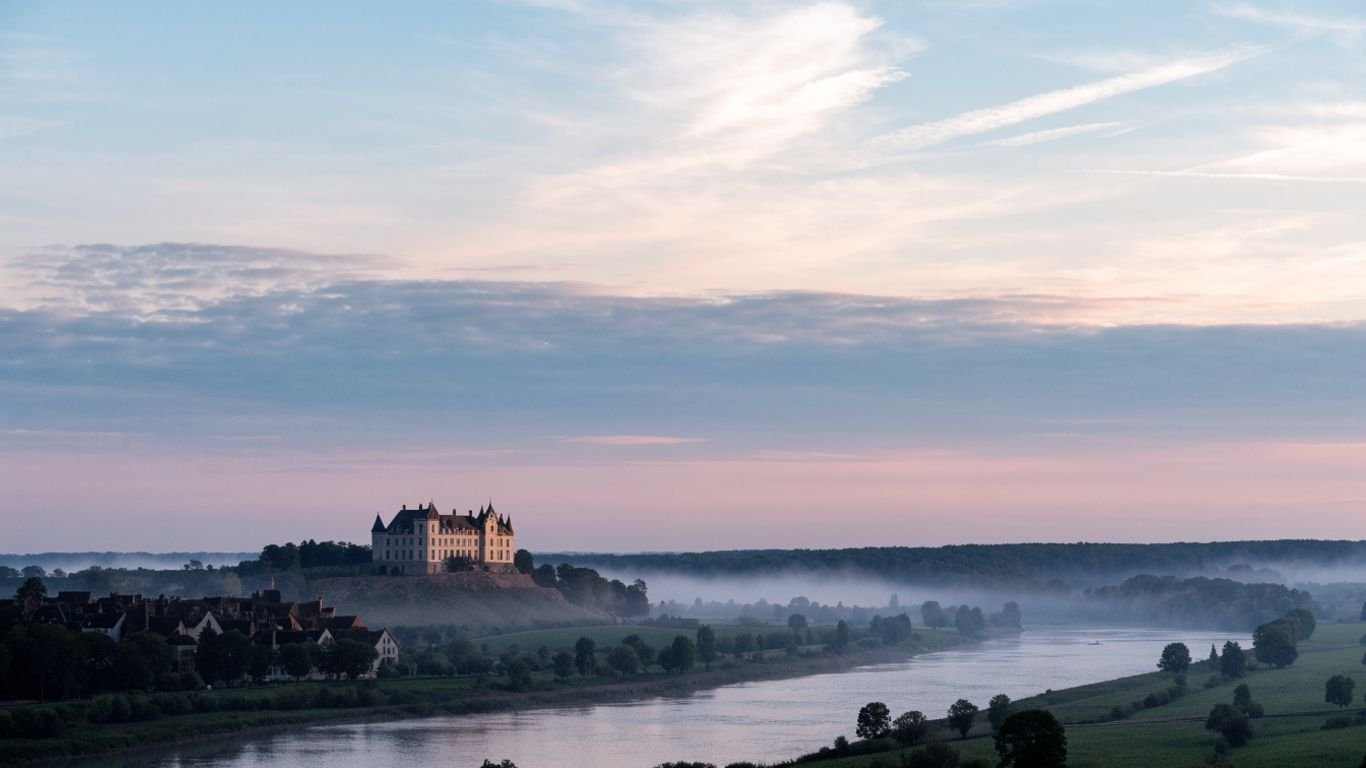
Chateaux at Dawn: The Loire Valley Before the Tour Buses Arrive

Key Takeaways
A dawn visit is best treated as a chance to see the Loire Valley’s castles and riverside landscapes in a different light, not as a shortcut to an early interior tour. A little advance planning makes the quiet hours easier to enjoy.
- Check sunrise time and the forecast for your dates.
- Confirm public access and opening hours before setting out.
- Choose a viewpoint and route in advance, especially in rural areas.
- Allow time for changing light, mist, and slower driving.
- Pair one dawn stop with a château visit later in the day.
Why see Loire Valley chateaux at dawn
The loire valley chateaux at dawn offer a different kind of visit: the focus shifts from rooms and exhibits to silhouettes, rivers, and the first changing colors of the day. The quiet can make familiar places feel less hurried, though it does not mean every gate or interior is open. Think of dawn as a landscape outing, then plan a separate daytime visit if you want to explore inside.
How early light changes the look and feel of the castles
Before the sun is high, the light is low and often soft, so stonework may read as a shape against the sky rather than as a detailed façade. Colors and shadows shift quickly as the morning brightens. A partly cloudy sky can change the scene from one moment to the next, which is part of the appeal but makes any single view hard to predict. Give yourself a few minutes to watch the light instead of rushing straight to a photograph.
What you gain from quieter roads and viewpoints
Setting out early can mean fewer people at a viewpoint and less traffic on the way there, especially outside the busiest periods. It is not a promise of an empty road or a private view, but there is often more room to pause without feeling pressed to move along. The quieter pace also makes it easier to notice the river, birdsong, and the details of the surrounding countryside. A slower first hour can set a calmer rhythm for the rest of the day.
What dawn does not guarantee, including open interiors
A sunrise view and an open château are two different things. Opening times vary by property and season, and the approach to a viewpoint may pass through grounds that are closed before the day’s visiting hours. Check official access information for each stop, and do not assume that a gate, garden, or riverbank is open simply because it appears on a map. If access is uncertain, choose a clearly public viewpoint and keep the visit outside the grounds.
Choosing sunrise scenery over a full château visit
A dawn outing works best when the scenery itself is the main event. You may have time for one viewpoint and a short walk, but not for a full visit with rooms, gardens, and exhibits. Decide which matters more that morning, then reserve enough time to do the other later. A focused stop is often more satisfying than trying to fit a complete château visit into hours when it may not yet be open.
Where to catch the best early-morning views
The strongest dawn stop is not always the most famous château; it is the place where you can reach a suitable public view safely and in time. River bends, open fields, and town viewpoints can all provide a sense of the landscape around a castle. Check your route and access before leaving, since a promising pin on a map may be on private land or behind a closed entrance. The settings below offer different kinds of scenery to consider.
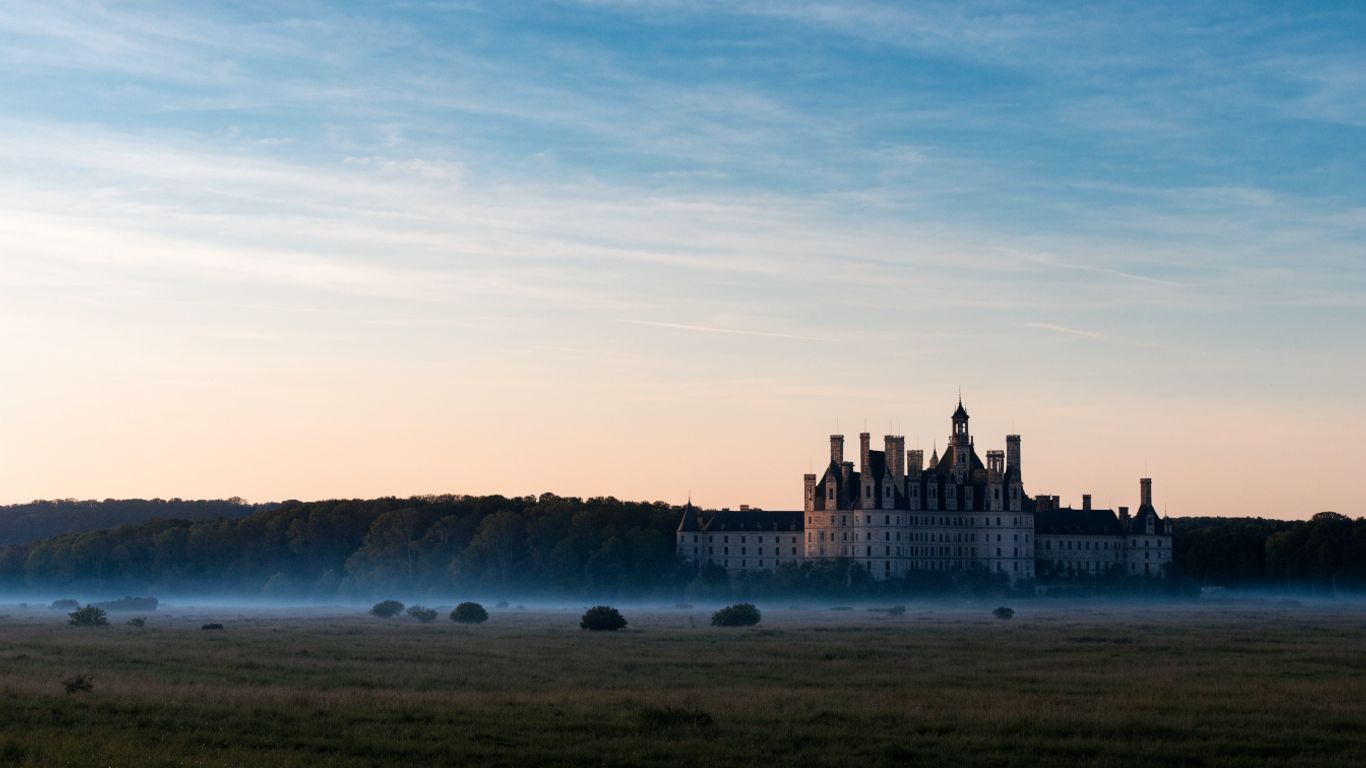
Chambord’s silhouette and surrounding forest
Chambord’s distinctive roofline can make a striking outline against a brightening sky, while the surrounding woodland gives the scene a broad, natural frame. From a suitable public viewpoint, the distance can help show the château in its landscape rather than isolating it as a building. Check access and parking arrangements in advance, and avoid entering closed grounds in search of a closer angle. If the sky is flat, the forest edge and the château’s shape can still make a clear composition.
Chenonceau’s arches reflected in the Cher
Chenonceau’s arches over the Cher make the river an essential part of the view. A reflection is possible when the water is calm, but wind, current, and passing conditions can break it up; plan for an interesting scene even if the surface is not mirrorlike. Confirm which river viewpoints are publicly accessible at your chosen hour rather than assuming that the château grounds are open. For a later visit, a golden-hour Chenonceau guide offers a separate look at changing light and seasonal access.
Amboise and the riverside views of the old town
Amboise gives you a townscape as well as a château: rooftops and the fortress rise above the Loire, with the river creating space in the foreground. A riverside viewpoint can be a practical choice when you want a view without relying on access to the château itself. Look for a safe place to stop and walk, and be mindful of local residents beginning their day. The scene changes with the weather, so leave room to explore a second angle if the first is obscured.
Saumur’s château above the Loire
At Saumur, the château sits above the town and river, so a view from across the water can bring all three into one frame. Mist may drift through the scene or hide part of the hilltop; a local Saumur dawn account illustrates how quickly river conditions can change. Treat a clear reflection as a bonus rather than the goal, and be ready to enjoy the changing atmosphere even when the building appears only in fragments.
When to plan your visit
The best date depends on how early you are willing to start, the kind of light you hope to see, and whether you also want to visit interiors that day. Sunrise shifts across the year, and weather in the valley is not something a calendar can settle. Use the seasons as a planning guide, then check a local forecast and the property’s current access details close to your visit. A seasonal Loire Valley guide can help put the timing of a broader trip in context.
Comparing sunrise times across the seasons
Summer mornings begin early, while winter gives you a later sunrise but colder, darker conditions before it. Spring and fall can offer a middle ground, though the exact timing still varies by date. Check the sunrise time for your location rather than relying on a general regional estimate, and allow time to reach the viewpoint before the sky begins to brighten. The table gives a broad planning comparison, not a substitute for checking the time on your travel dates.
| Season | General dawn planning | Practical consideration |
|---|---|---|
| Spring | Earlier starts as the season advances | Pack for cool, changeable conditions |
| Summer | Very early starts | Allow for an early night and a quiet route |
| Fall | Later starts as days shorten | Expect changing weather and damp mornings |
| Winter | Later sunrise | Bring warm layers and check for icy conditions |
The useful question is not just when the sun rises, but whether you can reach your chosen spot comfortably beforehand. Build in a margin for parking, walking, and finding the view in low light. For a wider view of seasonal trade-offs, check local conditions again shortly before you travel.
Weighing mist, cloud cover, and changing light
Mist can soften a view and add depth, but it can also conceal a château or make rural driving more difficult. A clear morning may give you a sharper outline, while broken cloud can produce brief changes in color and contrast. No forecast can guarantee the exact scene at a riverbank, so have a second viewpoint in mind if visibility is poor. If fog makes driving uncomfortable, skip the distant stop and choose a closer, safer option.
Checking opening hours and seasonal access restrictions
Opening hours for interiors, gardens, and grounds can differ, and some access may vary by season. Check the official information for the specific château rather than assuming the hours are the same across the region. Also confirm whether the viewpoint you want is outside the property boundary and available at dawn. This small check helps prevent a scenic plan from depending on an entrance that is still closed.
Allowing for weather and last-minute itinerary changes
Treat the sunrise stop as a flexible part of your day, not a fixed appointment with perfect conditions. Rain, low cloud, or a mist-obscured view may call for a slower breakfast or a later visit instead. Decide in advance what would make you change course, particularly if the roads are dark or visibility is limited. A short list of alternatives nearby can save time and keep the morning relaxed.
How to plan a dawn outing
A good dawn plan begins with the practical details: where you can legally stand, how you will get there, and what will be open. Rural areas can be quiet before sunrise, but that also means fewer services and less margin for missed turns. Check the route during daylight if it is unfamiliar, and save directions offline in case mobile service is limited. Pack simply so you can leave promptly and focus on the view.
Finding public viewpoints and access routes in advance
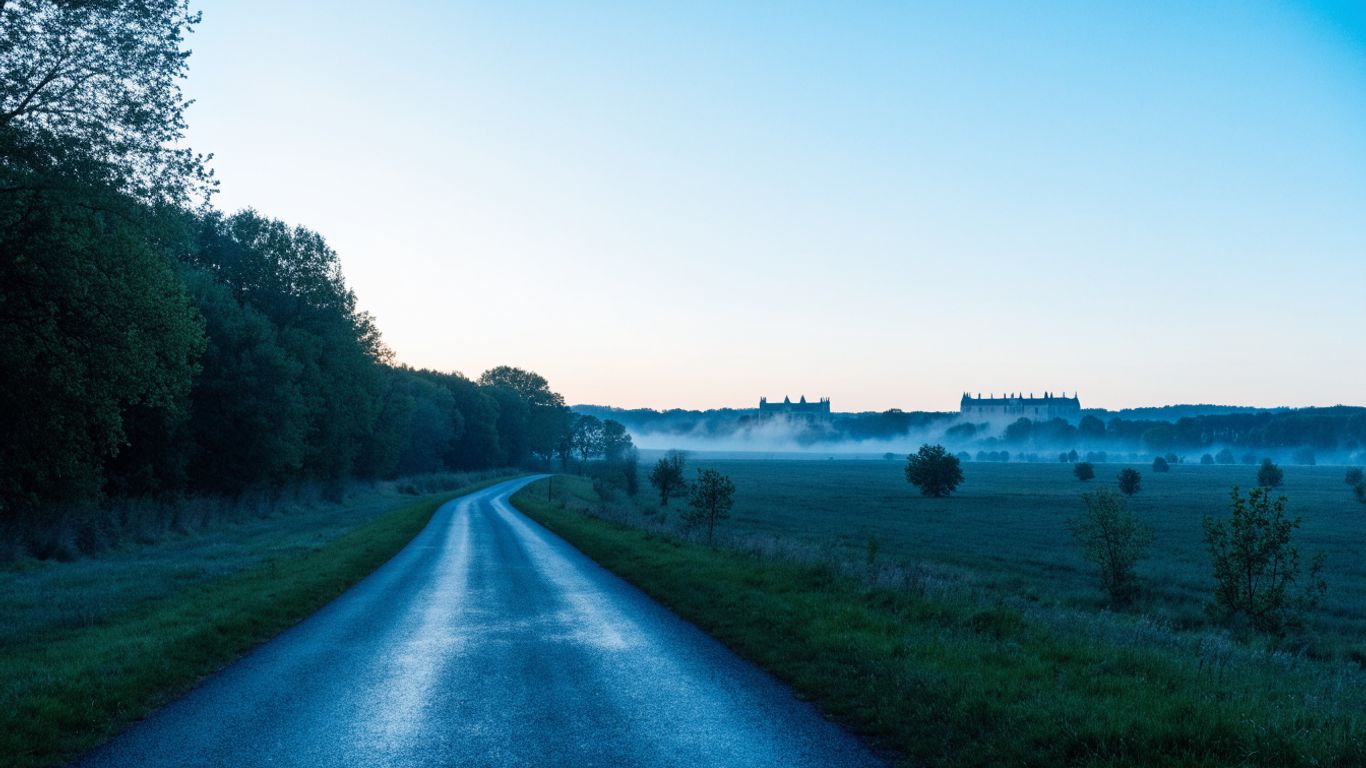
Use maps to identify a likely viewpoint, then verify that it is a public place with a safe walking route. Look for signs of parking or a designated path, and check whether access depends on château grounds that may be closed. It helps to know your final approach before it is dark: a little research can prevent wandering near private property in the early morning. If there is no clear public route, choose another location rather than improvising at the roadside.
Driving, parking, and navigating rural roads before sunrise
Before leaving, check the route, estimate the drive, and add time for parking and the walk to your viewpoint. Rural roads may be narrow or unlit, so drive at a pace that suits visibility and watch for wildlife. A compact preparation list can keep the departure straightforward:
- Save the route and viewpoint details for offline use.
- Check for road closures and any access restrictions.
- Identify a legal parking option before setting out.
- Leave extra time for poor visibility or an unfamiliar turn.
Once you arrive, park only where it is permitted and avoid stopping where your vehicle could obstruct traffic. If conditions make the route feel unsafe, change the plan; the view is not worth a risky drive.
Staying nearby to reduce early-morning travel
An overnight stay near your chosen stop can make a dawn visit easier, especially when sunrise is early or the route is unfamiliar. Compare locations based on realistic driving time rather than distance alone, and check whether breakfast or other services will be available at the hour you need them. A nearby base also gives you the option to return for a rest before a daytime château visit. Choose lodging that suits the rest of your itinerary, not only one morning’s photograph.
Packing layers, a light, and essentials for a quiet visit
Even a mild day can feel chilly before sunrise, particularly beside the river. Wear layers you can adjust, and bring a small light for walking in dark areas without shining it toward drivers or wildlife. Keep water, a phone, and any necessary access information easy to reach. A simple bag is usually enough; bulky gear can make a short walk less comfortable.
How to photograph the chateaux in early light
Early-morning photography rewards patience more than complicated equipment. The view may change as the sky brightens, mist shifts, or the river moves, so take time to observe before settling on a frame. A few practical choices—where to stand, what to include, and how to behave around the place—matter as much as camera settings. If you are visiting without a camera, the same habits help you notice the scene.
Choosing a viewpoint before arriving
Pick a location that offers a safe, public approach and a clear line of sight, then have a backup in case weather or access changes your plan. Check the direction of the sunrise against the château and river so you know what kind of light to expect. Arriving with a specific view in mind saves time in the dark, but remain open to a nearby angle if the first one is crowded or obscured. Do not cross barriers or enter closed property for a better frame.
Balancing the château, river, gardens, and sky in the frame
Decide what the picture is about before including every visible element. A château can dominate the frame, or the river and sky can give it more breathing room; a garden or tree may provide a natural edge if it is accessible. Move a little, when safe, to see how the foreground changes the relationship between the building and its setting. A quieter composition often says more than a crowded view with too many competing details.
Using reflections, mist, and silhouettes thoughtfully
Reflections work best when the water is still, but broken reflections can also show movement and weather. Mist can soften distant forms, so give the château enough contrast to remain legible rather than expecting it to appear sharply. A silhouette is a useful choice when the sky is brighter than the building, especially before direct light reaches the façade. Take a few frames over time; the conditions may shift faster than you expect.
Photographing respectfully around homes, wildlife, and other visitors
A quiet morning does not mean the landscape is empty of people or wildlife. Keep to public routes, avoid shining lights into homes, and do not disturb animals for a clearer shot. If others are at the viewpoint, leave room and be patient instead of blocking the path. Respectful behavior helps preserve the calm that makes an early visit worthwhile.
Building a Loire Valley dawn itinerary
A dawn stop is easier to enjoy when it has a clear role in the day rather than competing with a full schedule. Choose one main viewpoint, allow for the drive, and leave enough time to eat and reset before another visit. Distances can look short on a map while rural roads and parking add time. For a longer trip, a four-day Loire Valley route can help you think through the pacing of daytime stops and travel.
Pairing one sunrise stop with a later château visit
Choose a sunrise location for its outdoor view, then visit a château later when its interior or grounds are open. If the two stops are nearby, you can keep the day compact; if not, be realistic about the drive and any opening-time gap. A breakfast break gives you a chance to warm up and review the day’s conditions. This combination lets the morning remain unhurried without giving up a more complete visit.
Choosing a compact route around nearby castles
Resist the urge to cover several distant viewpoints before lunch. A compact route reduces backtracking and leaves room for the slower parts of travel: parking, walking, and finding the right public access. Choose stops that make sense geographically, then decide which one matters most if the schedule slips. For one dawn outing, a single well-chosen view can be more rewarding than several hurried ones.
Leaving time for breakfast and daytime travel
After an early start, a proper pause is part of the plan, not time wasted. Check in advance which cafés or services are likely to be open, or bring breakfast if your route begins far from town. Keep daytime driving estimates realistic and avoid stacking a long road journey immediately after a short night. A little spare time can absorb a slow meal or an unexpected change in weather.
Adjusting the plan when grounds are closed or visibility is poor
If grounds are closed, stay with a public viewpoint or move the château visit to its posted opening hours. If visibility is poor, choose a closer location, delay the outing, or make the river and town the focus instead of waiting for a hidden silhouette to appear. Keep one alternative that does not depend on entering private land. The best adjustment is the one that keeps the morning safe and enjoyable.
Conclusion
A Loire Valley dawn visit is most rewarding when it is planned as a quiet landscape stop, with public access, weather, and travel time checked in advance. Choose one promising view, give the light time to change, and save interior visits for the hours when the château is open. The morning may not deliver a perfect reflection or clear sky, but it can still offer a memorable perspective on the valley.
Frequently Asked Questions
What time should I arrive to see a château at dawn?
Plan to reach your viewpoint before sunrise so you have time to park, walk safely, and see the sky change. Check the local sunrise time for your date rather than relying on a general estimate.
Are Loire Valley châteaux open at sunrise?
Not necessarily. Interior, garden, and grounds hours vary, so check the specific château’s current access information and use a public viewpoint if the property is closed.
Which château is best for sunrise photography?
It depends on the view you want: a strong silhouette, a river setting, or a townscape. Choose based on safe public access and the conditions forecast for your visit, not on the assumption of a guaranteed reflection or clear sky.
Can I see a reflection of Chenonceau in the Cher?
A reflection may be visible when the water is calm, but wind and current can change the surface. Treat it as a possibility rather than a certainty, and enjoy the arches and river even if the reflection is broken.
Is it safe to drive in the Loire Valley before sunrise?
It can be, with careful planning, but rural roads may be dark or narrow and visibility can be affected by fog. Check the route, drive cautiously, and change plans if conditions do not feel safe.
What should I bring for a dawn visit?
Bring warm layers, a small light for walking, water, a charged phone, and offline directions. Keep the load manageable, and check weather and access information before leaving.
How many dawn stops should I plan in one day?
One main sunrise stop is usually a practical choice, especially if you also want to visit a château later. Allow time for breakfast and travel rather than packing several distant viewpoints into the same morning.
Enjoyed this guide? Follow Discover France Beyond Paris on Pinterest for new itineraries, hidden gems and seasonal ideas.
Follow on Pinterest


