

Corsican Food and Wine: What to Eat Beyond the Coast

Key Takeaways
Corsica’s inland food culture is shaped by mountains, chestnut forests, pastoral traditions, and local vineyards. A little planning makes it easier to find regional dishes and taste them in the places where they make the most sense.
- Look inland for pulenda, wild boar stews, brocciu, and traditional charcuterie.
- Chestnuts, olives, maquis herbs, and seasonal vegetables anchor many local dishes.
- Niellucciu, Sciaccarellu, and Vermentinu are the key grape varieties to know.
- Village markets, mountain auberges, and cellar visits offer more context than rushed meals.
- Driving times, opening hours, and market days matter when planning a food-focused trip.
How Corsica’s landscape shapes its food culture
Corsica’s cuisine is closely tied to its geography. The island rises quickly from the Mediterranean into forested slopes and high valleys, so inland cooking developed around ingredients that could be raised, gathered, preserved, or grown locally. This is a useful starting point for any corsica food wine guide because the landscape explains why many traditional meals feel earthy, substantial, and seasonal.
Mountain villages, maquis herbs, and pastoral traditions
In the interior, villages are surrounded by scrubland known as maquis, pasture, oak, and chestnut woodland. Wild herbs such as fennel, thyme, and rosemary appear in cooking, while sheep and goats support a long tradition of milk, cheese, and rustic family meals. The result is food with a strong sense of place rather than a single uniform island style.
Mountain restaurants may serve slow-cooked meat, fresh cheese, soup, or grilled produce depending on the season. Portions are often generous, but the cooking is usually straightforward. Ask what was prepared that day instead of assuming every traditional dish is available year-round.
The role of chestnuts, olives, and seasonal produce
Chestnuts were once an essential inland staple, particularly in areas where cereal farming was difficult. Dried chestnuts can be milled into flour for pulenda, fritters, biscuits, and cakes. Olive oil, honey, mushrooms, beans, and garden vegetables add other layers to the rural pantry.
Seasonality still matters. Autumn brings mushrooms and chestnut preparations, while spring is a good time to find young greens and fresh brocciu. Tomatoes, peppers, zucchini, and aubergines become more prominent during the warmer months, often served simply alongside grilled meat or fish.
Why inland cuisine differs from coastal cooking
Coastal Corsica naturally offers fish, shellfish, and lighter Mediterranean dishes, while inland menus lean more heavily on preserved meat, mountain cheeses, beans, chestnuts, and long-simmered sauces. The distinction is not absolute, but it is noticeable after a few days of travel.
A meal in Corte, Castagniccia, or a small village in the Niolo may feel very different from lunch beside a marina. For broader context on regional dishes across France, the guide to French regional specialties is a useful comparison, especially for travelers moving between Corsica and the mainland.
Local markets as a starting point for regional flavors
Markets are often the easiest place to understand a region before sitting down at a restaurant. Producers may sell cured meats, cheeses, preserves, honey, seasonal fruit, and baked goods, giving travelers a chance to compare aromas and textures without ordering a full meal.
Arrive early for the widest choice, and carry small cash denominations where possible. A market also helps you recognize ingredients that may appear later on a menu, making unfamiliar French or Corsican terms less intimidating.
Essential Corsican dishes to seek inland
The inland table is built around comfort, preservation, and practical use of local ingredients. Many dishes are humble in origin but deeply satisfying after a day on winding roads or mountain trails. Some recipes vary from village to village, so the name on the menu is only the beginning of the story.
Pulenda and other chestnut-based specialties
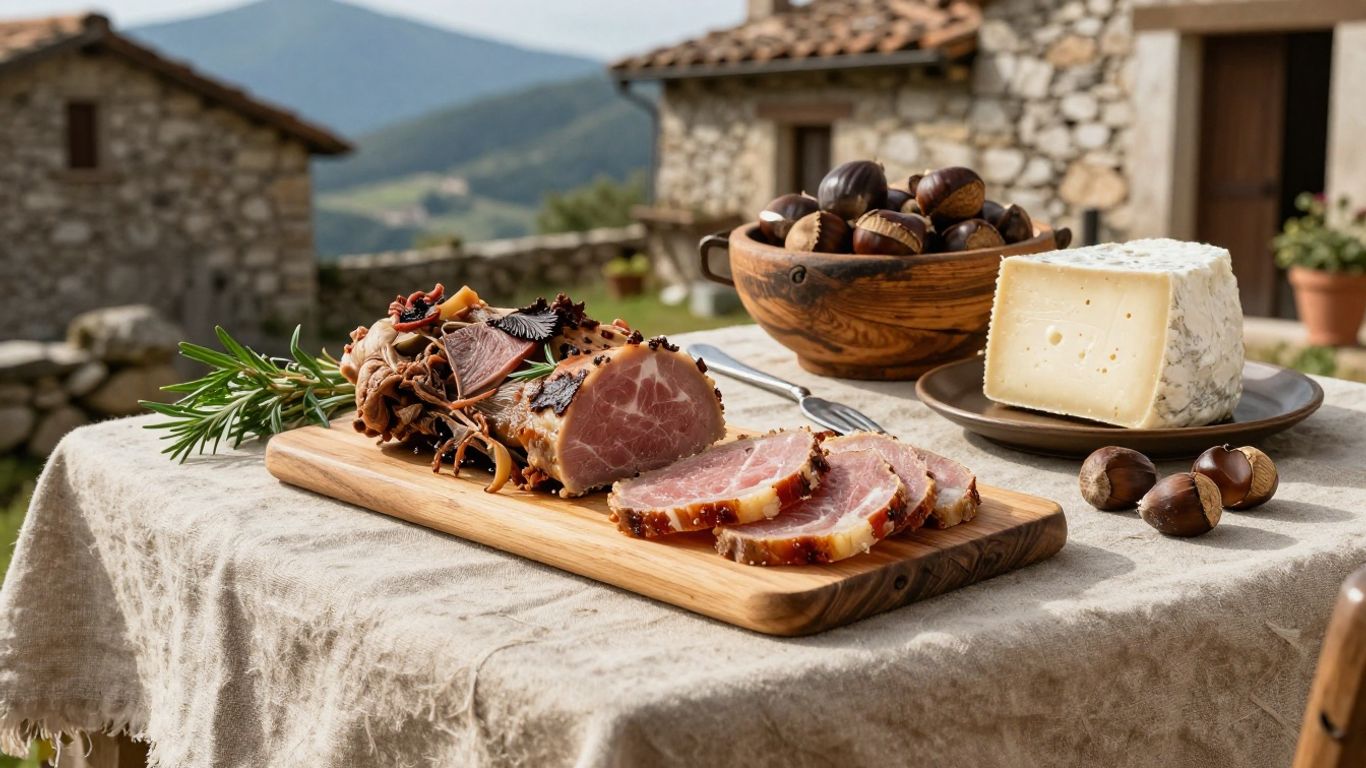
Pulenda is a firm, porridge-like preparation made from chestnut flour and commonly served in slices or wedges. Its gently sweet, nutty flavor works well with cheese, cured meat, mushrooms, or a rich stew. It is one of the clearest expressions of the island’s inland pantry.
Look also for chestnut-flour fritters and cakes, sometimes listed under local names that vary by area. These dishes can be surprisingly delicate, especially when paired with fresh cheese or a little honey. A small serving is often enough because chestnut flour is filling.
Wild boar stews and mountain-cuisine classics
Wild boar, or sanglier, is associated with Corsican mountain cooking and may appear in a stew prepared with wine, herbs, vegetables, and sometimes chestnuts. The flavor is deep and gamey, with a sauce that rewards slow eating and a piece of bread.
Other inland classics include veal with olives, lamb with rosemary, trout from mountain areas, and pasta or polenta served with braised meat. Recipes differ considerably, so it is worth asking whether a dish is made in-house or follows a family preparation.
Fiadone, canistrelli, and traditional desserts
Fiadone is a light Corsican cheesecake traditionally made with brocciu, eggs, sugar, and citrus zest. Its texture is softer and less heavy than many baked cheesecakes, with a clean dairy flavor that suits the island’s warm climate.
Canistrelli are crisp, twice-baked biscuits often flavored with lemon, anise, almond, or wine. They travel well and make a practical snack between villages. Chestnut cakes, honey desserts, and seasonal fruit may appear too, especially in small auberges rather than formal restaurants.
Seasonal soups, beans, and vegetable dishes
Soups and stews are central to inland cooking because they make good use of beans, vegetables, herbs, and preserved pork. A bowl of vegetable soup can be more revealing than a complicated main course, particularly when the ingredients reflect the season.
When scanning a menu, look for beans, lentils, zucchini, greens, fennel, and local mushrooms. These ingredients are often cooked with restraint, allowing olive oil, stock, or cured meat to provide depth. The season often matters more than the recipe’s prestige, so ask what is freshest that day.
Corsican charcuterie and farmhouse cheeses
Corsican charcuterie and cheese are not just appetisers; they are a concise introduction to the island’s pastoral and agricultural traditions. A tasting plate may bring together several textures, from soft and fresh to firm, smoky, and intensely cured. It is also one of the easiest meals to share when traveling with a group.
Prisuttu, coppa, and lonzu explained
Prisuttu is a dry-cured ham, while coppa is made from the neck or shoulder and lonzu from the loin. Their differences become clearer when tasted side by side: prisuttu tends to be silky and savory, coppa can have more marbling and spice, and lonzu is generally leaner.
The quality of the slice depends on curing time, animal husbandry, storage, and how recently the meat was cut. A good plate should not be served ice-cold, since temperature suppresses aroma and makes texture harder to judge.
Brocciu and other cheeses made from sheep or goat milk
Brocciu is a fresh whey cheese strongly associated with Corsica. It can be eaten on its own, spread over bread, used in fiadone, or included in savory dishes. Its flavor is mild and lactic when fresh, becoming more pronounced as it matures.
Other farmhouse cheeses may be made from sheep’s or goat’s milk, with differences reflecting pasture, breed, and aging. If a menu simply says cheese selection, ask which cheeses are local and whether they are fresh, semi-aged, or fully matured.
How curing, smoking, and aging affect flavor
Curing removes moisture and concentrates salt, fat, and savory notes. Smoking can add a dry, woodsy quality, while aging develops firmer texture and a longer finish. These techniques were historically practical ways to preserve food, but they now form an important part of the island’s culinary identity.
Taste from mild to strong if a plate includes several products. Start with fresh cheese, continue through younger meats, and finish with the most mature or smoky item. Bread, fruit, and water help reset the palate between bites.
Choosing a traditional tasting plate
A useful tasting plate should offer contrast rather than simply a large quantity of similar products. Ask for a mix of cured meat, fresh or aged cheese, bread, and perhaps a local preserve or honey.
A simple plate might include:
- Thinly sliced prisuttu for a delicate, salty start.
- Coppa or lonzu for a firmer cured-meat contrast.
- Fresh brocciu or a semi-aged sheep’s cheese.
- Local bread, figs, olives, or chestnut honey.
This combination makes it easier to identify what you enjoy before buying products for the rest of the trip. It also turns a quick order into a small lesson in Corsican food culture.
Corsican wine regions and native grape varieties
Corsican wine reflects a fragmented island geography, with vineyards influenced by sea winds, sun, altitude, and varied soils. The most useful approach for visitors is to learn a few native grapes and then taste them in their principal regions. Appellation names provide useful context, but the producer and vintage still shape the final style.
Niellucciu wines from Patrimonio and northern Corsica
Niellucciu is especially associated with Patrimonio and northern Corsica. It can produce reds with structure, dark fruit, herbal notes, and a savory edge, though freshness and tannin vary by producer and site.
Patrimonio is a practical region for visitors who want to combine food and wine because cellar visits can fit into a day of village and landscape exploration. Try the wine with cured meat, grilled lamb, or wild boar rather than tasting it in isolation.
Sciaccarellu wines from the Ajaccio area
Sciaccarellu is closely linked with the Ajaccio area and is known for aromatic, peppery, and red-fruited character. It can appear in red and rosé wines, often with a lighter feel than a heavily extracted Mediterranean red.
The grape works particularly well with grilled meats, roasted vegetables, and herb-seasoned dishes. When ordering, ask whether the wine is built for early drinking or has more structure for a substantial meal.
Vermentinu for fresh white and sparkling styles
Vermentinu is the island’s best-known white grape and can produce wines with citrus, floral, herbal, and saline qualities. Fresh examples are versatile at the table, especially with brocciu, vegetables, trout, or lighter starters.
Some producers also use the grape in sparkling styles. These wines can be useful before a meal or with fried snacks, although availability depends on the region and cellar.
Understanding Vin de Corse appellations and island terroir
Vin de Corse covers a broad family of island wines, while geographical designations and local appellations give more specific information about origin. Travelers do not need to memorize every classification before visiting a winery. It is more useful to ask where the grapes were grown, which varieties are in the blend, and how the wine was made.
A practical tasting comparison is to sample one red, one rosé, and one white from different parts of the island. The table below offers a starting point rather than a rigid rule.
| Style or grape | Common impression | Food to try alongside it |
|---|---|---|
| Niellucciu red | Structured, savory, dark-fruited | Wild boar or cured meats |
| Sciaccarellu red or rosé | Peppery, aromatic, red-fruited | Grilled lamb or vegetables |
| Vermentinu white | Fresh, floral, lightly saline | Brocciu, trout, or salads |
| Island sparkling wine | Bright and refreshing | Fritters, starters, or aperitifs |
The point is not to reduce Corsican wine to a few tasting notes. Use these categories to start a conversation, then let the producer explain the vineyard and vintage.
What to drink with Corsican food
Pairing Corsican food with wine does not require strict rules. The island’s wines generally make sense when matched to the weight, salt, herbs, and cooking method of the dish. Order what you enjoy, but use the menu as a guide to avoid choosing a wine that overwhelms a delicate plate.
Pairing red wines with wild boar and cured meats
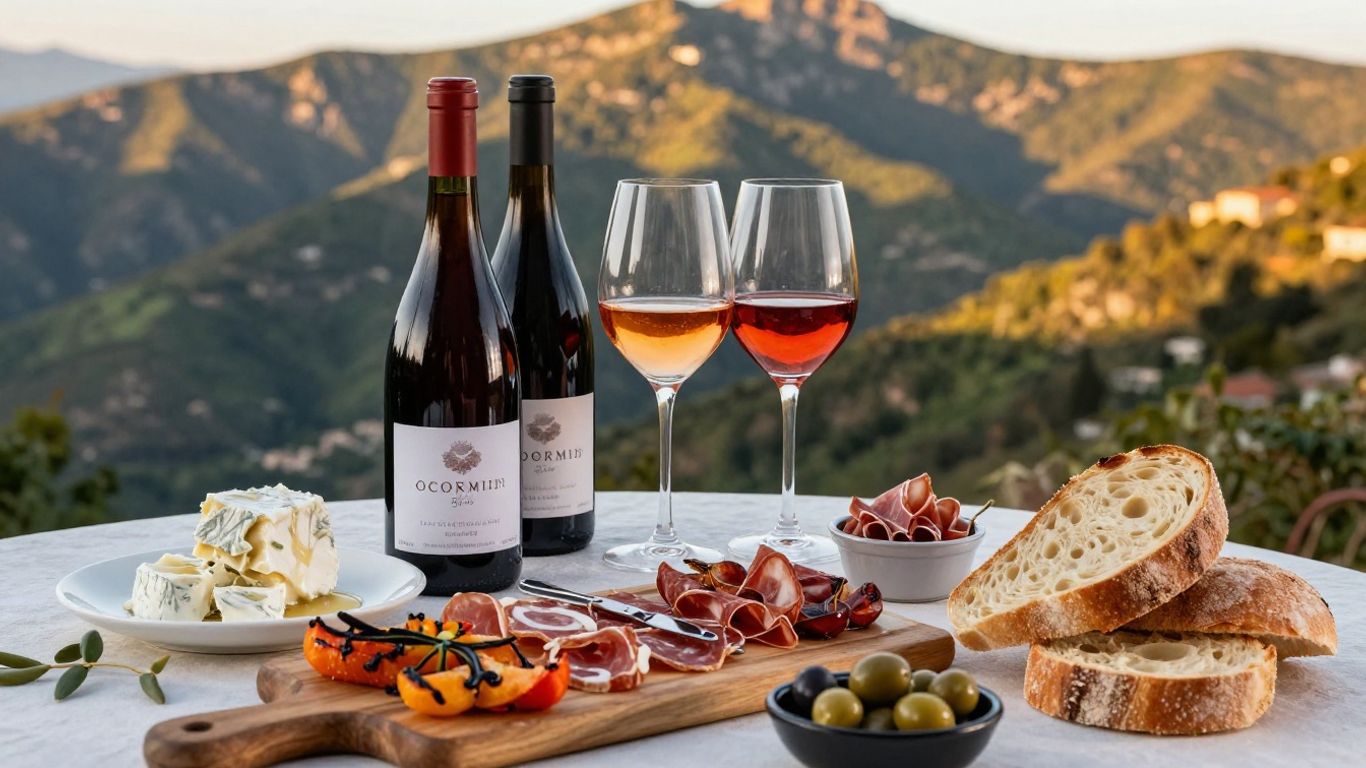
A structured Niellucciu-based red can stand up to wild boar, braised meat, and mature charcuterie. The wine’s acidity is useful with fatty cured meats, while its savory character echoes herbs and slow-cooked sauces.
For lighter plates of lonzu or young coppa, choose a fresher red rather than the most powerful bottle available. Serving temperature matters too: a slightly cool red often tastes more balanced in Corsica’s warm dining rooms.
Matching white wines with brocciu and lighter dishes
Vermentinu is a natural choice for fresh brocciu, vegetable dishes, trout, and seafood. Its acidity keeps creamy or soft textures from feeling heavy, while its herbal and citrus qualities fit the island’s cuisine.
A white can also work with grilled poultry or veal when the sauce is light. Ask for a bottle with freshness if the meal includes lemon, fennel, or raw vegetables, and a fuller example if the dish includes cream or richer cheese.
Serving rosé with grilled meats and seasonal vegetables
Corsican rosé is flexible at the table. It can bridge the gap between white and red when a group orders grilled meats, vegetables, salads, and cheese. Sciaccarellu-based examples may offer enough fragrance to remain interesting beside herbs and smoke.
Serve rosé cool but not extremely cold. Very low temperatures hide aroma and make the wine seem sharper than it is. A bottle opened early in the meal may become more expressive as it warms slightly.
Using aperitifs and digestifs to complete a meal
Aperitifs provide a gentle beginning, especially when served with olives, biscuits, or small savory bites. After a rich meal, a modest digestif may be offered, though local habits vary from one restaurant to another.
Take the restaurant’s suggestion, but do not feel obliged to order multiple courses or drinks. A simple glass of wine, coffee, or water is perfectly appropriate. The best pairing is one that leaves room for conversation and another bite.
Where to experience inland Corsican food and wine
The strongest food experiences often come from places that are part of everyday local life rather than destinations built only for visitors. Markets, village restaurants, family-run auberges, and small wineries each reveal a different part of the food system. Inland travel takes more time, but it also gives meals a clearer connection to place.
Village markets in central and northern Corsica
Markets in central and northern Corsica are good places to buy picnic supplies or identify products before ordering them in restaurants. Look for bread, seasonal fruit, cheeses, cured meats, preserves, and honey, while remembering that market schedules vary by town and season.
The village guides covering Corsica’s hilltop villages can help with route planning when you want to combine a market stop with old streets, viewpoints, and a meal. Check opening days locally rather than relying only on a general itinerary.
Mountain auberges and family-run restaurants
Mountain auberges tend to be informal and focused on a limited menu. That is often an advantage: fewer choices can mean a clearer connection to what the kitchen bought, grew, or preserved.
Reserve ahead during busy periods, particularly if the restaurant is small or located away from a main road. Arrive with enough time for a full meal, since traditional service may be slower than a quick coastal lunch.
Wineries and cellar visits around Patrimonio and Ajaccio
Patrimonio and Ajaccio are logical bases for exploring Corsican wine, but cellar visits are not always spontaneous. Some wineries receive visitors only by appointment, and smaller producers may have limited tasting hours.
Contact producers before driving out, ask whether tastings are available in English or French, and arrange a designated driver. A cellar visit is more useful when you can discuss grapes, harvest timing, and food pairings rather than simply buying the most attractive label.
Food festivals and seasonal producers’ events
Chestnut, wine, cheese, and village festivals can provide a concentrated introduction to regional products. They are also social events, so expect crowds, live music, demonstrations, and stalls rather than a quiet restaurant-style tasting.
Dates can change, particularly outside the main summer season. Confirm the event locally and treat the festival as one part of the trip, not the only opportunity to eat well.
Planning a Corsican food and wine itinerary
A food-focused trip works best when it follows a realistic route instead of trying to cover the entire island at once. Corsica’s roads are scenic but often slow, and mountain distances can look shorter on a map than they feel behind the wheel. Build the itinerary around two or three bases and leave room for unplanned village stops.
Choosing the best regions for a first tasting trip
For a first visit, combine one inland base with a wine area and a coastal stop. Corte offers access to central mountain cuisine, while Patrimonio is convenient for northern vineyards. Ajaccio provides another strong base for exploring western landscapes and Sciaccarellu-focused wines.
Readers using Corsica’s seven-day itinerary can adapt the route by replacing some sightseeing time with market visits, cellar appointments, or longer lunches. The key is to avoid adding a winery that requires a major detour between already distant overnight stops.
Timing your visit around harvests and local specialties
Late summer offers abundant produce and lively travel conditions, while autumn can bring chestnuts, mushrooms, harvest activity, and cooler evenings. Spring is useful for fresh dairy products and green landscapes, though some seasonal businesses may have shorter opening hours.
Ask local restaurants what is currently in season. A specialty associated with a particular month may appear only briefly, and availability can change with weather and supply.
Building meals around market days and winery openings
Start by listing fixed events such as winery appointments and market days. Then place flexible restaurant meals around them. This approach prevents the common mistake of planning a cellar visit on a day when the producer is closed or arriving at a market after most stalls have packed up.
A practical sequence might be a market breakfast, a light picnic lunch, and a longer village dinner. Keep one meal open for a recommendation from a producer or hotel host. Those suggestions often lead to the most useful discoveries.
Balancing driving distances with village dining
Do not plan to taste several wines and then drive a winding mountain road late at night. Stay near the final winery or arrange a taxi where possible. Corsica’s roads require attention, especially after dark and in poor weather.
The car rental advice for Corsica is useful when choosing a vehicle and thinking through rural routes. A compact car is often easier on narrow village roads, while a flexible schedule is more valuable than trying to visit every highlighted town.
Practical tips for ordering and tasting in Corsica
Eating inland is usually straightforward if you approach menus with curiosity and patience. Some rural restaurants have limited English, and the menu may focus on what the kitchen has available rather than offering a long list of alternatives. A few French food terms and a willingness to ask questions go a long way.
Reading menus and recognizing regional ingredients
Look for words such as sanglier for wild boar, brocciu for the fresh cheese, châtaigne for chestnut, veau for veal, and agneau for lamb. Charcuterie may be listed by its specific name, so recognizing prisuttu, coppa, and lonzu helps you order with more confidence.
Menus may also describe a dish by its preparation rather than its ingredients. If something is unclear, ask for a brief explanation before ordering. That is especially useful for stews and tasting plates, where the portion size may be larger than expected.
Asking about provenance, seasonality, and house specialties
A few direct questions can reveal whether a dish is genuinely local and what the kitchen does best. Keep them simple and specific rather than asking for a full culinary history during a busy service.
Useful questions include:
- Is this cheese or meat from Corsica?
- What is freshest today?
- Is the dish made in the house?
- Which local wine would you serve with it?
These questions are practical, not demanding. They give the restaurant an opening to recommend a dish and help you avoid ordering something that is unavailable or out of season.
Budgeting for traditional restaurants and tasting menus
Prices vary by location, view, season, and service style. A market picnic will cost less than a multi-course meal with wine, while a tasting plate can be good value when shared between two people.
Check whether wine is sold by the glass, whether bread or couvert is charged, and whether a set menu includes drinks. In small restaurants, payment options may be limited, so carrying some cash is sensible even when cards are widely accepted elsewhere.
Respecting local customs at markets, tables, and wineries
Greet staff when entering a small shop or restaurant, wait to be invited before handling market produce, and avoid blocking a stall while deciding what to buy. At wineries, arrive on time and follow the producer’s guidance about tasting, photography, and purchases.
For travelers following the practical approach of Discover France Beyond Paris, these small customs are part of the logistics of exploring rural France. Discover France Beyond Paris also helps readers prepare for regional travel beyond Paris, while Discover France Beyond Paris keeps the focus on practical information such as timing, transport, and local expectations.
Conclusion
Corsica rewards travelers who move slowly enough to connect its landscapes with its food. Look beyond the coast for chestnut-based dishes, mountain charcuterie, brocciu, village soups, and wines made from native grapes, then plan around market days, cellar appointments, and sensible driving distances. The result is a more grounded experience of the island, one meal and one valley at a time.
Frequently Asked Questions
What food is Corsica best known for?
Corsica is especially known for charcuterie, brocciu, chestnut-based dishes, wild boar stews, pulenda, fiadone, and seasonal soups. Coastal areas add fish and seafood, while inland menus tend to be more pastoral and rustic.
What is pulenda in Corsican cuisine?
Pulenda is a firm chestnut-flour preparation, often served in slices or wedges. It can accompany cured meats, cheese, mushrooms, or stews and has a mild, nutty flavor.
Which Corsican wines should first-time visitors try?
Start with a Niellucciu red, a Sciaccarellu red or rosé, and a Vermentinu white. These varieties offer a useful introduction to the island’s main wine styles and pair well with many traditional dishes.
Where can travelers find inland Corsican food?
Village markets, mountain auberges, family-run restaurants, and small producers are good places to look. Menus may be short, but that often means they are shaped by the day’s ingredients and local supply.
When is the best time to experience Corsican food specialties?
The best timing depends on what you want to eat. Late summer brings abundant produce, spring is good for fresh greens and dairy, and autumn is particularly attractive for chestnuts, mushrooms, and harvest-related products.
Is Corsican food suitable for vegetarians?
Vegetarian options can include vegetable soups, beans, salads, grilled vegetables, mushrooms, fresh cheese, and chestnut-based dishes. Ask about stock, cured meat, and cooking fats because meat may be used in otherwise vegetable-focused recipes.
Do travelers need a car for a Corsican food and wine trip?
A car is useful for reaching inland villages, markets, and wineries, especially when appointments are spread across rural areas. Plan conservatively because mountain roads are winding, and avoid combining extensive wine tasting with a long drive.


