
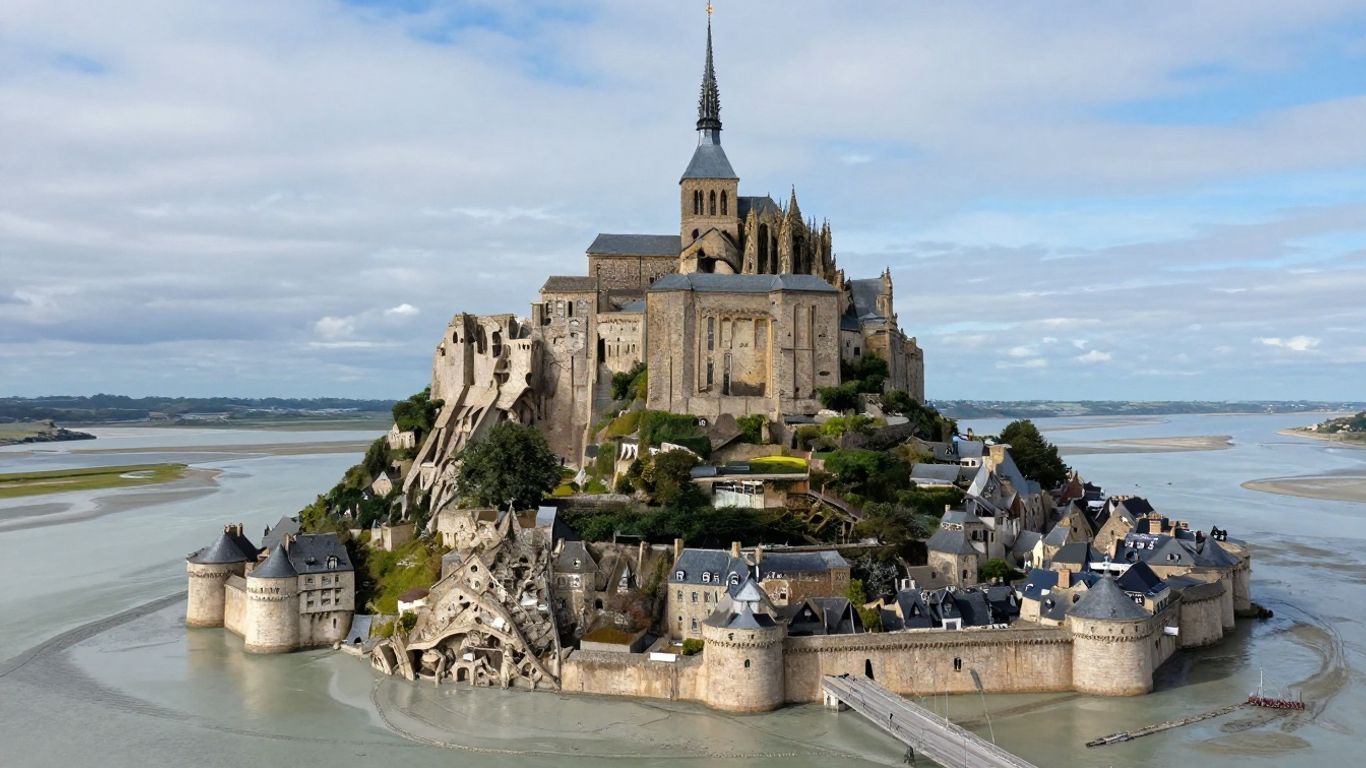
Mont Saint Michel from Above: Is the Helicopter Tour Worth It?

Key Takeaways
A helicopter flight gives you a fast, high-level understanding of Mont Saint-Michel and the changing shape of its bay. It is most compelling when clear weather, tide timing, and your budget all line up.
- The flight reveals the island, abbey, causeway, and bay in one view.
- Routes, departure points, and flight lengths vary by operator.
- Weather can change the schedule and the quality of the view.
- A helicopter tour is a splurge, not a replacement for visiting the island.
- Bay walks, coastal viewpoints, and scenic flights offer lower-cost alternatives.
What the Mont Saint-Michel helicopter tour includes
A helicopter experience usually combines a short safety briefing with a scenic flight over the bay and nearby coast. The exact route depends on the departure airfield, the flight plan, and current operating conditions. Some experiences are shared, while others are arranged as private flights. Before booking, check the meeting point, total time on site, and cancellation terms rather than focusing only on the flight duration.
Typical flight routes over the bay
Most routes are planned to give passengers a broad view of Mont Saint-Michel rather than a single pass directly over the monument. From the air, the flight may take in the salt marshes, tidal flats, causeway, island, and sections of the Normandy or Brittany coastline. The aircraft’s direction can change with air-traffic rules and weather, so an advertised route should be treated as an outline, not a guarantee of every angle.
Flight duration and what happens on arrival
The experience starts before takeoff. Allow time for check-in, identification, a safety briefing, and boarding instructions; a flight advertised as 30 minutes will not usually mean 30 minutes from car door to car door. Passengers commonly receive a headset so they can hear the pilot, then board in small groups according to the aircraft layout. After landing, there may be a short debrief before you leave the airfield.
Helicopter operators and departure locations
Departure points are not necessarily beside the monument. A tour may leave from an airport or airfield in the wider region, which makes transport planning part of the booking decision. Compare the driving time from your accommodation with the price of the flight, and confirm whether the operator expects you to arrive independently. For broader land-based planning, this Mont Saint-Michel transport guide can help you think through arrival routes from Paris and elsewhere.
Seasonal schedules and weather-related changes
Scenic flights often operate on selected dates or seasonal schedules rather than every day of the year. Wind, low cloud, rain, or poor visibility can delay or cancel a departure, even when conditions look acceptable at the monument itself. Ask how rescheduling works and keep some flexibility in your itinerary. A backup plan is especially useful if the flight is the fixed centerpiece of a short visit.
Why the aerial view is so distinctive
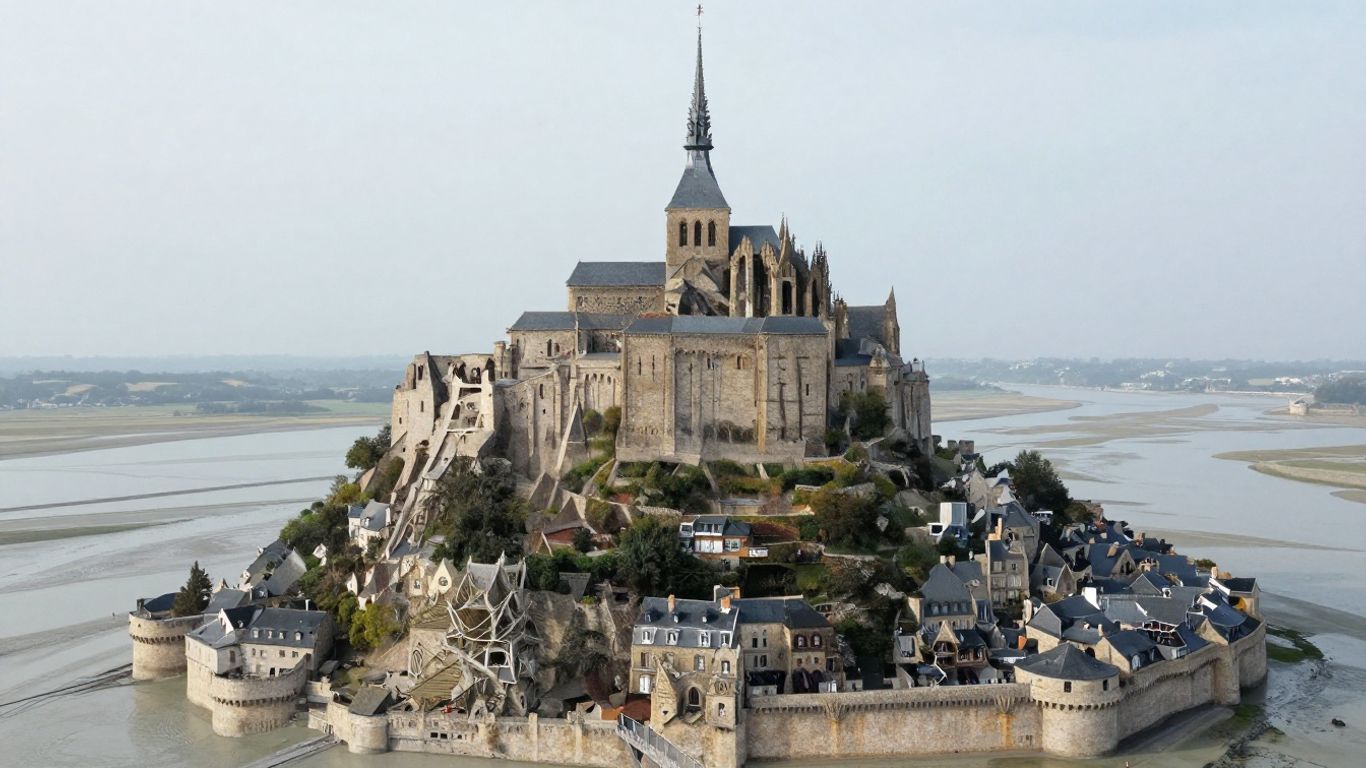
Mont Saint-Michel is difficult to understand fully from one position on the ground. The island’s architecture, causeway, surrounding flats, and water channels spread outward in a pattern that becomes legible only from above. An aerial visit also compresses a large area into a short experience, although it cannot provide the texture or intimacy of walking through the monument. The image below captures the kind of broad visual relationship travelers hope to see.
Seeing the island, abbey, and causeway in one frame
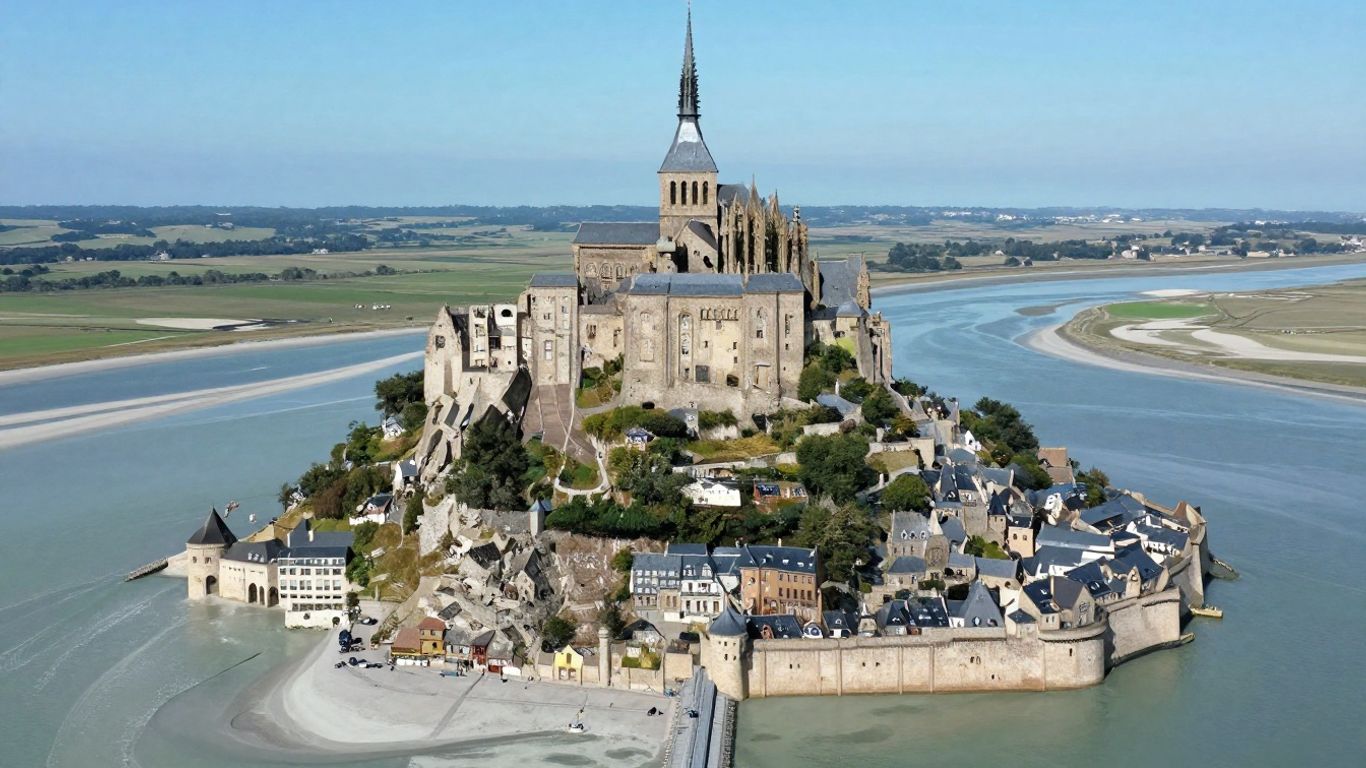
From the air, the abbey appears as the vertical point of a much larger composition. The village and fortifications cluster below it, while the causeway extends toward the mainland and gives the island its familiar sense of connection and separation. That complete arrangement is hard to see from the causeway, where nearby buildings and traffic limit the wider perspective.
How tides reshape the surrounding landscape
The bay changes dramatically between high and low water. At one moment, the island may appear surrounded by reflective channels; later, broad sands and mudflats dominate the view. Tide conditions are not simply a scenic detail: they affect the colors, textures, and apparent distance around Mont Saint-Michel. This guide to Mont Saint-Michel tides explains why tide tables deserve a place in your planning.
Views of Mont Saint-Michel Bay and the Normandy coast
A suitable route can put the monument in context with the bay rather than isolating it as a single attraction. The contrast between pale flats, green marshes, coastal water, and dense historic buildings gives the flight much of its visual interest. On a clear day, the wider coastline adds scale, but haze can soften distant features even when the island itself remains sharp.
What the ground-level experience cannot show
Walking the ramparts gives you close views of stonework, roofs, and the surrounding waterline, but it does not show the whole island’s footprint. Aerial distance also makes the causeway and tidal channels easier to compare. The trade-off is that small architectural details disappear, and the visit may feel brief if you value history, interiors, or unhurried photography more than geography.
How much a helicopter tour costs
Prices vary according to flight length, aircraft capacity, departure location, and whether the seat is shared or private. There is no single reliable price for every Mont Saint-Michel route, so treat online figures as indicative until you confirm the date and format. The most useful comparison is the complete cost of the experience, including transport and time, rather than the ticket alone. A simple breakdown can make the choice clearer.
Typical ticket prices and tour formats
Shared panoramic flights are generally the more accessible format, while private bookings cost more because the aircraft and schedule are reserved for a smaller party. Short flights may focus on the monument and immediate bay; longer routes can include more coastline and countryside. Ask whether the quoted duration means time in the air or the full activity. Also check how many passengers may share the cabin.
What is included in the advertised fare
The fare commonly covers the scheduled flight, pilot, safety instructions, and use of the aircraft for the booked route. It may not cover transport to the airfield, meals, accommodation, or personal photography services. The booking page should also state taxes, booking fees, and any age or passenger restrictions. If the wording is vague, contact the operator before paying.
Extra costs for transfers, photos, or private flights
A departure airfield outside the immediate Mont Saint-Michel area can add fuel, parking, taxi, or rental-car costs. Private flights may also carry a minimum booking value rather than a simple per-person price. Photos or video, when offered, may be optional extras. These costs matter most for solo travelers and families already managing a tight regional itinerary.
When premium pricing may be justified
Paying more can make sense when the flight fits a rare travel window, avoids a long transfer, or gives your group the privacy it values. It may also be worthwhile for photographers who have planned carefully around light and tide conditions. Still, a higher price does not guarantee clear weather or a particular route. The setting matters as much as the ticket when deciding whether the splurge feels worthwhile.
Is the helicopter tour worth it?
Whether the experience is worth it depends on what you want Mont Saint-Michel to reveal. A flight is efficient, visually expansive, and memorable, but it is also expensive and weather-dependent. It works best as one element of a trip rather than as the only way to encounter the monument. Think of it as an aerial overview followed by a separate decision about visiting on foot.
The travelers who will appreciate the experience most
The flight suits visitors who enjoy landscapes, aerial photography, and unusual perspectives on familiar landmarks. It can be particularly appealing to repeat visitors who have already explored the abbey and village from ground level. Travelers with limited time may also value the ability to see the island and bay together, provided they can reach the departure point without stress.
Situations where the flight offers the best value
The experience has stronger value when you are already traveling by car, can choose from several dates, and have enough time for weather-related changes. It also works well for a special occasion or a small group willing to divide a private-flight cost. A longer stay gives you more freedom to pair the flight with a land visit, rather than forcing both into a rushed day.
Reasons some visitors may prefer a standard visit
A conventional visit offers access to the abbey, streets, ramparts, restaurants, and changing atmosphere of the island. It is usually easier to budget and does not require a second transfer to an airfield. Visitors who dislike flying, have mobility or health concerns, or prefer slow cultural travel may find the ground experience more satisfying. A quieter Mont Saint-Michel visit can also address the crowd issue without adding an aircraft booking.
Comparing the experience with its cost and time commitment
Set the flight beside the rest of your itinerary before making a decision. Consider the ticket, transport, check-in time, possible weather buffer, and the hours needed for the island itself. If the aerial view would replace another meaningful activity, the cost may feel less attractive. If it adds a distinct perspective to a well-planned visit, the extra time can be easier to justify.
The best conditions for a clear Mont Saint-Michel helicopter view
Good visibility is central to the experience, and no booking can control the sky. Bright, clear conditions reveal the contrast between the island, water, and surrounding fields, while haze can flatten the scene. Wind and cloud also affect whether the aircraft can fly at all. Build your expectations around flexibility rather than assuming a particular photograph is guaranteed.
How weather affects visibility and flight safety
Operators make the final decision about whether conditions are suitable for flight. Low cloud may obscure the abbey, while strong wind can make the ride less comfortable or prevent departure. Rain can reduce both visibility and photographic quality. Check the forecast close to the date, but rely on the operator’s official update for the final decision and rescheduling instructions.
Choosing the time of day for light and scenery
Morning light can be gentle and may coincide with quieter conditions around the monument, while later light can add warmer tones to stone and water. The best choice depends on cloud, season, tide, and the direction of the route. Ask the operator which departure times are available, but avoid treating “golden hour” as a promise. A clear midday flight is often better than a dramatic time slot hidden by haze.
Tide levels, seasons, and changing views
Tide height changes the visual balance between water and exposed bay. High water can create the classic isolated-island impression, whereas low water reveals the bay’s broad textures and channels. Spring and autumn may bring variable weather, while summer can offer longer daylight but higher visitor demand. Tide tables should inform your preference, not override the operator’s schedule.
Where to sit and what to expect from the aircraft
Seating arrangements depend on the helicopter and the passenger load, so a specific side may not be available. Do not expect to move freely during the flight, and follow all instructions about doors, cameras, and personal items. Reflections and vibration can affect photographs through the window. The clearest view may come from simply watching rather than trying to capture every second.
Planning your helicopter experience
The practical details can determine whether the flight feels simple or stressful. Confirm the address, arrival time, documents, passenger rules, and cancellation policy before leaving for Mont Saint-Michel. Rural and regional transport can be less frequent than visitors expect, particularly outside peak season. Allow extra time for the journey and avoid scheduling the flight immediately before a nonrefundable connection.
How far ahead to book
Book earlier for weekends, holidays, private flights, or a trip with little schedule flexibility. Advance planning gives you more choice of departure times and leaves room to move the flight if weather intervenes. If your itinerary is flexible, a shorter booking window may let you choose based on the forecast, though availability can be limited. Keep confirmation emails and the operator’s contact details accessible.
Reaching the departure airfield from Mont Saint-Michel
First establish the exact airfield, then calculate the drive from your hotel or the mainland parking area. A taxi may need advance arrangement, and public transportation may not align with an early check-in. Visitors arriving from Paris can compare rail, bus, and car options in this Paris-to-Mont Saint-Michel planning guide, then add the separate transfer to the airfield. Do not assume the island itself is the departure point.
Weight limits, passenger requirements, and accessibility
Helicopters have strict weight and balance requirements, and operators may ask for passenger weights when confirming a booking. Children, pregnant travelers, and people with certain medical conditions may face specific restrictions, so ask directly rather than relying on general travel advice. Cabin access can also involve steps or narrow spaces. Discuss mobility needs in advance and request the exact boarding arrangement.
What to wear and bring on the flight
Wear comfortable clothing and secure shoes, especially if the experience includes time outdoors at the airfield. Bring identification, booking details, and only the personal items the operator permits in the cabin. Loose scarves, large bags, and unsecured equipment may not be allowed. Sunglasses can help with glare, while a phone or compact camera is usually easier to manage than bulky gear.
Helicopter tour alternatives and photography options
A helicopter is not the only way to appreciate the geography around Mont Saint-Michel. Bay walks, coastal viewpoints, the causeway, and the abbey ramparts each reveal a different relationship between the monument and its setting. Some alternatives cost less but require more time, physical effort, or attention to tide conditions. Combining two viewpoints often produces a fuller visit than choosing only one.
Comparing helicopter flights with scenic flights
A scenic flight may use a different aircraft or route and can provide a broader regional panorama, while a helicopter often offers a closer, more concentrated view of the island. The distinction depends on the operator and itinerary, so compare actual flight paths rather than labels. If you enjoy aerial travel generally, a hot-air-balloon perspective elsewhere in France illustrates how slower flight experiences trade proximity for a wider sense of landscape.
Viewing Mont Saint-Michel from the bay or coast
A guided bay walk offers a ground-level encounter with sand, channels, and the changing shoreline, but it requires suitable conditions and a reasonable level of fitness. Coastal viewpoints provide distance and often more time to compose photographs. The choice comes down to whether you want movement through the landscape or a stable place to observe it. Tide awareness remains essential for both options.
Best land-based viewpoints for photos
The causeway gives a direct approach view, while the mainland offers wider compositions with more space around the island. The abbey ramparts provide elevated angles over the village and bay, and nearby coastal points can show the monument in changing light. Arrive early or stay later if possible, since crowds make tripods and patient framing difficult. A telephoto lens is useful from a distance; a wide lens works better close to the island.
How to combine an aerial tour with a full island visit
Schedule the helicopter on a different part of the day from the abbey visit, leaving a generous buffer for transport and weather changes. After the flight, walk the island slowly and compare the aerial pattern with the streets and ramparts you can now recognize. For a longer stay, this two-day Mont Saint-Michel itinerary offers a useful framework for balancing the monument, bay, and surrounding area. The combination gives you both scale and detail without asking either experience to do everything.
Conclusion
A Mont Saint-Michel helicopter tour is worth considering when you value a rare aerial perspective, can absorb the cost, and have enough flexibility for weather and transport. It shows the island’s relationship with the bay in a way that ground-level sightseeing cannot, but it should complement rather than replace time on the island. For many travelers, the best choice is to compare the flight with a tide-aware visit, a coastal viewpoint, or a guided bay walk before committing.
Frequently Asked Questions
Is a Mont Saint-Michel helicopter tour worth the cost?
It can be worthwhile for travelers who value aerial views and have room in their budget, but a standard island visit is usually better value for history, architecture, and time spent exploring.
How long does a helicopter tour over Mont Saint-Michel last?
Flight times vary by route and operator, from short panoramic circuits to longer regional flights. Add check-in, safety briefing, boarding, and transport time to the advertised duration.
Where do helicopter tours usually depart from?
Many flights leave from an airport or airfield outside the monument area. Confirm the exact address and plan the transfer before booking accommodation or other timed activities.
Can bad weather cancel the flight?
Yes. Wind, rain, low cloud, and poor visibility can affect both safety and the quality of the view. The operator makes the final decision and should explain rescheduling or refund options.
What tide is best for seeing Mont Saint-Michel from above?
High tide can create the classic isolated-island appearance, while low tide reveals broad flats and channels. The best choice depends on the scenery you prefer and the available flight schedule.
Can children take a helicopter tour?
Age and height rules vary by operator and aircraft. Families should confirm minimum ages, seating arrangements, passenger documentation, and any restrictions before purchasing tickets.
What should visitors bring on a helicopter flight?
Bring identification, booking information, and only the personal items permitted by the operator. Wear secure shoes and avoid loose clothing or large bags that may not be accepted in the cabin.