

Your Essential South of France Map: From Beaches to Bliss (2026 Guide)

So you’re thinking about the South of France. Good call. It’s the kind of place where you can be floating in a quiet cove before lunch, wandering a Roman arena by mid-afternoon, and watching the light go gold over a hilltop village by the time dinner rolls around. Trouble is, it’s a big region, and ’the South of France’ covers a lot more ground than just the Riviera everyone pictures. Which is the whole point of this guide.
Think of it as a plain-English map of the South of France: where the good beaches are, which towns are worth your time, and the slightly boring but useful stuff like when to go and how to get around without losing the plot.
Key Takeaways
- The region runs from the wide sandy beaches of the Languedoc in the west right across to the glitzy French Riviera in the east, with Provence and its lavender sitting just behind the coast.
- Beaches here aren’t one single thing. You’ve got soft sand near Cap d’Agde and Sete, clear-water pebbles at Nice, and tucked-away coves in the Calanques you can only reach by boat.
- The coastal towns south of France each have their own personality, from pastel little Villefranche-sur-Mer to cliff-top Eze and sunny Menton.
- History is everywhere: Roman arenas, a giant papal palace in Avignon, and walled medieval towns so well preserved they look almost fake.
- Head a bit inland and Provence hits you with lavender fields, hilltop villages, and the ridiculous turquoise of the Gorges du Verdon.
- A car gets you the most out of the place, but if you’re sticking to the Riviera, honestly the coastal train is easier.
The South of France at a Glance
Right, before we get into specifics, here’s the cheat sheet: the whole South of France map squished into one table. Have a scan, work out which bits sound like your thing, then skip down to those sections.
| Area | Best known for | Great for | Main hub |
|---|---|---|---|
| Languedoc coast (Occitanie) | Long sandy beaches, lagoons, lower prices | Families, budget trips | Sete / Cap d’Agde |
| Marseille & the Calanques | Big-city buzz beside dramatic limestone coves | Hiking, boat trips, city + sea | Marseille |
| Provence (inland) | Lavender fields, hilltop villages, Roman sites | Slow travel, scenery, history | Avignon / Aix |
| The Var & Saint-Tropez | Glamour, beach clubs, pine-backed bays | Nightlife, sailing, people-watching | Saint-Tropez |
| French Riviera (Cote d’Azur) | Iconic resort towns and azure water | First-timers, art, classic Riviera | Nice |
| Gorges du Verdon | Turquoise canyon and kayaking | Adventure, road trips | Moustiers-Sainte-Marie |
You’re not going to do all of this in one trip. Nobody does. Pick two or three areas that sit near each other and you’ll have a far better time than trying to drive the whole coast in a week.
Mapping the Coast, West to East
Here’s the easiest way to hold it all in your head. Picture the southern coast of France as one long line running west to east, Spain at one end, Italy at the other. Everything more or less slots in between. This is roughly how it breaks down.
The Languedoc Coast (Occitanie)
Most first-timers fly straight past this stretch, which is a shame. The Languedoc coast is sandy, wide, and a good deal cheaper than what you’ll find further east. Sete is the standout, a working fishing port laced with canals (people call it the Venice of Languedoc, which is a stretch, but you get the idea) and some of the best seafood going. Cap d’Agde nearby is all big open beaches. And just behind the shore sits Aigues-Mortes, a medieval walled town that’s almost too perfect. Want sand and sun without the price tag? Start here.
Marseille and the Calanques
Marseille is loud, a bit rough around the edges, and full of life. It’s the oldest city in France and still very much a port, not a postcard. What makes it worth your time, though, is what’s right next door. The Calanques are deep limestone inlets with water in a blue that doesn’t look real. City one minute, proper wild coastline the next.
Provence and the Var
Keep heading east and the coast goes soft and green, all pine trees and quiet bays. This is the Var, and yes, this is where Saint-Tropez does its thing. Tip inland and you’re into Provence proper: vineyards, stone villages clinging to hillsides, and those lavender fields everyone’s seen a thousand times. It’s a slow country. You come here to eat long lunches and do very little.
The French Riviera (Cote d’Azur)
And then the main event. The French Riviera, or Cote d’Azur, crams Cannes, Antibes, Nice, Villefranche, Eze, and Menton into one shiny stretch. Blue water, palm trees, art galleries, superyachts, a lot of expensive sunglasses. If it’s your first trip down south, odds are you’ll base yourself somewhere along here, and that’s no bad shout.
Sun-Kissed Beaches Along the Southern Coast of France
Let’s be honest, the beaches are why most people come. But South of France beaches come in a few very different flavours, and it pays to know which is which before you pack. Sandy and sprawling in the west. Pebbly and clear by Nice. Hidden and rocky around the Calanques.
Sandy Beaches of the Languedoc
Over on the western side, the sand turns up properly. Cap d’Agde has miles of it. Sete backs onto a long thin strip that seems to run forever. The water’s shallow, the mood is family-holiday rather than fashion-show, and it’s a lot kinder on the wallet than the Riviera. This is the South of France coast at its most easygoing.
Nice Beaches: Pebbles, but Worth It
Now, Nice. People moan about the pebbles, and fair enough, you won’t be building any sandcastles. But those stones keep the water unbelievably clear, so it’s a decent trade. Bring a mat or rent a lounger and your back will thank you. The Promenade des Anglais runs the whole way along, perfect for a wander or a cycle once you’ve had enough sun.
A few worth knowing:
- Plage de la Reserve: clearer water, more of a local crowd.
- Plage du Centenaire: handy for amenities nearby.
- Promenade des Anglais beaches: the easiest to reach, and the most famous.
Hidden Coves: Villefranche-sur-Mer and the Calanques
When central Nice gets to be too much, duck out to the smaller places. Villefranche-sur-Mer is a quick hop away and has a calm sandy beach (Plage des Marinieres) right by the train station, which is gold if you’ve got kids in tow. And over near Cassis, you can grab a boat into the Calanques, where the prettiest swimming spots take a bit of effort to reach. Which is exactly why they stay quiet.
If you love being outdoors, exploring the Calanques near Marseille really is a must.
Saint-Tropez: Glamour With a Laid-Back Side
Saint-Tropez. You know the reputation, and yeah, it earns it. But it’s not all champagne and beach clubs. Pampelonne Beach, the famous one, is actually a long run of sand chopped into sections, and each has its own mood. Some are pumping music and rose by noon. Others are calm enough to read a book on.
- Club 55: the iconic, upscale original.
- Nikki Beach: where the pool-party crowd ends up.
- Plage de l’Escalet: wilder and far quieter, if you want to escape the scene.
A Voyage Through History on the South of France Coast
Here’s something people forget: the South of France isn’t just sun and swimming. The history down here is genuinely ancient, and a lot of it is right out in the open. Empires, popes, whole cities walled up to keep enemies out. You trip over it constantly.
Avignon’s Papal Legacy
For most of the 1300s, Avignon ran the show. The popes packed up and left Rome (long story, lots of politics) and set up here instead. What they left behind is the Palais des Papes, a hulking great Gothic pile that still dominates the town. Part palace, part fortress, all power. Walk around inside and it’s genuinely a little eerie, in a good way.
Roman Grandeur in Nimes and Arles
Long before any of that, the Romans were here, and they built to last. Nimes and Arles are where you see it best. The arena in Nimes is a Roman amphitheatre that gives the Colosseum a real run for its money, and they still hold events in it today. The Maison Carree, also in Nimes, is a Roman temple that’s somehow still standing more or less intact. You don’t squint at these through glass. You walk straight in.
Medieval Walls and Fortified Towns
Carry on along the coast and inland and you keep running into towns wrapped in thick stone walls. Carcassonne is the big one, a full-blown fairytale fortress city, a bit further inland but well worth the detour. Closer to the water there’s Aigues-Mortes, a walled town so well preserved it almost feels staged. Walk the ramparts and you start to understand how people thought back when a wall was the difference between safe and not.
Roughly, the layers stack up like this:
- Roman era: amphitheatres, temples, proper city planning.
- Papal Avignon: a burst of religious and architectural ambition.
- Medieval period: fortified towns, castles, defensive walls.
Prefer to find the history down the back roads? Mapping out some scenic drives can lead you to lesser-known gems between the headline sights.
Charming Coastal Towns in the South of France
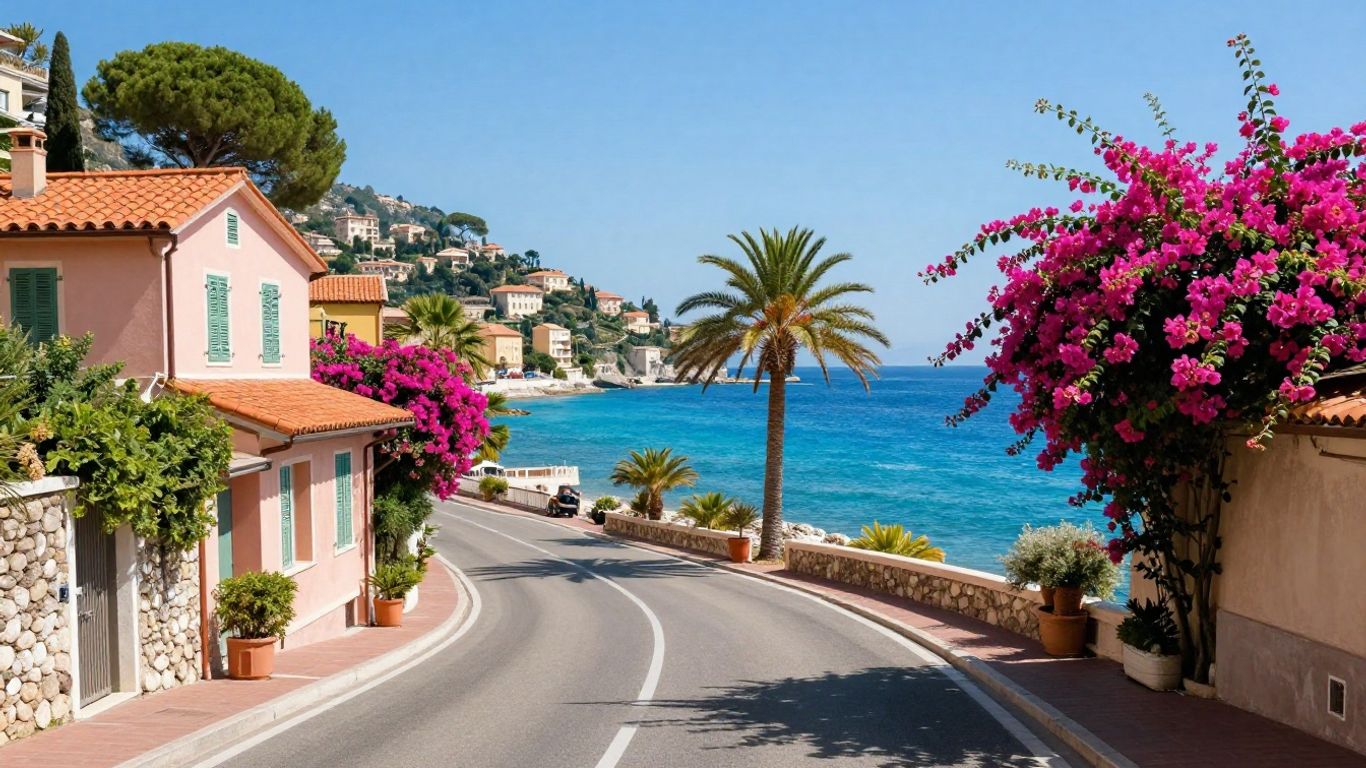
The beaches and the big sights get all the attention, but honestly? It’s the small coastal towns south of France that tend to stick with you. Cannes and Nice are great, sure. But it’s the little places, the ones with crooked lanes and faded paint and someone’s washing strung across the street, that you find yourself thinking about months later.
Villefranche-sur-Mer: A Pastel Paradise
Villefranche-sur-Mer felt like a bit of a secret, tucked right in among all the famous names. The whole village is absurdly pretty, narrow lanes, pastel walls, the lot, and you can walk all of it in under an hour. The beach is a couple of minutes from the centre and stays mellow even in July. When we were there it was mostly locals and a few European families, which made a nice change from the crush down the road.
- Worth doing: dinner on the water at La Mere Germaine (book ahead).
- Sweet tooth: the gelato at Solea Gelateria, the mango sorbet especially.
- Slow morning: coffee at the Welcome Hotel while the boats and the town wake up.
Menton: The Pearl of France
They call Menton the ‘Pearl of France,’ and standing on the beach looking back at those rows of peach and lemon-coloured houses, you sort of get it. The main drag can feel a touch touristy, sure, but wander off into the back streets and it calms right down. Easy day trip, too, and Monaco is basically on the way.
Eze: A Medieval Hilltop Escape
Eze sits up on a hill between Nice and Monaco, and the views from the top are almost silly. There’s a garden up there (small fee) and a panorama that’ll stop you mid-sentence. Even just driving past you catch the old castle walls, bits of which have been there since the 1100s. It’s the kind of place that doesn’t feel quite real.
Chasing that same sense of history at a slower pace? France’s charming canal towns have a similar magic, just a completely different landscape.
Artistic and Cultural Hubs of the South of France
Antibes: Art and Ancient Ramparts
Antibes is a lovely mix of old and arty. The old town sits behind heavy sea walls and feels properly ancient. Picasso lived and worked here for a spell, and you can see a stack of his stuff at the Musee Picasso, set inside the old Grimaldi castle. Seeing the work in the actual place it was made hits differently.
- Walk the ramparts for views of the sea and the eye-watering superyachts in the harbour.
- Step into the Musee Picasso for works by Picasso and others.
- Get happily lost in the old town’s lanes, shops, and cafes.
Cannes: Glamour and Film Festival Legacy
Cannes and the film festival go together in everyone’s head, and even when the red carpet’s rolled up, the place keeps that polished, slightly showy feel. The Croisette is the strip to stroll, designer shops on one side, beach on the other. It’s a bit much. But in a fun way.
Nice: Capital of the Riviera
Nice is the big dog on the Riviera, and it earns the billing. The Promenade des Anglais is made for aimless strolling. Vieux Nice, the old town, is a tangle of skinny streets, loud markets (the Cours Saleya is the one to hit), and tiny restaurants doing proper local food. It’s grand and a little scruffy at the same time, which is exactly why people fall for it.
Exploring the Natural Wonders of the South of France
The Breathtaking Calanques of Cassis
Forget whatever picture you’ve got of a beach. The Calanques near Cassis are a different animal: white limestone cliffs dropping straight down into water so turquoise it looks Photoshopped. The easiest way to see a good chunk is by boat, and some trips let you jump off for a swim. Up for a workout? There are hiking trails too, but fair warning, they’re steep and there’s zero shade, so haul more water than you think you need.
Lavender Fields of Provence
Provence and lavender. Yes, it’s a cliche, but it’s a cliche for a reason. Roughly late June to early August, whole hillsides go purple and the smell is something else. You can tour the farms, watch them turn it into oil and soap, grab a bit to take home. The drive through the Luberon is the move, especially past hilltop villages like Gordes and Roussillon, which look ridiculous in the best possible way ringed by all that purple.
Gorges du Verdon’s Turquoise Waters
The Gorges du Verdon is a proper jaw-dropper. People call it the Grand Canyon of Europe and, standing on the edge looking down, you don’t argue. Huge canyon, sheer walls, and a river running through it in this mad bright turquoise (it’s the glacial rock dust in the water, apparently). Hire a kayak and paddle in among the cliffs, or just hit the viewpoints up top if you’d rather keep your feet dry.
Quick tips before you go:
- Best time to go: late spring through early autumn for the kindest weather.
- What to pack: sturdy shoes, sunscreen, a hat, and more water than feels sensible.
- Getting around: a rental car, really, so you can roam at your own pace.
Planning Your South of France Trip
When to Visit
Summer, June to August, is the obvious window: hot, sunny, buzzing, and rammed. Brilliant for the beach, and if you time it for early-to-mid July you’ll catch the lavender too. But if crowds and high prices put you off, May, early June, September and October are the sweet spots. The sea’s still warm and the towns can actually breathe. Winters on the coast are mild and quiet, which is lovely if swimming isn’t the point of the trip.
How Many Days Do You Need?
Got a long weekend? Pick one area, Nice and a couple of nearby towns, say, and don’t try to do more. A week to ten days, and now you can pair the Riviera with a slice of Provence or the Calanques. Two weeks, and you can take the whole coast at a gentle stroll. Whatever you do, don’t overstuff the itinerary. This region punishes rushing.
Getting There
Two airports do most of the heavy lifting: Nice Cote d’Azur for the Riviera, and Marseille Provence for the western side and Provence. There’s also the TGV, which whisks you from Paris down to Marseille, Avignon, Aix or Nice in a few hours, and frankly it’s a nicer way to travel than flying. Worth a look at this French airports map guide before you commit to anything.
Getting Around
A car gives you the run of the place, and you’ll really want one for inland Provence, the lavender roads, and the Verdon, where buses are thin on the ground. On the Riviera itself, though, skip the car stress. The coastal train hops between Cannes, Antibes, Nice and Menton all day and barely costs a thing. Loads of people just do both: train on the coast, car for the hills.
Where to Base Yourself
For a first trip, Nice is a no-brainer. It’s bang in the middle of the Riviera, dead easy to reach, and you can day-trip out to Eze, Menton, Monaco and Cannes without much fuss. More into Provence? Avignon or Aix make better bases. Chasing cheap sand? Sete or Cap d’Agde. Pick one spot, unpack properly, and treat the rest of your South of France map as a string of day trips.
Your South of France Adventure Awaits
So there’s the lay of the land. Sandy Languedoc beaches at one end, glossy Riviera towns at the other, Roman ruins and lavender hills filling in the middle. The South of France really does cram a lot into one region. Treat this as a rough map rather than a strict plan, though, because the best bits are usually the ones you didn’t see coming: a cove you stumbled onto, a back-street cafe with no English menu, a viewpoint nobody mentioned. Pick your corner, slow right down, and go find your own. Bon voyage.
Frequently Asked Questions
What’s the best time of year to visit the South of France?
June to August is peak: warm, sunny, and busy. Want the lavender too? Aim for early-to-mid July. If you’d rather dodge the crowds, late spring and early autumn are lovely, still warm, far calmer.
What kind of beaches will I find on the southern coast of France?
Depends where you go. The Languedoc beaches near Cap d’Agde and Sete are big and sandy. Nice clear-water pebble beaches. And around Cassis you’ll find hidden coves in the Calanques you can only reach by boat or on foot.
How many days do I need in the South of France?
A long weekend covers one area. Seven to ten days lets you mix the Riviera with Provence or the Calanques. Two weeks and you can take the lot slowly. Better to go deep on a few spots than sprint through all of them.
Do I need a car to get around?
Not necessarily. The coastal train links the main coastal towns south of France along the Riviera, and it’s cheap and frequent. But for inland Provence, the lavender routes and the Verdon, a car earns its keep. Plenty of people just do both.
What are the Calanques everyone mentions?
Narrow inlets boxed in by tall white cliffs, mostly near Cassis. Picture natural swimming pools with absurdly blue water. Brilliant for a swim, a snorkel, or just gawping at from a boat.
Are there historical sites worth visiting, not just beaches?
Loads. Avignon’s papal palace, Roman ruins at Nimes and Arles, walled medieval towns like Aigues-Mortes and Carcassonne. You could build a whole trip around history and barely touch a beach.
What’s the difference between the French Riviera and Provence?
The French Riviera (Cote d’Azur) is the coast: glossy beach towns and that famous blue water. Provence is a bit just inland, all rolling hills, lavender, vineyards, and hilltop villages. Most people do a bit of both, since they sit right next to each other on the map.
Where should I base myself for a first trip?
For a first visit, Nice. It’s central, well connected, and puts Eze, Menton, Monaco and Cannes all within easy reach. If Provence is more your speed, base in Avignon or Aix instead.


