

Explore France’s Hidden Canal Towns That Deserve the Spotlight

Everyone talks about Amsterdam, and sure, it’s got its canals. But France? There’s this whole different kind of charm about the waterways, and honestly it feels way less crowded. If you’re after that picturesque, waterside vibe but without the usual tourist hustle then yeah, you’re in the right place. We’re talking about those little hidden gems, the canal towns where day to day life kind of moves at a slower pace, and the scenery is just breathtaking. Forget the usual suspects, let’s do a proper wander through some of the prettiest canal towns in France you can put on for your next trip.
Key Takeaways
- France boasts numerous charming canal towns that offer a unique travel experience away from the typical tourist crowds, making them some of the prettiest towns France has to offer.
- Regions like Alsace, the Loire Valley, Languedoc, Provence, Normandy, and the Dordogne offer distinct canal town experiences, each with its own character and attractions.
- Exploring these towns provides a chance to discover local life, history, and natural beauty at a more relaxed pace.
- From fairytale villages to historic riverside cities, France’s waterways present a diverse range of beautiful destinations.
- Planning a “prettiest canal towns France visit” means looking beyond the obvious and embracing the less-traveled paths for a truly memorable trip.
France’s prettiest canal towns at a glance
| Town | Region | Known for |
|---|---|---|
| Colmar | Alsace | La Petite Venise: half-timbered houses along the Lauch, best seen by small boat |
| Strasbourg | Alsace | Petite France, a quarter of canals, locks and timbered mills on the Ill |
| Annecy | French Alps | The “Venice of the Alps”: the Thiou canal through the Old Town to the lake |
| Montargis | Centre-Val de Loire | The “Venice of the Gâtinais”, crossed by canals and well over a hundred bridges |
| Briare | Centre-Val de Loire | The Pont-Canal de Briare, a canal bridge carrying boats over the Loire |
| Sète | Languedoc | A working fishing port laced with canals, where the Canal du Midi meets the sea |
| Martigues | Provence | The “Venice of Provence”: colourful houses along canals between a lagoon and the sea |
| L’Isle-sur-la-Sorgue | Provence | A town ringed by the river Sorgue, with old water wheels and a big antiques market |
| Amiens | Hauts-de-France | The Hortillonnages, floating gardens reached by flat-bottomed boat |
Discovering France’s Enchanting Waterways Beyond the Usual Tourist Trails
Initially, my attraction to France’s famous attractions was just like many others. Paris definitely has an allure of its own and I was soon enlightened that the genuine soul of France usually lives a bit more silently, particularly next to the rivers. It’s easy to get caught up in the idea of places like Amsterdam with its famous canals, but the canals in France offer a completely different and in my opinion, often more charming, experience. Sometimes it feels almost slower, more river like, and less “look at me” … which I liked more. I’ve found that stepping away from the most beaten paths leads to some truly unforgettable moments.
The Allure of French Canal Towns
There’s something incredibly peaceful about a French canal town. The pace of life kind of seems to slow down, and you can just wander along the water edge, watching the barges slide by. I recall one trip where I sat by the Canal du Midi for hours, sort of soaking in the sun, and the quiet. It’s a different kind of beauty than a bustling city, more about mood and history, honestly. Those little towns often feel like they’ve been left in time, with old stone bridges, flower dressed houses, and locals who seem glad to share their small bit of paradise. And yeah, that’s why they’re those truly unforgettable French canal villages, you know.
Why Seek Alternatives to Amsterdam?
Amsterdam is wonderful, no doubt. But yeah, sometimes, the sheer volume of visitors can feel a little overwhelming, like too much noise in the background. If you want something more intimate, a spot where you can actually hear yourself think and where you can properly connect with the local culture, then France’s canals are the way to go. I’ve noticed that French canal towns tend to give you a more authentic vibe. It’s not just a postcard moment, you’re stepping into a living, breathing piece of French heritage. And honestly, the variety is incredible— from Burgundy’s vineyards, to that bright sunny south, each region brings its own sort of canal personality.
Unveiling Hidden Gems for Your Next Visit
Okay so, where to begin really? France has this huge net of canals and rivers, and every stretch seems to come with its own set of pretty little towns, sort of quietly waiting for you. I’ve been thinking about it from my own trips, and I put down a handful of ideas that lean into that mix of calm, heritage and just plain scenery. Consider it more like a first hint for your own journey, not some strict plan.
Perhaps it will be the storybook villages in Alsace that attract you, or the ancient castles that run along the Loire. Or maybe if you are in a mood for something gentler and cozier, it will be the sunny, intertwining waterways down south that charm you. What is really important is that you maintain an open mind to the elements of surprise, as that is when the most wonderful parts usually reveal themselves to you.
For instance, if you’re planning your trip and looking for simpler ways to get around, remember that France gives a solo traveler a kind of seamless and rewarding experience, with an excellent train network, which can carry you to many of these areas.
Canals in France are a treasure trove waiting to be explored, offering a unique perspective on the country’s rich history and diverse landscapes.
Here are a few things I always keep in mind when planning a canal town visit:
- Timing is everything: Visiting in the shoulder seasons (spring or fall) often means fewer crowds and pleasant weather.
- Embrace slow travel: Don’t rush. Allow time to simply wander and soak in the atmosphere.
- Consider your transport: While some towns are easily accessible by train, others might require a car or even a boat trip to fully appreciate.
The charm of France’s canals is less about only the postcard scenery, and more about that strange feeling like you’re suddenly stepping back in time. Somehow it feels like finding a slower rhythm of living, where history quietly murmurs from old stone walls and that calm flow of water becomes the thing that nudges the day along.
Alsace: A Fairytale Region of Canals and Charm
When people talk about pretty canal towns in France, they usually head straight to the big names, but I’ve kinda always felt the real magic is a bit off the beaten path. Alsace, for me, is one of those places that really gives you that fairytale feeling, especially if you start wandering around the waterways. It’s a region that feels like it’s been picked right out of a storybook, with its lively half-timbered houses, and streets lined with flowers.
Strasbourg’s Picturesque Canals
Strasbourg is probably the most famous spot in Alsace, and for good reason. Its historic center, known as ‘La Petite France,’ is kinda stunning, I mean really. I recall wandering through the tight cobblestone lanes and it felt like every corner, was one more postcard perfect scene. The canals here aren’t only beautiful, they’re also a core thread of the city’s history, back when tanners and millers relied on them. Honestly, a boat tour is a must, you slip under those charming little bridges, and glide past the famous gingerbread style houses, you know the ones. From the water you get a clearer feeling for the city’s past and it’s not the same as just walking around. Plus, it’s incredibly calming, almost slow and serene.
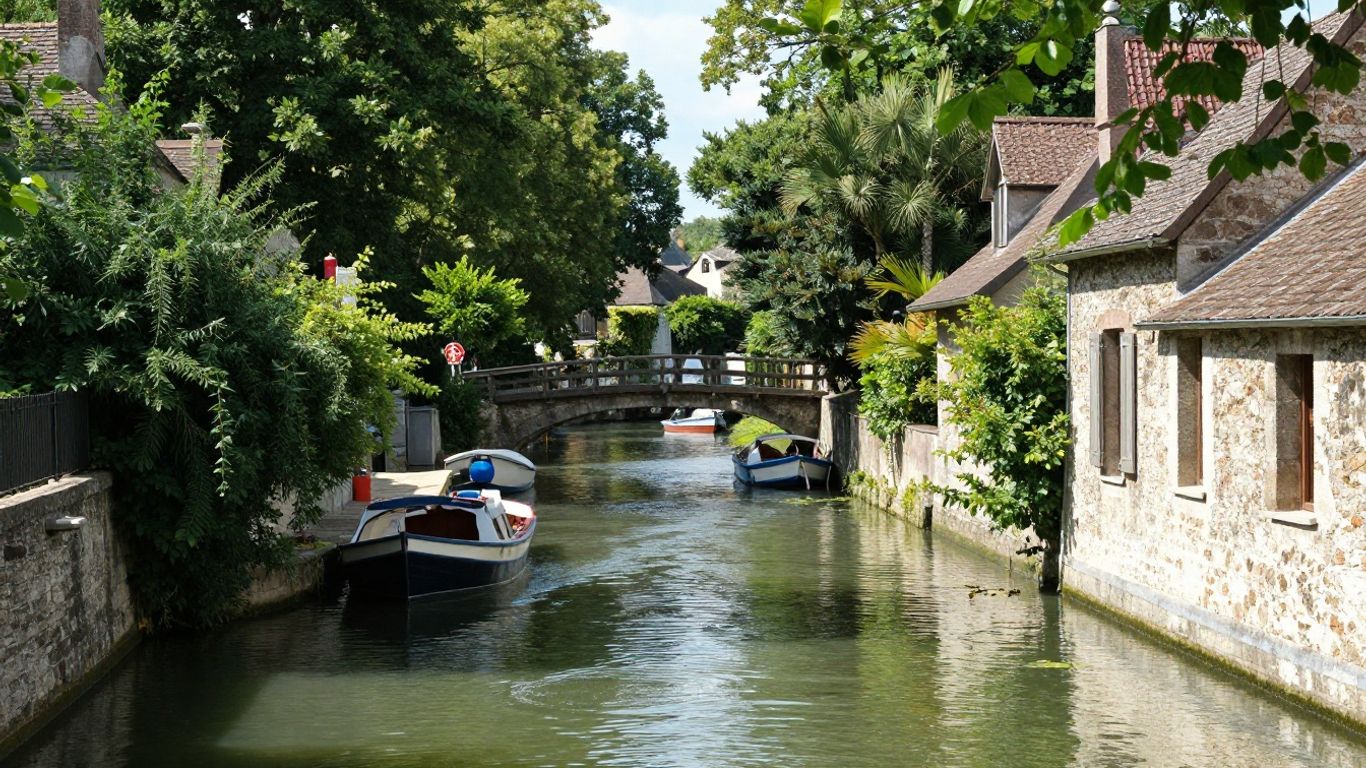
The boat tours offer a unique way to see the city’s architecture.
- What to See: The Vauban Dam, the covered bridges, and the picturesque canals of La Petite France.
- Best Time to Visit: Spring for blooming flowers, or winter for the famous Christmas markets.
- Getting Around: The city center is very walkable, but boat tours are the best way to see the canals.
The canals of Strasbourg are not just picturesque paths but they resemble the very life-giving vessels of the city that have been pulsating with vitality for centuries. In a sense, they mirror the deeply layered history as well as the splendid architecture of the city.
Where to Stay: For a truly immersive experience, consider staying in a hotel within the Petite France district. Many offer rooms with canal views, which is just lovely.
Colmar’s Enchanting Waterways
If Strasbourg is a sort of fairytale, then Colmar is its even more whimsical sibling, you know, like the quieter one that’s still slightly mischievous. It’s smaller, more intimate, and some people might say, even more charming. Colmar has a spot called “Little Venice” and honestly it does deliver on that name. Here the canals are edged with the most colorful houses you can imagine, all dressed up in shades of pink, blue, yellow, and green.
I kind of kept wandering for hours along the waterways, swans passing by and those reflections shimmering on the water. It felt unreal, like I was watching something staged or maybe just dreaming. Everything feels incredibly calm, like you’ve stepped well out of the hustle and bustle, even for a while.
- Must-Do: A gentle boat ride through ‘Little Venice’ is essential. You can even opt for a gondola-style boat for a bit of extra romance.
- Don’t Miss: The Maison des Têtes and Maison Pfister, iconic buildings that look even more magical reflected in the water.
- Local Tip: Try some of the local Alsatian wine while you’re there; the vineyards are right nearby!
Exploring Smaller Alsatian Villages by Water
Honestly, while Strasbourg and Colmar get most of the attention, I think the real joy for me in Alsace comes from just… finding the smaller villages. Like Eguisheim, Riquewihr, and Kaysersberg. They are, seriously, so scenic in this almost storybook way. Sure, they might not have big canal networks the way the cities do, but a lot of them sit by rivers, or they have these lovely little water features that quietly steal your attention.
To be honest, renting a car is probably the best route, because it lets you slip from one place to another without all the fuss. You can end up in some tiny village, then you just wander and suddenly you spot a calm stream, and it feels like you’ve stumbled into your own small slice of heaven. Those little off the map moments are what make traveling so worth it. And if you want a genuinely authentic French vibe away from the crowds, these Alsatian fairytale villages are a great choice, really.
Where to Stay: For a genuinely unique stay, try to look around for charming guesthouses or ‘chambres d’hôtes’ in the smaller villages. Usually they come with a more personal touch, a sort of close welcome and all that, plus it gives you a real chance to link up with everyday local life. In other words, it feels less “just passing through” and more, staying in the moment.
The Loire Valley: Castles, Rivers, and Quaint Canal Towns
When people talk about France, they usually rush to Paris or the Riviera, like right away. But honestly, if you’re after a taste of classic French charm with a bit of history and incredible views, the Loire Valley is kind of where it’s at. I’ve been lucky enough to wander through this region a few times, and it never really disappoints, even when I think I’ve seen enough. It’s not just about the famous châteaux, though they are pretty spectacular. The rivers and smaller towns along them have a special kind of magic.
Navigating the Loire River’s Scenic Routes
The Loire River itself is a big part of the valley’s appeal. It’s France’s last wild river, and when you are just cruising along it, or even simply catching sight of it winding through the landscape, it feels kinda different. Sure, you can do boat tours too, but I also got a surprising amount of pleasure in finding a few small little spots along the banks to sit, and just watch the water roll by.
- Consider a river cruise: There are various options, from multi-day trips to shorter excursions, offering a unique perspective on the valley.
- Rent a bike: Many towns have bike paths that run alongside the river, perfect for a leisurely afternoon.
- Explore by kayak or canoe: For a more active experience, renting a kayak allows you to get up close to the river’s natural beauty.
Charming Towns Along the Waterways
Honestly beyond those grand castles, it’s the smaller towns that somehow catch your heart, it feels like more than just a quick stop. Like Chinon, with its medieval fortress sitting above the Vienne river, which is a tributary of the Loire, it gives you that step back in time vibe. Amboise is another true gem too, its château up high over the Loire and a town center that’s just lovely for drifting around, slowly. You can spend days doing nothing but looking around, stumbling into tucked away courtyards, and enjoying the local markets.
Here the pace of life feels slower, more deliberate almost like you can breathe out and think. It’s really about savoring the small and ordinary bits, like a really good glass of wine, a wandering stroll by the water, the flavor of fresh bread from the local boulangerie and stuff like that.
A Blend of History and Natural Beauty
What I love most about the Loire Valley is how history and nature feel all tangled together. You’ll see ancient castles showing up in the water too, vineyards running out towards the riverbanks, and quaint villages that have been standing for centuries now. It feels grand and kind of close at the same time, like it’s both breathtaking, and personal. If you’re planning a trip, I’d really suggest renting a car, because even though you can reach some of the larger towns by train, having your own set of wheels makes everything smoother, and it’s much easier to uncover those smaller, more tucked away spots… plus you can hop between the well known châteaux without fuss.
Where to Stay:
If you want something really immersive, maybe staying in a smaller town is better than jumping into a big city. Try to look around for charming guesthouses, like chambres d’hôtes, or small hotels in areas such as Amboise, Chinon, or Blois. A lot of them have stunning views and, honestly, a more personal kind of hospitality, not just the usual routine. And if you’re after a bit more luxury, some of the châteaux themselves have been transformed into hotels too, so you get this rather special stay.
Languedoc: Southern France’s Underrated Canal Treasures
When I think about the south of France my head usually jumps right to the glitz of the Riviera or those lavender fields in Provence. But kind of tucked away, just west of Provence, there is the Languedoc region, and honestly it feels like a hidden gem. It’s less crowded, a bit more rugged, and still it has this incredible charm, especially if you go and wander its waterways. It’s like stepping back in time, in the best possible way, even if it’s all a little more low key than the headlines would suggest.
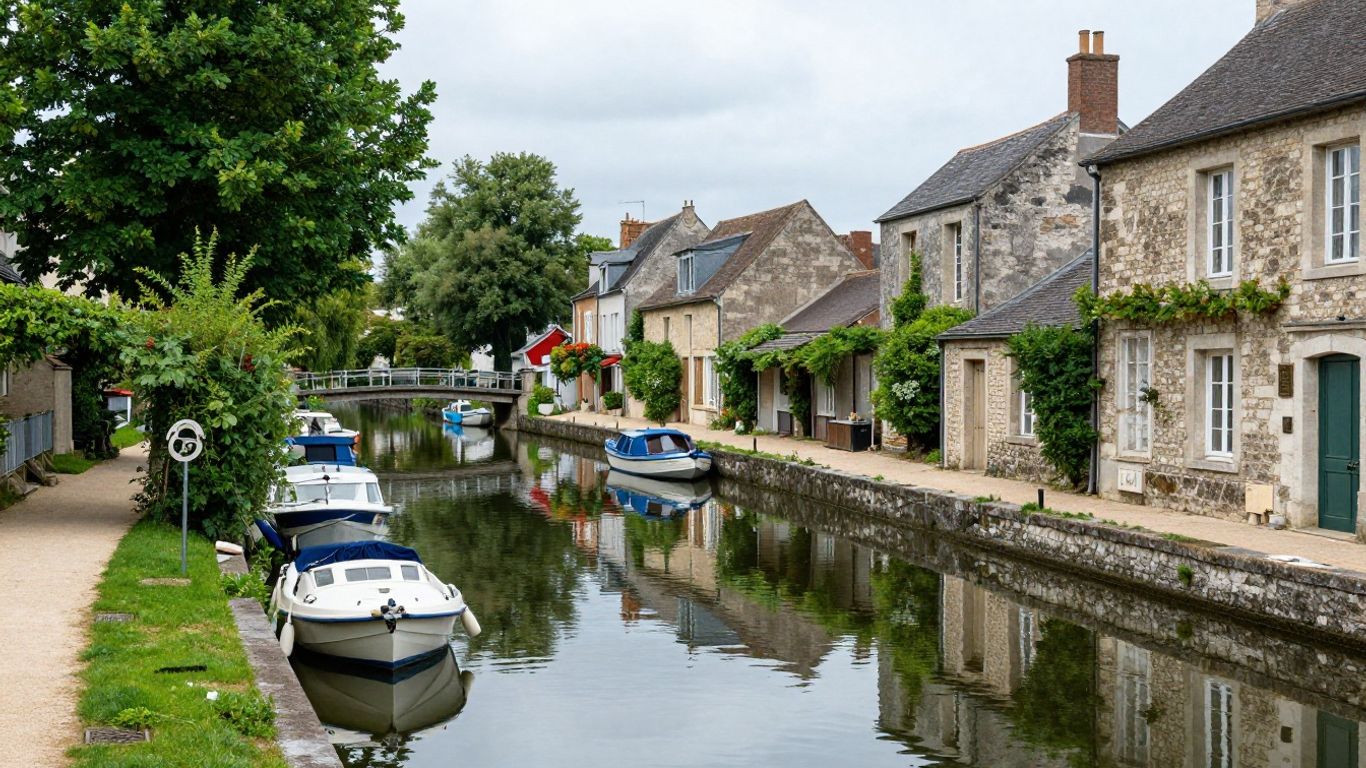
The Majestic Canal du Midi
The star of the show here has to be the Canal du Midi, with several Canal du Midi towns offering unforgettable waterside experiences. This UNESCO World Heritage site is just stunning. It’s this 17th-century canal, stretches for more than 150 miles, linking the Mediterranean Sea to the Atlantic Ocean. I kinda remember taking a boat ride along a bit of it and it was really peaceful, like almost too quiet. The plane trees on the banks make that nice dappled shade, and you just slide by vineyards, while the little villages seem to nap, or something like that, very sleepy. It’s a completely different pace of life.
- Getting on the water: You can rent a small boat (no license needed for many!) for a day or a week. It’s a fantastic way to see the countryside.
- Lock keepers: Many locks are still operated by friendly locals with stories to tell.
- Cycling: The towpaths are perfect for cycling, offering a great way to explore at your own speed.
Where to stay: Look for charming guesthouses (chambres d’hôtes) in towns like Castelnaudary or Carcassonne, or even consider renting a waterside cottage for a truly immersive experience.
Honestly, the sheer engineering feat of the Canal du Midi, built, centuries ago, is mind boggling. It feels like some kind of real proof of human ingenuity, and also kind of a lovely way to slip into the landscape while you’re there. I mean, it just ties everything together, water and terrain, and it’s hard not to be amazed.
Exploring Historic Carcassonne’s Water Features
Carcassonne itself is, like a must-see, and yeah while the walled Cité is the main draw don’t skip the way it’s tied to the water either. The Canal du Midi is running nearby, and the Aude River flows through the lower town. If you walk the ramparts around the Cité you get amazing views, you can pretty much see how these waterways were historically used for trade and defense, not just for scenery. It’s one of those spots that really transports you, for real.
Discovering Quiet Villages in Occitanie
Beyond the big names, the Languedoc (now folded into the broader Occitanie region) is sprinkled with smaller villages that are kind of lovely, in a way that feels easy to settle into. You can go by places like Narbonne, with its Roman beginnings, and that busy market energy that pulls you in, or head over to the coastal town of Sète, where the canals wander around and the seafood is a sure thing. And really, there are some great wines here as well; this is a place with a deep winemaking lineage producing all sorts of wines, often more approachable than you might expect.
- Markets: Visit a local market for fresh produce, cheese, and regional specialties.
- Local Cuisine: Don’t miss trying cassoulet, a hearty bean stew that originated in Castelnaudary.
- History: Explore the Cathar castles scattered throughout the countryside for a dose of medieval history.
Where to stay: Consider basing yourself in a town like Béziers for good access to both the canal and the coast, or find a rural gîte for a peaceful escape.
Provence: Coastal Charms and Riverside Villages
When I think of Provence, my mind kind of immediately goes to those sun-drenched landscapes, the scent of lavender drifting around in the air and, well of course, the charming little towns scattered along the coast and even by the rivers. It’s a region that really catches the spirit of southern France, giving you a different pace of life compared to the loud bustling cities. Sometimes it feels like everything slows down just enough to notice details, and that’s kind of the whole idea.
The Picturesque Port of Cassis
My first real taste of Provence’s coastal beauty was in Cassis. Kind of just a short hop from Marseille, this little port town felt like stepping into a postcard, you know? The colorful boats bobbing in the harbor, the pale pastel buildings, and the sharp white cliffs of the Calanques rising behind it all— it’s genuinely something. I spent an entire afternoon sort of wandering around the narrow streets, grabbing a coffee at a small cafe, and just letting time pass while I watched the world go by. The beaches here are lovely as well, really ideal for a dip on a warm day. And if you’re chasing a proper Mediterranean vibe without the overwhelming crowds of some other Riviera spots Cassis is a very solid choice.
The Calanques National Park, accessible from Cassis, gives you some really stunning coastal hikes and also boat tours in the area, like you can’t miss it.
- Getting there: The easiest way is to fly into Marseille Provence Airport (MRS) and then take a bus or taxi to Cassis. Driving is also an option, but parking can be tricky in peak season.
- What to do: Explore the harbor, hike or take a boat tour of the Calanques, relax on the Plage de la Grande Mer, and enjoy fresh seafood at one of the many restaurants.
- Where to stay: Look for charming boutique hotels in the town center or consider a rental apartment for a more local feel. Many offer great views of the port.
Exploring the Luberon’s Water Features
Moving inland, the Luberon region is kinda famous for hilltop villages, but do not forget the waterways. It’s not like there are grand rivers, yet the smaller streams and those ancient irrigation systems add this particular charm, and it feels, somehow, more lived in. Places like Gordes and Roussillon are really stunning, but I always find myself gravitating to the quieter nooks where water is sort of in the picture, maybe a small fountain in a village square, or a gentle stream running along the path, without any real dramatics. Those little details, that’s what makes Provence so special.
The Luberon is kind of a treasure trove of scenic little villages, each one with its own character, in a way. While the more well known places like Gordes and Roussillon pull in most visitors, it can be surprisingly good to slow down and wander into smaller, less known hamlets too. There you can accidentally come across a little hidden bakery or a calm nook by a stream that somehow feels like a private finding you made yourself.
Avignon’s Riverside Appeal
Avignon, with this imposing Palais des Papes, it’s a city that feels soaked in history and its position along the Rhône River adds this extra layer of charm, you know? If you can, walk over the famous Pont d’Avignon, also called Pont Saint-Bénézet, although only a fragment is left today, it’s still kind of a must. The riverbanks are really pleasant, a kind of calm escape, for a slow walk or even a picnic that you take your time with. Honestly it’s a good spot to feel like you’re in a bigger Provençal city that still keeps history in its rhythm and a bit of old-style charm, and the river, there’s no question, makes the whole scene look beautiful.
Where to stay in Provence:
- Saint-Rémy-de-Provence: A fantastic base for exploring the Luberon and surrounding areas. It has a lovely market and a good selection of hotels and guesthouses.
- Cassis: Ideal if you want to be right on the coast and have easy access to the Calanques.
- Avignon: Great if you prefer a city base with historical sites and good transport links.
When you’re in Provence, don’t really shy away from sampling the local food. You’ll run into amazing dishes like ratatouille and bouillabaisse, and honestly they’re best savored in a neighborhood restaurant, not just somewhere convenient. Take the time to explore those regional flavors, beyond the usual tourist fare—there’s always something a bit more particular waiting.
Normandy: Historic Shores and Inland Waterways
Normandy, in the northwestern France area, is a region that just sort of sticks with you. It’s not only about the dramatic history, even if that’s well, a huge part of it. I remember going to Honfleur the first time, and it felt like stepping back into another era, you know. The old harbor, with those tall, narrow houses that seem to lean in a bit, is honestly really breathtaking. It’s one of those places where you can wander for hours without realizing, and you keep bumping into tiny cafés and art galleries tucked away in corners, like, quietly waiting for you.
Honfleur’s Maritime Charm
Honfleur’s Vieux Bassin, or Old Harbor, is kinda the heart of the town. You know, it’s all around by these super tall slate covered buildings, and somehow they make the water look like a mirror, even when the light shifts. Honestly you can just pass an afternoon sitting there near the quay line, watching the boats slide by, and quietly taking it all in. Then there’s Sainte-Catherine Church, built entirely of wood by shipwrights, and it’s a truly singular sight, though, you really should peek inside. It feels animated in a way that’s hard to explain, with artists often setting up their easels along the quayside, so it ends up being one of those very charming French canal villages you’ll want to explore slowly.
Where to Stay: For a really charming, kind of unhurried experience, think about staying in one of the boutique hotels that are right there on the harbor, or slightly tucked away in the winding streets just behind it. A good number of them provide rooms with water views, which honestly is a real treat, like you can just linger there a bit more than usual.
Exploring Rouen’s River Seine
Rouen is this city with a real strong presence, mostly because of its magnificent cathedral, which of course famously inspired Monet. Still, the Seine River also kind of does a lot here. If you take a walk along the riverbanks, particularly near the Île Lacroix, you get this different view of the place. It feels like the historic bridges and the more modern pieces of Rouen are, kind of, living together without any fuss. I actually found a Seine boat tour to be really relaxing, like a gentle way to see Rouen from the water, and it gives you a quiet pause from the crowded old town, which can get a bit hectic.
Key Sights in Rouen:
- Rouen Cathedral
- The Gros-Horloge (a medieval astronomical clock)
- Place du Vieux-Marché (site of Joan of Arc’s execution)
The Serene Waters of Giverny
While Giverny is most famous for Claude Monet’s house and gardens, those water features there are really the stars of the show. The Japanese inspired water garden, with its iconic bridge and water lilies, is pretty much like you imagine it would be from his paintings. It feels incredibly tranquil, like a calm water and quiet air sort of thing. And beyond that well known pond, there are other smaller streams, or water channels I guess you could call them, that quietly add to the peaceful atmosphere.
It’s one of those places that makes you want to slow down and actually notice the beauty around you, not just rush through. If you’re looking for a quiet escape, consider going during the week so you can dodge the biggest crowds. Also, there are some lovely places to stay out in the surrounding countryside if you want to extend your visit and explore more of the hiking paths across France.
Giverny isn’t just a place to see; it’s a place to feel. The way the light hits the water, the gentle rustling of the leaves, the vibrant colors – it all combines to create a deeply calming experience. It’s easy to understand why Monet found so much inspiration here.
Where to Stay: Try to find those charming bed and breakfasts (chambres d’hôtes) around Giverny, or maybe in the nearby little villages. They usually offer something more personal, and in a way more authentic too. So you can actually settle into the countryside a bit, like, properly immerse yourself, even if it is just for a short stay.
The Dordogne and Lot Regions: Medieval Villages and River Valleys
When I think about stepping back in time, the Dordogne and Lot regions immediately come to mind. It’s like the rest of the world just fades away here. You’ve got these crazy well kept medieval villages, and a bunch of them are perched kinda dramatically on cliffs, or tucked next to winding rivers, like somehow everything just stayed put. It’s a part of France that feels a little more rugged, a little more untouched, and really that’s just a huge chunk of the charm.
Beynac-et-Cazenac’s Riverside Beauty
Beynac-et-Cazenac is one of those places that kinda… just stops you, in your tracks, you know. The Château de Beynac looms up high above the village like this formidable stone sentinel, watching the Dordogne River. And when you wander through the narrow, steep little streets, you can almost hear the echoes of centuries past. The river itself feels like the main lifeblood of the whole area, and it gives you those stunning views, from pretty much every angle. I remember taking a simple boat trip down the Dordogne, and seeing the village rise up from the water— honestly it was breathtaking. It’s a place that really sticks, with you.
Where to Stay: If you want something a bit more immersive, have a look at a gîte (you know, a self catered holiday home) in or around Beynac. A bunch of them have absolutely stunning, views of the château and the river valley, like you can almost feel it. And if that’s not really your thing, there are also charming small hotels in the nearby area of Sarlat-la-Canéda, which can be a nice alternative really.
Exploring Sarlat-la-Canéda’s Waterways
Sarlat-la-Canéda is, kind of the undisputed gem of the Dordogne. The old town turns into a labyrinth of golden-hued stone buildings, covered markets and those charming squares that sort of keep pulling you along. While it doesn’t have some big river running right through its historic center like other places do, the Dordogne River is never actually far, and somehow the town itself feels like it’s been carved by time.
And honestly the local markets here are fantastic, it’s really a feast for the senses. I spent hours just wandering through the stalls, grabbing local cheeses and pastries, and pretending I wasn’t hungry yet. It’s one of those spots where you can easily stay a few days just soaking everything in, piece by piece.
Must-Do Activities in Sarlat:
- Wander through the historic old town, especially in the early morning or late afternoon, to avoid the biggest crowds.
- Visit the covered market (Marché Couvert) for local produce and delicacies.
- Take a day trip to nearby prehistoric cave sites like Lascaux.
The Tranquil Lot River
The Lot River offers a different kind of beauty. It’s maybe a little less dramatic than the Dordogne in certain spots, but it does have this calm, gently luminous quality that’s honestly weirdly appealing. The villages along the Lot, like Saint-Cirq-Lapopie, are often brought up as some of the most beautiful in France, and that sort of makes them among the prettier towns in France for a reason.
They cling to cliffsides, looking down over the river, in a way that feels both slightly precarious and really picturesque. This is the sort of place where you can rent a kayak, or even a small boat and just drift along, letting the view basically wash over you. The tempo here is slower, and it’s wonderful, truly.
The sheer number of “Les Plus Beaux Villages de France” (Most Beautiful Villages of France) in this combined region is astounding. It truly feels like stepping into a storybook, with ancient castles and charming hamlets dotting the landscape. Getting around does require a car, but the freedom it offers to explore these hidden corners is well worth it.
Getting Around: A rental car is pretty much a necessity for exploring the Dordogne and Lot regions effectively. Public transport is limited, and the real magic happens when you can pull over spontaneously to admire a view or explore a tiny village you stumble upon. You can fly into Bordeaux and rent a car from there, which is what I’ve done before. For those who prefer to travel by train initially, consider heading to Sarlat-la-Canéda or Cahors and arranging car hire from those larger towns. If you’re visiting in autumn, it’s a wonderful time to visit France; the colors here are absolutely spectacular.
Unique Canal Experiences in France
While the grand canals of cities like Strasbourg or Colmar are undeniably beautiful, sometimes the real magic of France’s waterways lies in stepping off the beaten path. I’ve found that the most memorable moments often happen when you embrace the unexpected and seek out experiences that feel a little more personal, a little more you.
Beyond the Tourist Crowds: Finding Peace
It’s kind of easy to get caught up in those popular, well-known spots and don’t get me wrong they are popular for a reason, but if you’re anything like me and you’re craving a little more peace and quiet, then maybe slip away and poke around the smaller, less-advertised canals. I remember this one trip, we actually rented a small electric boat on a calm stretch of the Canal de la Robine, in the Aude department.
Late afternoon, the sun was starting to sink, and it was just us, that soft water sound against the hull, plus an occasional kingfisher that darts through like, real quick. Honestly it felt like we had the whole world, to ourselves. Those kinds of quiet scenes, they really stick with you.
Experiencing Local Life on the Water
One of my favorite ways to connect with a place is to see how locals use its waterways. In some regions, canals are still vital transport routes for goods or simply a beloved spot for an evening stroll. I once spent a week in a small village along the Canal du Midi, and watching the barges slowly make their way through the locks, seeing families picnic by the water’s edge, and even chatting with a lock keeper about his life – it all painted such a rich picture of daily life. It’s a different pace, a different rhythm, and it’s incredibly grounding.
Here are a few ideas to get you thinking about local canal life:
- Rent a bike: Many canal towpaths are perfect for cycling. You can cover more ground and stop whenever something catches your eye.
- Take a local boat tour: Look for tours run by smaller, local operators rather than the big tourist boats. They often have more interesting stories and take you to less-visited spots.
- Visit a waterside market: If you’re lucky enough to be in a town on market day, head to the canal-side stalls. It’s a great way to sample local produce and soak up the atmosphere.
Planning Your Prettiest Canal Towns France Visit
When planning a trip focused on France’s canals, think about what kind of experience you’re after. Are you looking for grand architecture and bustling city life, or quiet countryside and charming villages? I found that combining a few different types of canal towns made for a really well-rounded trip. For instance, starting in a city like Strasbourg and then heading south to the more rural Canal du Midi offered a fantastic contrast.
Where to Stay:
- Canal-side Guesthouses (Chambres d’hôtes): These often offer a more intimate experience and a chance to chat with local hosts. Many are located in beautifully restored old buildings right on the water.
- Houseboats: For a truly unique stay, consider renting a houseboat. You can find them in various sizes, from small, self-drive options to larger, crewed vessels.
- Boutique Hotels in Historic Towns: Many canal towns have charming boutique hotels tucked away in their old centers, offering easy access to the waterways and local attractions.
Remember, the best canal experiences often come from a willingness to explore a little further and embrace the slower pace of life along the water. It’s about the journey, not just the destination.
Beyond the Usual Stops
So, while Amsterdam’s canals are undeniably famous, France offers its own unique charm with towns that boast beautiful waterways without the same crowds. Whether you’re drawn to the fairytale setting of a car-free village or the historic waterways of a larger region, these French canal towns provide a different, often more peaceful, way to experience the country.
They’re a great reminder that sometimes, stepping just a little off the beaten path can lead to the most memorable discoveries. It’s definitely worth exploring these spots if you’re looking for a picturesque getaway that feels a bit more your own.
Frequently Asked Questions
Why should I visit French canal towns instead of Amsterdam?
While Amsterdam is amazing with its canals, France has its own special charm! French canal towns offer a different vibe, often less crowded and with unique history and culture. You can find beautiful waterways, charming houses, and a more relaxed pace of life away from the big tourist spots.
What makes French canal towns so pretty?
Many French canal towns feel like stepping into a fairy tale. Think colorful old buildings lining calm waters, cute bridges, and boats gently floating by. Places like Colmar in Alsace or towns along the Canal du Midi feel like they’re straight out of a storybook.
Which regions in France have the prettiest canals?
Several regions are famous for their canals! Alsace has charming towns like Strasbourg and Colmar. The Loire Valley has beautiful rivers and towns near castles. In the south, the Canal du Midi is a UNESCO World Heritage site. Normandy and Provence also have lovely waterside spots.
Can I travel by boat in these French canal towns?
Yes, absolutely! Many of these Canal du Midi towns and canals are perfect for boat trips. You can rent your own small boat, join a guided tour, or even take a longer canal cruise to see different places. It’s a wonderful way to explore.
Are French canal towns good for families?
Definitely! Kids often love boat rides and exploring new places. Towns with markets, open spaces, and interesting sights make for fun family adventures. It’s a great way to show them a different side of France.
What kind of activities can I do in a French canal town?
Besides enjoying the views and taking boat rides, you can walk or bike along the canals, explore historic buildings and castles, try local food and wine, visit markets, and soak up the local culture. Each town offers its own unique experiences.
When is the best time to visit these canal towns?
Spring and fall are usually wonderful times to visit. The weather is pleasant, and there are fewer crowds than in the peak summer months. Alsace is especially magical during its Christmas markets in winter.
How do I get to these canal towns from Paris?
Many of these towns are accessible by train from Paris, which is often the easiest way. For some regions, like the Loire Valley or Dordogne, renting a car after arriving by train can give you more freedom to explore smaller villages and scenic routes.


