

Camping the Gorges du Verdon: Sites With the Unique Canyon Views

Staying in a campground is one of the better ways to see the Gorges du Verdon France. The canyon feels huge, and the turns keep changing what you can see. One hotel stop will not let you take it all in.
Sitting above the valley on the rim, you still get the view. Later, the ground levels out and turns into cooler shade near the Verdon River. There are also spots by the lakes at Sainte-Croix and Esparron. As the hours pass, the light shifts, the water moves, and the cliffs change, and you stay close to it all.
You might start the day looking over the canyon. Then you can step out and reach a kayak launch with little effort. Or you can keep to your own pitch and use it as a calm place between stops at nearby viewpoints.
Picking one campsite in the Gorges du Verdon France can feel tricky. It depends on what you want most. Are you chasing big canyon views? Or would you rather stay near the river, so you can get to the water fast? Some people want quiet time on the water, maybe around a lake. Other people just need a camp base that makes day trips easier.
Key Takeaways
- La Palud-sur-Verdon is well placed for elevated canyon views and the Route des Crêtes.
- Rougon suits travelers focused on Point Sublime and the canyon’s western entrance.
- Castellane offers services, outdoor activities, and access to the lower gorge.
- Moustiers-Sainte-Marie and Lac de Sainte-Croix combine village life with water activities.
- Book early for summer, prepare for winding roads, and bring more water than you think you’ll need.
How to choose a campsite in the Gorges du Verdon
Picking a Gorges du Verdon camping site is not really about one best place for everyone. It is more about fitting your stay to what you want to see. The area is big. You have steep edges, stretches by the river, spots near the waterline at the lakes, and small towns. Roads connect these places, but they can be slow and curvy.
This Gorges du Verdon camping guide puts the area first. A nice tent spot can still feel wrong if you spend too much time on the road each day.
North rim, south rim, or lake shore
The north side is the best bet if you want big canyon scenes, mainly near La Palud-sur-Verdon and Rougon. Going to the south rim feels less like that and more like an easy path toward Moustiers-Sainte-Marie and Lac de Sainte-Croix. There, the views spread out more, with softer hills and water that looks bright. Staying at a camp right by the lake is not the same as pitching higher up near the rim. On the lake you can swim and paddle with little effort. If you want the deepest gorge views, you will likely need to drive.
Think about the view you want at breakfast in Gorges du Verdon France. If it is layered limestone and distant cliffs, prioritize elevation and rim access. If it is a quiet morning swim, a lake or riverside location may be more satisfying.
Canyon viewpoints versus river access
Staying at a camp spot near the river helps you cool down fast. It also makes it easier to just linger outside without a strict plan. Still, those river sites may not give great views of the gorge from up high. Tall trees can block the sightline. The slope and the river valley can also cut down how far you can see. If you pick a higher campsite, the tradeoff is clear. You usually get less direct water access. In return, you can often see more at once. You may also reach the road that goes to the viewpoints more quickly.
Pick a spot that has one main highlight. Then fit the rest of your visits into your day plan. The Gorges du Verdon overview gives you a way to judge each viewpoint, the river views, and the things you can do. After you look it over, decide which option feels like it should be the nearest thing to your campsite.
Distance to hiking trails and villages
A faraway area can feel calm. Still, you may need a car for groceries, meals, trail starts, and places to swim. If you base yourself nearer to La Palud-sur-Verdon, hiking is easier. The trails are closer. Choosing Castellane can be smarter for people who need more options. There are shops, places to eat, and more things to do. Moustiers-Sainte-Marie brings a small-town feel. You can also reach the lake from there.
Don’t judge the drive by miles alone. A trip that looks quick on a canyon map can still last much longer. The road may curve a lot, climb steeply, and have few spots to pass.
When campsite location matters most
Where you stay is a big factor if you only have two or three nights. It also counts when you are traveling with kids. Picking a place that saves you from packing every morning helps. In summer, especially during the crowded weeks, it can be just as important. You can lose time to parking at well known lookout spots or at the places where boats launch. A central base may be less photogenic from the pitch but more efficient overall for your Gorges du Verdon vacation.
For a broader comparison of villages and travel styles, use this guide to choosing a Verdon base. It helps frame the decision around hiking, swimming, village access, and activity planning rather than scenery alone.
The best camping areas for canyon scenery
Verdon Gorge France doesn’t have a single camping district. You can see the area in more than one way. One path shows tight limestone walls. Another lets you look out over the water in a wider view. Where you should be depends on your plan. Do you want to wake up by the river? Are you trying to end a walk close to where you stay? Or do you want quiet nights in a Provençal village?
La Palud-sur-Verdon and the Route des Crêtes
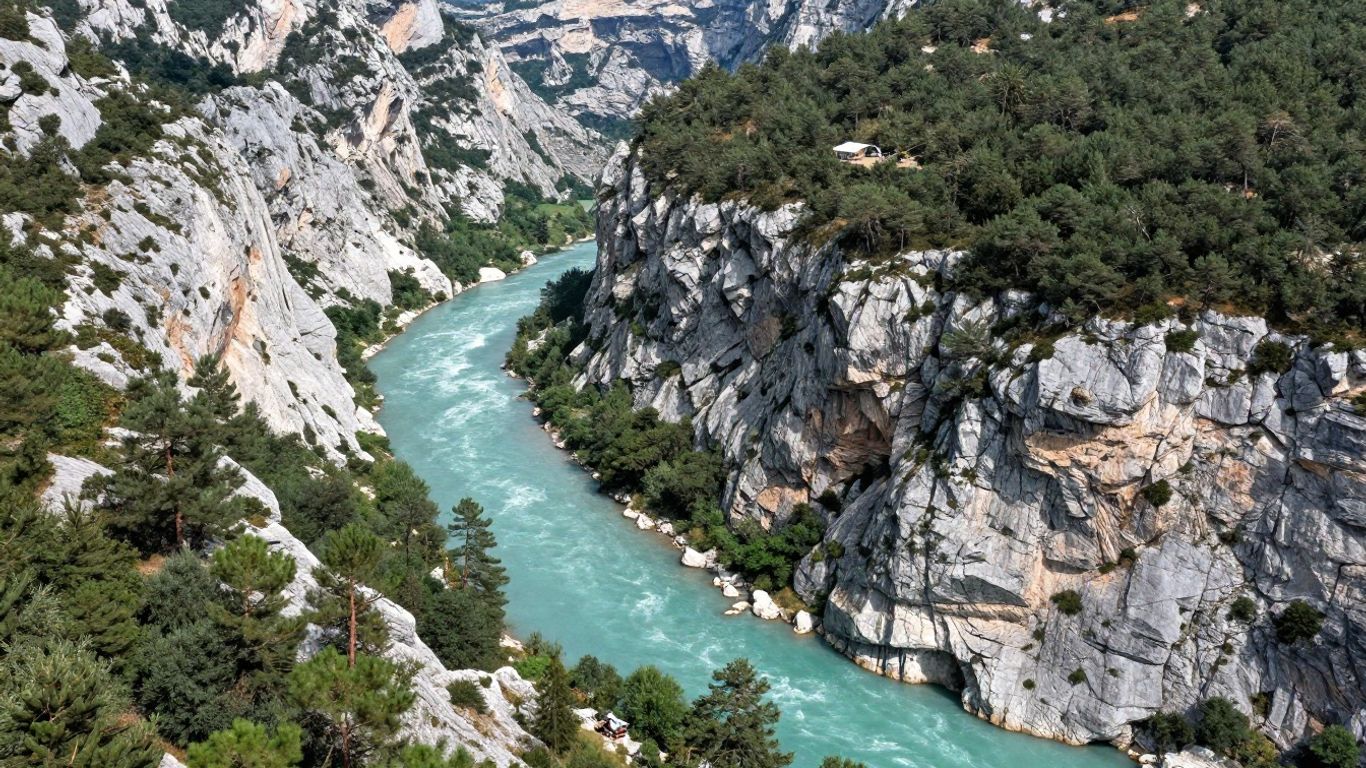
La Palud-sur-Verdon is one of the strongest bases for travelers who want high canyon scenery close at hand in Verdon Gorge France. The village sits near the Route des Crêtes, a loop of roads and viewpoints above the gorge so that mornings can begin with a short drive rather than a full cross-region journey. Campsites in this area tend to suit hikers and visitors who value quiet surroundings over extensive resort facilities.
The best way to take this road is at an easy pace. You can pause for quick walks, then stop again. In the morning, the light feels softer and there are fewer cars. Later in the day, the limestone walls often turn warm and bright.
Rougon and the Point Sublime area
Rougon is a solid option if you like Point Sublime and want to reach the far west part of the canyon. The place feels out in the country, and it sits up high. From there you can really see how Verdon carved the plateau. Many photographers and hikers seem drawn to it because it is near a top viewpoint. They often do not want to drive over from the lake.
Shops and fuel options are thinner here than in big towns, so it helps to stock up before you move in. Once you are set, the place feels calm, and it seems tied to the land more than it feels like a quick stop.
Castellane and the lower canyon
Castellane sits as the usual base near the north end of the Verdon Gorge France. From here, it is simpler to get groceries, find meals, and reach local activity services. The roads around town then take you to the canyon routes, to Lake Castillon, and to a number of walking trails. The place does not aim as much at high views as La Palud-sur-Verdon does. Still, it can make a camping stop easier to plan and run.
This place works well for groups with different interests. Someone might set up a hike. Another person can line up time on the river. After that, everyone can head back to town and use the regular services there. The Castellane base guide explains how the town stacks up against the rim villages and the lake area.
Moustiers-Sainte-Marie and Lac de Sainte-Croix
Moustiers-Sainte-Marie is a good pick if you like a pretty village close to the south part of the gorge. Staying around Lac de Sainte-Croix changes the whole feel. You spend more time looking at the broad turquoise water instead of tall canyon cliffs. There are beaches to relax on, and it is easy to get onto boats. This area also works well for families. You can see the sights in the morning, then slow down in the afternoon.
The lake does not replace the tight gorge, but it does belong to the larger Verdon area. Staying at a campsite here can work well if you care about swimming and paddling as much as you care about the views.
Campsites with the best canyon views
What you pick in this area depends more on the exact plot than on the campground name. A listing that says it is by the gorge might only give you a path to the river, not a clear view of the canyon. Before you book, check where the pitch sits, how the sun hits it, and how steep the ground is. Also ask how long the walk is to the water or to the closest lookout.
Huttopia Gorges du Verdon for a riverside setting
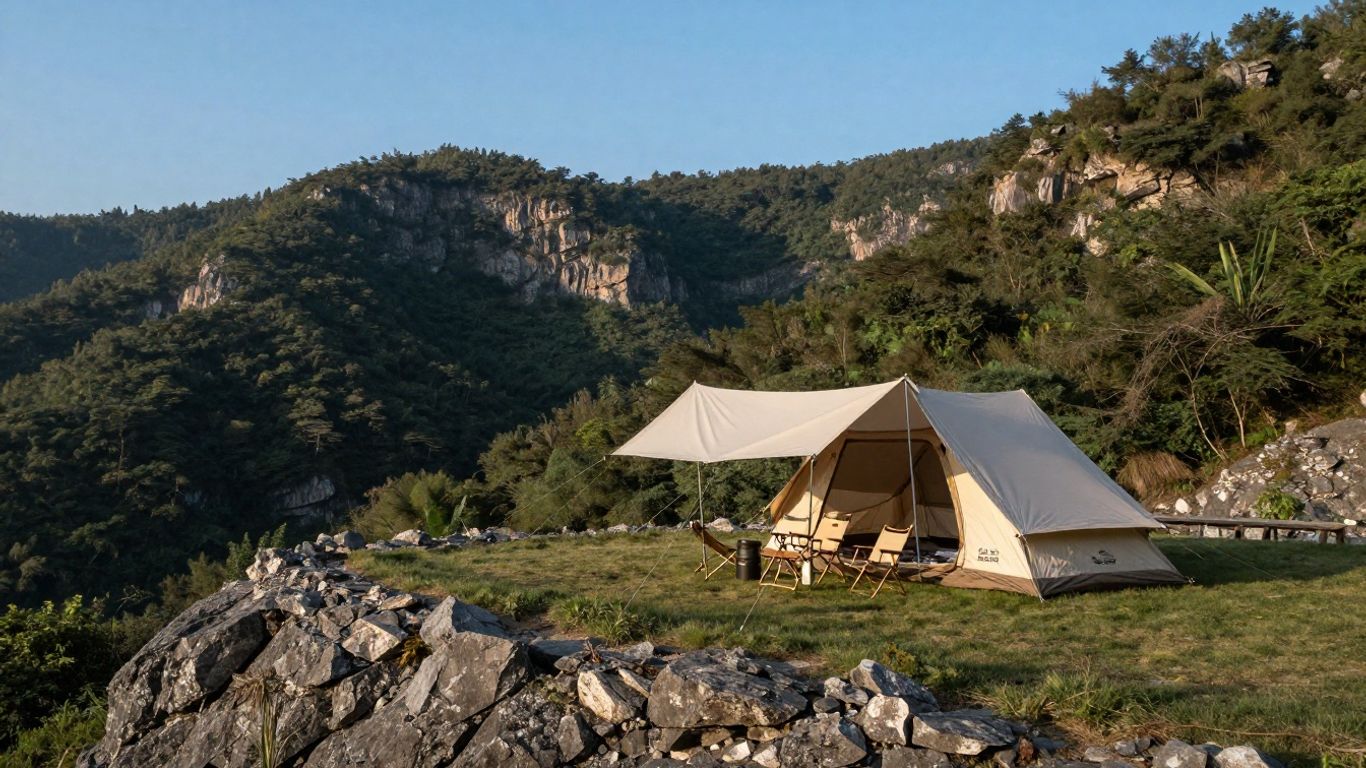
Huttopia Gorges du Verdon is near the entrance to the gorge, close to Castellane. You get a spot by the water, with your own way down to the Verdon River. On site, there are places for camping tents and also wood and canvas tents. You can even choose a chalet if you prefer that setup. There are two swimming pools for days when you do not want to swim in the river. Overall, it suits travelers who want a campsite feel and easy river access, not a view from far up on a high ledge.
The setting is better understood as a comfortable base for exploring canyon scenery and outdoor activities than as a pitch directly above the deepest cliffs. Choose it when river time, swimming, and access from Castellane are central to the trip.
Camping Terra Verdon for access to Castellane and outdoor activities
Camping Terra Verdon is a practical name to investigate for travelers basing themselves near Castellane and organizing outdoor days from there. Its appeal in this itinerary is the location: staying in the Castellane area keeps supplies, town services, and access to the lower canyon within reach. The surrounding landscape provides a useful starting point for combining drives, hikes, and water-based activities.
Before booking, check the current accommodation types and pitch map directly. The most scenic experience may come from the day’s route rather than from a panoramic view at the campsite itself.
Campsites around La Palud-sur-Verdon for elevated canyon views
Sites around La Palud-sur-Verdon are the better match for travelers who want to spend more time above the gorge. Their value comes from proximity to the Route des Crêtes, rim trails, and viewpoints, not resort-style amenities. The best pitch will usually be one with an open aspect, but trees can provide welcome relief from the afternoon sun.
Ask whether the pitch faces the canyon or sits in the same general district. A few minutes of map checking can make the difference between a broad view and a wooded camping spot with no visible cliffs.
Lakefront campsites near Lac de Sainte-Croix
Lakefront camping spots beside Lac de Sainte-Croix feel a bit different from the usual places. You get wide water, gentle edges, and a view that lines up with the gorge entrance. It works well for people who want to paddle or swim, or just sit outside and take it easy, without making the trip to the river each day.
Nearby towns add their own mood. Sainte-Croix-du-Verdon has its own pace. Les Salles-sur-Verdon feels another way. Bauduen also brings a separate feel around the water.
Around the lake, the busiest time hits during the hottest hours. A camp spot you can reach by foot from the water helps a lot. You can still swim early or take a calm paddle later, once the crowd thins out.
What to expect from each type of campsite
Gorges du Verdon camping can mean a basic tent spot. It can also mean a cabin with furnishings. Some areas have mobile homes too. A good view does not always mean it is the easiest stay. Sometimes the prettiest place has fewer services. First, figure out how many nights you need. Then pick the options that fit your way of getting around.
Tent pitches with the strongest sightlines
Tent pitches offer the best chance of choosing your exact outlook, especially when a campsite has open ground near an edge or hillside. Even so, shade from trees and the cars nearby can shift how it feels. Get there while it is still bright so you can look closely at the ground. Also think about morning light, how the wind may hit, drainage, privacy, and the view.
A spectacular outlook is less useful if the ground is uneven or exposed to strong afternoon heat. A balanced pitch choice usually combines some openness with shade nearby.
Mobile homes and cabins for comfort
Mobile homes and cabins suit travelers who want a kitchen, beds, and a protected place to eat after a long day on the road. They can also be sensible in shoulder season, when cool evenings make a tent less appealing. Their terraces may provide pleasant outdoor living, but the view depends heavily on the unit’s position within the site.
If scenery matters to you, ask for an accommodation map. Also ask what the view looks like from the terrace. For example, does it face open fields, a line of trees, or another set of units? Comfort and views can both work out, but you should not expect that without checking.
Riverside pitches and shade trade-offs
Riverside pitches are attractive in hot weather because the water and vegetation can make the air feel cooler. They may also be more shaded and more sheltered than elevated sites. There is a downside, though. Trees can get in the way of the view. The ground can feel wetter than you expect. Also, the river might be a quick walk away instead of being right by the pitch.
Cool off in the river if you can. Do it only where the camp rules allow it. Also follow the safety advice for the area. Don’t assume the water depth or the current will look clear from shore. Sometimes it changes fast.
Facilities that make remote camping easier
Remote camping feels easier when the basics are taken care of at the camp. If you are deciding where to stay, look at what you will use every day. Do not only chase a high star score. Check for a small store, a place to wash clothes, clean toilet and shower areas, and an easy water refill spot. When you plan to hike and spend time in the car, these things can matter more than the games or shows.
A simple comparison can keep the choice grounded:
| Campsite feature | Most useful for | Question to check |
| Grocery shop or bread service | Remote stays | Is it open during your dates? |
| Laundry facilities | Longer trips | Are machines available without long waits? |
| Water access | Summer camping | Is swimming permitted and supervised? |
| Shaded pitches | Hot afternoons | Can you request shade when booking? |
These details shape how much time you spend leaving the campsite for errands. They also help you decide whether a remote view is worth the extra planning.
Planning a stay around the best viewpoints
A good itinerary groups sights by area instead of crossing the canyon repeatedly. Roads are scenic but slow, and a short map distance can hide a long drive. Give each day one main scenic objective, then add a nearby walk, village, or water stop.
Combining campsite views with the Route des Crêtes
If you are near La Palud-sur-Verdon, set aside part of one morning for the Route des Crêtes. Plan on a loop with several lookouts. If you rush, you will miss the best views. Pull over at each viewpoint, take a short walk where you are allowed, and bring enough water in the car. There are not many places to buy things along the way.
The Route des Crêtes viewpoints guide helps you identify stops and plan around early light. Starting early also makes parking and passing easier on the narrower sections.
Reaching Point Sublime and the Couloir Samson
Point Sublime gives a broad view into the gorge, while the Couloir Samson brings you closer to the canyon’s dramatic entrance. These sights line up nicely, mainly if you are near Rougon or heading along the west side. Bring shoes that handle rough ground, even if you do not plan to walk far.
Don’t treat the viewpoint as a quick roadside photo stop. Allow time to read the landscape, notice the changing scale of the cliffs, and check conditions before continuing toward any trail.
Adding Lac de Sainte-Croix and the Verdon River
The lake adds an easy contrast to the high viewpoints. Go out early, either on the water or on the sand by the lake. Wait until the light shifts, then head to a viewpoint above the gorge. The Lac de Sainte-Croix guide shares where you can launch, the nearby villages, and the routes you can take to reach the reservoir.
If you plan to paddle, start early when possible. Wind and heat can build later, and popular launch points may become crowded during summer.
Building a two- or three-night itinerary
With two nights on your Gorges du Verdon vacation, pick one main spot to stay. Don’t feel like you must see every viewpoint, town, and shoreline. If you have three nights, you can spread things out a bit more. You may also manage a good drive through the scenery and still have time to be on the water. A simple sequence keeps the trip manageable:
- Arrive, settle in, and visit a nearby viewpoint or village.
- Spend the fullest day on the Route des Crêtes, Point Sublime, or a major hike.
- Add Lac de Sainte-Croix, a short walk, or a relaxed departure route.
This plan still allows for slowdowns, bad weather, and the rare added stop that we did not list at first. The two day route around Verdon is another way to plan the same general set of small towns, scenic overlooks, and water based activities.
Outdoor activities near the canyon campsites
Verdon is a place that suits people who like both scenery and getting outside. You do not have to set big goals every single day. Sometimes a quick walk along the rim and a dip in the water is enough, especially after a long day on the road. Pick what you will do based on the weather, the state of the water, your energy level, and how long it will take to get back without stress.
Hiking trails for rim and gorge views
Hiking provides perspectives that roads cannot reach. Short walks by the lookout areas can fit an easy day. The Blanc-Martel path is different. It needs planning ahead, plus extra water and more time. Some parts are steep. There are also open sections where the weather shifts fast. Solid shoes help a lot, even if the trip does not feel too long.
The Verdon hiking trails guide can help you compare lakeside walks, rim routes, and more demanding canyon trails. Check current conditions before setting out, especially after hot weather or storms.
Kayaking and paddleboarding on the river and lake
Lac de Sainte-Croix is generally the simpler setting for casual kayaking, canoeing, and paddleboarding. The lake gives beginners more open space, while narrower gorge sections require closer attention to access rules, wind, and water conditions. Begin early when possible, particularly during the busiest months.
Choose a launch point that matches your experience and allow time to return before conditions change. A calm morning can become much less comfortable once wind and heat increase.
Climbing, rafting, and canyoning options
The region supports guided activities ranging from rafting and canyoning to climbing and via ferrata. Arrange these with qualified local providers, since equipment, water levels, and route conditions affect what is suitable. A guided option can also make unfamiliar terrain easier to understand.
If you want exposure and fixed protection without traditional climbing, a Verdon via ferrata route may be worth researching. Read the difficulty description carefully and be honest about your comfort with heights.
Scenic drives and photography stops
Enjoying the drive here is worth it on its own. Still, you need to slow down and stay calm. Stop only where it says you can. Make sure you have enough gas for the whole trip. Also, do not take photos while you are working through a curve. Morning and late day light can show the limestone surface better than bright midday light.
A small camera, water, and a light layer are more useful than a complicated setup. The best photograph may come from a short walk away from the obvious roadside stop.
Practical advice for camping in the Gorges du Verdon
Camping here is pretty easy if you think ahead. First, look at how far you will drive, what the heat will be like, and when campsites get busy. This park area is wide, so facilities may be far apart, and the weather can shift fast.
Before you leave, confirm the opening dates for the sites you want. Also check the latest road updates. Finally, read any trail notices right before departure. Avoid trusting an old plan.
Best seasons for clear views and warm weather
Summer makes it simple to swim and paddle on a Gorges du Verdon vacation. You also get evenings that feel pleasantly warm. Still, the same season can mean strong heat, slow roads, and lots of people at the main viewpoints. If you go in late spring, the sights can look fresher and the air may feel less heavy. Early fall often suits hiking better, with cooler temps and a calmer vibe around the area. The Verdon guide breaks down when to go, and it links the timing to season, height, and local land.
Whatever the month, pack for variation. A sunny afternoon does not guarantee a warm morning at a higher campsite.
Booking rules for summer and shoulder season
If you can, book for July and August as soon as possible. This matters most when you want a certain room or tent size, a bigger pitch, or a site near the lake. In the shoulder season, options are often easier to find. Still, some parks and activity groups may run fewer hours. Also double check your check-in time. Look at the cancellation rules and see if they want a deposit.
If your itinerary includes several areas, it can be tempting to change campsites frequently. In practice, staying put for two or three nights often gives you more time to enjoy the canyon.
Driving narrow roads with camping equipment
Large vehicles and trailers need extra care on canyon roads. Check the route before leaving; don’t assume every scenic road suits your setup, and let faster traffic pass when it is safe. Reversing or turning around can be difficult at viewpoints and narrow bends.
Keep food, water, and basic supplies accessible, not buried under camping gear. A small delay on the road shouldn’t turn into a stressful search through the entire vehicle.
Weather, water, and essential equipment
Carry sturdy walking shoes, sun protection, a refillable water bottle, a light jacket, and a headlamp. For water activities, bring secure footwear and a dry layer for the return journey. Check forecasts for storms and temperature, since rain can affect trails and canyon conditions.
Don’t rely entirely on a phone signal for navigation. Download maps in advance and keep the campsite address available offline, especially if you arrive after dark.
Leave-no-trace practices in the regional nature park
Use marked paths, take all waste with you, and keep noise low near campsites and natural areas. Do not remove rocks, plants, or other natural features, and follow fire restrictions and campsite instructions. Keep water access clean and shared, not treated as a private picnic area.
A careful visit protects the scenery that makes the Verdon worth camping beside. It also keeps the experience more pleasant for residents, wildlife, and the travelers who arrive after you.
Conclusion
The best campsite in the Gorges du Verdon is the one that fits your priorities: elevated views near La Palud-sur-Verdon, practical access from Castellane, river time near the canyon entrance, or relaxed lake days around Moustiers-Sainte-Marie and Lac de Sainte-Croix. Choose one area as your base, plan drives realistically, and leave enough space for weather, walks, and unplanned viewpoints.
Frequently Asked Questions
Which area has the best canyon views from a campsite?
La Palud-sur-Verdon and the Route des Crêtes area are strong choices for elevated views, while Rougon is well placed for Point Sublime and the western canyon.
Is Castellane a good base for camping?
Yes. Castellane is practical for supplies, meals, outdoor activities, and access to the lower canyon, though it may not provide the same high-rim views as La Palud-sur-Verdon.
Are lakefront campsites near Lac de Sainte-Croix worth considering?
They are a good fit for travelers who value swimming, paddling, open water, and relaxed afternoons as much as narrow canyon scenery.
How many nights should I spend in the Gorges du Verdon?
Two nights can cover one main scenic area, while three nights give you more time for a drive, a hike, a village visit, and an activity on the lake or river.
What should I pack for camping in Verdon?
Bring walking shoes, sun protection, plenty of water, a light jacket, a headlamp, offline maps, and suitable clothing for swimming or paddling if you plan those activities.
When is the best time to camp in the Gorges du Verdon?
Summer is best for warm-weather water activities, while late spring and early fall can offer more comfortable hiking conditions and fewer crowds.
Do I need a car to explore the canyon from a campsite?
A car is usually the most practical way to reach viewpoints, trailheads, villages, and lake access points because distances are spread out and roads are winding.


