

A Normandy Road Trip: Pairing Mont Saint Michel with the D-Day Beaches

Key Takeaways
A well-paced Normandy road trip can combine Mont Saint Michel’s medieval atmosphere with the history of the D-Day coast without rushing every stop. The key is to plan around geography, tides, opening hours, and realistic driving times.
- Allow at least five days for Mont Saint Michel and the main D-Day sites.
- Stay near Mont Saint Michel before moving to a base around Bayeux or the coast.
- Visit Utah Beach, Omaha Beach, Pointe du Hoc, and the American Cemetery in a logical sequence.
- Check tide tables, parking arrangements, museum hours, and reservation requirements ahead of time.
- Leave room for regional food, rural roads, weather changes, and unplanned stops.
Plan the route, timing, and trip length
Normandy is easy to underestimate on a map. Mont Saint Michel sits west of the main D-Day beaches, and the small roads connecting villages can make a short-looking journey take longer than expected. A practical plan treats the region as several connected areas rather than one compact destination.
Choose the best starting point and direction
For many travelers, Paris is the most convenient arrival point, but picking up a car after leaving the city can make the first driving day calmer. Caen, Rennes, and Saint-Malo can all work as starting points depending on flight, train, and hotel plans. Driving west toward Mont Saint Michel first creates a natural progression from the abbey to the landing beaches, while beginning in Bayeux may suit travelers whose main priority is military history.
A car gives you flexibility in the countryside, particularly when visiting smaller museums or viewpoints. Before setting off, review the practical route from Paris to Mont Saint Michel, including possible rail connections if you would rather delay the rental car until Normandy.
Decide how many days to spend in Normandy
Five days is a useful minimum for this route: one travel day, two days around Mont Saint Michel, and two days for the D-Day coast. Six or seven days make the itinerary more comfortable and create space for Bayeux, Caen, or the western Normandy coastline. With only three or four days, choose either a shorter abbey-and-beaches route or fewer museums rather than trying to cover everything.
The best mont saint michel normandy road trip itinerary is not necessarily the one with the most stops. It is the one that leaves enough time to walk, read, pause, and absorb places that carry considerable historical weight.
Compare driving times, tolls, and fuel costs
Driving costs depend on your starting point, vehicle, fuel prices, and whether you use toll roads. The fastest route is not always the most interesting, so compare the cost of tolls with the time saved before committing to a motorway-heavy journey. Keep a small margin for fuel stops because services are less frequent on some rural stretches.
A simple planning table can help you compare the main legs before booking accommodation:
| Route leg | Approximate driving time | Planning consideration |
|---|---|---|
| Paris to Mont Saint Michel | 4–5 hours | Tolls, traffic leaving Paris, and a long first day |
| Rennes to Mont Saint Michel | 1–1.5 hours | Convenient if arriving by train or air |
| Mont Saint Michel to Bayeux | 1.5–2 hours | Allow time for stops and parking |
| Bayeux to Utah Beach | 1–1.25 hours | Rural roads and museum opening times |
| Bayeux to Caen | 30–45 minutes | Easy addition for the Caen Memorial |
These are planning estimates rather than guarantees. Check live navigation shortly before departure, especially during summer weekends and holiday periods.
Pick the best season for a road trip
Late spring and early fall often offer a useful balance of daylight, manageable temperatures, and fewer visitors than the height of summer. Summer provides long days but brings heavier traffic, fuller parking areas, and more demand for accommodation. Winter can feel peaceful, although shorter days and reduced opening schedules require a tighter plan.
Weather changes quickly along the coast. Pack a waterproof layer even in mild months, and avoid building the entire itinerary around a single sunset, tide, or outdoor walk.
Build a practical Mont Saint Michel Normandy road trip itinerary
The following five-day outline keeps the route moving in one direction without making every day a race. It assumes a car and an arrival from Paris or another French city, but the first day can be adjusted if you begin in Rennes, Saint-Malo, or Caen. Book the most popular accommodation and museum visits before finalizing the sequence.
Day 1: Travel to Normandy and settle in near Mont Saint Michel
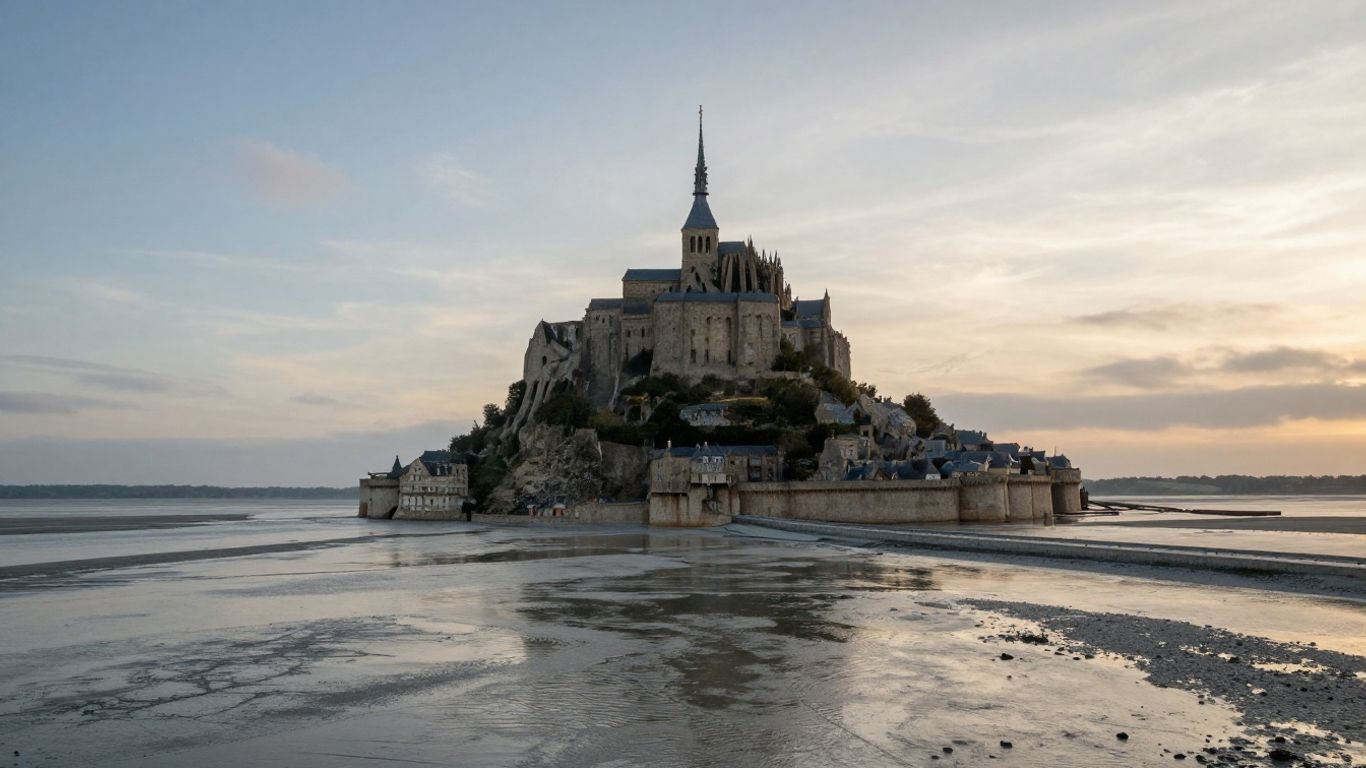
Use the first day to reach the Mont Saint Michel area rather than trying to combine a long transfer with a full sightseeing schedule. Arriving in the afternoon gives you time to check in, walk around the mainland approach, and see the mount from a distance. If you arrive late, a simple local dinner and an early start the next morning will serve you better than squeezing in a hurried visit.
The La Caserne area is practical for shuttle access and parking, while nearby villages can provide a quieter rural setting. Pontorson is another useful base, especially for travelers who value restaurants, shops, and straightforward road access.
Day 2: Explore Mont Saint Michel and the surrounding bay
Begin early, before the busiest part of the day, and allow several hours for the village, ramparts, and abbey. The narrow streets are steep and uneven, so comfortable shoes matter more than an ambitious checklist. After visiting the mount, consider a viewpoint across the bay or a properly guided walk rather than wandering onto exposed sand alone.
For additional planning, the practical guide to things to do near Mont Saint Michel covers nearby towns, landscapes, and activities that can fill a second day without repeating the central village. Return to your accommodation before the evening drive becomes tiring, particularly if you intend to photograph the mount at sunset.
Day 3: Drive from Mont Saint Michel to the D-Day coast
Leave after breakfast and head toward Bayeux, Arromanches, or another base near the landing beaches. The journey is manageable, but it is worth treating it as a half-day transition if you want to stop in small towns or pause for lunch. Once settled, use the afternoon for one focused visit rather than attempting several major museums.
Bayeux works well because it offers a walkable center, a range of accommodation, and access to both the western and eastern beach sectors. Staying closer to the coast reduces morning driving, but may mean fewer evening dining choices outside the high season.
Days 4 and 5: Visit the main D-Day beaches and museums
Divide the beaches across two days according to geography. One day can cover Utah Beach, Sainte-Mère-Église, and nearby sites, while the other focuses on Omaha Beach, Pointe du Hoc, and the American Cemetery. If you are especially interested in the British and Canadian sectors, replace or extend one of these loops rather than treating Gold, Juno, and Sword as quick photo stops.
Keep the schedule intentionally light. Memorial sites can be emotionally demanding, and the value of the visit often comes from spending time with exhibits and landscapes rather than collecting locations.
Explore Mont Saint Michel efficiently
Mont Saint Michel rewards a slower visit than its compact footprint suggests. The abbey, village, ramparts, bay, and access system each require a different kind of planning. A little preparation helps you spend more time looking around and less time dealing with queues or transport confusion.
Walk through the medieval village and ramparts
The main street is lively, but the side lanes and ramparts offer a better sense of the mount’s layout. Climb gradually, stop at viewpoints, and remember that the route includes stairs and uneven paving. Early morning and later afternoon usually feel more manageable than the busiest middle hours.
Do not plan the village as a quick stop between two timed reservations. Even travelers who are less interested in shopping may want time for the changing views across the bay and the details of the old stone buildings.
Visit Mont Saint Michel Abbey
The abbey is the central timed attraction and deserves priority in your schedule. Its rooms, terraces, stairways, and changing elevations make the visit feel more like an architectural walk than a single gallery experience. Check current admission information and opening hours before you go, since schedules can change by season.
If you prefer additional historical context, a small-group guided visit can help explain how the religious and defensive roles of the mount developed over time. Reserve only after confirming the tour language, duration, meeting point, and amount of walking involved.
Understand the tides and access arrangements
The bay has powerful tides and shifting channels, so tide conditions should shape your plans. The bridge provides access to the mount, while shuttles connect the mainland parking area with the entrance zone. Parking is outside the mount itself, and the walk or shuttle transfer adds time that visitors sometimes overlook.
The advice in this guide to experiencing Mont Saint Michel’s tides is useful when you want to understand why the surrounding landscape can look dramatically different within a few hours. Never cross tidal sands independently unless local authorities explicitly confirm that conditions are safe; guided bay walks are the sensible option for exploring that environment.
Choose between staying on the island, nearby, or in Saint-Malo
Sleeping on the island offers atmosphere and the chance to experience quieter streets after many day visitors leave, but luggage handling, stairs, and limited vehicle access can complicate the stay. Mainland lodging is generally easier for drivers, particularly around La Caserne or nearby villages. Saint-Malo works best when you want a larger coastal town, more restaurants, or a connection with Brittany rather than the shortest possible route to the abbey.
For a closer comparison of access, parking, and accommodation styles, review the guide to places to stay near Mont Saint Michel. Choose the base that reduces friction for the rest of your itinerary, not simply the one with the most dramatic view.
Visit the D-Day beaches in a logical order
The D-Day coast is not one attraction but a long sequence of beaches, cliffs, cemeteries, museums, and villages. Distances are modest, yet each stop can take longer than expected because the stories and landscapes invite attention. A geographic order reduces backtracking and gives the two-day visit a clear shape.
Start at Utah Beach and Sainte-Mère-Église
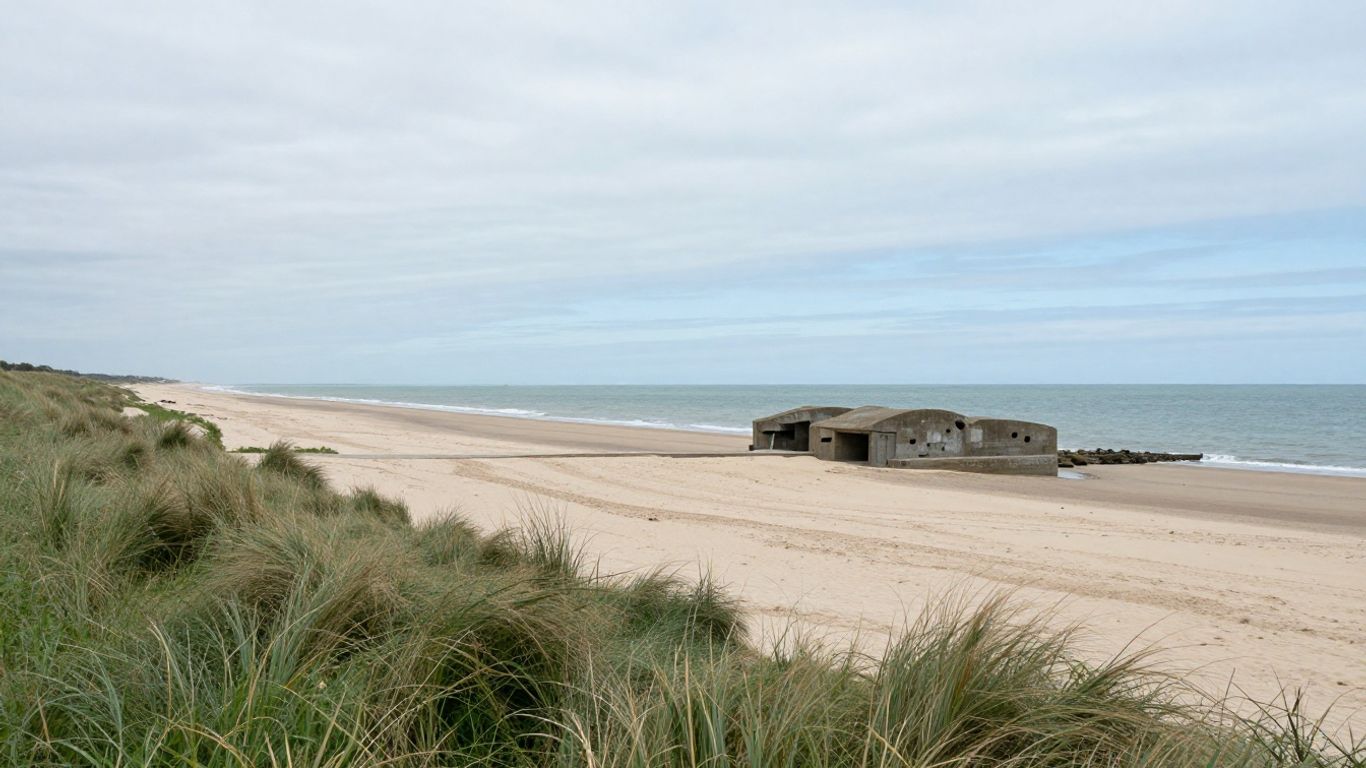
Utah Beach and Sainte-Mère-Église form a useful western starting point from a Bayeux base. The area combines coastal memorials with airborne history and is usually easier to visit before moving east. Begin with the site that matters most to you, then use the rest of the day for nearby museums and smaller memorials.
Allow more time than the map suggests if you plan to read exhibits carefully. Country roads, village traffic, and museum parking can all interrupt an overly tight schedule.
Explore Omaha Beach and the Normandy American Cemetery
Omaha Beach carries a different visual and emotional character from Utah, with steep bluffs and a broad shoreline. The Normandy American Cemetery at Colleville-sur-Mer should not be treated as a brief roadside stop; its grounds and visitor facilities deserve unhurried attention. Dress for wind and weather, even when the forecast looks mild.
The cemetery visit can stand on its own, so avoid placing several major museums immediately afterward. A quiet meal or return to Bayeux may be a better close to the day than another long drive.
Stop at Pointe du Hoc and Longues-sur-Mer
Pointe du Hoc is best paired with Omaha Beach because both lie on the western part of the main coastal route. The cliffs, cratered ground, and remaining concrete positions make it a landscape visit as much as a museum visit. Longues-sur-Mer adds a different perspective with its coastal battery and preserved gun positions.
Wear sturdy shoes and take care near edges and uneven ground. The sites are outdoors, and rain can make paths slippery, so allow flexibility rather than treating every stop as a fixed appointment.
Include Gold, Juno, and Sword beaches if time allows
The British and Canadian sectors east of Arromanches broaden the story beyond the American landing beaches. Gold, Juno, and Sword are possible in a longer itinerary, but seeing all three in one compressed day can leave little time for museums or villages. Pick one or two based on your interests, then return for the others on a future trip if necessary.
A route toward Caen can make this eastern section easier to organize, especially if you plan to visit the Caen Memorial. The important thing is to recognize that a shorter, attentive visit is more meaningful than a rushed sweep along the coast.
Choose meaningful museums and memorial sites
Normandy’s museums vary considerably in size, focus, and tone. Some concentrate on a single unit or landing, while others place the invasion within the wider history of the Second World War. Selecting a few complementary sites will usually provide more understanding than entering every museum on the route.
Compare the Airborne Museum and Utah Beach Landing Museum
The Airborne Museum in Sainte-Mère-Église is a natural choice for travelers interested in paratrooper operations and the events around the village. The Utah Beach Landing Museum provides a more beach-centered interpretation, linking the landing area with equipment, planning, and the experience of the troops. Visiting both works well when your western beach day has enough time.
Read the current descriptions before buying tickets so the exhibits match your interests. Families may prefer interactive displays, while history enthusiasts may want more archival material and operational detail.
Visit the Overlord Museum near Omaha Beach
The Overlord Museum near Omaha Beach is convenient to combine with Colleville-sur-Mer and the coast. Its collections and presentation can help connect individual objects with the wider military campaign. Plan it as one substantial indoor stop rather than squeezing it between several timed outdoor visits.
A museum visit is also useful when weather changes. Keep one indoor site in reserve each day, since rain and coastal wind can make a planned sequence of viewpoints less appealing.
Add the Caen Memorial for broader historical context
The Caen Memorial takes a wider view of twentieth-century conflict and can provide context before or after the beach visits. It is not the most efficient addition to a tightly packed western beach day, so place it on a separate morning or use it as the focus of an eastern Normandy day. The large scale means visitors should expect to spend several hours there.
This broader framing can make the smaller coastal sites easier to understand. It also gives travelers who want historical depth an alternative to adding still more landing beaches.
Decide which sites need advance reservations
Check official booking pages for the abbey, guided bay walks, popular museums, and any special exhibitions. Reservations are especially useful during school holidays and summer weekends, although smaller memorials may remain flexible. Keep confirmation emails, opening times, and parking information available offline.
A reasonable reservation checklist includes:
- Mont Saint Michel Abbey entry, if timed admission applies.
- Guided walks across the bay, which depend on tides and local safety conditions.
- Special museum tours or language-specific visits.
- Popular accommodation near the mount or in central Bayeux.
These bookings establish the firm points of the trip. Leave the spaces between them open enough to accommodate weather, queues, and the emotional pace of the memorial sites.
Make the road trip comfortable and efficient
The practical details can shape the experience as much as the attractions. Normandy’s rural roads are generally manageable, but parking, walking distances, weather, and limited evening transport all reward preparation. Discover France Beyond Paris approaches regional travel from this logistical angle, helping readers plan beyond the most obvious French destinations.
Select convenient bases for overnight stays
Use one or two bases rather than changing hotels every night. Mont Saint Michel or its nearby mainland area suits the first part of the trip, while Bayeux, Arromanches, or another D-Day coast location works well for the second. A single Bayeux base is particularly convenient if you want restaurants and a central position between the western and eastern sectors.
When comparing rooms, look beyond the view. Parking, luggage access, breakfast timing, and the distance to dinner can make a noticeable difference after a full day outdoors.
Allow extra time for rural roads and parking
Navigation apps often calculate driving time accurately but cannot fully predict the time needed to park, walk to an entrance, or find a public restroom. Add a buffer to every coastal loop, especially when visiting during peak months. Some roads narrow near villages, and farm vehicles can slow traffic without warning.
Arrive early at the most popular beaches and cemeteries. Earlier parking is less stressful and leaves more time for the places themselves.
Plan meals, market stops, and regional specialties
Make lunch part of the route rather than assuming every village will have an open restaurant at the exact time you need one. Bakeries, markets, and small cafés can provide practical options, but opening days and hours vary outside larger towns. Normandy is also a good place to try local seafood, dairy products, cider, and apple-based specialties without turning every meal into a formal event.
Build a simple food plan around the day’s geography:
- Buy breakfast supplies near your accommodation when an early departure is planned.
- Pack water and a light lunch for remote coastal sites.
- Reserve dinner in smaller villages during busy periods.
- Leave room for a market or bakery stop in Bayeux, Pontorson, or another town.
This approach keeps meals flexible while reducing the chance that hunger dictates an inconvenient detour. It also makes space for the regional character of the trip.
Use a rental car, navigation apps, and offline maps
A rental car is usually the most flexible choice for linking Mont Saint Michel with dispersed beach sites. Photograph the vehicle before leaving the rental lot, confirm fuel and insurance arrangements, and make sure the driver understands French road signs and toll procedures. Download offline maps before traveling because rural coverage can be inconsistent.
Discover France Beyond Paris is designed for travelers who need practical destination guidance, including the realities of moving through regions beyond Paris. Keep the navigation app as a support rather than a substitute for checking road closures, tide information, and official site instructions.
Extend or customize the Normandy itinerary
The core route can be expanded without losing its shape. Add destinations according to your interests, available days, and tolerance for hotel changes. Normandy works particularly well for slower travel because villages, coastlines, and museums are often more rewarding when approached without a packed schedule.
Add Bayeux and its famous tapestry
Bayeux deserves more than a quick overnight if you enjoy medieval history or want a walkable town between beach days. The Bayeux Tapestry is the obvious landmark, while the cathedral, old streets, and local restaurants make the town useful even for travelers focused mainly on the twentieth century. Visit the tapestry when your attention is fresh, since its long narrative is easier to follow without rushing.
An extra night in Bayeux also reduces the pressure to drive back to Mont Saint Michel after a long coastal day. It is one of the simplest ways to make the itinerary feel more spacious.
Include Honfleur and the Normandy coast
Honfleur adds a different coastal atmosphere, with a historic harbor and a stronger connection to the Seine estuary. It is not a natural quick detour from every D-Day route, so allow at least a full day or place it between Normandy and another destination. Travelers who want scenic drives can also explore sections of the coast rather than aiming only for landmark towns.
The road itself becomes part of the experience when you leave room for viewpoints, seafood stops, and weather-dependent walks. Avoid adding Honfleur if it would turn the rest of the itinerary into a sequence of long transfers.
Combine the trip with Saint-Malo or Brittany
Saint-Malo pairs naturally with Mont Saint Michel because of its coastal setting and manageable distance. From there, a longer extension into Brittany could include Cancale, coastal villages, or a slower regional loop. A week-long Brittany road trip itinerary is a useful reference if you want to continue beyond Normandy without returning immediately to Paris.
This extension works best when you add at least two or three nights. A single rushed night in Brittany may create more packing and driving than enjoyment.
Adapt the route for families, history enthusiasts, or slower travel
Families may prefer shorter walking sessions, earlier meals, and one major museum per day. History enthusiasts can add Caen, specialist museums, guided tours, and more time at the cemeteries. Slower travelers might choose two bases, skip some beaches, and reserve a full day for Mont Saint Michel’s village and bay.
If traveling with children, pacing matters more than coverage. The family-focused advice on visiting Mont Saint Michel with kids can help with stairs, shuttles, weather, and realistic expectations. Whatever your travel style, define the few places you most want to understand, then let the rest of the itinerary support those priorities.
Conclusion
A Normandy road trip linking Mont Saint Michel with the D-Day beaches works best when geography and time guide the plan. Stay near the mount first, move toward Bayeux or the coast, and give each memorial, museum, and landscape enough attention to feel meaningful. With flexible driving days, careful tide planning, and a few well-chosen bases, the route becomes manageable as well as memorable.
Frequently Asked Questions
How many days do you need for Mont Saint Michel and the D-Day beaches?
Five days is a practical minimum, while six or seven days allow a calmer pace and room for Bayeux, Caen, or additional coastal stops.
Should you visit Mont Saint Michel before the D-Day beaches?
Traveling from Mont Saint Michel toward the D-Day coast creates a straightforward west-to-east route, although the reverse direction can work if your arrival point or flight schedule makes it more convenient.
Is a car necessary for this Normandy itinerary?
A car offers the most flexibility because the beaches, museums, cemeteries, and smaller villages are spread across a wide area. Public transportation can work for selected stops but requires more timetable planning.
Where is the best place to stay for the D-Day beaches?
Bayeux is a convenient central base with restaurants and access to several beach sectors. Coastal towns can reduce morning driving but may have fewer dining and accommodation choices outside peak periods.
What is the best time of year to visit Normandy?
Late spring and early fall often combine reasonable weather, long enough daylight, and fewer crowds than midsummer. Summer is convenient but generally busier and more expensive.
How far in advance should you book Mont Saint Michel and Normandy?
Reserve accommodation and popular timed attractions several weeks or months ahead for summer, holidays, and weekends. Shoulder-season travelers usually have more flexibility but should still check opening schedules.
Can you visit the D-Day beaches in one day?
You can see a few major sites in one day, but visiting the main beaches, museums, cemeteries, and memorials properly usually requires two days or more.


