

Saintes-Maries-de-la-Mer: The Camargue’s Gypsy Pilgrimage Town

Part of our Camargue travel guide
Key Takeaways
Saintes-Maries-de-la-Mer combines a pilgrimage tradition with beaches, wetlands, and distinctive Camargue culture. A good visit balances the town’s religious heritage with time outdoors and careful planning.
- The town sits where the Camargue wetlands meet the Mediterranean coast.
- Its fortified church and crypt are central to the pilgrimage tradition.
- May and December are the key pilgrimage periods.
- Beaches, lagoons, horses, bulls, and flamingos shape the surrounding landscape.
- Responsible travel means respecting ceremonies, wildlife, and fragile wetland habitats.
Understanding Saintes-Maries-de-la-Mer and its place in the Camargue
Saintes-Maries-de-la-Mer is a coastal town in the Rhône delta, at the southern edge of the Camargue. It is both a seaside destination and a historic religious center, which gives it a character quite different from larger Provençal cities. This saintes maries de la mer camargue guide treats the town as a base for understanding the wider region, rather than as an isolated beach resort.
Where the town sits in the Camargue
The town stands between the Mediterranean and a broad patchwork of marshes, lagoons, reed beds, and salt-affected plains. Roads approaching from Arles pass through open country where cattle, horses, and water birds may appear beside the route. The flat terrain makes distances seem greater than they are, so a map and a little patience are useful when planning excursions.
Saintes-Maries-de-la-Mer is also a practical starting point for exploring the wider delta. The Camargue region guide provides useful context on wetlands, salt pans, birdwatching, and the traditional ranches that surround the town. Within the village, however, most central sights are easy to reach on foot.
The origins of the town’s name and legends
The town’s name refers to Mary Salome and Mary of Cleopas, two figures associated with a longstanding local tradition. According to the legend, they arrived on the Camargue shore after crossing the Mediterranean and were later joined in the story by Saint Sara. The account belongs to religious tradition rather than verifiable travel history, but it remains central to the town’s identity.
That mixture of legend, landscape, and ritual explains why the town feels different from a conventional resort. Visitors encounter the story in the church, in local ceremonies, and in the way the shoreline is woven into the town’s religious memory.
How Saintes-Maries-de-la-Mer became a pilgrimage destination
Pilgrimage developed around the church and the relics associated with the Marys. Over time, the site became particularly important to Romani pilgrims, whose devotion to Saint Sara gives the May ceremonies their distinctive presence. The processions bring religious practice into public space, connecting the church with the sea and the streets around it.
The town can be busy during pilgrimage dates, but the significance of the events is not simply spectacle. Travelers who arrive with some background and leave room for worshippers will understand more of what they are seeing.
The town’s connection to Camargue culture and identity
Camargue identity is shaped by both the natural delta and the people who work within it. Gardians, ranches, fishing traditions, salt production, regional food, horses, and bulls all form part of that cultural picture. The town is one of the clearest places to see these elements meet, although no single visit can explain the whole region.
The landscape is part of the culture here. A church visit, a walk beside the water, and a meal featuring local ingredients can feel like separate activities, yet together they reveal how closely daily life remains tied to the delta.
Exploring the town’s religious and historic landmarks
The historic center is compact, and the fortified church is difficult to miss as it rises above the low town. Religious landmarks are still active places of worship, not just museum pieces, so visitors should move quietly and follow any posted guidance. Set aside time for both the architecture and the stories attached to it.
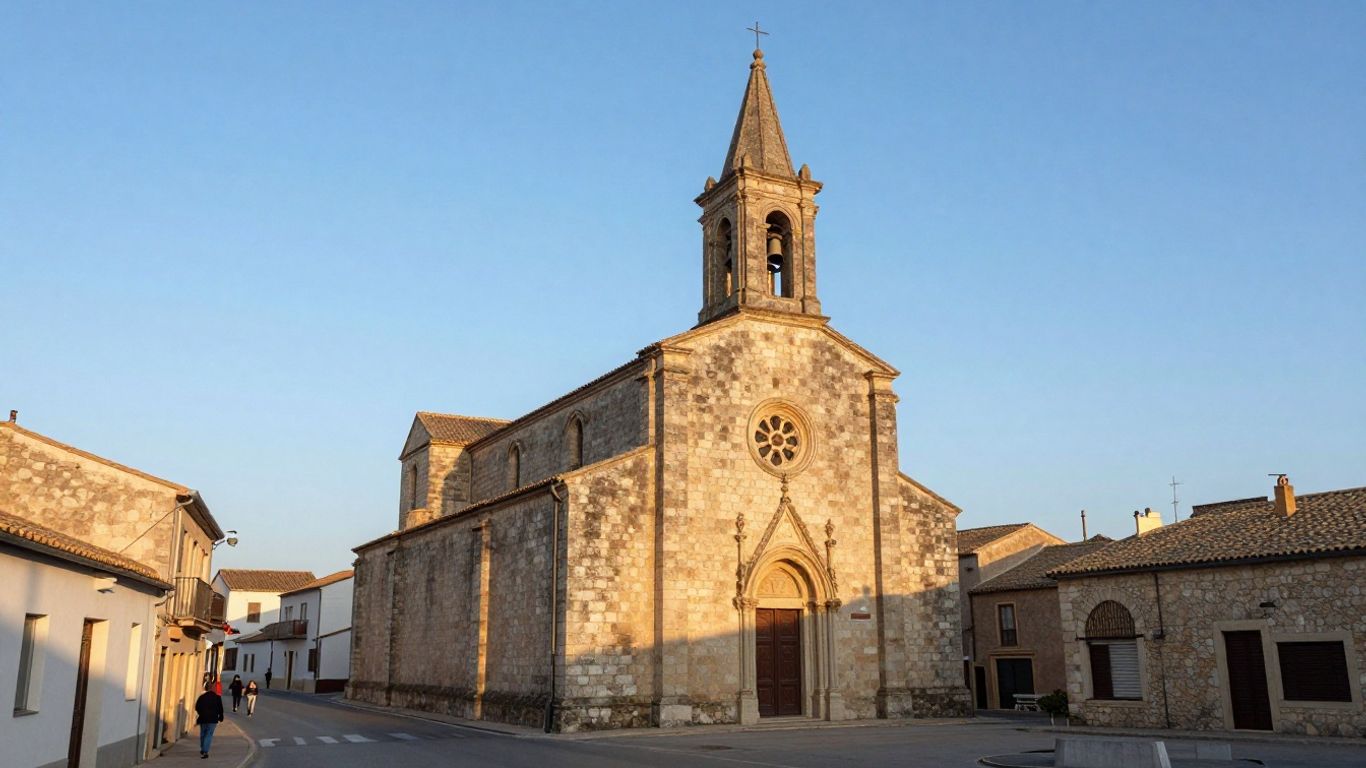
The fortified Church of Saintes-Maries
The Church of Notre-Dame-de-la-Mer has the appearance of a defensive building as well as a place of worship. Its strong walls and elevated position reflect the insecurity of the medieval coast, while the interior retains its religious purpose. Climbing or viewing the upper parts, when access is available, can also provide a broad perspective over the flat surroundings.
The church is the town’s visual landmark and a useful orientation point. Even travelers who do not plan a long visit should walk around it slowly, noticing how its stone mass contrasts with the low buildings and open horizon.
The crypt of Saint Sara, patron saint of Romani pilgrims
The crypt is dedicated to Saint Sara, often called Sara the Black, and is one of the most emotionally charged spaces in the church. The setting is intimate and usually darker than the upper church, encouraging visitors to pause rather than pass through quickly. For Romani pilgrims, the site has a significance that cannot be reduced to tourism.
Visitors should avoid treating the crypt as a theatrical attraction. Keep photography rules in mind, speak softly, and allow people who have come to pray to occupy the space without interruption.
The statues and relics of the three Marys
The church preserves traditions connected with Mary Salome and Mary of Cleopas, along with Saint Sara. Statues and relics give physical form to stories that have been carried through generations. Their importance is best understood through the pilgrimage calendar, when they become part of ceremonies that extend beyond the church interior.
A short visit is enough to see the principal devotional elements, but reading local information or joining a guided visit can add useful historical context. The distinction between legend, devotion, and documented architectural history is worth keeping clear.
The annual pilgrimage processions and their traditions
During the major pilgrimages, the statues are carried in procession toward the sea, accompanied by worshippers and traditional ceremony. The movement from church to shore is central to the experience: it makes the coastline part of the ritual rather than a separate sightseeing stop. Crowds can be dense, and the atmosphere may be intense for those unfamiliar with the tradition.
A practical way to prepare is to think of the procession as a religious event first. Check the current program locally, arrive early if you need a clear route, and do not assume that every moment is intended for visitors to photograph.
Planning a visit around the pilgrimage calendar
The pilgrimage calendar can change the town’s pace, accommodation demand, and street access. May is generally the best-known period, while the later pilgrimage connected with the three Marys provides another important date in the annual cycle. Exact schedules should be confirmed with local tourism or church authorities before booking.
The May pilgrimage for Saint Sara
The May pilgrimage is held in honor of Saint Sara and is especially significant for Romani pilgrims from across Europe. The central ceremony includes the carrying of her statue toward the sea, where a blessing forms part of the public ritual. The town may be crowded, and accommodation can become limited well in advance.
If you plan to attend, book early and allow more time than usual for moving through town. A visit outside the main ceremony can also be worthwhile, since the church and crypt are easier to appreciate when the streets are quieter.
The December pilgrimage of the three Marys
The December pilgrimage honors the three Marys associated with the town’s foundation legend. It is generally quieter and takes place in a different seasonal setting, with shorter days and cooler weather along the coast. Those conditions can suit travelers who prefer a less crowded visit but still want to encounter the religious calendar.
Winter services and access arrangements should be checked locally. Some businesses may operate on reduced schedules, so visitors should not rely on summer opening patterns.
What visitors can expect during the processions
Processions involve groups of worshippers, clergy, musicians, local participants, and visitors moving through public streets. There may be waiting, pauses, singing, and changes to normal pedestrian routes. The sea procession is especially distinctive, but it can be difficult to see clearly from every position.
The following practical choices help keep the experience manageable:
- Arrive before the main movement begins and identify a respectful place to stand.
- Wear comfortable shoes because you may wait or walk farther than expected.
- Keep bags and cameras under control in crowded areas.
- Expect temporary changes to traffic, shop access, and restaurant service.
These details matter because a pilgrimage day is not an ordinary sightseeing day. Flexibility will usually make the visit calmer and more respectful.
Respectful ways to observe religious ceremonies
Dress modestly enough for a church setting, keep voices low, and follow instructions from clergy, organizers, or local authorities. Ask before photographing identifiable people, especially during private or devotional moments. Do not block a procession route or touch religious objects unless invited to do so.
The most useful attitude is attentive restraint. Watch first, take photographs only when appropriate, and remember that the ceremony has a meaning for participants that exists independently of tourism.
Discovering beaches, landscapes, and wildlife
The town’s natural setting is one of its strongest attractions, but it is also environmentally sensitive. Beaches lie close to wetlands, and seasonal conditions can affect access, wind, insects, and bird activity. Visitors should plan outdoor time with the same care they give to the church and pilgrimage calendar.
The town’s Mediterranean beaches
Saintes-Maries-de-la-Mer has accessible sandy beaches near the town, making it easy to combine swimming or a shoreline walk with a visit to the historic center. Farther along the Camargue coast, beaches can be more remote and may have fewer facilities. Wind is common, and summer sun can be strong even when the air feels moderated by the sea.
The Camargue coast guide is useful when comparing convenient town beaches with wilder shores farther from the center. Check access conditions before setting out, especially if you are carrying food, water, or beach equipment.
Camargue wetlands, lagoons, and salt flats
The Camargue is a working delta as well as a protected natural environment. Water levels, salt, sediment, and human management shape its lagoons, rice fields, marshes, and salt flats. The colors and wildlife can change considerably with season and weather, so a landscape that seems empty at midday may become active in the cooler morning or evening.
A guided nature outing can help visitors recognize the difference between habitats without leaving marked routes. Walking and cycling are rewarding here, but distances, wind, and limited shade should be taken seriously.
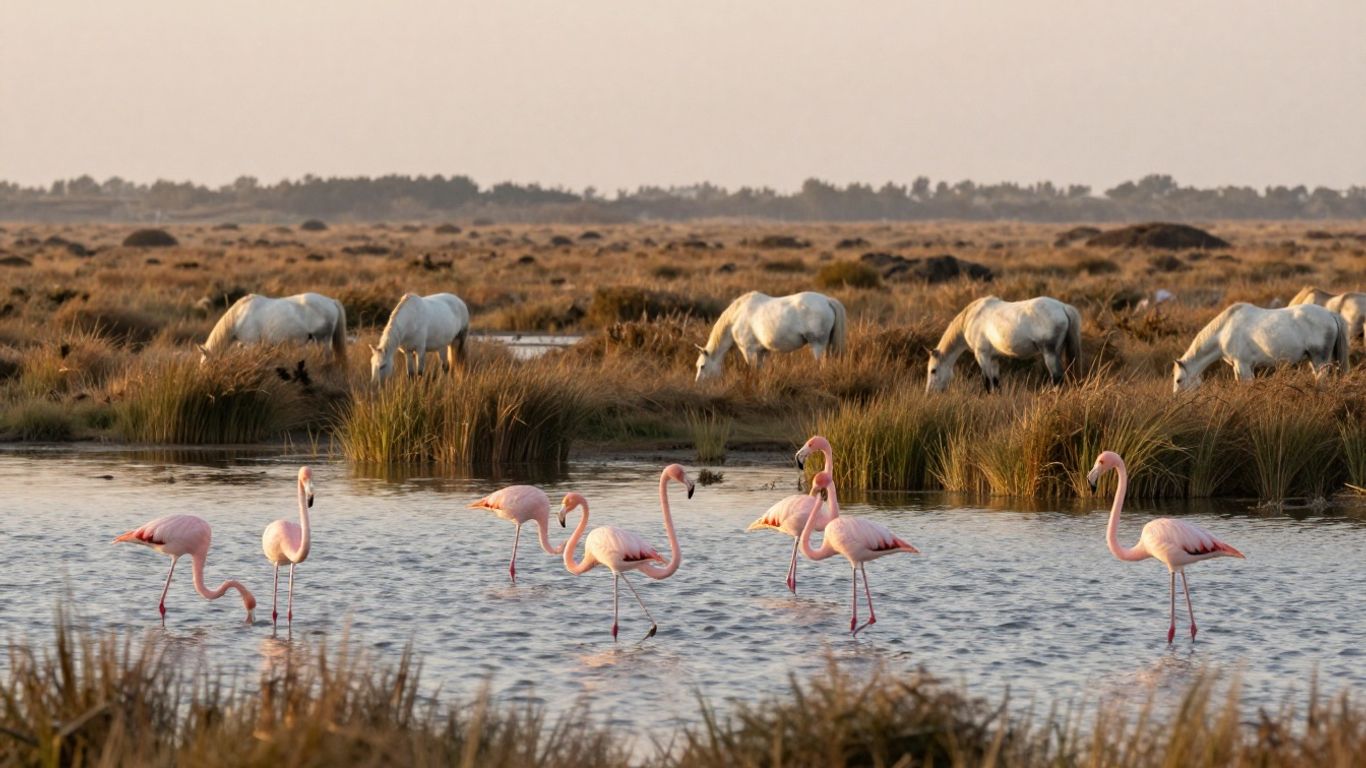
Flamingos, bulls, and Camargue horses
Flamingos are among the region’s most recognizable birds, while black bulls and white Camargue horses are closely associated with local ranching culture. They are not decorative props for photographs. Herds and birds need distance, and animals can react suddenly when approached or surrounded.
The best views often come from remaining still and allowing wildlife to behave naturally. Binoculars are more useful than trying to move close, particularly near water where birds gather.
Birdwatching opportunities near the town
Birdwatching is possible around lagoons, marshes, and designated observation areas near Saintes-Maries-de-la-Mer. Early morning usually offers cooler conditions and better light, while late afternoon can also be productive. Bring binoculars, protect them from sand, and use marked paths where they exist.
A simple field routine helps keep the experience focused: stop often, scan slowly, and listen before walking on. Patience usually reveals more than covering a long distance quickly.
Choosing things to do in Saintes-Maries-de-la-Mer
A first visit can be structured around one town walk, one cultural stop, and one outdoor activity. That balance prevents the trip from becoming either a rushed list of attractions or a purely passive beach stay. Weather and season should guide the final choice.
Walking through the historic center
The central streets are compact enough to explore without a fixed route. Begin near the church, continue toward the harbor and waterfront, and leave time for small streets, cafés, and local shops. The low buildings make the church appear even more imposing as you approach it from different angles.
Walking is also the easiest way to understand the relationship between the religious center, the sea, and everyday town life. Go early in summer if you prefer quieter streets and softer temperatures.
Taking a horseback ride through the Camargue
Horseback riding is a popular way to enter the marshes and coastal landscapes beyond town. Local operators may offer short rides, beach routes, sunset outings, or longer excursions, with options depending on riding experience and conditions. Choose an established provider that explains safety rules and treats the horses well.
The Camargue horseback riding guide can help compare the types of excursions available. A ride is not simply a faster nature walk; it should be paced around the animals, terrain, and group’s experience.
Visiting the Musée de la Camargue and local heritage sites
The Musée de la Camargue, outside the town itself, provides broader context on the delta, its inhabitants, work, and environmental change. It is a useful complement to the more concentrated religious history of Saintes-Maries-de-la-Mer. Local heritage sites and ranch visits can add further perspective on gardians, cattle, horses, and regional traditions.
Museum time is particularly useful during hot or windy afternoons. It gives travelers a chance to connect what they have seen outdoors with the social and economic history of the landscape.
Exploring the coast by boat, bike, or nature trail
Boats, bicycles, and marked walking trails offer different ways to experience the delta. A boat can reveal the relationship between open water and reed-lined channels, while cycling makes the region’s flatness both accessible and physically demanding in strong wind. Nature trails are often the simplest option for a short outing.
For a longer stay, the two-day Camargue itinerary can help organize beaches, salt flats, transport, and wildlife stops without trying to cover everything in one day. Whatever the mode, carry water and check the return distance before leaving town.
Using this Saintes-Maries-de-la-Mer Camargue guide to plan your trip
Planning is more valuable in the Camargue than in a compact city because public transport is less frequent and attractions can be spread across large distances. Start with your main reason for visiting—pilgrimage, wildlife, beaches, or riding—then build around it. The practical guidance offered by Discover France Beyond Paris is especially useful for travelers moving beyond France’s major urban hubs, where services may be less predictable.
When to visit for weather, wildlife, and events
Spring and autumn often provide comfortable conditions for walking, cycling, and wildlife viewing, while summer brings longer beach days but more heat and demand. Pilgrimage dates are the right choice for travelers who specifically want the ceremonies, not necessarily for those seeking a quiet town. Winter can be peaceful, though some services and opening hours are reduced.
Check wind forecasts as well as temperature. A mild day can still feel challenging on an exposed bike route or beach walk.
How to reach the town by car and public transportation
Most visitors reach Saintes-Maries-de-la-Mer by road from Arles or other regional centers. A car makes it easier to visit wetlands, ranches, and distant beaches, but parking can become difficult during major events. Public transportation is possible, though connections may be less frequent and require careful checking.
The Camargue transport guide explains how arrival points such as Arles, Nîmes, and Marseille affect the most efficient route. Confirm current timetables before departure, particularly outside the main travel season.
Where to stay in the town and surrounding Camargue
Staying in town suits visitors who want restaurants, the beach, and the church within walking distance. Farmhouses, ranches, and rural accommodations offer more immediate contact with the landscape but may require a car. During pilgrimage periods and summer weekends, reserve well ahead.
Discover France Beyond Paris approaches accommodation as part of the logistics of regional travel: location matters as much as the room itself. The Camargue places to stay guide can help compare town hotels, farm stays, ranches, and more rural options.
How much time to allow for a visit
One full day covers the church, historic center, beach, and a simple meal, but it leaves little room for wildlife or distant landscapes. Two or three days allow a more balanced schedule with one outdoor excursion and time to adjust for weather. Pilgrimage visits may need additional time because crowds and ceremonies alter the normal rhythm.
If you are using public transportation, build in more flexibility than you would for a city break. A delayed connection can affect an entire day in this spread-out region.
What to pack for beaches, wetlands, and summer heat
Pack clothing for sun, wind, and walking on uneven or sandy ground. Insect protection, water, a hat, sunscreen, binoculars, and a light outer layer are useful additions. For church visits and ceremonies, include clothing that is comfortable but suitably modest.
Keep essential supplies with you when leaving town, since rural services can be limited. A small daypack is usually more practical than carrying separate beach and sightseeing bags.
Traveling responsibly in the Camargue
The Camargue’s appeal depends on habitats and traditions that can be damaged by careless access. Responsible travel is not an optional extra here: it affects nesting birds, working animals, local residents, and the religious communities who gather in town. Small choices can keep a short visit from creating unnecessary pressure.
Protecting fragile wetlands and nesting areas
Stay on marked paths, respect closures, and avoid entering dunes, reed beds, or nesting zones. Do not remove plants, shells, or salt-covered material from protected areas. Take rubbish back with you, including food packaging that can attract animals.
Wetlands may look open and resilient, but their edges can be particularly vulnerable. Following a detour sign protects the landscape even when the alternative route seems less scenic.
Following rules around horses, bulls, and wildlife
Never feed or approach free-roaming animals, and keep dogs controlled where they are permitted. At ranches and riding centers, follow staff instructions rather than attempting to create a closer photograph. Wildlife should be observed from a distance, with binoculars used instead of pursuit.
This approach protects both animals and visitors. A calm group that remains predictable is much less likely to disturb a herd or a nesting area.
Supporting local businesses and traditional producers
Eat at local establishments, buy regional products from reputable producers, and choose guides or riding operators who employ people from the area. Spending locally helps sustain the services that make rural travel possible. It also gives visitors a more grounded understanding of Camargue food, work, and customs.
The aim is not to collect an image of an “untouched” region. The Camargue is lived in and managed, and responsible spending recognizes that reality.
Avoiding cultural stereotypes during pilgrimage events
The phrase “Gypsy pilgrimage” can flatten a complex community into a tourist image. Use the names and descriptions preferred by organizers and reliable local sources, and avoid assuming that every participant shares the same background or experience. Ask permission before photographing people and do not imitate devotional gestures for entertainment.
Discover France Beyond Paris recommends the same practical habit it applies to travel throughout France: learn the local context before arriving, then observe with courtesy. Respect makes the ceremony more meaningful for visitors and less intrusive for those who have come to worship.
Conclusion
Saintes-Maries-de-la-Mer rewards travelers who give equal attention to its fortified church, living pilgrimage traditions, and open Camargue landscapes. With realistic transport planning, suitable clothing, and respect for wildlife and worshippers, the town can become a thoughtful introduction to one of southern France’s most distinctive regions.
Frequently Asked Questions
Is Saintes-Maries-de-la-Mer worth visiting?
Yes. The town combines a historic church and pilgrimage tradition with beaches, wetlands, and access to characteristic Camargue wildlife.
What is Saintes-Maries-de-la-Mer known for?
It is known for its fortified church, devotion to Saint Sara, pilgrimages associated with the three Marys, Mediterranean beaches, and Camargue culture.
When are the main pilgrimages held?
The best-known pilgrimage takes place in May for Saint Sara. Another important pilgrimage connected with the three Marys takes place later in the year, with exact dates best confirmed locally.
Can visitors enter the church and crypt?
Visitors can generally visit the church and crypt when they are open, but access may change during services, ceremonies, restoration, or crowd management.
How many days do you need in Saintes-Maries-de-la-Mer?
One day covers the principal town sights, while two or three days allow time for beaches, wildlife areas, riding, cycling, or a boat excursion.
Are there flamingos near the town?
Flamingos live in wetlands and lagoons across the Camargue. Sightings vary by season and location, so quiet observation and binoculars improve the chance of seeing them.
Do you need a car to visit Saintes-Maries-de-la-Mer?
A car is helpful for reaching rural wetlands, ranches, and distant beaches, but the town center itself can be explored on foot and public transportation may serve some routes.
Planning a trip to the Camargue?
Compare hotels, guided tours, car hire and flights in one place.


