
French Canals: The Best Time to Visit, Season by Season

The French canals don’t really have a bad season, but they do have very different ones, and picking the right window changes the whole trip. Ask ten people about the best time to visit French canals and you’ll get ten answers, because it depends what you’re after: swimming weather, harvest colours, empty towpaths, open locks.
So instead of one answer, here’s the honest season-by-season picture, plus a little cheat sheet by canal at the end. And if the plan involves sleeping by the water, which it really should, have a look at these campsites along the canals while you’re at it.
Key Takeaways
- Late May to June and September are the sweet spots: warm days, open locks, and none of the August crush.
- The boating season runs roughly from April to the end of October, and many locks close over winter for maintenance.
- July and August are the liveliest months, but book boats and moorings well ahead, France goes on holiday too.
- Autumn means harvest season in the wine regions, which is a genuinely lovely time to be on the water.
- The towpaths never close, so walkers and cyclists can enjoy the canals pretty much year-round.
When Can You Actually Cruise The French Canals?

Quick practical bit first. The French canals, all 8,000 km or so of them, are mostly open for navigation from around April to the end of October. Over winter, VNF, the waterways authority, shuts various stretches for lock repairs and dredging, and it publishes the list of closures each year, so a November cruise is usually off the table anyway. The hire bases follow the same rhythm, opening in spring and winding down in autumn.
Two nice surprises for first-timers, by the way. You don’t need a licence for a standard hire boat, they give you a briefing and off you go, and the boats amble along at about cycling pace, so nothing about this is stressful. Oh, and some of the manned locks still pause for lunch, which is either annoying or completely charming depending on how slow travel has gotten into your bones. I’ve come around to being charming.
Spring (April To May): The Canals Wake Up
Spring is when the whole network stretches and yawns. The banks go green, the blossom does its thing, and the lock queues basically don’t exist yet. Days can still be cool, especially up north, and you’ll want a jumper for the evenings, but the light is soft and the villages feel like they belong to the people who live there. Hire prices sit at their friendliest too, which never hurts.
It’s a brilliant window for cyclists and walkers as much as boaters, honestly. The towpaths are firm, the air smells like things growing, and cafe terraces are just starting to spill outside. If you like this mood, France in spring is full of quiet corners that pair beautifully with a canal day or two.
Early Summer (June): Probably The Sweet Spot
If you made me pick one month, it’d be June, and I wouldn’t even hesitate that much. The days are at their longest, the water and the weather have properly warmed up, and the school-holiday wave hasn’t broken yet. You get summer without the queues, more or less. On the Canal du Midi that means shaded afternoons, evening swims, and moorings you don’t have to fight for.
Book a few weeks ahead rather than months, and you’ll still have a decent choice on boats and places to stay along the Midi. Prices haven’t hit their August peak yet either. June just quietly does everything right, you know. It’s the month the canals were made for.
High Summer (July And August): Lively, Hot, And Busy
Let’s be fair to high summer: it’s a great time, it’s just not a quiet one. The south gets hot, sometimes properly hot, the popular canals fill up with boats, and the lock flights near famous spots develop actual queues. But there’s an energy to it too, village festivals, markets in full swing, long warm nights on deck. Families are usually stuck with these months anyway, and the trip still delivers.
The trick is timing your days, not your dates. Cruise or cycle in the morning, hide from the early afternoon sun like a local, then come back out when the light turns gold. And book everything early, boats, moorings, the lot, several months out for August especially. France takes its own holidays in August, and it takes them on the water too.
Autumn (September To October): The Golden Season
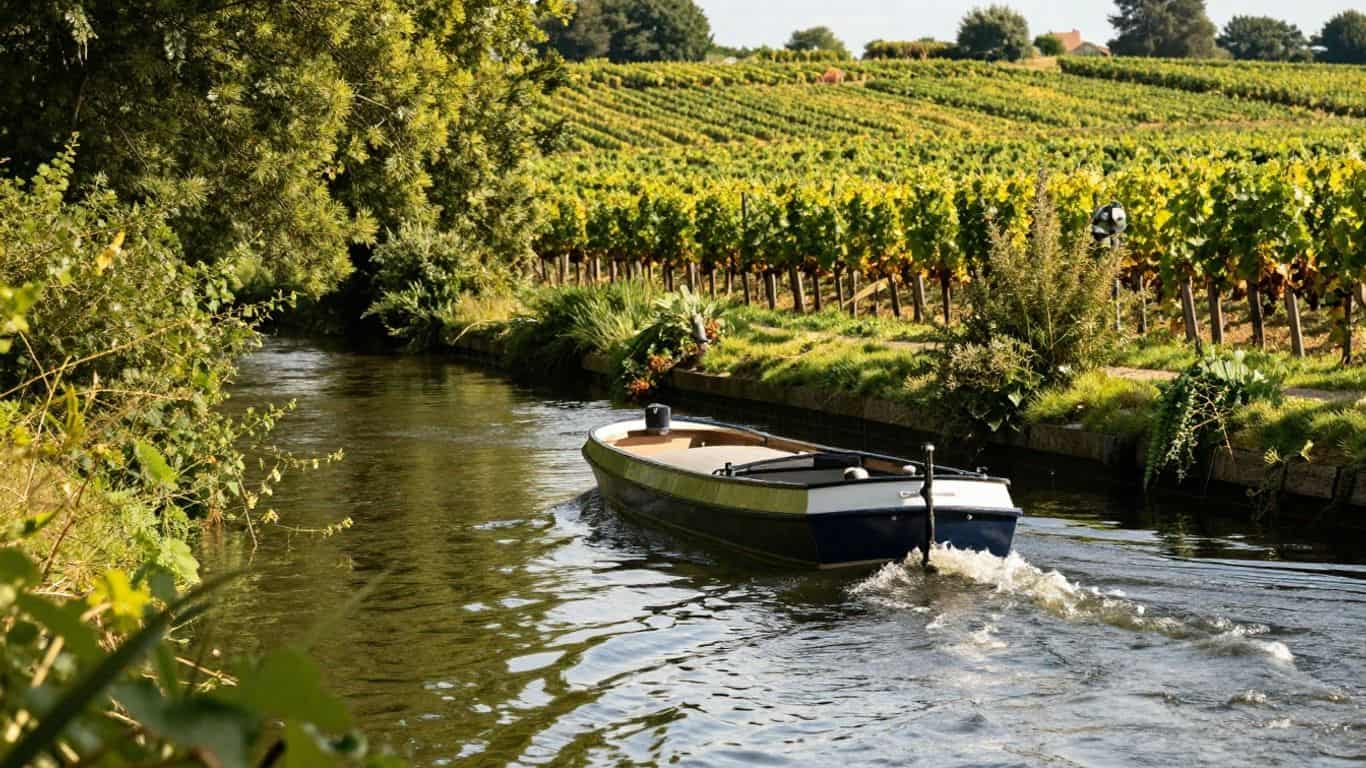
September might be the connoisseur’s answer. The crowds thin out almost overnight, the water is still warm from summer, and the vineyards along the Burgundy and Languedoc canals turn every shade of gold and rust. It’s harvest time, so the wine regions around the water are buzzing in the best possible way, tractors, grape smells, and tastings that run long.
October is quieter again, a bit cooler, a bit moodier, mist on the water in the mornings, and honestly gorgeous for photographers and walkers. Hire prices drop, moorings free up, and the whole network exhales. If autumn is your season generally, France in October and November has plenty more where that came from.
Winter (November To March): Quiet Waters, Closed Locks
Winter is the odd one out. Boating largely stops, the hire bases shut, and the maintenance crews take over the locks. But here’s the thing, the canals themselves don’t go anywhere, and neither do the towpaths. A frosty morning walk along a silent canal, coffee in hand, church bells somewhere off in the mist, that’s a genuinely special version of this landscape that most visitors never see.
The canal towns are lovely in the cold months too, all lit windows and cosy bistros, and a few of the prettiest canal towns in France do beautiful Christmas markets. So no, winter isn’t the cruising season, but as part of a winter trip around France it earns its place. Pack gloves, obviously.
The Best Time By Canal, At A Glance
Different canals peak at slightly different moments, so here’s the quick version:
| Canal | Best Months | Why Then |
| Canal du Midi | May to June, September | Warm but calmer, August is peak crowds |
| Canal de Bourgogne | June to September | Warmest window up north, harvest in autumn |
| Canal du Nivernais | May to September | Green, gentle, and rarely crowded |
| Canal de Nantes à Brest | June to August | Brittany’s driest, warmest stretch |
| Canal de Garonne | April to October | Long mild season in the southwest |
None of these are hard rules, mind. The Canal de Bourgogne in early October or the Canal de Garonne in April can be quietly perfect, you just accept a jumper and the odd shower as part of the deal.

Booking Windows And Timing Tips
A few small things that make the timing work in your favour:
- Boats for July and August: Book several months ahead, the popular bases genuinely sell out.
- Shoulder season trips: A few weeks’ notice is usually plenty in May, June, or September, and prices are kinder.
- Campsites and moorings: Same logic, summer needs planning, spring and autumn reward spontaneity.
- Market days: Check the local market schedule and build your cruising days around it, it’s the easiest win on any canal trip.
- Lock hours: Locks keep daytime hours and shut earlier off-season, so plan shorter cruising days in spring and autumn.
Do that much and the rest sorts itself out. French canal vacations are forgiving things, the worst-case scenario is usually just a longer lunch somewhere pretty.
Until Next Time, Time It Right!
So, when should you go? June or September if you can swing it, July and August if the school calendar says so, spring and autumn if you like your canals soft-lit and half-empty, and winter if you’re happy to swap the boat for walking boots. That’s really the whole trick to France canal holidays: match the month to the mood you want, then let the water handle the pace. The French canals have been running on their own gentle clock for a few centuries. All you have to do is show up on time.
Frequently Asked Questions
Late May to June and September are ideal. You get warm weather, open locks, decent prices, and fewer boats than the August peak. June offers longer days, while September brings beautiful harvest colours.
The shoulder months, including April, May, and October, are usually the cheapest. Boat hire and accommodation prices drop outside the summer peak, and you will have more choice of moorings and campsites.
Most canals are not open for cruising during winter. Many routes close between November and March for lock maintenance, and hire bases often shut. However, towpaths remain open for walking and cycling throughout the year.
Book several months ahead for July and August. For May, June, or September, a few weeks’ notice is usually enough, while off-season travellers can often find last-minute deals.
No, a licence is not required for a standard hire boat. The hire company provides a safety briefing and practice session, and the boats travel slowly, making them suitable for complete beginners.
Both seasons are excellent. Spring offers blossom, green landscapes, and fresh scenery, while autumn brings golden vineyards, warmer water, and harvest views. Autumn is a favourite for many travellers.
The Canal du Midi is a classic choice, especially in June or September. It offers reliable sunshine, beautiful scenery, historic villages, and plenty of boat hire bases along the route.


