

Lac de Sainte-Croix: Turquoise Water at the Foot of the Gorges du Verdon

Part of our Gorges du Verdon travel guide
Key Takeaways
Lac de Sainte-Croix combines easy lake swimming with boat outings at the western end of the Gorges du Verdon. A little planning helps you choose the right beach, understand seasonal access, and enjoy the water responsibly.
- The lake is an artificial reservoir created by the Sainte-Croix dam.
- Sainte-Croix-du-Verdon, Les Salles-sur-Verdon, and Bauduen offer different shoreline experiences.
- Pedal boats and electric boats are practical ways to approach the Verdon canyon.
- Summer brings the fullest services and largest crowds, while spring and fall are quieter.
- Weather, wind, water temperature, and local rules should shape every swimming or boating plan.
Understanding Lac de Sainte-Croix and its setting
Lac de Sainte-Croix sits in southeastern France, between the Alpes-de-Haute-Provence and Var departments. Its broad waters form a striking foreground to the limestone landscapes of the Verdon. The lake is easy to combine with village visits, scenic drives, and walks, but distances around the shoreline can take longer than the map suggests.
How the artificial lake was created
The lake was formed in the 1970s after the Verdon was dammed at Sainte-Croix. Creating the reservoir changed the valley permanently, submerging the former village of Les Salles and reshaping the lower end of the gorge. Today, the dam provides a clear visual boundary between the open lake and the river landscape farther upstream.
The reservoir also explains why the shoreline varies so much. Some sections have broad beaches and gentle access, while others narrow into rocky coves or steep wooded edges. That variety gives visitors several ways to spend a day beside the water.
Why the water appears turquoise
The lake’s blue-green color comes from the character of the Verdon and the pale limestone terrain through which it flows. Fine mineral particles suspended in the water scatter light, producing the turquoise appearance that is especially vivid on sunny days. Water color can still change with cloud, wind, rainfall, and the angle from which you view it.
The effect is most noticeable from higher roads and viewpoints, where the contrast with the surrounding forest and pale rock is strongest. At the beach, the water may look deeper blue or greener than it does in photographs.
Where the lake meets the Gorges du Verdon
At the western end, the lake narrows toward the Pont du Galetas and the entrance to the Gorges du Verdon. This is the natural transition between calm reservoir water and the more enclosed canyon. Boat trips commonly head in this direction, although the distance and conditions depend on the craft, weather, and rental rules.
For broader orientation, a practical Gorges du Verdon guide can help place the lake within the region’s roads, villages, viewpoints, and river activities. The lake is not the entire gorge, but it is one of the most accessible places to experience its landscape from the water.
Main villages and access points around the shoreline
Sainte-Croix-du-Verdon is set above the southern shore and is associated with a well-used beach and lake views. Les Salles-sur-Verdon occupies the northern shore and was rebuilt after the old village was submerged. Bauduen, farther east, has a village waterfront and smaller coves that feel more enclosed.
Aiguines overlooks the lake from higher ground and is useful for combining shoreline time with viewpoints. Because roads curve around the reservoir, choosing a base near your preferred beach or boat departure point can save substantial driving.
Choosing the best swimming beaches
The main beaches around Lac de Sainte-Croix differ in scale, access, shade, and proximity to services. In high summer, arrive early if you need convenient parking or a quieter place to spread out. Swimming is generally associated with designated shoreline areas, so follow local signs and keep clear of boat movements.
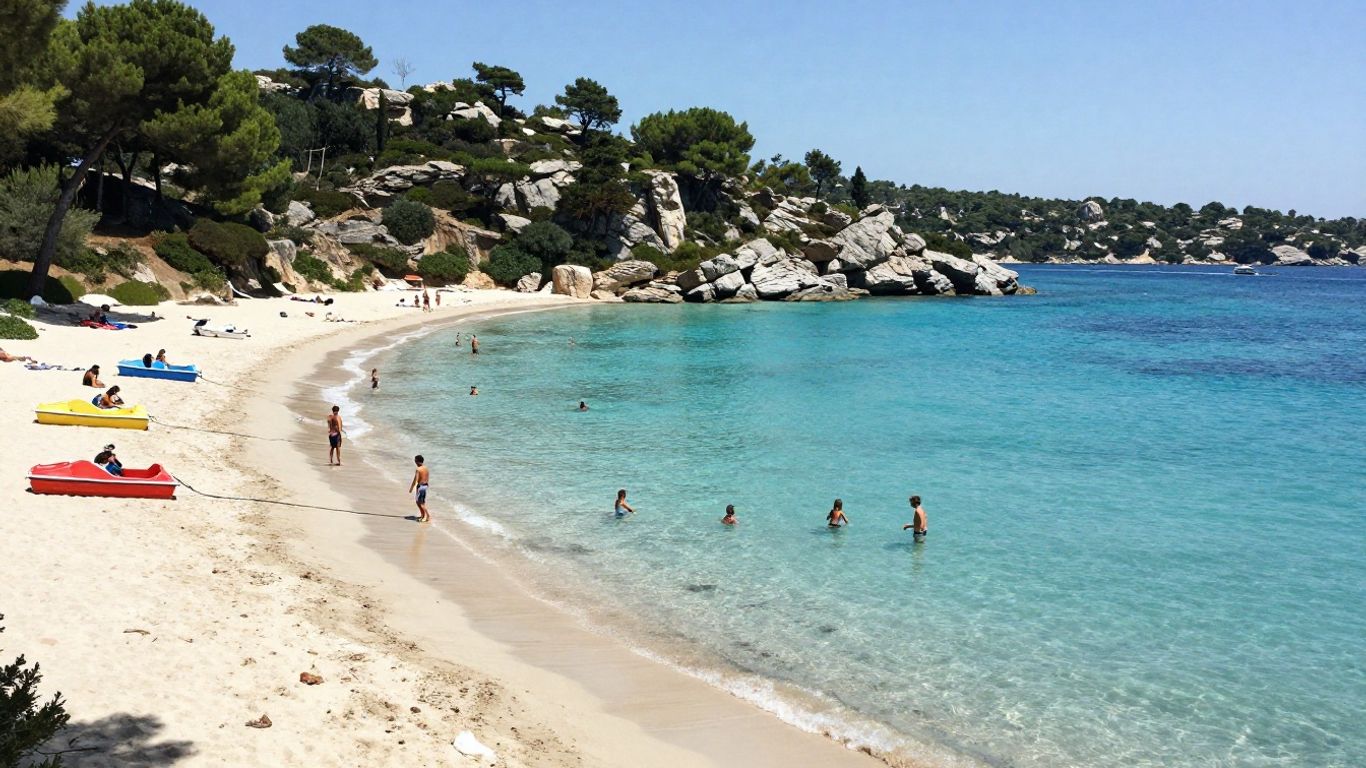
Sainte-Croix-du-Verdon beach
The beach below Sainte-Croix-du-Verdon is a straightforward choice for travelers who want an established swimming stop with the village close by. Its position makes it convenient for a half-day visit, followed by a walk through the village or a meal nearby. The open view across the reservoir is one of its main attractions.
Because it is popular and readily reached by car, this beach can become busy during summer afternoons. Parking arrangements and charges may vary by season, so check locally rather than assuming that a previous visit reflects current conditions.
Les Salles-sur-Verdon beach
Les Salles-sur-Verdon offers another accessible lakeside option, with a setting that suits families and visitors planning a longer stay by the water. The rebuilt village is close enough for supplies or a break away from the beach, while the shoreline provides room for swimming and relaxing.
The atmosphere depends heavily on the time of day. Early morning is usually calmer, while the middle of a warm summer day brings more visitors, parked cars, and activity near the water.
Bauduen and its sheltered coves
Bauduen has a more village-centered waterfront, with the lake closely integrated into the settlement. Beyond the main bathing area, smaller coves along the shore may offer a quieter setting, although access can be less formal and parking may be limited. Wear suitable shoes if you explore rocky edges rather than a maintained beach.
These coves are best approached with modest expectations. They may lack toilets, shade, lifeguard supervision, or easy entry, so bring what you need and avoid leaving belongings unattended.
Conditions to check before swimming
Before entering the water, look at the local weather, wind, beach notices, and any temporary restrictions. Lake conditions can change during the day, and a calm morning does not guarantee a calm afternoon. Water temperature may also feel surprisingly cool, especially outside the height of summer.
A short preparation check is useful before setting out:
- Confirm the beach’s opening arrangements and parking situation.
- Check wind forecasts and any storm warnings.
- Bring drinking water, sun protection, and suitable footwear.
- Identify the designated swimming area before entering the lake.
This simple routine keeps the focus on swimming rather than solving avoidable problems after arrival. If conditions deteriorate, leave the water early and move away from exposed shoreline areas.
Planning a Lac de Sainte-Croix swimming and boat day
A lake day works best when swimming, boating, food, and shade are treated as separate parts of the schedule. Rentals may operate on seasonal hours and can be busiest around midday. Planning around the first and last parts of the day often means less waiting and more comfortable temperatures.
The phrase lac de sainte croix swimming boat describes the combination many visitors want, but it should not imply that every beach and rental base offers the same facilities. Check the exact departure point before driving across the reservoir.
Combining swimming with a pedal boat or electric boat rental
A pedal boat is a relaxed option for short trips, swimming stops, and families who want to remain close to shore. Electric boats provide a quieter way to cover more water without the physical effort of pedaling, subject to local rental requirements and availability. Ask the operator about the permitted route, return time, passenger limit, and weather policy.
A practical sequence is to swim first, rent the boat once everyone is settled, and leave time afterward to dry off and eat. That avoids boarding with wet towels, overheated passengers, or a rushed return.
What to bring for a full day on the water
The lake has strong sun exposure, and shade may be limited at both beaches and coves. Pack light but deliberately, using a waterproof bag for phones, keys, and documents. Sun protection matters even when a breeze makes the air feel mild.
Useful items include:
- Refillable water bottles and a packed lunch or snacks.
- Hat, sunscreen, sunglasses, and a light layer.
- Water shoes for rocky entries and uneven paths.
- Towels, spare clothing, and a waterproof pouch.
Keeping the load compact makes it easier to move between the beach, parking area, and rental dock. Take all packaging and food waste back with you, particularly when using a less developed cove.
How long to allow for beaches, boating, and breaks
Allow at least half a day for one beach and a short rental, and a full day if you want to swim, explore the shoreline, eat slowly, and travel toward the gorge entrance. Driving times increase in summer, so avoid building a schedule around exact minute-by-minute transfers. A flexible plan is more realistic than trying to see every side of the lake.
For a larger regional visit, a two-day Verdon itinerary can help balance lake time with villages, viewpoints, and canyon roads. Keep the lake day spacious; its appeal comes partly from not having to hurry.
Facilities, parking, and seasonal crowds
The established beaches generally provide easier access to parking and basic services than informal coves, but facilities are seasonal and may close outside the warmer months. Parking can fill quickly in July and August, especially near popular waterfronts and the Pont du Galetas. Have a backup beach or a later arrival plan if the first car park is full.
Local restrictions may cover parking, fires, dogs, launching, or beach access. Read posted information when you arrive, since conditions and operating arrangements can change from one season to the next.
Exploring the lake by boat
Boating reveals the lake’s shape more clearly than a beach visit alone. From the open reservoir, the shoreline folds into wooded bays before tightening toward the Verdon entrance. The most enjoyable route is usually the one that matches your rental time and experience rather than the most ambitious line on a map.
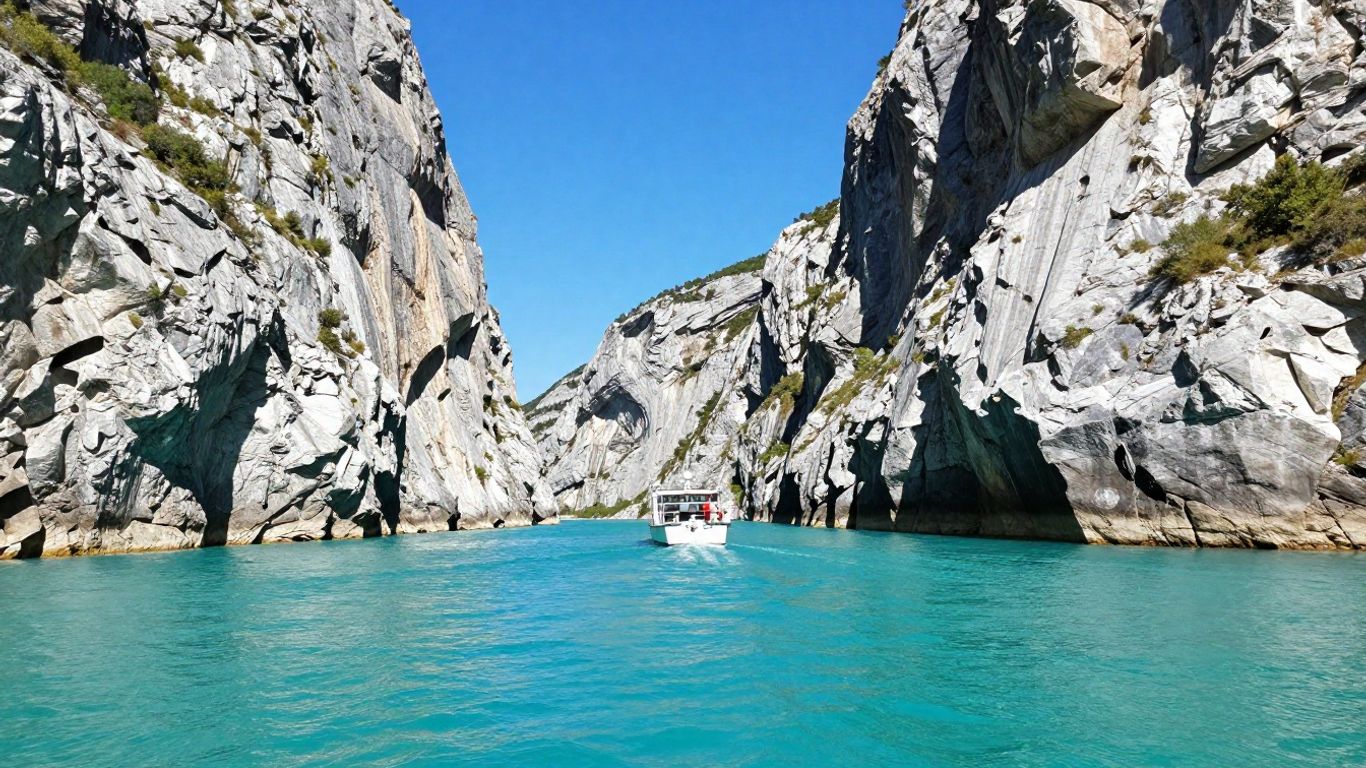
Boat types permitted on Lac de Sainte-Croix
The lake is commonly explored in pedal boats, electric boats, canoes, and kayaks where local operators permit them. Motorized craft, launch points, and licensing requirements can be subject to local rules, so do not assume that a boat allowed on another French lake is automatically allowed here. Rental staff can explain which craft are available without a boating license.
For a closer look at paddling options, the Verdon kayaking guide provides useful regional context on craft, launches, wind, and the difference between lake and river conditions. Whatever you choose, keep the route realistic for the group aboard.
Where to rent boats and pedal boats
Rental bases are concentrated around popular access areas, including the lake’s western end and shoreline villages. Availability is strongly seasonal, and busy periods may involve queues or fixed return times. Arriving earlier gives you more choice and time for a safety briefing.
Before paying, confirm the deposit, identification requirements, maximum capacity, permitted zone, and what happens if wind or storms interrupt the outing. Those details are more useful than choosing a boat based only on its appearance.
Routes toward the entrance of the Gorges du Verdon
The route toward the Pont du Galetas is the classic outing because it leads toward the dramatic opening of the gorge. The journey is scenic even before the cliffs become enclosed, with changing views of pale rock, dark forest, and bright water. Allow time to turn around before reaching the rental deadline.
Near the entrance, boat traffic may increase and the surroundings can feel more confined. Stay attentive to other craft, follow the operator’s boundary, and do not continue into a restricted area simply because the route looks inviting.
Boating rules, speed limits, and environmental protection
Local signs and rental operators determine where boats may travel, how fast they may move, and where they may be launched or moored. Keep away from swimming zones and shoreline habitats, and never leave a boat unattended outside an approved area. Quiet travel is especially appropriate in a landscape valued for its natural character.
Avoid collecting plants, disturbing birds, scraping shallow lakebeds, or approaching cliffs unnecessarily. Carry waste back to shore and use toilets before departure when facilities are available.
Staying safe in and around the water
Lac de Sainte-Croix is inviting, but its scale and changing weather deserve respect. A lake can look calm from the beach while wind is building farther out. Safety depends on choosing a suitable area, keeping the group together, and adjusting plans when conditions shift.
Swimming zones and areas reserved for boats
Use marked swimming areas and do not swim across boat routes or near rental departures. A bright towel or inflatable does not make a swimmer easy for every operator to see, so stay well inside the designated zone. If you move to an undeveloped cove, inspect the entry and exit before getting in.
Do not dive into unfamiliar water. Depth and submerged obstacles can vary, particularly near rocky edges, and jumping from cliffs adds risks that are difficult to judge from above.
Cold water, changing weather, and wind conditions
The lake may feel cold outside midsummer, and even warm-weather swimmers can become chilled after a long period in the water. Wind can make a return journey harder for pedal boats and small craft. Darkening skies, sudden gusts, or distant thunder are clear reasons to return to shore.
Check forecasts before departure, but also watch the water once you are there. Conditions on the lake matter more than a forecast made for a nearby town.
Supervision and precautions for children
Children should remain within close reach of a responsible adult, particularly near docks, boat lanes, steep banks, and unfamiliar coves. Approved flotation equipment can help, but it does not replace supervision. Establish a meeting point on busy beaches in case someone becomes separated.
Keep children hydrated and protected from the sun, and schedule breaks before they become tired. A shorter boat trip is usually preferable to stretching the outing beyond the group’s energy level.
Responsible behavior near cliffs, coves, and natural habitats
The shoreline includes quiet areas where noise, litter, and careless anchoring can damage habitats or disturb wildlife. Keep voices low in secluded coves, leave natural features where you find them, and use established paths where possible. Respect private property and do not climb unstable rock.
Responsible travel also makes the lake more pleasant for everyone else. The clearest water and most peaceful bays are shared resources, not personal picnic areas.
Visiting Lac de Sainte-Croix throughout the year
The best time to visit depends on whether swimming, boating, walking, or scenery matters most. Summer provides the broadest choice of water activities, while the shoulder seasons offer more space and softer light. Winter can be beautiful but requires greater independence because many services are reduced.
What summer offers for swimming and boating
July and August are the most reliable months for a classic beach-and-boat day, with warmer air, longer daylight, and more rental activity. They are also the busiest months, particularly on weekends and during school holidays. Reserve or arrive early when possible, and expect parking to take longer.
Heat can make exposed beaches tiring, so alternate water time with shade and breaks. Morning outings are often more comfortable than late-afternoon departures after a very hot day.
Spring and autumn for quieter scenery
Spring brings fresh vegetation, changing light, and quieter roads, although water temperatures may limit long swims. September and early autumn can offer warm days with fewer visitors, making them a strong compromise for travelers who want both scenery and some water time.
Services may operate on shorter schedules outside peak season. Check rental availability and opening hours before committing to a boat-focused itinerary.
Winter access and limited services
Winter visits are mainly about viewpoints, village walks, photography, and the broad silence of the reservoir. Beaches and rental stations may have limited or no services, and some parking arrangements can differ from summer. Bring food, water, and appropriate clothing rather than relying on seasonal facilities.
The low sun can make the turquoise water look muted, but it also brings clear contrasts across the limestone and hillsides. This is a good season for a slow scenic drive if roads are open and conditions are stable.
How weather affects water activities
Wind, thunderstorms, heat, and heavy rain can all change a lake day quickly. Rain upstream may affect water conditions even when the beach itself appears dry, while strong sun increases dehydration risk. Check official local information and follow instructions from rental staff.
A useful rule is to treat the boat outing as optional. The lake, villages, and viewpoints remain worthwhile when swimming or boating is not sensible.
Building a wider Verdon itinerary
Lac de Sainte-Croix works well as one part of a larger trip rather than an isolated stop. The surrounding region includes high viewpoints, canyon roads, Provençal villages, and walking routes at several difficulty levels. Allow time for slow roads and photo stops when connecting these places.
Scenic viewpoints above the lake
Aiguines and the roads above the reservoir provide elevated views that explain the lake’s full scale. The contrast between the open water, forested slopes, and limestone horizon is especially clear from above. Stop only in designated areas and take care near unprotected edges.
The Route des Crêtes viewpoints are farther into the canyon landscape and make a strong addition for travelers who want dramatic panoramas rather than another beach afternoon. Start early if you plan to combine several overlooks in one drive.
Hiking near the Gorges du Verdon
Short walks near the lake can be paired with a swim, while more demanding trails require proper footwear, water, and a realistic timing plan. Heat and exposed limestone make even moderate routes feel harder in summer. Check trail conditions before setting out.
For route ideas across different ability levels, browse these Gorges du Verdon hiking trails. A hike followed by a lake stop can be a rewarding rhythm, but leave enough time to return before darkness or storms.
Villages to visit around the shoreline
Sainte-Croix-du-Verdon is useful for lake views and a beach stop, Les Salles-sur-Verdon offers a rebuilt lakeside settlement, and Bauduen brings a more intimate village waterfront. Aiguines sits higher and adds a different perspective over the reservoir. Each deserves more than a rushed pass-through if you want to notice the regional architecture and daily life.
Moustiers-Sainte-Marie is farther from the immediate shoreline but is one of the region’s best-known village stops. Its Moustiers-Sainte-Marie streets can fit naturally before or after a lake day, depending on your route.
Combining Lac de Sainte-Croix with nearby Provençal attractions
The lake can be combined with markets, lavender landscapes, local food, and other small towns in Provence-Alpes-Côte d’Azur. Driving from major cities also requires planning because public transportation options are more limited around rural shoreline areas. A guide to reaching the Gorges du Verdon can help compare approaches from Nice, Aix-en-Provence, or Marseille.
Choose one main water activity and a small number of nearby stops rather than trying to cover the entire region in a day. For overnight planning, compare places to stay near the Verdon by location, since the right base can reduce repeated driving.
Conclusion
Lac de Sainte-Croix is at its best when treated as both a swimming destination and a gateway to the wider Verdon landscape. Choose a beach that suits your group, check conditions before launching a boat, and leave room for viewpoints, villages, and unplanned pauses along the shore.
Frequently Asked Questions
Is Lac de Sainte-Croix good for swimming?
Yes. The lake has several accessible beaches and calm shoreline areas, although water temperature, wind, and local conditions should always be checked before entering.
What is the best beach at Lac de Sainte-Croix?
There is no single best beach for everyone. Sainte-Croix-du-Verdon is convenient, Les Salles-sur-Verdon suits an established beach day, and Bauduen offers a more village-centered setting with smaller coves nearby.
Can you rent a boat on Lac de Sainte-Croix?
Seasonal rental stations offer options such as pedal boats and electric boats in permitted areas. Availability, operating hours, passenger limits, and routes vary, so confirm details locally.
Can you take a motorboat onto the lake?
Boat access and motorized craft are governed by local regulations. Check current rules and use an authorized launch or rental operator rather than assuming that any craft is permitted.
How long should a lake visit take?
Allow at least half a day for one beach and a short boat trip. A full day is more comfortable if you want swimming, breaks, food, and time near the gorge entrance.
Is Lac de Sainte-Croix suitable for children?
It can be, especially at established beaches with easier access, but children need close supervision around water, docks, boat routes, and uneven shoreline. Flotation aids do not replace an attentive adult.
What should you bring to Lac de Sainte-Croix?
Bring water, food, sunscreen, a hat, sunglasses, towels, spare clothing, and footwear suitable for rocky entries. A waterproof bag is useful for phones, keys, and other valuables.
Planning a trip to the Gorges du Verdon?
Compare hotels, guided tours, car hire and flights in one place.


