
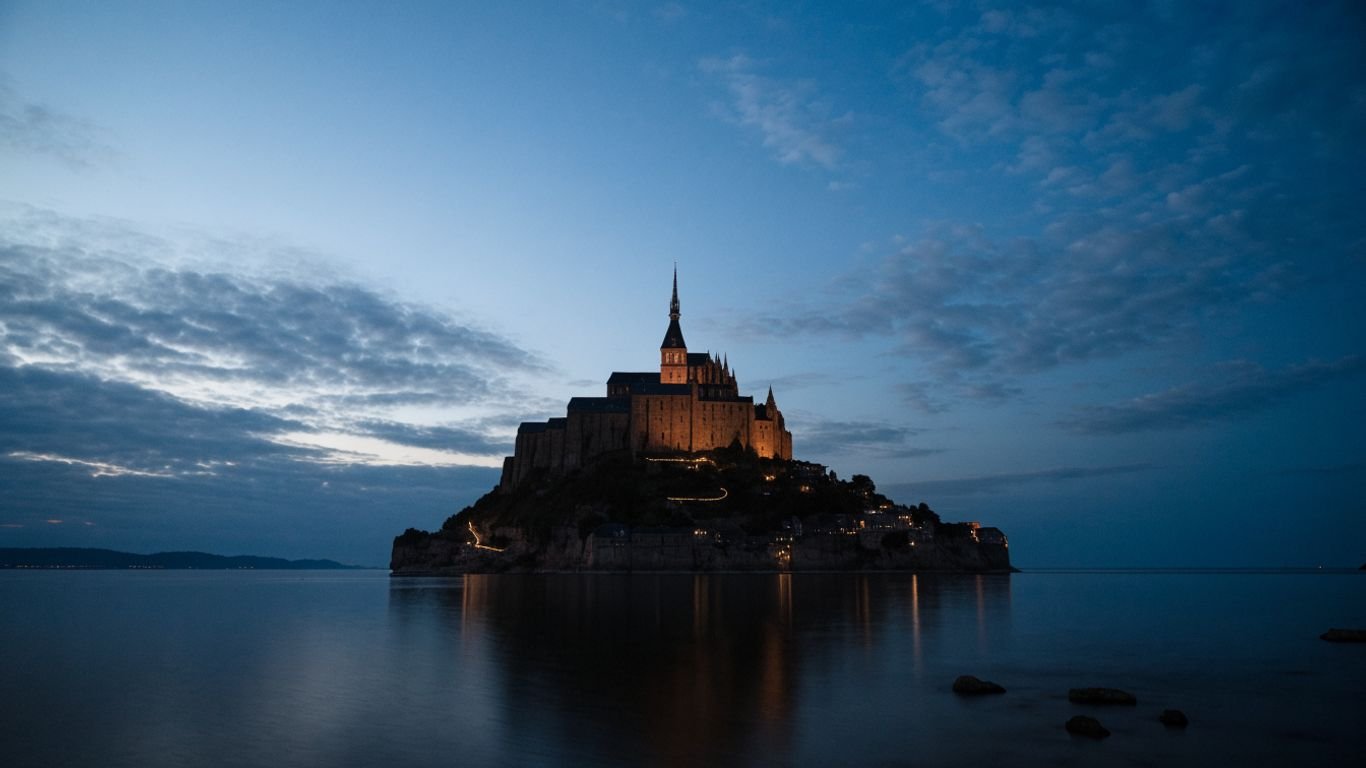
After the Crowds Leave: Spending the Night on Mont Saint-Michel

Key Takeaways
An overnight stay changes the pace of a Mont Saint-Michel visit, but it takes a little planning around accommodation, transport, and opening hours.
- Staying on the island puts you close to its lanes and ramparts after day visitors leave.
- Mainland and nearby-town lodging can offer more room and flexibility, with transport to factor in.
- Check current shuttle schedules, parking arrangements, tide information, and access conditions before you travel.
- The abbey may not be open at night; confirm its hours and any evening events separately.
- Pack for steep walking routes and changing weather, and plan a calm morning rather than a rushed departure.
Why spend the night on Mont Saint-Michel
A night here is less about fitting in more sights and more about experiencing the place at a different pace. The practical details still matter: access, lodging, and abbey hours shape what you can do. An overnight visit can suit travelers who want time to explore without compressing everything into a day trip. For a wider comparison of the two approaches, see this overnight stay comparison.
How the island changes after day-trippers leave
As the day’s visitors depart, the lanes and ramparts can feel quieter, and the view of the island from nearby becomes a different part of the experience. The change is not a guarantee of complete solitude: residents, overnight guests, and staff are still going about their evenings. Rather than trying to see everything, take time to notice the stonework, the changing light, and the sound of the bay. A slower pace is often the most valuable part of staying late.
Who benefits most from an overnight stay
An overnight visit is particularly useful for travelers who want to explore the village and abbey without organizing the whole trip around a same-day return. It also gives more room to adjust if arrival times, walking pace, or seasonal opening hours affect the plan. Discover France Beyond Paris provides destination guidance for visitors exploring France beyond the capital, including places such as Mont Saint-Michel. If you have only a short window, compare the likely time inside the abbey with the time needed to reach and leave the island before booking a room.
What an overnight visit can and cannot include
Staying overnight gives you the option to walk the village after the main daytime rush, but it does not automatically include access to the abbey after closing. Evening events, services, and seasonal openings are separate possibilities that need their own current information. For an itinerary that balances the village, abbey, and ramparts, use this two-day visit plan as a starting point and adjust it to the dates of your stay.
Where to stay for a nighttime visit
The right base depends on whether being close to the lanes matters more than having space, easy parking, or a broader choice of lodging. Staying on the island creates a distinctive evening but can involve stairs and luggage constraints. On the mainland or in nearby towns, you may have different options and a longer journey to the island. Discover France Beyond Paris offers destination guidance to help travelers compare places across France; for this specific decision, start with the distance you are comfortable walking or traveling at night.
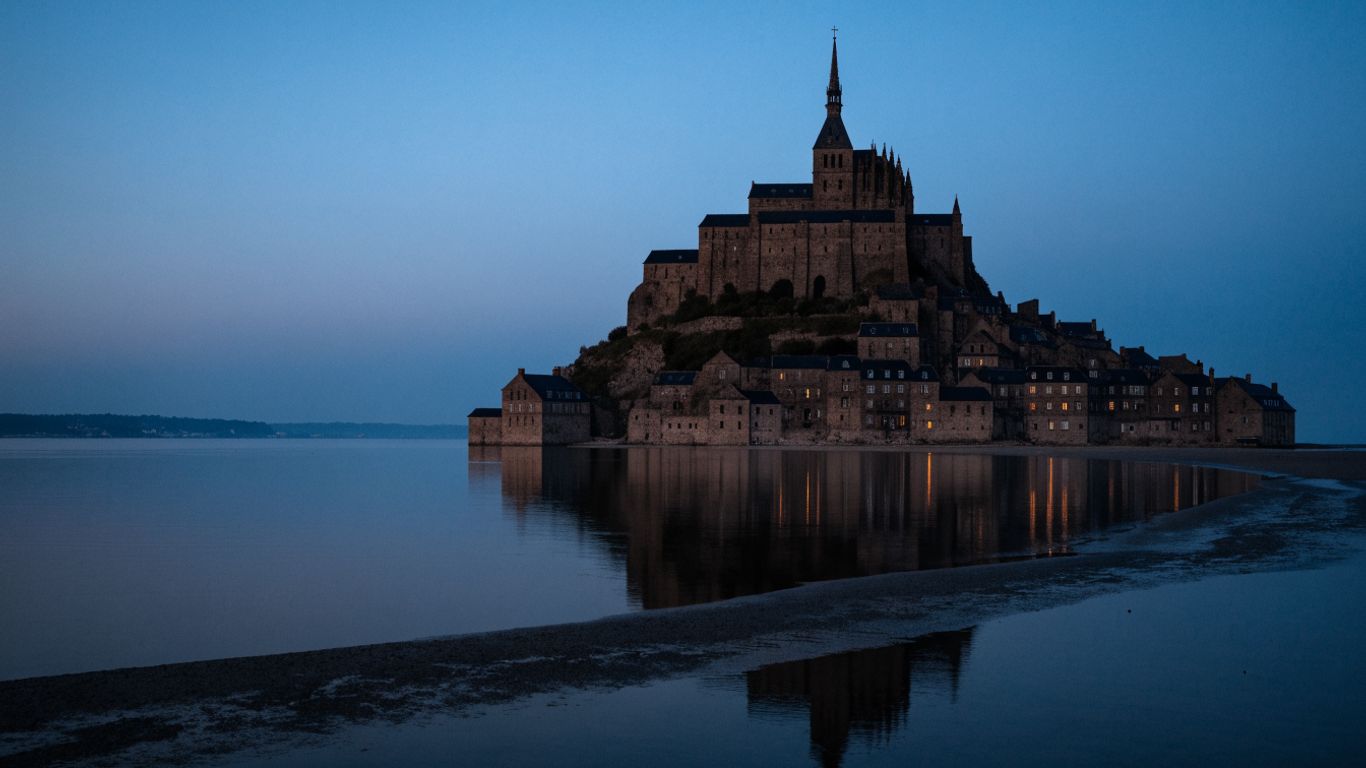
Sleeping within the island walls
An island room means you can return to your accommodation without leaving the village, which is convenient if you hope to take an evening walk or start early. The trade-off is that historic lanes can be steep and narrow, and getting bags to a room may take more effort than it would at a roadside hotel. Ask your accommodation about the route from the arrival point, stairs, and any luggage arrangements before you book. A small, manageable overnight bag can make the walk easier.
Choosing a hotel on the mainland
A mainland hotel can be a practical fit if you want easier vehicle access or prefer to keep your luggage outside the island’s narrow streets. It does mean thinking carefully about how and when you will return after an evening visit. Confirm the route between your lodging, parking, and the shuttle rather than assuming they are directly beside one another. Travelers who want to compare island and mainland options can consult this nearby lodging guide.
Staying in nearby towns for more flexibility
Nearby towns may suit a longer regional trip, a larger group, or anyone who wants to combine the island with other stops. The added flexibility comes with more transport planning, especially if you hope to visit around dusk or early in the morning. If you are considering additional local outings, this guide to things to do nearby can help you decide whether to base yourself farther away. Check the journey back to your room before committing to a late schedule.
Comparing location, cost, and convenience
A simple comparison can clarify what matters most for your stay. Prices vary by date and property, so treat location as a planning factor rather than a promise of a particular rate.
| Base | Main advantage | Practical trade-off |
|---|---|---|
| Island | Close to the village lanes | Steep routes and limited room for luggage |
| Mainland | Convenient for vehicle access | Return transport needs checking |
| Nearby town | More choice for a regional stay | Longer journey to and from the island |
Choose the option that makes your arrival and return manageable, not simply the one that looks closest on a map. For an overnight visit, a smooth transfer and a comfortable walk can matter more than saving a few minutes at the start.
Plan your arrival and departure
An overnight stay is easier when the journey is treated as part of the visit rather than an afterthought. Check the route, parking arrangements, shuttle information, and your accommodation’s directions before setting off. Schedules and access details may vary, so confirm them close to your travel date. For broader practical logistics, Discover France Beyond Paris focuses on destination guidance and travel information for trips around France.
Timing the drive, parking, and shuttle
Leave enough time to park, reach the shuttle, and walk from its drop-off point to your lodging. If you are arriving near evening, avoid building a plan that depends on an unverified final shuttle or an exact arrival minute. Before you travel, check these details together rather than in isolation:
- The current parking arrangements and payment method.
- The shuttle’s operating schedule on your travel date.
- The walking route from the drop-off point to your accommodation.
- The time needed to reach the island at your own pace.
This small check helps reveal whether your planned arrival leaves time for dinner or an evening walk. If the timing feels tight, arriving earlier can make the first night less rushed.
Checking shuttle schedules for your return
A shuttle schedule that works for your arrival may not suit your return later in the evening or early the next morning. Check the current timetable for the specific date, and make sure you understand where to board and where it will leave you. Do not assume that a service runs at the same frequency in every season. Keep a backup plan that accounts for the walk and your comfort with it, rather than counting on a service you have not verified.
Managing luggage on the island
The island’s historic lanes are not an easy setting for oversized bags, especially if your room is reached by stairs. Pack only what you need for the night and confirm with your lodging how to reach it from the nearest arrival point. If you are traveling with more luggage, ask whether there is a suitable way to handle it before setting out. A lighter bag leaves you freer to walk at a steady pace.
Allowing for tides and changing access conditions
Tides are part of the setting, but the conditions and access guidance for a particular visit should come from current local information. Check tide information alongside transport and arrival details, especially if you plan to photograph the bay or spend time near its edges. This tide-planning guide explains why timing can affect the views and the shape of a visit. Treat changing water and bay conditions with care, and follow posted instructions rather than venturing onto the sands alone.
What to do on Mont Saint-Michel at night
The evening can be a good time to walk familiar routes more slowly and look at the village from a different angle. Not every activity runs after dark, so keep expectations flexible and check access before making plans around a particular opening. The island remains a lived-in place, not just a nighttime attraction. Aim for a quiet walk that leaves room for residents and other guests.
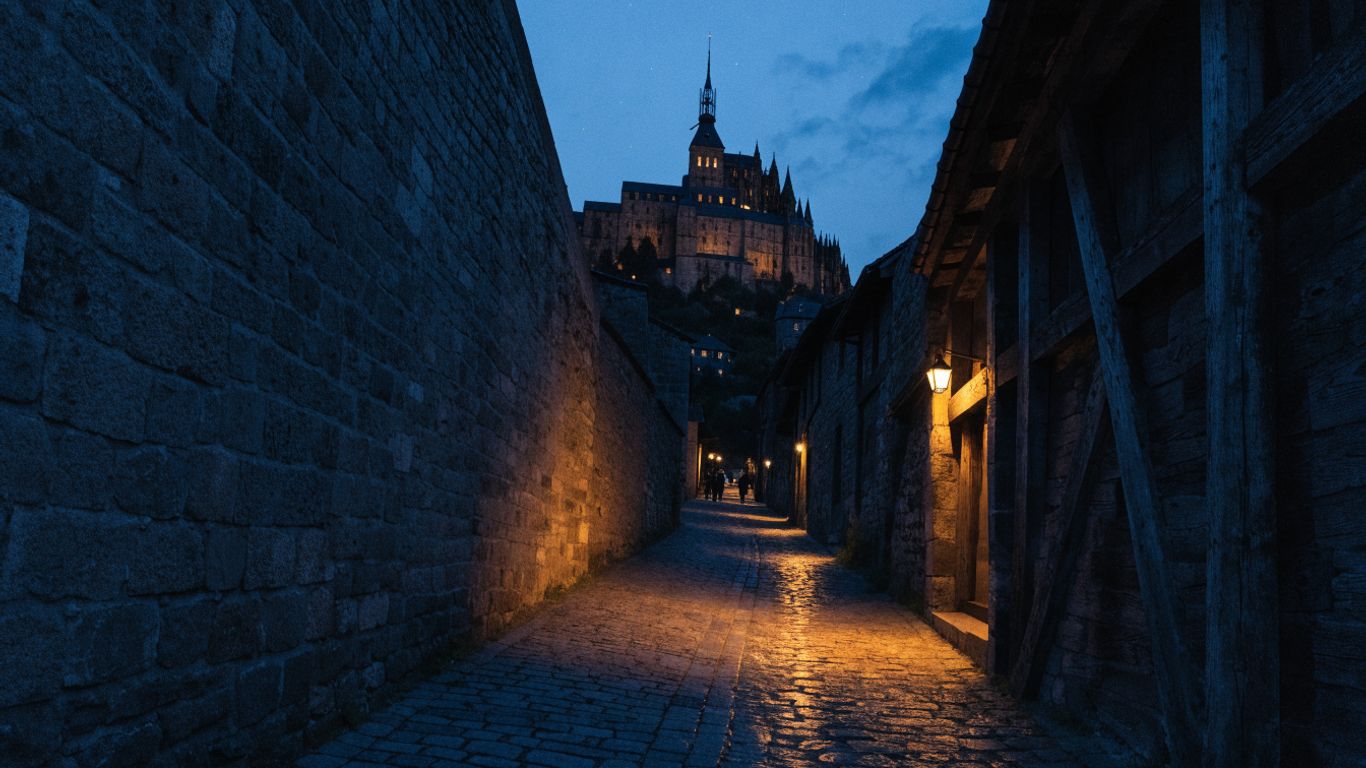
Walking the ramparts and quieter lanes
The ramparts and lanes make a natural evening route, but their steep steps and uneven surfaces call for attention, especially in low light. Take the route at a comfortable pace and avoid trying to cover every corner in one loop. A night-focused guide to visiting after dark can offer additional planning context, but check local access and conditions for your own dates. If an area is closed or poorly lit, turn back rather than improvising a route.
Finding viewpoints for evening and nighttime photos
A useful photo plan starts with the view you want: the island’s silhouette, the illuminated buildings, or details along the lanes. Light changes quickly around dusk, so choose a safe place to stop before it gets dark and keep clear of moving traffic and restricted areas. This guide to sunset photo locations covers viewpoints beyond the village. For night shots, steady your camera or phone and take a moment to check the route underfoot before framing the image.
Checking whether the abbey or a night event is open
Do not assume that the abbey stays open simply because you are spending the night nearby. Check current opening hours and any separately scheduled evening event, including its dates and entry conditions. A past event listing, such as Colorama at the abbey, is a reminder that seasonal programming has specific dates; its listed 2026 run was July 3 through August 31, 2026, and has ended. Confirm whether anything is scheduled during your own visit before building your evening around it.
Respecting quiet hours and residents
Keep voices low in narrow lanes and near accommodation, and avoid shining lights into windows while taking photographs. Residents use these same routes for everyday life, often after visitors have moved on. Be considerate around doorways, gardens, and any marked private areas. A quiet presence helps preserve the evening atmosphere for everyone who remains on the island.
Make the most of the abbey visit
The abbey is a separate part of the plan from simply staying overnight in the village. Opening hours, admission, and any evening programming can vary, so check details for your date before choosing a room or setting a schedule. A visitor can still enjoy the village and ramparts without entering the abbey. For practical details on a standard visit, use this abbey visit guide alongside current official information.
Checking opening hours and seasonal schedules
Start with the abbey’s current visitor information and check the date of your visit rather than relying on a general seasonal assumption. Note the last entry time as well as the closing time, since they may differ. If you are visiting on a holiday or during a special event period, confirm whether the usual schedule applies. This makes it easier to decide whether the abbey belongs in your arrival day or the following morning.
Choosing between a daytime visit and an evening event
A daytime visit and an evening event are not interchangeable: one may offer standard access during opening hours, while the other depends on a specific program and date. Consider what you want from the interiors and how much time you have before making a choice. If there is no event during your stay, an overnight booking can still be worthwhile for the village and quieter walks. Keep the abbey plan flexible until its schedule is confirmed.
Booking tickets and confirming access details
Once you know when the abbey is open, confirm ticket requirements, entry arrangements, and any accessibility information that affects your visit. Use the appropriate official booking channel and check whether your selected ticket corresponds to the correct date and time. Allow time to reach the entrance from the village and account for the climb through the lanes. Clear access details can prevent an avoidable scramble on the day.
Planning around crowds and time inside
Even with an overnight stay, the busiest hours may overlap with your abbey visit. Choose a visit time that leaves room to explore without rushing, and allow extra time for walking between the entrance, the village, and your lodging. The useful question is not how many sights you can fit in, but how much time you want to spend inside. A measured schedule leaves space for breaks and unexpected delays.
Prepare for a comfortable overnight stay
The island is best approached with practical clothing, a light bag, and a plan that does not depend on every business being open late. Weather and walking conditions can change, while opening hours differ by season and day. Check the details that affect your stay before you arrive, then leave some room in the schedule. This is a compact visit to prepare for, but it need not feel hurried.
Packing for steep lanes and changing weather
Choose comfortable shoes with secure soles for uneven lanes and stairways, and bring a layer that suits the forecast for the evening and morning. A compact rain layer can be useful if conditions change, while a smaller bag is easier to carry through narrow streets. Pack any essentials you will need overnight so you are not forced to return to the mainland for them. The aim is to be prepared without carrying a full day’s luggage up the hill.
Bringing food and checking restaurant hours
Check restaurant and shop hours for your date rather than assuming you will find an open option late in the evening. If you have dietary needs or a tight arrival time, arrange a meal plan in advance and ask your accommodation what is available nearby. Carry water and any small essentials you know you will need. For travel beyond the island, the broader reference library includes unrelated material on ASEAN business expansion, plant ingredient research, QSC Queen Secret, Cook Islands foundations, and setting life goals; these topics are separate from Mont Saint-Michel dining and logistics.
Staying safe on dim paths and stairways
Walk carefully on steps and uneven surfaces, especially after dark or in wet weather. Use a phone light only when needed and keep it directed toward the path rather than residents’ windows. Stay on open routes, follow signs, and avoid entering the bay or any restricted area without appropriate guidance. When in doubt, choose the simpler route back to your accommodation.
Planning a relaxed morning before departure
Give yourself time to eat, pack, and reach the shuttle or parking area without turning the morning into a race. If you hope to revisit a viewpoint or walk the lanes once more, check opening and transport details first. Keep your luggage plan straightforward and leave a little margin for stairs and transfers. A calm departure is a good reason to avoid booking an overly tight connection after the island.
Conclusion
Spending the night on Mont Saint-Michel is most rewarding when you treat the quiet hours as part of the visit and plan the practical details with care. Choose lodging that suits your walking and transport needs, confirm what is open, and leave space to explore at an unhurried pace.
Frequently Asked Questions
Can you visit Mont Saint-Michel at night?
You can plan an evening visit to the village, but access to individual sites and services may differ from daytime hours. Check current local conditions and opening information before you go.
Is it worth staying overnight on Mont Saint-Michel?
It can be worthwhile if you want time to explore at a slower pace and experience the village after many day visitors have left. The best choice depends on your accommodation preferences, budget, and transport plans.
Is the abbey open at night?
The abbey is not automatically open late because you are staying nearby. Check its current hours and whether a separate evening event is scheduled for your travel dates.
Where should you stay for an overnight visit?
You can look at lodging on the island, on the mainland, or in nearby towns. Compare the convenience of being close with the trade-offs in walking, transport, and luggage handling.
Do shuttles run late in the evening?
Schedules can vary by date and season, so check the current timetable for both your arrival and return. Do not assume a late service will be available without verifying it.
What should you wear for an evening visit?
Wear comfortable shoes suitable for steep, uneven lanes and bring a layer appropriate to the forecast. A light rain layer may also be useful if conditions change.
Can you walk on the bay at night?
Bay conditions and access require care, and visitors should follow current local guidance. Do not walk onto the sands alone; use an appropriate guided experience if you plan to explore the bay on foot.
Enjoyed this guide? Follow Discover France Beyond Paris on Pinterest for new itineraries, hidden gems and seasonal ideas.
Follow on Pinterest


