
Nice, France: A Complete Guide to the Riviera’s Capital

Key Takeaways
Nice pairs a Mediterranean waterfront with a historic center, hillside viewpoints, and neighborhoods that each have a distinct pace.
- Walk the Promenade des Anglais and explore the lanes of Vieux Nice.
- Make time for Castle Hill, museums, and quieter neighborhoods such as Cimiez.
- Try local dishes, including socca and pan bagnat, alongside the city’s markets and cafés.
- Spring and fall can offer a calmer visit; check event dates before booking.
- Use trams, buses, trains, and walking to explore Nice and nearby Riviera towns.
Getting to know Nice, France
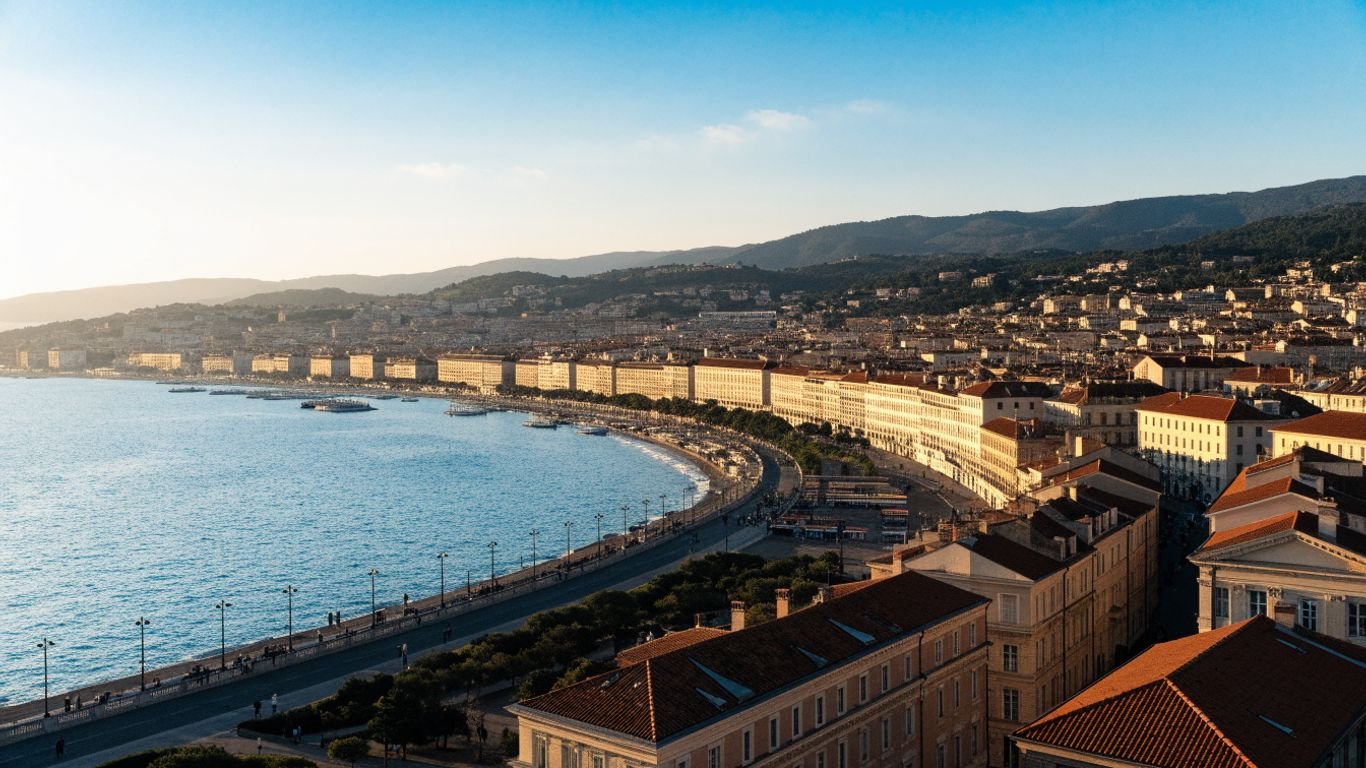
Nice sits on the Mediterranean in southeastern France, where the Riviera’s coastline meets the foothills of the Alps. It is a city of sea views and busy streets, but also a practical base for exploring nearby towns by train. For a first visit, it helps to think of Nice not as one single resort strip, but as a collection of distinct areas. The phrase “nice france” may bring beaches to mind, yet the city’s character is just as apparent in its markets and residential streets.
Where Nice sits on the French Riviera
Nice is on the French Riviera, between the coast and the lower slopes of the Alps. Its position makes it easy to combine a city stay with coastal outings, whether you want a quiet afternoon by the water or a train ride to another town. The bay curves along the city’s southern edge, while the urban area stretches inland and uphill. For broader ideas, this French Riviera guide looks beyond Nice to coastal towns nearby.
How Nice’s French and Italian influences shaped the city
Nice’s history reflects its place near the Italian border and its changing ties to France. You can see that mix in the old town’s narrow lanes, colorful façades, and church interiors, as well as in the local food traditions. The result feels distinctly Mediterranean, but not quite like any other Riviera city. Take time to notice small details—the shutters, tiled roofs, and shop signs—rather than treating the old center as a route to hurry through.
What to know about the language, currency, and local customs
French is the official language, and the currency is the euro. A simple “bonjour” when entering a small shop or café is a courteous way to begin, and a polite “merci” goes a long way. Card payments are common, though it is useful to keep a little cash for small purchases. Discover France Beyond Paris is a travel resource for practical details like language, currency, and timing across the country, so check the basics before you set out.
How the city is laid out, from the waterfront to the hills
The Promenade des Anglais traces the seafront, with central streets and neighborhoods extending north and east behind it. Vieux Nice sits near the waterfront, just east of the central shopping streets, while Port Lympia lies farther east around the harbor. Castle Hill rises between the old town and the port, and Cimiez is farther inland on higher ground. Orienting yourself by these landmarks makes it easier to plan days on foot without constantly checking a map.
Must-see sights in Nice
Nice’s best-known sights are close enough to make a satisfying walking day, though the hills and summer heat can make breaks worthwhile. Start with the coastline, then move through the old town and up to a viewpoint rather than trying to see everything at once. Museums offer a welcome change of pace, especially when the sun is strong or the weather turns. This guide to Nice’s highlights offers another overview as you decide what belongs on your own list.
Stroll the Promenade des Anglais and the Baie des Anges
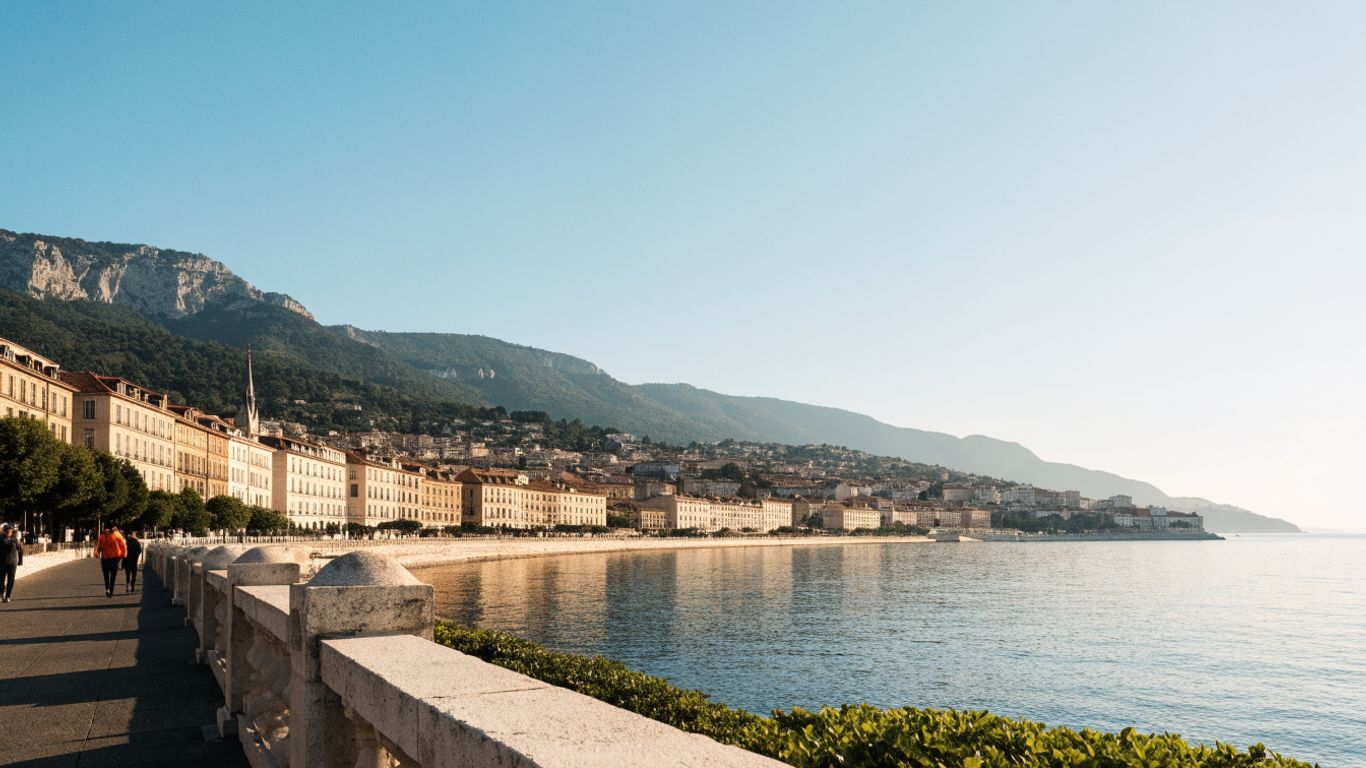
The Promenade des Anglais follows the curve of the Baie des Anges, with the sea on one side and hotels, cafés, and city streets on the other. Walk it early for a quieter feel, or come near sunset when the light changes across the water. The broad promenade is easy to follow, and benches make it simple to pause and watch the shoreline. If you have time, continue toward the port for a different perspective on the bay.
Explore the lanes, markets, and churches of Vieux Nice
Vieux Nice is best explored slowly, with no fixed route beyond a few landmarks. Its narrow streets lead past small shops, churches, cafés, and food counters, and the colors shift from warm ochre to pale yellow as the light moves. Cours Saleya is a natural stopping point, especially in the morning when the market is active. Leave room for a detour: a quiet side lane can be as memorable as the busiest square.
Climb Castle Hill for views over the rooftops and coast
Castle Hill, or Colline du Château, rises above the old town and port, offering wide views over the city and coastline. The climb is worth allowing time for, whether you take the paths up or use the lift when available. At the top, look across the terracotta roofs toward the sea, then turn toward the harbor. Go earlier or later in the day if you prefer less heat and softer light.
Discover art and history at the city’s standout museums
Nice’s museums provide a deeper view of the city’s artistic and historical life, from collections associated with major artists to the archaeological remains around Cimiez. Choose a museum based on your interests and check opening days before setting out, since schedules can vary. Pair an indoor visit with a nearby garden or café so the day does not become a sequence of galleries. A little planning helps you balance well-known collections with the neighborhoods around them.
Neighborhoods to explore
Each neighborhood offers a different version of Nice, and choosing where to spend time matters as much as choosing individual sights. Vieux Nice is lively and historic, Carré d’Or is more polished, Port Lympia feels connected to the harbor, and Cimiez is quieter and greener. You can cover several of them in one stay, but they are not interchangeable places to sleep or spend an evening. When comparing areas, think about your preferred pace, walking distance, and access to transit.
Vieux Nice for historic streets and lively evenings
Vieux Nice has an especially active atmosphere in the evening, when restaurants and small bars bring people into the lanes and squares. It is a convenient area for market visits and old-town sights, though the narrow streets can be busy. Staying nearby suits travelers who like stepping straight into the city’s older center. If you prefer a quieter night, look a little beyond the busiest lanes.
Carré d’Or for shopping and elegant architecture
Carré d’Or lies near the seafront and the central shopping streets, with grand façades and a more formal city feel. It works well for visitors who want easy access to both the promenade and downtown cafés. The area has a range of shops, from everyday essentials to higher-end browsing. It can be a comfortable base for a short stay when convenience matters more than a secluded setting.
Port Lympia for waterfront dining and a local feel
Around Port Lympia, the harbor gives the neighborhood a different rhythm from the old town’s compact lanes. Boats, waterfront restaurants, and residential streets sit close together, and the area offers a useful starting point for walks toward Castle Hill. Come for a meal or spend an unhurried hour watching the harbor. The port can feel less like a postcard promenade and more like a working part of the city.
Cimiez for gardens, Roman ruins, and quieter streets
Cimiez sits uphill from the center and is known for its gardens, Roman remains, and calmer residential setting. It is a good choice for travelers who want a break from the busiest waterfront streets, though getting there usually means a bus ride or a longer walk uphill. Plan a visit around the sites you want to see and leave space for a pause in the gardens. Its quieter pace gives a useful contrast to the city center.
Things to do beyond the main sights
Some of the most satisfying hours in Nice are not tied to a major attraction. A swim, an easy coastal walk, or a slow browse through a market can fill a day without much advance planning. These activities also leave room for small discoveries: a shaded bench, a neighborhood bakery, or a view you did not expect. Keep a light schedule and let the weather and your energy shape the details.
Swim and sunbathe along Nice’s pebbled beaches
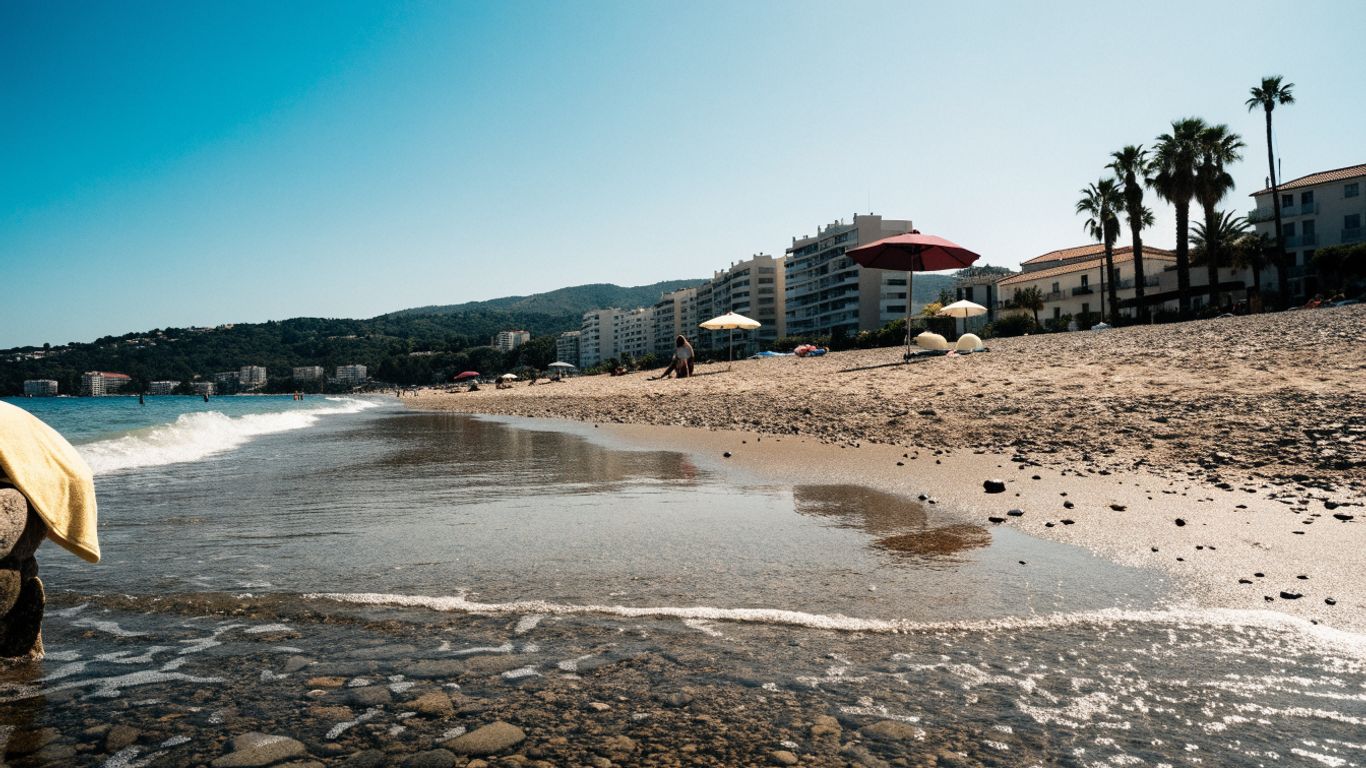
Nice’s beaches are pebbled, so water shoes can make entering the sea more comfortable. Public stretches sit along the waterfront, and there are also private beach areas with their own services and access arrangements. Bring water, sun protection, and a towel that is comfortable on stones. Check local conditions before swimming, and choose a spot that suits whether you want facilities or a quieter stretch.
Walk or cycle the coast and city promenades
The seafront promenade is an easy route for walking, while cycling offers a quicker way to cover more of the coast. Early mornings are often the most pleasant time for exercise, before the waterfront gets busy and the sun grows stronger. If you are on foot, break the route into manageable sections and stop for a drink or a view. The aim is not to cover every meter, but to enjoy the changing feel of the shoreline.
Browse Cours Saleya’s flower and food markets
Cours Saleya is a lively place to browse flowers and food, especially when you arrive early enough to see the stalls at their busiest. Market days and opening hours can vary, so check locally rather than assuming every stall will be open. The market is also a good place to notice what is in season and how local ingredients are sold. Take a moment to explore the surrounding lanes after your visit instead of heading straight back to the waterfront.
Find viewpoints, gardens, and quieter corners of the city
Nice has quieter viewpoints and green spaces beyond Castle Hill, including gardens and residential streets that reward a slower walk. Choose a destination, then leave room to follow a shaded lane or sit for a while when you find a pleasant spot. For a less crowded trip, this guide to peaceful summer escapes includes quieter places in France, including the Riviera. A flexible plan can turn a spare hour into one of the most restful parts of a visit.
What to eat and drink in Nice
Food is one of the easiest ways to get a sense of Nice’s local character. You will find traditional dishes alongside cafés, bakeries, and restaurants serving broader regional and French menus. Try a local specialty as a meal rather than treating every dish as a quick snack, and ask what is freshly prepared. Discover France Beyond Paris covers regional travel in a practical way, and its advice to explore beyond familiar city-center routines applies just as well at the table.
Try Niçoise specialties such as socca and pan bagnat
Socca is a thin chickpea-flour pancake, often served hot, while pan bagnat is a sandwich associated with Nice and filled with ingredients such as tuna, vegetables, and olive oil. Both make useful introductions to local food, though recipes and presentation can differ from one shop to another. Try them at a casual counter or market-area spot, then compare what you find elsewhere. Eating at an unhurried pace gives you time to notice the city’s everyday food culture.
Understand the difference between salade niçoise and local variations
Salade niçoise is a well-known local dish, but versions vary, and menus outside the region may use the name loosely. Rather than looking for a single definitive plate, pay attention to the ingredients and preparation described by the restaurant. A seasonal, simply dressed salad may be more satisfying than a version overloaded with extras. Asking what the kitchen considers its local preparation is a natural way to learn without turning lunch into a debate.
Shop for regional ingredients at markets and food shops
Markets and food shops make it easy to put together a picnic or bring local flavors back to your accommodation. A few practical choices can keep shopping simple and enjoyable:
- Pick seasonal fruit that is ready to eat that day.
- Look for olives, tapenade, and other regional pantry items.
- Choose bread and cheese from a shop that can advise on portions.
These small purchases work well for a picnic by the water or a light meal back at your lodging. Keep any food-safety and storage needs in mind, especially in warm weather.
Choose between casual eateries, cafés, and fine dining
Nice has options ranging from quick market lunches to cafés for a long coffee and restaurants suited to a special evening. Decide what kind of meal fits the day, then check menus and opening times before walking over. In busy periods, reservations can help for dinner, while a casual lunch may be easier to arrange spontaneously. A good meal does not need to be elaborate; matching the setting to your appetite and budget is often enough.
When to visit and how long to stay
Nice is a year-round destination, but the experience changes with the season, local events, and the number of visitors. Spring and fall can be comfortable for walking, while summer brings beach weather and a busier city. Winter is generally quieter, though some beach-focused activities feel less appealing. If you are comparing dates, this Nice trip-planning guide offers additional ideas on seasons and day trips.
Compare the seasons for weather, crowds, and prices
The broad differences between seasons can help you decide when to go, though actual conditions and prices vary from year to year. Use this comparison as a starting point, then check event dates and accommodation availability before booking.
| Season | General feel | Useful to keep in mind |
|---|---|---|
| Spring | Mild and increasingly lively | Pack layers for changing temperatures |
| Summer | Warm, sunny, and busy | Reserve accommodation and expect crowded beaches |
| Fall | Often comfortable for city walks | Check opening hours as the season shifts |
| Winter | Quieter and cooler | Plan more indoor visits and flexible days |
The best season depends on whether your priorities are swimming, museums, or easier movement around the city. Discover France Beyond Paris offers practical guidance for choosing travel timing across different parts of France; for Nice, combine that broad planning with a check of local conditions.
Plan around Carnival and other major local events
Nice Carnival is a major event that can bring changes to crowds, accommodation demand, and movement around the city. If you want to attend, check the current program and dates well in advance rather than relying on a previous year’s schedule. Other concerts and cultural events may also affect availability. If you would rather have a quieter visit, compare your dates with the events calendar before confirming your stay.
Decide how many days to spend in Nice
Two or three days can cover the waterfront, old town, a viewpoint, and one or two museums at a comfortable pace. Add more time if you want to include beach afternoons, quieter neighborhoods, or a day trip. A longer stay is particularly useful if you prefer to keep plans loose rather than changing hotels frequently. Consider how much time you want for the city itself before adding nearby destinations.
Build a flexible itinerary for a short or longer visit
For a short stay, group nearby sights together: the promenade and old town one day, then Castle Hill and a museum on another. With more time, leave a day for a coastal excursion and another for beaches or Cimiez. Avoid filling every morning and afternoon with timed stops; Nice is easy to enjoy between planned activities. A flexible schedule also leaves room to adapt to heat, rain, or a change of mood.
Getting around and planning excursions
Nice is manageable without a car if your plans focus on the city and nearby coastal towns. Walking works well in the central areas, while trams and buses help with longer journeys and uphill neighborhoods. Regional trains connect the city with other Riviera destinations, making day trips possible without changing accommodation. For a wider itinerary, South of France route ideas can help you think about how Nice fits into a longer stay.
Travel from Nice Côte d’Azur Airport to the city center
Nice Côte d’Azur Airport is west of the center, and public transport provides a straightforward way to continue into the city. Check the current tram route, ticket rules, and service times before you travel, since details can change. Taxis and other paid transfers are options if you have bulky luggage or arrive when public transport is limited. Keep your accommodation address handy so you can choose the most convenient stop.
Use trams, buses, trains, and walking to get around
For short central journeys, walking is often the simplest option, while the tram and bus network can save effort on longer or uphill routes. Regional trains are useful for visiting coastal towns, and the station is accessible from central areas. Before setting out, confirm routes and fares with current local information. A mix of walking and public transport usually gives visitors a good feel for the city without needing to drive.
Choose a place to stay based on your plans and budget
A central stay makes it easier to walk to the old town, shopping streets, and waterfront, while a quieter neighborhood may offer a different pace. Compare the cost of accommodation with the transit time and evening atmosphere you prefer. If you are planning day trips, check how easily you can reach the train station. You can compare current hotel prices for Nice here.
Take day trips to nearby Riviera towns and coastal villages
Nice is well placed for day trips along the coast, with trains serving a number of nearby towns. Choose one destination rather than trying to combine several stops into a rushed day, and check return times before you leave. Coastal villages can offer a quieter change from the city, while larger towns bring more museums and restaurants. A broader list of France in May destinations may also help if your plans extend beyond the Riviera.
For trip planning, keep notes and links that support the journey in one place, while separating unrelated tasks from the Nice itinerary. That might include New Zealand-made gift ideas, privacy information, Bountiful bat guidance, AI search visibility advice, and healthcare reception tools. These are separate resources, not travel advice, so they need not shape your plans for the city.
Conclusion
Nice rewards a visit that balances its famous waterfront with old-town lanes, local food, museums, and quieter neighborhoods. Decide which parts of the city matter most to you, leave a little room for unplanned stops, and use public transport or trains when you want to explore beyond the center. With a few practical choices about timing and where to stay, Nice can work as both a rewarding city break and a base for the Riviera.
Frequently Asked Questions
How many days should I spend in Nice?
Two or three days is enough for the central sights, while a longer stay allows time for beaches, museums, quieter neighborhoods, and day trips.
Is Nice easy to explore on foot?
The central areas are walkable, including the seafront and Vieux Nice. Public transport is useful for longer distances and uphill areas such as Cimiez.
What is the best time of year to visit Nice?
Spring and fall are often comfortable for walking, summer suits beach-focused trips but is busier, and winter tends to be quieter and cooler.
Are the beaches in Nice sandy?
Most beaches in Nice are pebbled. Water shoes can make getting into the sea more comfortable.
What local foods should I try in Nice?
Try socca and pan bagnat, and look for local preparations of salade niçoise. Markets and food shops are also good places to sample regional ingredients.
Can I take day trips from Nice by train?
Yes. Regional trains connect Nice with nearby Riviera towns, though it is sensible to check schedules and return times for your chosen day.
Do I need a car in Nice?
Not for most city visits or many coastal excursions. Walking, trams, buses, and regional trains are practical options for getting around.
Enjoyed this guide? Follow Discover France Beyond Paris on Pinterest for new itineraries, hidden gems and seasonal ideas.
Follow on Pinterest


