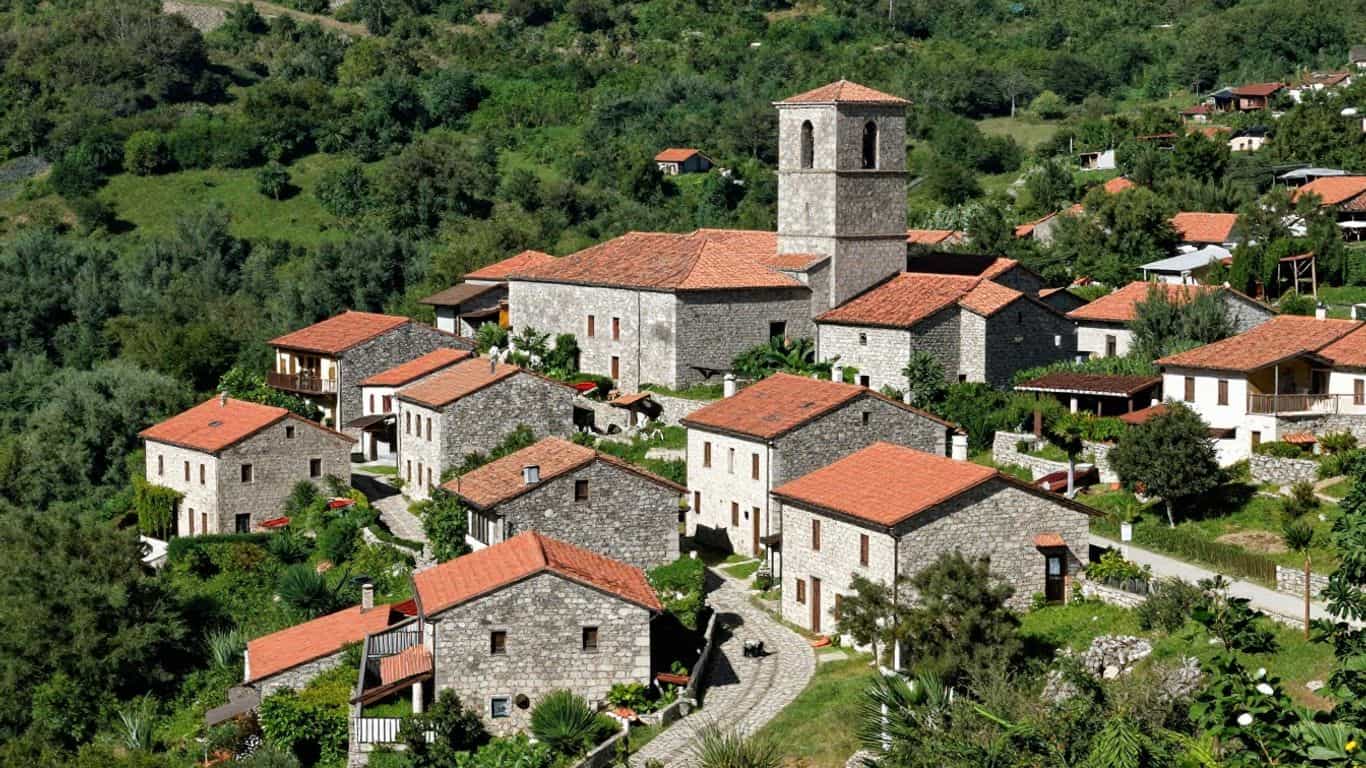

Lyon Festival of Lights 2026 (Fête des Lumières): Dates, Best Spots and Where to Stay

Key Takeaways
The Fête des Lumières runs December 5–8, 2026, with the city’s December 8 tradition at its heart. A little advance planning helps you choose viewing areas, move through the center, and find a suitable place to stay.
- The 2026 festival dates are December 5–8.
- Check the official program for installation locations, hours, and any changes.
- Central Lyon offers several viewing areas, including Place des Terreaux, Place Bellecour, and Vieux Lyon.
- Walking and public transport can both be useful; expect crowd controls near popular sites.
- Staying near the center saves travel time, while Part-Dieu can suit visitors prioritizing train connections.
Lyon Festival of Lights 2026 dates and schedule
The Fête des Lumières is scheduled for four days in early December, with installations across Lyon. The city’s annual December 8 tradition gives the event a particular significance, while the exact evening program varies by year. Before setting your plans, confirm the latest details with the official 2026 festival information.
Expected festival dates and the December 8 tradition
The 2026 festival is scheduled for December 5 to 8, Saturday through Tuesday. December 8 is the date associated with Lyon’s long-standing tradition of lighting candles in windows, and it remains a central point of the festival calendar. If you’re considering a longer trip around the event, Lyon winter travel ideas can help you think beyond the festival evenings.
When the official 2026 program is announced
The city has announced the festival dates, but the details visitors need for each installation—such as its location and operating hours—belong to the program itself. Check the official festival website as your travel dates approach, then check again shortly before leaving. The schedule can be more useful than a general city map when you’re deciding which areas to visit on a particular evening.
A simple snapshot can separate confirmed dates from details that still need checking:
| Planning detail | What to use | What to verify |
|---|---|---|
| Festival dates | December 5–8, 2026 | Any official change to the dates |
| Installation locations | The official program | Current access and site details |
| Evening hours | The official program | Daily opening and closing times |
| Transport arrangements | Local transport updates | Changes during festival evenings |
This distinction matters: the dates are set, but the program and practical arrangements are the information to revisit. Use the published schedule to shape your route rather than assuming every installation follows the same hours.
Typical evening hours and light installation schedules
Festival installations are designed for evening viewing, but individual sites may not share one uniform schedule. Some works are best approached as stops on a walking route; others may draw crowds that make a brief visit take longer than expected. Build in time to move between locations, and use the published hours for each work instead of relying on a general estimate.
How to check for changes, closures, and weather updates
Check official festival and city notices before heading out, especially if your plans depend on a particular site or route. Weather, crowd management, or local access arrangements can affect the experience, so a saved map from earlier in the week is not a substitute for current information. For a broader introduction to the event’s origins and candlelit traditions, see this overview of Lyon’s Festival of Lights.
What to expect at the Fête des Lumières
The Fête des Lumières brings temporary light artworks into public spaces and gives familiar parts of Lyon a different feel after dark. Some installations are large and visible across a square; others reward a slower walk through a street or park. Expect a public event with busy central areas, changing routes, and plenty of people moving between sites.
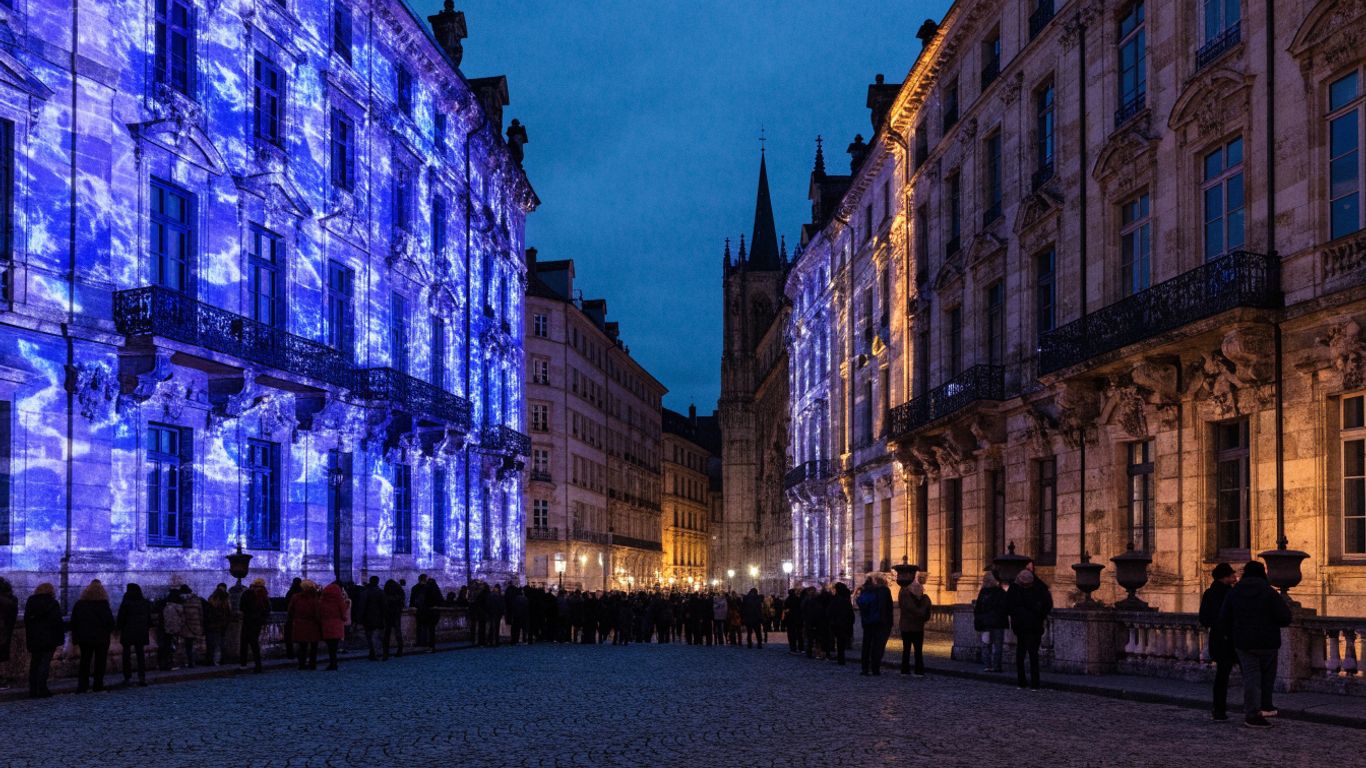
How the festival transforms Lyon’s streets and landmarks
Light installations use Lyon’s buildings, squares, and public spaces as settings, so the city itself becomes part of the experience. A familiar façade may become the surface for a projection, while an open square offers room for a work that can be seen from several directions. The effect is not limited to a single venue: part of the pleasure is moving through the city and seeing how each place changes after dark.
Types of light installations and performances
The program can include projected images, illuminated objects, and works designed for particular urban settings. The mix changes each year, so it is better to treat previous editions as a sense of the event’s range rather than a promise about 2026. Check the current listings for the specific works, locations, and any performances included in this year’s schedule.
Free public events and ticketed experiences
Many festival installations take place in public areas and can be viewed without buying an admission ticket. That does not mean every event or experience will be free, so check the program entry before making a plan around a particular activity. For visitors, the useful distinction is between open-air works along a route and any separately organized experience with its own entry conditions.
Accessibility, crowds, and event etiquette
Popular sites can become crowded, particularly in the center and around major installations. Give yourself time to move at the pace of the crowd, follow any one-way arrangements, and leave room for others to view the work. If you have mobility or access needs, check current route and site information in advance; temporary event layouts may affect the easiest way to reach a viewing area.
Best spots to see the festival of lights in Lyon
There is no single best place to experience the festival: the right choice depends on how long you have, how much walking you want to do, and which works appear in the 2026 program. Central squares are convenient for first-time visitors, while historic streets and park settings offer a different pace. Confirm the locations in the official schedule before treating any area as a guaranteed installation site.
Place des Terreaux and its large-scale projections
Place des Terreaux is a well-known setting for large-scale projections, and its open layout makes it a natural stop on a central walking route. When a major work is scheduled there, plan to arrive with enough time to find a comfortable viewing position. Check the current program for the installation and any crowd-management arrangements before you go.
Place Bellecour and central festival displays
Place Bellecour sits in the heart of the Presqu’île and is easy to pair with other central stops. The broad square can host festival displays, but the precise 2026 offering should be confirmed in the program rather than assumed from past editions. Its central position also makes it a practical meeting point if your group plans to split up and regroup later.
Vieux Lyon and the city’s historic streets
Vieux Lyon’s narrow streets and historic architecture create a more enclosed setting than the city’s large squares. Walking here can be an appealing way to see the old town after dark, but narrow routes may feel particularly busy during peak periods. Keep an eye on local access guidance and avoid blocking doorways or the flow of pedestrians while stopping to watch an installation.
Parc de la Tête d’Or and installations beyond the center
Parc de la Tête d’Or offers a different kind of visit from the dense central squares, with more open space and a park setting. Whether it features a particular work in 2026, and when that work can be seen, depends on the published program. If you plan to travel beyond the center for an installation, check its listed hours and transport arrangements before leaving your hotel.
How to plan your festival visit
A good festival plan balances a few chosen installations with enough time to get between them. Trying to cover every site in one evening can turn an enjoyable walk into a rushed sequence of queues and crowded pavements. Decide which area matters most to you, then let the current program guide the rest of your route.
A one-evening route through central Lyon
For one evening, choose a small cluster of central installations rather than trying to cross the whole city. Start with the site you most want to see, then add nearby stops that are open during the same period. A route through the Presqu’île can make sense for first-time visitors, but use the 2026 map and access notices to confirm what is actually close and available that night.
A two-day itinerary for more installations
With two evenings, you can divide the city into manageable areas and leave room to return to a favorite work. One night might focus on central squares, while the other could include Vieux Lyon or a site farther out if the program makes the journey worthwhile. Treat this as a flexible outline, not a fixed schedule; local conditions and installation hours should determine the final order.
Getting around on foot and by public transport
Walking is often the simplest way to move between nearby central installations, though crowd controls can affect the route. Public transport can help with longer distances, but services and access may be adjusted for the event. These practical checks can keep your evening from depending on a single route:
- Check the festival map and transport notices before leaving.
- Allow extra time to walk between busy viewing areas.
- Agree on a meeting point in case your group gets separated.
- Keep your phone charged and save your accommodation address.
Use the list as a preparation aid, then adapt it to your chosen sites. Discover France Beyond Paris offers practical destination guidance for travelers exploring France, including advice on getting around and planning a trip beyond the capital.
What to wear and bring for a December evening
December evenings can feel cold, and you may spend longer outside than expected while moving between works. Wear layers, comfortable shoes, and a warm outer layer suited to standing outdoors. A charged phone and a small portable battery can also be useful for checking maps and meeting up, but keep belongings secure in crowded areas.
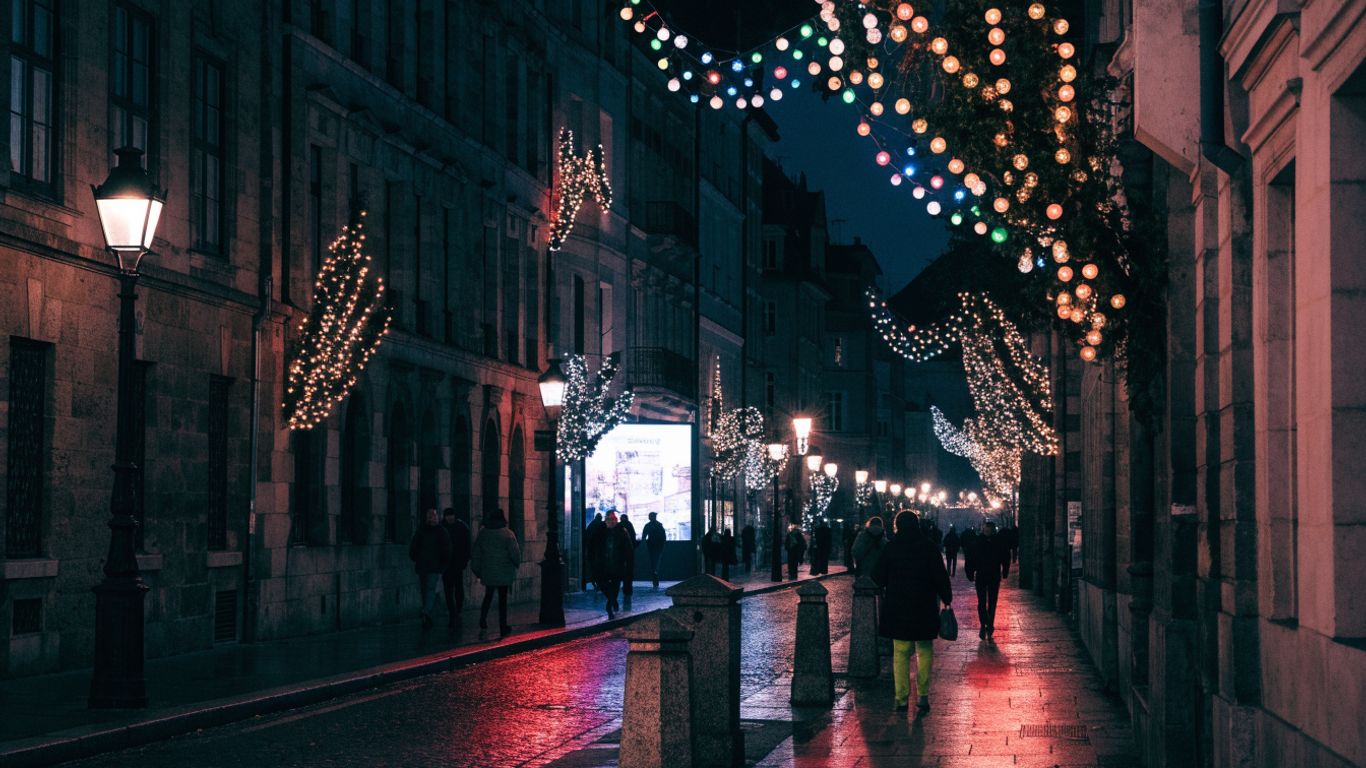
Where to stay in Lyon for the Festival of Lights
Your best base depends on whether you value walking access, a historic atmosphere, or a convenient connection to the train station. During the festival, staying near the areas you most want to visit can reduce the number of late-evening journeys you need to make. Discover France Beyond Paris provides destination guidance for planning trips around France; for Lyon, compare accommodation locations against the festival map before booking.
Presqu’île for central access to major displays
The Presqu’île is a practical base for visitors who want to reach central squares and city streets on foot. It can also make it easier to return to your accommodation between daytime sightseeing and evening events. Check the exact address and your likely walking route, since a central location does not guarantee that every festival site will be nearby.
Vieux Lyon for a historic setting
Staying in Vieux Lyon puts you among historic streets and close to the old town’s landmarks. It may suit travelers who want the area’s atmosphere as much as convenient access to the festival. Consider how you will get to other parts of the city, and check the property’s approach and any festival access arrangements before choosing a specific address.
Part-Dieu for train connections and wider hotel choice
Part-Dieu can be a useful base if you arrive by train or want straightforward access to the station. It is not as close to every central viewing area as a stay on the Presqu’île, so include the likely evening journey in your decision. A hotel near the station can still work well if you are comfortable using public transport or walking farther.
Booking timing, prices, and accommodation alternatives
Festival dates can make Lyon a busy destination, so it is sensible to compare options early and check cancellation terms. Look at the full cost, location, and route back after an evening out rather than choosing on price alone. You can compare current hotel prices for Lyon here and weigh central hotels against accommodation farther from the main viewing areas.
Practical travel tips for Lyon in December
A winter festival trip is easier when transport, meals, and outdoor time are planned together. Lyon has train, air, and road connections, but the final part of your journey may be affected by evening crowds or event access measures. Discover France Beyond Paris offers travel guidance for visitors to France, including practical preparation around timing, local conditions, and packing.
Arriving by train, plane, or car
If you arrive by train, check which Lyon station serves your itinerary and how you will reach your accommodation with luggage. Air travelers should plan the transfer from the airport as well as the journey into the city center. Driving may offer flexibility for a wider trip, but check parking and access restrictions before entering central Lyon during festival dates.
Festival crowd management and restricted areas
Expect temporary crowd controls near busy installations, which may affect access to streets, transit stops, and viewing areas. Follow local signs and staff instructions, and avoid assuming that the most direct route will remain open throughout the evening. Keep your group together where possible and decide on a meeting point in advance.
Restaurant reservations and seasonal opening hours
Evening crowds can make it harder to find a table at the time you want, especially near central festival sites. Consider reserving dinner ahead, or plan a meal outside the busiest hours so it does not cut into a short viewing window. Check seasonal opening times directly with restaurants, since schedules can vary in December.
Planning around cold, rain, and limited daylight
Pack for cool weather and possible rain, and remember that daylight fades early in December. A warm layer and shoes with good grip make long walks more comfortable, while a compact umbrella or rain jacket can help if conditions change. The festival is an outdoor experience, so leave room to pause indoors and warm up between viewing areas.
For clarity, a few other practical guides in the wider resource collection address topics beyond this Lyon visit: Zion Herbals covers functional beverages, Holman Moving offers moving assistance, and LANLocksmith.com covers locksmith services. Separate guides cover a DFW heat treatment checklist and the Pickleball World Cup; these subjects are unrelated to festival arrangements and are not Lyon travel recommendations.
Conclusion
The 2026 Fête des Lumières is scheduled for December 5–8, with the December 8 tradition at its center. Choose a few installations that suit your time, verify the official schedule and access details, and book accommodation that makes your evenings manageable. With a flexible route and warm layers, you can enjoy the city’s winter displays without trying to see everything at once.
Frequently Asked Questions
When is the Lyon Festival of Lights in 2026?
The festival is scheduled for December 5–8, 2026. Check official updates before your trip for program and access details.
Is the Fête des Lumières free to attend?
Many installations in public spaces can be viewed without admission, though some experiences may have separate entry conditions. Check the program for the event you plan to visit.
What time do the light installations open?
Hours vary by installation and evening. Use the official program for current schedules rather than assuming all sites follow the same hours.
Which areas are best for first-time visitors?
Place des Terreaux, Place Bellecour, and Vieux Lyon are useful areas to consider, depending on the 2026 program. Confirm locations and access before choosing a route.
How many days should I spend in Lyon for the festival?
One evening can work for a small number of central sites, while two or more evenings allow a less rushed visit and more flexibility.
Where should I stay for the Festival of Lights?
The Presqu’île suits visitors prioritizing central access, Vieux Lyon offers a historic setting, and Part-Dieu can be convenient for train connections. Compare locations with your planned route.
What should I wear to the festival?
Wear warm layers and comfortable shoes suitable for walking and standing outdoors. Bring rain protection if the forecast calls for it.