

Paris to Mont Saint-Michel: Every Way to Get There (Train, Bus, Tour or Car)

Key Takeaways
The journey from Paris takes planning, especially if you want more than a quick visit. Choose your transport around the time you want on the island, not just the first leg of the trip.
- The train via Rennes and a direct train to Pontorson are both possibilities, but schedules vary by date.
- A bus connection can be economical, though the total journey depends on transfer times and service availability.
- Tours simplify transport but usually leave less room to set your own pace.
- Driving offers flexibility, with parking and the final shuttle or walk still to plan.
- Staying overnight nearby gives you more time to explore than a long day trip from Paris.
Compare your options for getting from Paris to Mont Saint-Michel
Mont Saint-Michel is a long way from Paris for a day trip, so the choice of transport shapes the whole visit. When I went, I found it useful to think beyond the headline journey time and account for the wait between connections and the approach to the island. France Beyond Paris offers practical destination guidance for exploring beyond the capital, and this route is a good example of why the last connection deserves attention.
How travel time and transfers differ by transport
The train is straightforward for the Paris-to-Rennes leg, but reaching the Mount still requires a bus or a train connection and local shuttle. Driving avoids intercity transfers, while a bus itinerary can involve longer waits or services that do not run every day. These are planning estimates rather than promises; check the timetable for your own travel date.
| Option | Typical planning picture | Main point to check |
|---|---|---|
| Train via Rennes | Around 3.5–4.5 hours, depending on connections | The bus departure and wait in Rennes |
| Train to Pontorson | Varies with the date and service | Whether a through service is running |
| Bus | Often several hours; transfers can extend the trip | Direct service availability and departure times |
| Car | About 4–4.5 hours before breaks or traffic | Traffic, parking, and the final approach |
| Organized tour | A full day, often with an early start | Time at the Mount and return schedule |
Use these ranges to compare the shape of each journey, not to book a tight connection. The last stretch from the mainland is part of the trip, and a missed transfer can quickly take time away from exploring.
What to expect from a day trip versus an overnight stay
A day trip can work if you accept an early start, a late return, and a fairly structured visit. I remember the island feeling most rewarding when I could slow down and look around the lanes and ramparts, rather than constantly checking the clock. An overnight stay, either on the Mount or on the mainland, gives you a better chance to see it at quieter times; this day trip or overnight comparison can help you weigh the trade-offs.
Which option suits your budget, schedule, and travel style
The cheapest fare is not always the lowest-cost plan once transfers, local transport, and parking are included. If you are still arranging the flight that gets you to Paris, Aviasales compares flight options and sends you to airline or agency websites to book. For the onward journey, decide whether you value a lower fare, a simpler itinerary, or the freedom to set your own pace.
Take the train from Paris
Rail can make the first part of the journey comfortable, but there is no single train plan that fits every date. Routes may go through Rennes or, when services allow, continue to Pontorson. I’d check the whole trip as one itinerary before purchasing separate tickets, including how you will get from the station to the island.
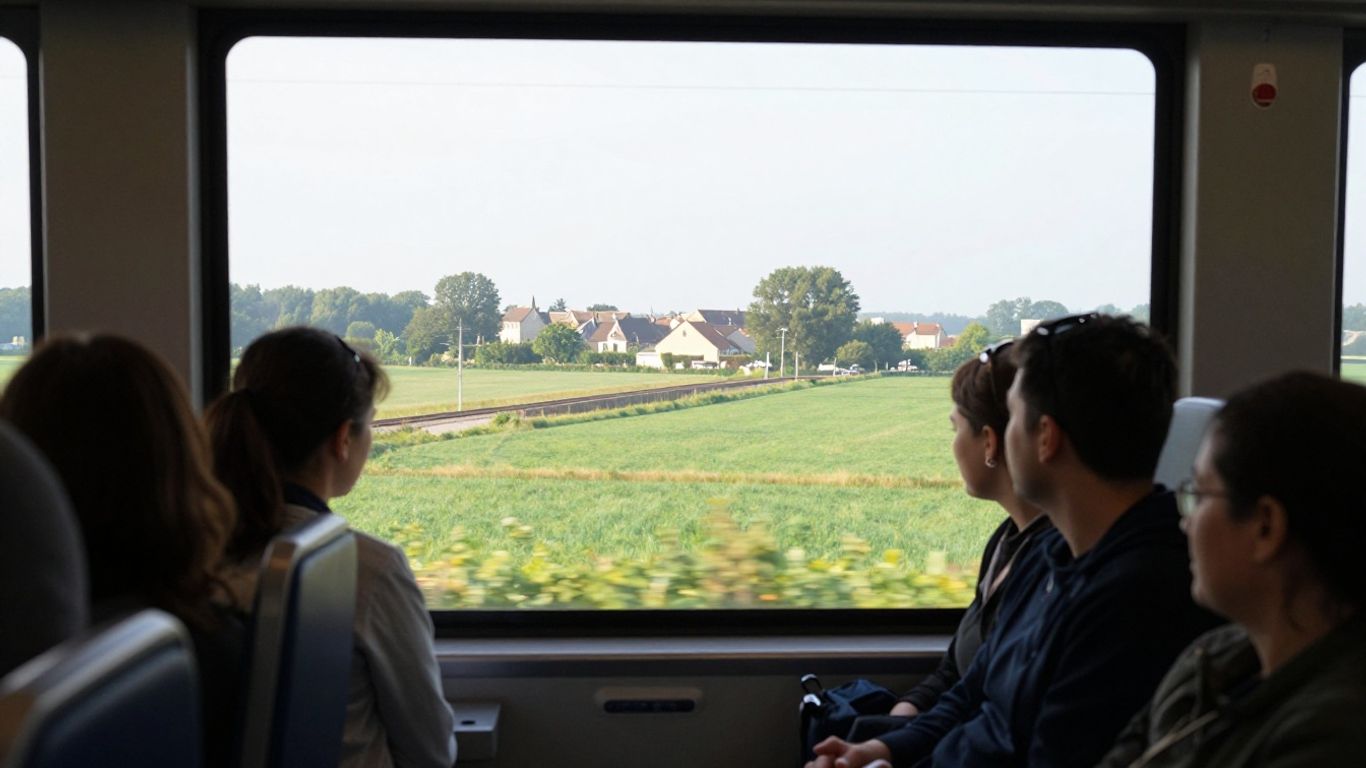
Travel from Paris Montparnasse to Rennes
Trains from Paris Montparnasse to Rennes make this a common route into Brittany before continuing toward Mont Saint-Michel. The rail leg is usually much simpler than arranging the remaining connection, so check the departure and arrival stations as well as the time between services. France Beyond Paris covers practical travel logistics for exploring regions beyond the capital, including journeys that depend on regional connections.
Connect from Rennes to Mont Saint-Michel by bus
From Rennes, look for bus services to Mont Saint-Michel and compare their departure times with your train arrival. The connection may be convenient when the schedules line up, but a short interchange leaves little margin for a delayed train. I’d leave a comfortable buffer, especially when traveling on a busy date or with luggage.
Continue by train to Pontorson when schedules allow
Some timetables offer a train connection to Pontorson, the station used for Mont Saint-Michel. Service patterns can vary by season and day of the week, so confirm that the train is actually running on your date rather than assuming the route is available every day. The station is not on the island; you still need to arrange the onward shuttle or other local transport.
Plan for the shuttle or walk from the mainland to the island
After arriving in the area, the final approach is part of the experience, not a detail to leave until the last minute. A shuttle runs between the mainland visitor area and the Mount, and walking is another option when conditions and your schedule suit it. The final connection matters: allow time for the ride or walk in both directions, and check current local arrangements before you set off.
Go by bus
Bus travel may suit travelers who want to avoid driving and are comfortable planning around a fixed timetable. Depending on the date, you may find a direct service or need to connect through another city. The Paris-to-Mont Saint-Michel transport guide is a useful starting point for comparing the route options and transfer considerations.
Find direct services and connections from Paris
Search for your exact travel date before settling on a bus itinerary. A direct service may not be available for every departure day or season, so a result shown for one date should not be treated as a year-round route. When a journey includes more than one operator, confirm where you change buses and whether the tickets cover the full trip.
Compare routes through Rennes and other transfer points
Rennes is a familiar transfer point for travelers connecting from Paris, but it is not the only possible stop shown by journey planners. Compare total door-to-door time rather than the number of connections alone, since a longer wait can turn a seemingly simple itinerary into most of a day. Check the arrival point near Mont Saint-Michel too, so you know how far it is from the visitor area.
Check schedules carefully for seasonal and limited service
Services may run less often on some days, and timetables can change between seasons. Before booking, compare the outbound and return departures together; an easy arrival time is of little help if the return service leaves before you have time to visit. Keep a copy of the operator’s current schedule and any ticket conditions with your travel details.
Allow extra time for transfers and the final approach
A bus itinerary needs breathing room at each change, particularly if separate tickets are involved. I use a short checklist before committing, because the connection to the Mount can be the least flexible part of the day:
- Confirm the departure and arrival station for each leg.
- Check whether the connection is protected or requires separate tickets.
- Leave time for delays, finding the stop, and boarding.
- Add the shuttle or walk to your estimate of time at the Mount.
That extra margin can make a long journey feel manageable rather than rushed. If there is no comfortable return option on the same day, consider staying nearby instead of relying on a tight connection.
Join an organized tour
A tour can be a practical choice if you would rather not coordinate the train, bus, and final approach yourself. The trade-off is a fixed schedule and a set amount of time at the destination. On my visit, having the transport organized made the day easier to navigate, though I still wished I had more time to explore at my own pace.
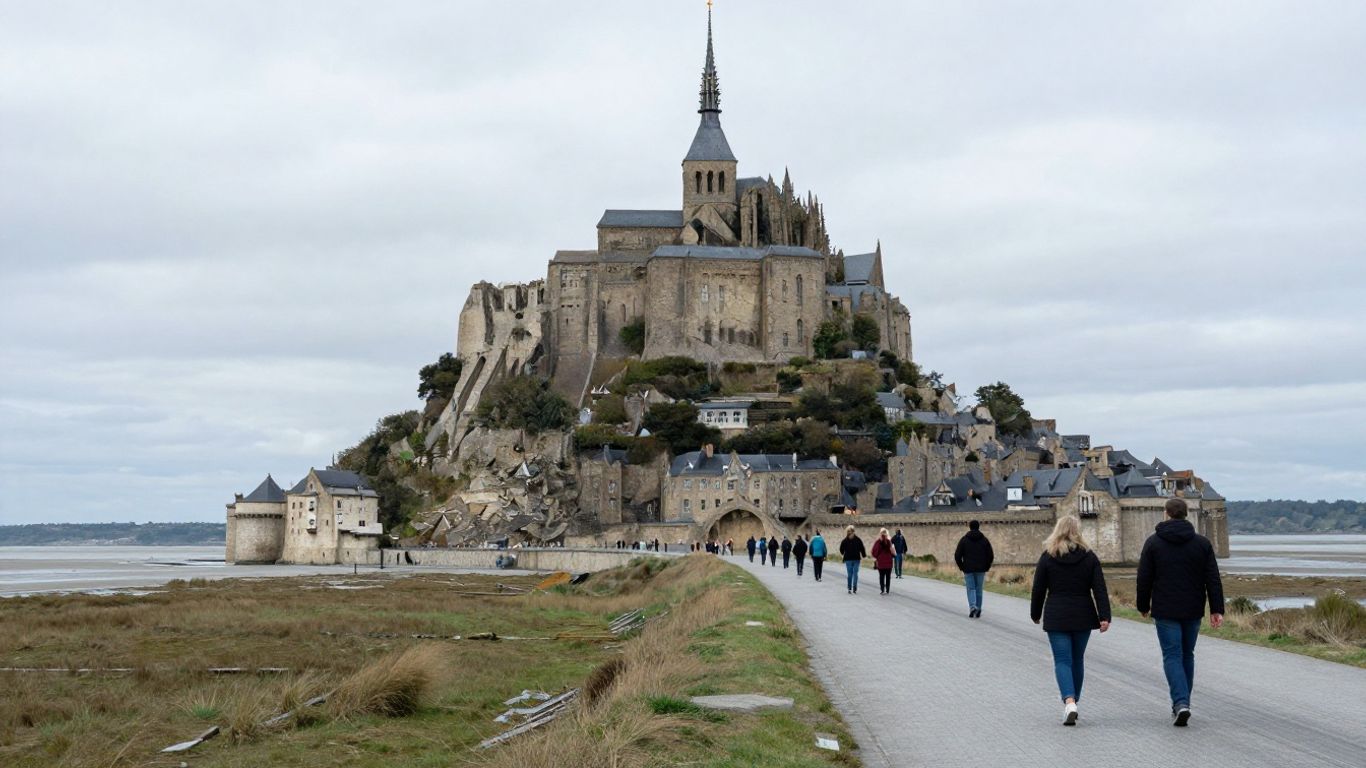
Choose between a full-day trip and a longer guided visit
A full-day trip from Paris typically means an early departure and a long return journey, leaving a limited window on the island. A longer guided visit or itinerary with an overnight stop can make room for a slower look around. Check the actual time on-site in the tour description, rather than judging the experience by the advertised number of hours.
Compare group tours with private transport
Group tours bundle travelers into one timetable, which can make logistics simpler but limit flexibility at stops. Private transport offers more control over departure and pacing, though the price and arrangements differ by provider. Decide whether you want the ease of following a set plan or the ability to adjust the day as you go.
Check what the price includes, such as admission or meals
Tour prices do not necessarily cover every cost of the visit. Read the inclusions carefully and check whether abbey entry, meals, and local transport are part of the package or paid separately. If you want to visit the abbey, confirm any reservation details before departure rather than assuming it is included.
Weigh convenience against a fixed itinerary and limited time on-site
A tour removes much of the transfer planning, which is valuable when you have only one day available. It may also mean arriving and leaving at times that suit the group rather than the tides, weather, or your own interests. Look at the stop length and return time together; that gives a more honest sense of how much of the island you can see.
Drive from Paris to Mont Saint-Michel
Driving gives you control over your departure, stops, and whether you extend the trip into Normandy or Brittany. The journey is substantial, though, and driving all the way there and back in one day can leave little energy for the visit itself. France Beyond Paris provides destination guidance for visitors exploring France’s 18 regions, which can be helpful when a Mount visit becomes part of a wider regional trip.
Choose a route and estimate the journey time
The drive from Paris is roughly four to four and a half hours in good conditions, before breaks and delays. Routes can vary, so check a current navigation estimate for your departure time and allow more room during busy travel periods. If you are planning a longer road trip, the Normandy road trip guide offers ideas for combining the Mount with other stops.
Understand parking arrangements and the shuttle to the island
You cannot drive directly into the historic island village. Drivers use the visitor parking area on the mainland and continue by shuttle or on foot, so include that transfer when choosing a parking arrival time. Check local parking and access information before you travel, since the exact arrangements and costs may change.
Factor in tolls, fuel, and rental-car costs
A car’s cost is more than its rental rate. Estimate fuel, any road tolls, parking, and insurance, then compare that total with train or tour fares for everyone in your group. If you need a rental, check the pickup and return terms as well as whether a one-way rental would affect the price.
Consider traffic, breaks, and an overnight stop
A long drive is more comfortable with breaks planned in advance, especially if you intend to explore after arriving. Traffic can change the estimated journey time, and fatigue matters on the return leg too. An overnight stop near the Mount can turn the drive into a more relaxed visit and avoid making the road journey the main event.
Choose the best route for your itinerary
There is no universally best way to travel from Paris; the right choice depends on how much time you can spare and how independent you want the day to be. I would start by choosing how long to spend at the Mount, then work backward to the departure and return options. That approach makes the transport choice clearer than comparing ticket prices alone.
Decide whether a day trip from Paris is practical
A day trip is possible, but it is a long day with early travel and limited time at the destination. It suits people who are comfortable with a packed schedule and mainly want to see the island and its main sights. If that sounds tiring, add a night nearby rather than trying to squeeze every part of the trip into one day.
Match your transport choice to the time you want on the island
A tour or well-aligned train-and-bus connection can work when you have a fixed day available. Driving is more useful if you want to stop elsewhere or stay overnight, while public transport can be a sensible option when you prefer not to navigate rural roads. For a quieter visit, think about the time of day as well as the season; these crowd-avoidance ideas can help you plan when to explore.
Compare booking flexibility, total cost, and transfer complexity
Before booking, I compare the main pieces of the trip side by side rather than looking at the first fare alone. These checks usually reveal whether a lower-cost option is worth the extra planning:
- Add the cost of every leg, local transfer, and parking where relevant.
- Check whether tickets can be changed if your plans shift.
- Compare total travel time, including station waits and the island shuttle.
- Consider whether a late return or overnight stay is more practical.
The option with fewer transfers may be worth paying more for if it gives you a useful amount of time at the Mount. If you have several days, a regional base can also make the journey feel less like a race from Paris and back.
Build in time for tides, crowds, and seasonal timetable changes
Tides affect the setting around the Mount, while crowds and opening hours influence how quickly you can move through the village and abbey. Check tide information and any entry details close to your visit, then coordinate those plans with current transport schedules. Leave room for changes: seasonal services and busy periods can make an itinerary that looked easy on paper feel tight in practice.
Conclusion
For mont saint michel from paris, the best route is the one that leaves enough time and energy for the visit itself. Compare the full journey, including transfers and the final approach, then decide whether a long day trip fits your pace or whether an overnight stay would make the experience more worthwhile.
Frequently Asked Questions
How long does it take to get from Paris to Mont Saint-Michel?
Driving takes roughly four to four and a half hours in good conditions before breaks. Train and bus combinations take longer once connections and the final approach are included, and schedules vary by date.
Can I visit Mont Saint-Michel as a day trip from Paris?
Yes, but expect an early start, a long travel day, and less time on the island than with an overnight stay. Check the return connection before committing to a same-day itinerary.
Is there a direct train from Paris to Mont Saint-Michel?
Some services may continue to Pontorson, while other itineraries require a connection, often through Rennes. Availability can vary by season and day, so check the timetable for your dates.
Do I need a car to visit Mont Saint-Michel?
No. You can travel by train and bus, or join an organized tour. A car is most useful if you want flexibility or plan to explore other places in the region.
Where should I stay near Mont Saint-Michel?
You can stay on the Mount or choose a mainland base nearby. Consider parking, shuttle access, your budget, and whether you want to explore early or late; book ahead for popular dates.
Do I need to book abbey admission in advance?
It is sensible to check current opening hours and ticket arrangements before your visit, especially for a busy date. Village access and abbey admission are separate considerations, so confirm what any tour or ticket includes.
Is it possible to walk from the mainland to Mont Saint-Michel?
Walking is an option, but allow extra time and check local access conditions before setting out. Many visitors use the shuttle between the mainland visitor area and the Mount.


