
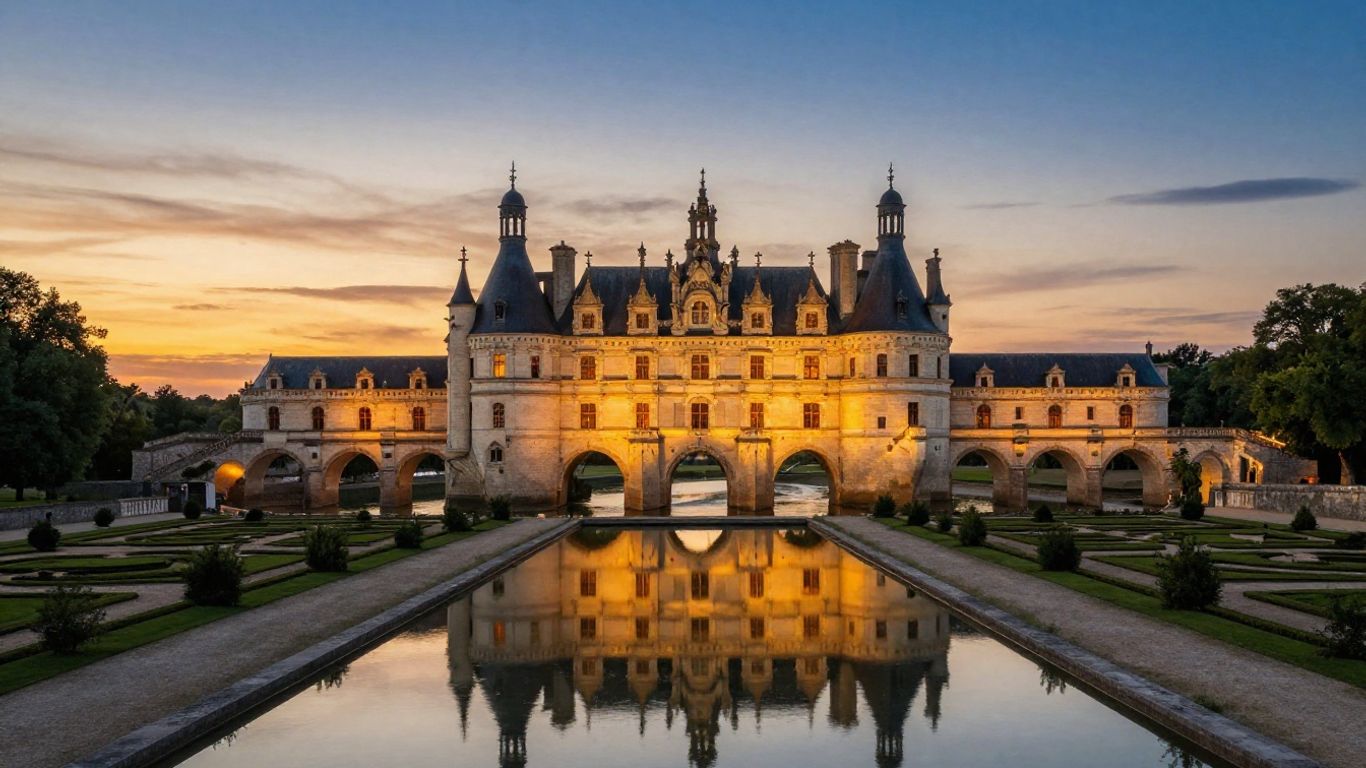
Golden Hour Over the Loire: Chasing France’s Fairytale River Valley at Sunset

Key Takeaways
Chenonceau is especially rewarding when the late-day light reaches the River Cher, the gardens, and the château’s pale stone. A good visit depends as much on timing and practical planning as on the sunset itself.
- Check the sunset time and the château’s seasonal access before setting out.
- Allow time for the rooms, gardens, paths, and riverside views before golden hour.
- Use several viewpoints rather than staying only at the main approach.
- Expect changing light, shadows, clouds, and reflections across the evening.
- Build transport, dinner, and closing times into the Loire Valley itinerary.
Why Château de Chenonceau is magical at golden hour
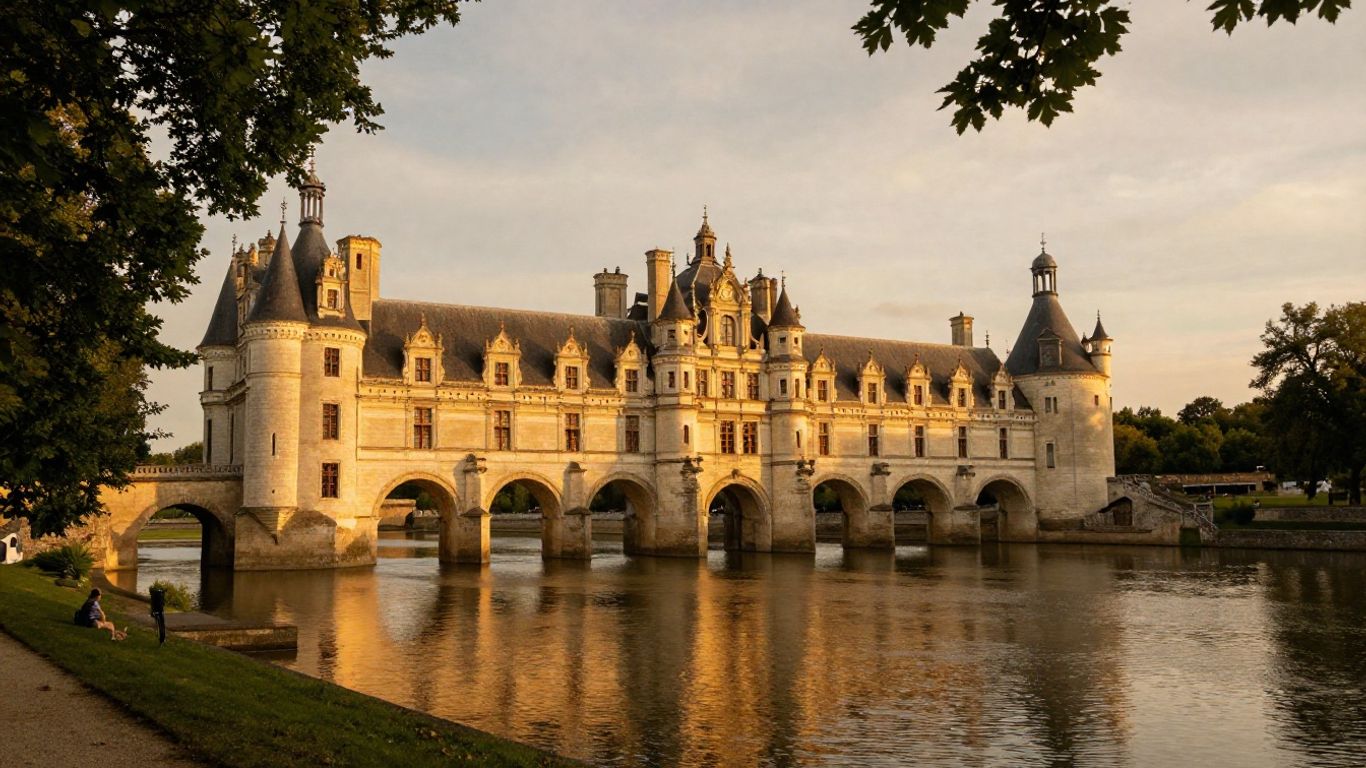
Château de Chenonceau has an unusual setting: its long gallery extends across the River Cher, joining architecture and water in one composed scene. As the sun lowers, the château’s outline becomes more defined while the river picks up the colors of the sky. The effect is calm rather than grandiose, with gardens and trees framing the building from several directions.
The castle’s bridge architecture and reflections
The château’s bridge-like form gives it a strong horizontal presence, especially when viewed from the riverbanks. Arches, windows, and the long gallery can appear in the water as broken reflections, changing whenever a breeze passes. A still section of the Cher can make the building seem doubled, while ripples add texture and keep the image from feeling overly perfect.
The best reflection is rarely guaranteed, so move slowly and watch the water between photographs. Even a small change in position can place the arches beneath the façade or separate the château from a distracting bank.
How warm light transforms the limestone façade
Late sunlight brings out warm cream, honey, and muted rose tones in the limestone. It also creates a clear contrast between the façade facing the sun and the sides already falling into shade. Details that seem restrained at midday—masonry joints, window surrounds, and rooflines—become more legible when the light arrives at a low angle.
This is a good time to pause rather than rush through a list of viewpoints. The light changes by the minute, and a façade that looks evenly lit at one moment may soon have a more layered pattern of sun and shadow.
The role of the River Cher, gardens, and surrounding landscape
The River Cher is not just a backdrop. It gives the château breathing room, carries the reflection, and provides a natural line that leads the eye toward the gallery. On land, the formal gardens offer wider compositions, while clipped hedges and tree-lined paths create closer frames around the building.
The surrounding landscape also softens the formality of the architecture. Leaves, lawns, water, and open sky change the mood from one season to the next, so the same view can feel orderly in summer, quiet in winter, or textured by autumn color.
What makes sunset different from daytime visits
A daytime visit usually gives you clearer access to the interior, gardens, and practical facilities, but sunset introduces a slower rhythm. Visitors tend to linger over the exterior rather than moving directly from room to room. The château can look less like an object to tour and more like part of a river landscape.
That shift is worth planning for, but do not assume the grounds remain accessible after closing. Confirm the rules for your date and treat sunset as a timed experience within the visit, not as an automatic late-night admission.
When to plan your Château de Chenonceau sunset golden hour experience
The right date depends on the balance you want between warm light, open gardens, and manageable visitor levels. Sunset moves dramatically across the calendar, while opening hours and evening access can vary by season. The practical advice in this Loire Valley guide is useful when fitting Chenonceau into a broader regional trip.
How sunset times change throughout the year
In late spring and summer, sunset arrives much later, giving you more daylight for gardens and riverside walks but potentially pushing dinner quite late. In autumn, the sun sets earlier and the lower angle can produce attractive warmth, though you have less margin if you arrive after a full day of sightseeing. Winter offers very early dusk and cooler conditions, so the visit needs tighter timing.
Use a reliable local forecast and sunset calculator for the exact date. Plan to be in position before the published sunset, since golden hour begins well before the sun touches the horizon.
The best seasons for light, gardens, and visitor levels
Spring brings fresh foliage and gardens that are beginning to fill out, while summer offers long evenings and abundant greenery. Early autumn can combine softer temperatures with changing leaves and a lower sun. Winter is quieter in many places, but some garden areas, services, or access arrangements may differ.
A simple comparison helps clarify the trade-offs:
| Season | Main advantage | Planning consideration |
|---|---|---|
| Spring | Fresh growth and gentle light | Sunset arrives later as the season progresses |
| Summer | Long evenings and full gardens | Higher visitor numbers and late dinner times |
| Autumn | Lower sun and softer temperatures | Earlier sunset and possible rain |
| Winter | Quiet atmosphere and low-angle light | Short daylight and colder riverside conditions |
No season guarantees a clear sky, but choosing around your priorities makes the experience more predictable. For broader timing advice, the Loire Valley seasonal guide can help compare weather, gardens, and crowd patterns.
Blue hour versus golden hour for different moods
Golden hour is the period of warm, directional light before sunset, when stone and foliage take on richer color. Blue hour follows sunset, bringing cooler tones and a more subdued contrast between the darkening sky and the château. Golden hour suits warm architectural photographs; blue hour often feels quieter and more atmospheric.
If access allows, stay long enough to see the transition. The château’s color may become less obvious, but its silhouette and reflected sky can gain strength as daylight fades.
Allowing time to explore before the evening light
Arriving just before sunset is risky because the estate is more than a single viewpoint. Allow time to navigate from the entrance, visit the interior if it is open, walk through the gardens, and reach the River Cher without hurrying. A first pass in ordinary daylight also helps you understand where paths lead and which compositions are possible.
A useful sequence is:
- Arrive with enough daylight to orient yourself.
- Visit the interior or principal gardens first.
- Walk toward the river while the light begins to warm.
- Reserve the final minutes for your preferred viewpoint.
This approach leaves room for a delayed arrival or a crowded path. It also means the sunset becomes the final part of a complete visit rather than the only thing you manage to see.
The best places to watch sunset at Chenonceau
There is no single perfect place to watch the sunset at Chenonceau. The château changes appearance as you move between water, gardens, paths, and the main approach. Some viewpoints show the full length of the gallery, while others favor details, reflections, or a quieter sense of distance.
Riverside perspectives along the River Cher
The riverside is the natural starting point for studying the relationship between the château and the water. Look for an unobstructed view of the arches, then adjust your position so the reflection sits beneath the building rather than cutting across its most important details. The riverbank can also provide a lower viewpoint that makes the château feel taller and more connected to the sky.
Stay aware of uneven ground and changing visibility in low light. A calm stretch of water is attractive, but a lightly rippled surface can give the reflection a more painterly quality.
Garden viewpoints for wider castle compositions
The gardens provide more structured foregrounds than the riverbank. Hedges, beds, and paths can frame the château while keeping enough space around the architecture for a balanced photograph. From a wider position, include the sky and surrounding trees; from a closer one, use the garden geometry to lead toward the gallery.
These views are particularly useful when the river is too shadowed or when crowds gather at the water. They also give you a chance to appreciate how the formal planting organizes the wider estate.
Bridges and paths that reveal the château’s full length
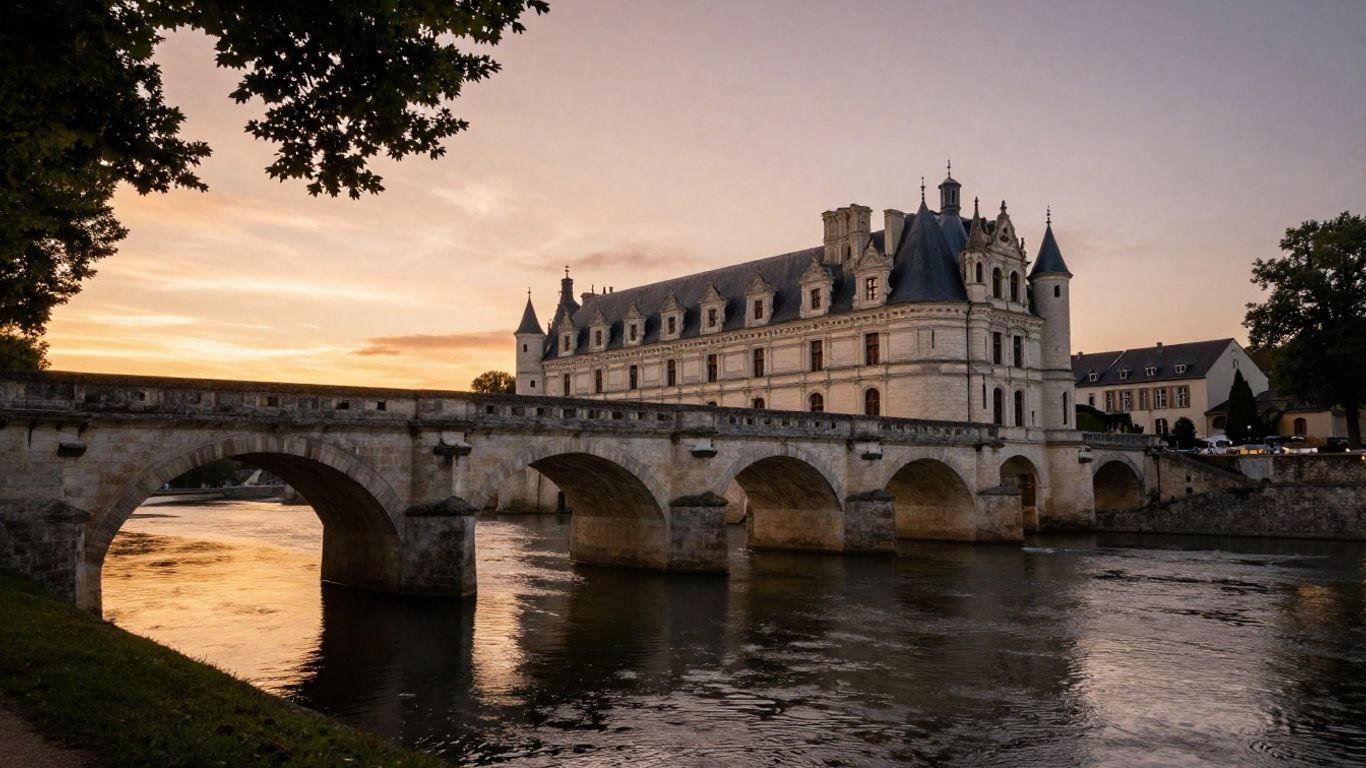
Paths and crossing points can reveal the building’s distinctive extension over the Cher more clearly than a frontal view. As you walk, look for alignments in which the gallery, bridge arches, and river form one continuous line. A slightly oblique angle often shows depth better than a symmetrical position directly opposite the château.
Do not remain fixed on the first attractive frame. The full length of the building may appear only after a short walk, and the strongest light can shift from one end of the façade to the other.
Finding quieter angles away from the main approach
The main approach is convenient, but it is also where many visitors naturally stop. Quieter paths and more distant viewpoints can offer a cleaner composition, with fewer people crossing the foreground and more of the landscape included. Even when the château appears smaller, the surrounding water and trees can make the scene feel more spacious.
Respect barriers and any restricted areas while exploring. A quieter angle is worthwhile only if reaching it does not damage a garden bed, disturb other visitors, or put you in an unsafe position after dark.
How to photograph Château de Chenonceau at sunset
Chenonceau rewards flexibility more than a single camera setting. Its bright sky, pale stone, dark trees, and reflective water can all occupy the same frame. Whether you use a phone or a dedicated camera, work through several compositions and keep checking how quickly the contrast is changing.
Choosing between wide-angle, portrait, and telephoto compositions
A wide-angle view is useful for including the gallery, River Cher, gardens, and sky together. A portrait orientation can make the château feel taller and is often effective when the arches or a path provide vertical structure. A telephoto lens, or a phone’s longer focal setting, isolates windows, roof details, and warm sections of stone.
Take a few frames at each scale rather than assuming the widest view tells the whole story. A tighter composition may communicate the character of the architecture more clearly, while a broad one explains its setting.
Using reflections, leading lines, and architectural symmetry
Reflections work best when the camera is held low enough to give the water a meaningful role. Paths, hedges, river edges, and the gallery itself can act as leading lines toward the center of the frame. Symmetry is compelling at Chenonceau, but a modest shift to one side often adds depth and shows the building’s extension across the river.
Try both an orderly composition and a less centered one. Comparing them on the screen can reveal whether the scene is stronger as a formal architectural study or as a landscape with the château embedded within it.
Managing exposure in bright sky and shadowed stone
The bright sky can cause a camera to darken the château, while exposing for the stone may wash out the warmest parts of the sky. Check the highlights and, where possible, make a small exposure adjustment rather than trusting the first frame. Keeping the sun just outside the composition can also reduce flare and preserve detail.
If your device supports it, capture a range of exposures for later selection. Otherwise, prioritize the part of the scene that matters most: the façade, the reflection, or the color in the sky.
Capturing the transition from golden hour to blue hour
Continue photographing after the sun disappears. As the sky cools, artificial lights or remaining brightness may separate the château from the surrounding trees, and the river can become a darker, smoother band beneath it. Lower contrast can make the image feel more restrained than the saturated warmth of the previous minutes.
Keep the camera steady as shutter speeds lengthen, and avoid moving into unlit areas without checking the path. The transition is brief, but it often produces the most distinctive set of photographs.
Planning a Loire Valley sunset itinerary
Chenonceau fits naturally into a wider Loire Valley route, but the schedule should protect the final light rather than treating it as spare time. Nearby villages, vineyards, and other châteaux may be easy to combine by car, while bicycle routes require more attention to distance and daylight. A practical Loire Valley itinerary can help place Chenonceau within a multi-day journey.
Combining Chenonceau with nearby villages and château visits
Choose earlier stops that do not leave you crossing the region at sunset. A village lunch, a nearby château in the morning, or a vineyard appointment in the afternoon can work well if the final approach to Chenonceau is short. Avoid stacking too many major interiors on the same day; each visit takes longer when you stop for gardens, photographs, and meals.
The most satisfying route usually has one main cultural visit before Chenonceau and a lighter stop afterward or on the following morning. That leaves energy for walking once you arrive.
Deciding whether to arrive by car, tour, or bicycle
A car gives the greatest control over arrival time, but parking and traffic still need to be considered. A guided tour can simplify transport, though its fixed schedule may not match the ideal light. Bicycle travel suits the region’s quieter roads and paths, but the return journey, weather, and fading daylight must be planned carefully.
For cyclists, Loire Valley cycling routes offer useful background on route planning and terrain. Whichever method you choose, confirm the final walking distance from the drop-off or parking area to the viewpoint.
Where to pause for dinner or local Loire Valley wine
Dinner timing can be awkward when sunset is late. Consider eating before the visit if restaurants near the estate close early, or reserve a table for afterward in a nearby town. A local wine stop is best treated as part of the route, not an unplanned detour that risks missing the final light.
The Loire produces a broad range of styles, so Loire Valley wine regions can help you identify a suitable area or tasting focus. Keep the evening practical: never combine wine tasting with driving, and allow extra time for rural roads.
Creating a realistic schedule around closing times
Start with the château’s official hours for your date, then work backward from the time you want to reach the viewpoint. Build in parking, entry, security, interior rooms, garden walking, and a short buffer for delays. If the grounds close before sunset, an exterior public path or a viewpoint outside the estate may be the better plan, provided access is lawful and safe.
Write the schedule as a sequence rather than a list of wishes. The aim is to arrive calmly, with enough time to adapt if a road is busy or the weather changes.
Practical details for an evening visit
Sunset planning at Chenonceau requires more than checking a weather app. Opening hours, ticket arrangements, access rules, and walking distances can change the shape of the evening. The platform Discover France Beyond Paris provides destination guidance and logistical information for travelers preparing to explore France beyond the capital, which is useful context when a rural stop needs more advance planning.
Checking opening hours, seasonal access, and ticket requirements
Check the château’s official visitor information close to your travel date. Look for opening and last-entry times, seasonal changes, ticket requirements, garden access, and any special evening arrangements. Do not rely on a sunset photograph online as proof that every area remains open after dark.
If the timing is tight, buy or reserve tickets in advance when that option is available. Keep a backup plan for an exterior view if the interior or gardens close before the light you want.
Parking, walking distances, and mobility considerations
Allow time between parking, the entrance, the château, the gardens, and the river. Paths may be uneven, and low light can make short distances feel longer. Travelers with mobility concerns should check the current accessibility information directly and ask about the most suitable routes before arrival.
A small amount of research can prevent an uncomfortable final half-hour. It also helps groups agree on a meeting point before everyone spreads out to photograph different views.
What to bring for changing temperatures and low light
Even warm days can become cool beside the river after sunset. Wear layers and shoes with secure soles, and carry a charged phone, water, and any required tickets or booking details. A small flashlight can help with the walk back, but use it discreetly and avoid shining it toward other visitors.
Photographers should also bring spare battery power and enough storage. The changing light encourages repeated attempts, and a nearly full phone or camera can end the session prematurely.
Respecting garden rules and protecting the château grounds
Stay on marked paths, keep away from planted beds, and follow instructions from staff. Do not climb walls, enter closed areas, or place equipment where it blocks a path. The gardens and river edges are shared spaces, not private photo studios.
A careful visit protects the setting for the next traveler and keeps the atmosphere peaceful. It also reduces the chance that an ambitious composition becomes a safety or conservation problem.
Making the most of changing weather and light
A clear forecast is only one version of a good sunset. Clouds can catch warm color, haze can soften distant details, and rain can leave reflective surfaces across paths and water. Rather than waiting for perfect conditions, prepare several ways to use the scene you are given.
Using clouds to add drama without losing warm color
Thin or broken clouds can catch sunlight after the horizon itself disappears, creating bands of peach, gold, or mauve above the château. Expose carefully for the brightest part of the sky so the color remains visible, then look for moments when a gap illuminates the stone. Heavy cloud may produce a shorter glow, so be ready before it arrives.
The building does not need to be fully sunlit to look warm. A bright strip behind the gallery or a small patch across the water can provide enough contrast for a compelling frame.
Adjusting plans for rain, haze, and summer crowds
Rain calls for a shorter outdoor sequence and protection for cameras or phones. Haze may reduce detail in distant views but can make the light gentler and less contrasty. In summer, crowds often mean waiting for a clear section of path or choosing a more distant viewpoint rather than forcing a frontal photograph.
Keep the plan adjustable:
- Move the photography session earlier if rain is approaching.
- Use sheltered architectural details when the river view is uncomfortable.
- Return to a viewpoint after a crowd has passed.
- Leave extra time for slower roads and parking during busy periods.
These changes preserve the purpose of the visit without turning the weather into a reason to abandon it. A flexible schedule is especially valuable in rural areas, where alternatives may be farther apart.
Choosing backup viewpoints when the sun is hidden
When the sun disappears behind cloud, emphasize shape, texture, and reflection instead of color. A river-level composition can make the arches and water carry the image, while a garden path can provide strong geometry beneath a pale sky. Details of windows, towers, and stonework may also work better than a wide sunset scene.
Move toward the most stable visual elements: the gallery’s length, the repeated arches, and the contrast between the château and surrounding trees. These remain effective even when the sky is subdued.
Knowing when blue hour offers better conditions than sunset
Blue hour can be the stronger choice when the sunset itself is washed out or when the warm light creates harsh contrast across the façade. The cooler sky gives the château a quieter outline, and reflections may become more apparent as the water darkens. It is also a natural time to shift from color to silhouette and tonal balance.
Stay only where access is permitted and safe. Once the grounds close or paths become difficult to see, the best decision may be to leave with a smaller set of thoughtful images rather than extend the visit.
Conclusion
A chateau de chenonceau sunset golden hour visit works best when treated as a carefully timed Loire Valley outing: arrive early, explore beyond the obvious view, watch the River Cher as closely as the sky, and leave room for changing weather and closing times. With practical preparation, the château’s bridge architecture, gardens, and evening reflections can turn a short window of light into the most memorable part of the route.
Frequently Asked Questions
What is the best time to arrive at Château de Chenonceau for sunset?
Arrive well before sunset, ideally with enough time to handle parking, entry, and a walk through the interior or gardens. Reaching your preferred viewpoint before golden hour gives you time to adjust without rushing.
Can you watch sunset from inside Château de Chenonceau?
Access depends on the opening hours and rules in effect on your date. Check official visitor information rather than assuming the interior or gardens remain open until sunset.
Which season is best for a sunset visit?
Spring and autumn often offer comfortable conditions and attractive low-angle light, while summer provides longer evenings. Winter can be peaceful and atmospheric but has shorter daylight and colder riverside conditions.
Is the River Cher the best place for photographs?
The river offers strong views of the arches and reflections, but gardens and paths can provide better compositions in crowded, cloudy, or shadowed conditions. Moving between viewpoints usually produces a more complete set of images.
Should I stay for blue hour?
Stay for blue hour if access remains open and you can return safely. The cooler light can create a quieter mood and stronger silhouettes than the final moments of golden hour.
What should I bring for an evening visit?
Bring layers, comfortable shoes, water, a charged phone, tickets or booking details, and extra camera battery power if needed. A small flashlight can help on the return walk where permitted.
How can I fit Chenonceau into a Loire Valley itinerary?
Place Chenonceau late in the day only if the route, transport, and closing time allow a calm arrival. Schedule heavier château visits earlier, keep dinner flexible, and leave a buffer for rural roads and parking.


