
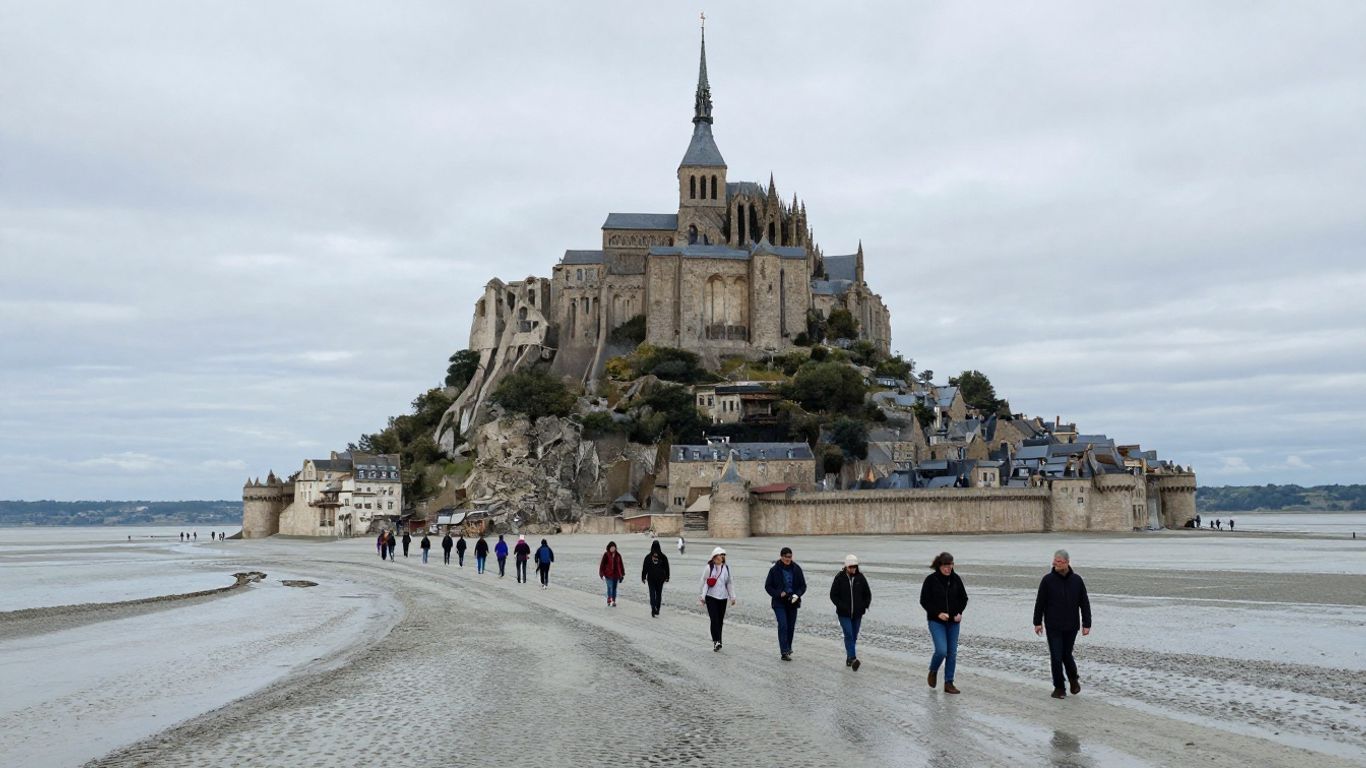
Walking Across Mont Saint Michel Bay: The Guided Tour That Feels Like an Adventure

Key Takeaways
A guided crossing of Mont Saint-Michel Bay combines a demanding walk with changing coastal scenery and a strong sense of place. The experience depends on tides, weather, preparation, and choosing a qualified local guide.
- Expect sand, mud, shallow channels, and exposed terrain rather than a regular beach walk.
- Plan around tide times and follow the guide’s route and instructions throughout the crossing.
- Wear practical footwear, bring water and sun protection, and allow time for a steady pace.
- Compare tours by distance, duration, group size, difficulty, and what the price includes.
- Pair the crossing with the abbey and a quieter visit to Mont Saint-Michel when possible.
What makes a walking Mont Saint Michel Bay tour so memorable
A walking Mont Saint Michel Bay tour gives you a view of the monument that changes with every step. Instead of approaching by road or shuttle, you move through the landscape that has shaped the identity of the mount for centuries. The setting is open, physical, and highly dependent on the day’s conditions. It is an outing to prepare for, not simply an attraction to tick off.
The bay’s changing landscapes and tidal rhythm
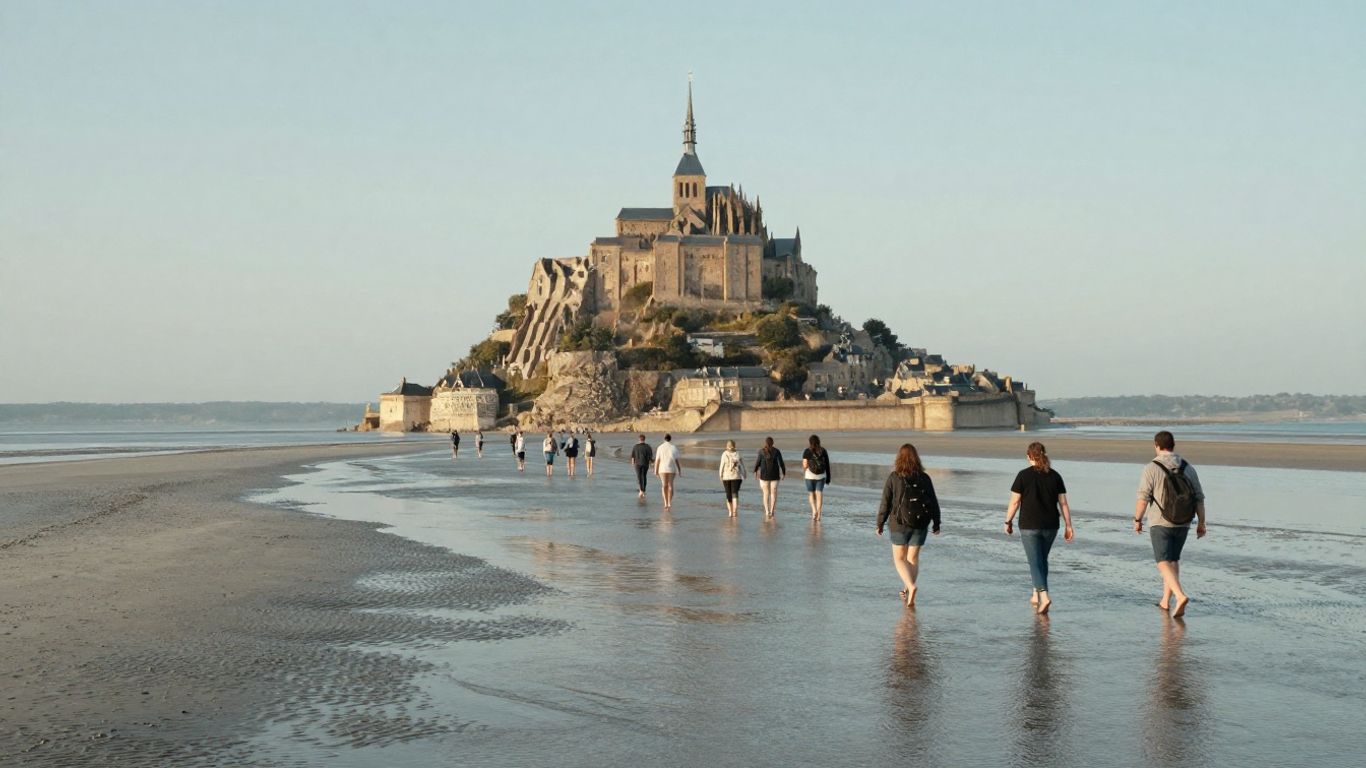
The bay never looks quite the same for long. At one point, the Mont Saint-Michel rises beyond broad sand; later, channels catch the light and water begins to gather across the flats. The tide sets the schedule and changes the mood of the crossing, while wind and cloud alter the colors of the horizon. That steady movement makes the walk feel connected to the place rather than separated from it.
The contrast between mudflats, channels, and open water
The route can pass across several surfaces in a single outing. Firm sand may give way to softer mud, a shallow channel, or a stretch of wet ground that requires shorter, more deliberate steps. These transitions are part of the interest, but they also explain why ordinary beach assumptions do not apply. The bay rewards attention: walkers notice textures underfoot as much as the famous silhouette ahead.
Why the crossing feels more like an expedition than a sightseeing walk
A sightseeing visit usually has a fixed path and predictable footing. A bay crossing is more fluid, with pauses, route adjustments, and moments when the group moves carefully through uneven ground. The sense of shared effort is central to its appeal; strangers often settle into a common rhythm as the monument grows closer. Even a shorter outing can feel like a small expedition because the landscape asks for participation.
The stories of pilgrims, guides, and the Mont Saint-Michel
For centuries, pilgrims traveled toward Mont Saint-Michel, and that history gives the crossing an additional layer without requiring a religious purpose today. A guide can explain how people used the bay, how the mount developed, and why the tidal setting influenced access. The stories are most effective when tied to what you can see: a distant islet, a changing channel, or the walls becoming clearer on the horizon.
How the guided crossing works
There is no single standard crossing, so the details depend on the operator, route, season, and tide. Some walks travel from the mainland toward the mount, while others explore the bay and return to their starting point. Before booking, check where you meet, how you finish, and whether transport is included. The best guided tours of Mont Saint Michel can help you compare walks by comfort, interests, and timing.
Where tours typically begin and end
Common mainland starting areas include Genêts and the Bec d’Andaine, with routes leading toward Mont Saint-Michel or through selected parts of the bay. A one-way walk may finish near the monument, leaving time to explore before returning by shuttle or other arranged transport. Round trips require more stamina and planning. Meeting instructions matter, since parking, transfers, and walking distances can vary considerably.
How guides choose the route based on tides and conditions
Guides assess the tide, weather, visibility, ground conditions, and channels before setting out. They may change the route or timing when conditions are unsuitable, even if the original itinerary looked straightforward. This flexibility is a normal part of a tidal environment, not a failure to follow a plan. A responsible guide puts the group’s safety ahead of completing a particular line across the bay.
What the pace and distance are usually like
Distances vary from short discovery walks to full crossings that can take several hours. The pace is usually moderate, with stops for explanations, views, and sections where the surface requires care. Sand and mud make a given distance feel harder than the same number of miles on a paved trail. Ask whether the route is one-way or round trip and whether the stated duration includes breaks.
Why walking with a local guide matters
A local guide brings practical knowledge that is difficult to acquire from a map alone. They understand where channels form, which surfaces are unstable, and how the bay responds to changing conditions. They also manage the group so that faster walkers do not separate from those who need more time. For visitors unfamiliar with the area, that combination of local interpretation and route judgment is a meaningful part of the experience.
Understanding the tides before you cross
Mont Saint-Michel Bay is shaped by some of the highest tidal ranges in continental Europe. The difference between exposed flats and surrounding water can be dramatic, but the transition is not always obvious to a first-time visitor. Tide tables are useful for planning, yet they do not replace on-site judgment. A guided crossing should always be treated as a time-sensitive activity.
How Europe’s highest tides shape the experience
As the tide recedes, large areas of sand and mud become accessible, revealing channels, ripples, and reflective pools. When the tide returns, the bay’s open character changes quickly and the mount can appear increasingly surrounded by water. Spring tides can create especially noticeable changes, but every outing still depends on the exact conditions that day. For a broader planning view, this guide to the best times to visit Mont Saint-Michel is a useful companion.
Why the bay cannot be treated like an ordinary beach
A beach generally offers a visible shoreline and familiar access points. In the bay, the route may cross ground that looks level but varies greatly in firmness, while the water’s movement can be hard to judge from a distance. There may also be no convenient exit once the group is far from land. Treating the area as an informal solo stroll creates risks that are not obvious in photographs.
The risks of quicksand, channels, and rising water
Quicksand-like areas, slippery mud, unstable river crossings, and incoming water are among the hazards associated with the bay. Weather can add cold, glare, wind, or poor visibility, and water releases in the Couesnon area are another factor near the mount. The safest response is not alarm but discipline: stay with the group, avoid shortcuts, and do not test unfamiliar ground on your own.
How professional guides keep groups on a safe route
Qualified guides use their knowledge of the bay, the tide, and the day’s conditions to select a suitable route. They explain where to step, when to pause, and how to cross shallow water or uneven surfaces. They also watch the group’s pace and adapt when someone is tired. Follow instructions promptly, since a safe route can depend on everyone moving together rather than spreading out.
What to bring and how to prepare
Preparation makes the crossing more comfortable and helps you respond to changing weather. The bay is exposed, so there is limited shade and little protection from wind or sun. Your clothing should tolerate water and mud, and your plans should leave enough time for the full outing rather than only the walking distance. Check the meeting details and the forecast before leaving your accommodation.
Footwear that works for sand, mud, and shallow water
Footwear needs to balance grip, comfort, and ease of cleaning. Some outings are designed for walking barefoot in suitable areas, while others recommend light footwear that can get wet and muddy. Ask the guide what is appropriate for the specific route; a heavy hiking boot may collect sand and become tiring. Whatever you choose, avoid new shoes that have not been tested over several hours.
Clothing and sun protection for exposed terrain
Wear layers that can handle wind and allow easy movement. Quick-drying fabrics are practical, and a hat, sunscreen, and sunglasses help on bright days when the pale sand reflects sunlight. Even in warm weather, bring an extra layer because conditions can feel cooler in open terrain. A small waterproof bag protects phones, wallets, and other items from splashes and damp clothing.
Water, snacks, and other practical essentials
There may be no place to buy supplies once the walk begins, so carry enough water for the expected duration. Simple snacks can help during a longer crossing, especially when the group pauses between more demanding sections. A compact set of essentials is usually more useful than a heavy daypack:
- Refillable water bottle and an easy-to-eat snack.
- Sunscreen, hat, and sunglasses for exposed stretches.
- Waterproof pouch for a phone, documents, and valuables.
- Small towel or spare clothing for wet, sandy feet.
These items address the most common sources of discomfort without adding unnecessary weight. Keep everything secure and leave room for clothing you may remove as the pace warms you up.
Fitness considerations for first-time participants
You do not need to be an experienced hiker, but you should be comfortable walking for several hours on uneven surfaces. Sand demands more effort than pavement, and crossing shallow channels can challenge balance. People with health conditions that could affect their safety should seek medical advice before booking. Tell the guide about relevant limitations in advance so the outing can be assessed honestly.
Choosing the right walking tour
The right tour is the one that matches your physical ability, available time, and interest in the bay. A family may prefer a shorter route with frequent stops, while a confident walker may want a longer crossing. Timing is just as important as distance because the route must fit the tide. Treat the booking page as a starting point and confirm the practical details directly when anything is unclear.
Group tours, private outings, and family-friendly options
Group tours are often a social and cost-conscious choice, with a set departure time and a shared pace. Private outings can offer more flexibility for photography, history, or a slower rhythm, subject to the guide’s availability and the conditions. Families should ask about minimum ages, walking surfaces, and the likelihood of water crossings. A shorter family-friendly walk can be more enjoyable than an ambitious route that leaves children exhausted.
Short guided walks versus full bay crossings
A short walk may focus on the landscape, quicksand demonstration, shoreline, or views around the mount. A full crossing generally involves more distance, more varied ground, and a longer time commitment. Neither is automatically better. Choose the shorter option when you want an introduction or have a packed itinerary; choose the longer one when the physical journey is a central reason for visiting.
How to compare timing, difficulty, and included services
Tour descriptions often use different language for distance and duration, so compare like with like. The table below gives a practical framework for reading those descriptions before you pay.
| Detail to compare | Why it matters | What to confirm |
|---|---|---|
| Start and finish | Determines transfers and the time available at the mount | Meeting point, endpoint, and return transport |
| Duration | Includes walking, pauses, and explanations | Total time away from the meeting point |
| Difficulty | Reflects sand, mud, water, and distance | Fitness expectations and route conditions |
| Group size | Affects pace and personal guidance | Maximum participants and guide ratio |
A tour that looks inexpensive may not include transport or equipment, while a longer listing may include substantial breaks. Reading these details closely makes the final choice more predictable.
Questions to ask before booking
A few direct questions can prevent surprises on the day. Ask who leads the outing, what happens if weather or tides make the route unsuitable, and whether the advertised distance is one way or round trip. Confirm what to wear, whether children can participate, and how long you will have at the monument if the walk ends there. Clear answers are a good sign that the operator takes preparation seriously.
Making the most of your Mont Saint-Michel adventure
The crossing is only one part of a visit to the area. You will get more from it if you plan the day around the tide instead of trying to fit the bay into a rigid sightseeing schedule. Leave time to change, eat, and recover before exploring the mount. If you are building a longer stay, a 2-day Mont Saint-Michel itinerary can help connect the walk with the abbey and nearby accommodation.
The best time of day and season for a crossing
The best departure time is the one that fits the guide’s safe tide window, not necessarily the hour with the prettiest forecast. Morning and evening light can be attractive for photography, but visibility and temperature vary by season. Shoulder-season travel may offer a calmer atmosphere, while summer usually brings stronger visitor demand. Always use the confirmed schedule for your chosen date rather than relying on a general seasonal rule.
What to expect when approaching the monument
The mount changes scale as you cross. At first it may look like a small shape on the horizon; then its walls, towers, and rocky base become increasingly distinct. The final approach can feel slower because the ground remains uneven and the view encourages frequent pauses. Once you reach the monument, rinse or change footwear if needed and be mindful of the transition from open bay to busy visitor areas.
Combining the walk with a visit to the abbey
Check the abbey’s opening hours and admission arrangements before choosing a crossing time. A long walk followed by stairs and narrow medieval lanes can be tiring, so allow a realistic break between the two activities. Some visitors prefer to tour the abbey first and walk later, while others enjoy earning the arrival before exploring inside. For crowd management, consider practical advice on visiting Mont Saint-Michel without crowds, especially if your schedule allows an early or late visit.
Responsible ways to protect the bay’s natural environment
The bay is a living coastal system, not just a scenic route. Stay on the guide’s path where requested, avoid disturbing birds or other wildlife, and take every item of waste back with you. Do not remove shells, plants, or unusual stones, and keep noise low when the group passes sensitive areas. Respecting access guidance helps preserve the landscape for residents, wildlife, and future walkers.
Conclusion
Walking across Mont Saint-Michel Bay is memorable because the journey is shaped by the tide, the ground, and the people who know the landscape well. With a suitable route, practical clothing, realistic expectations, and a qualified guide, the crossing becomes a rewarding way to approach one of France’s most distinctive landmarks.
Frequently Asked Questions
Is it safe to walk across Mont Saint-Michel Bay?
It can be safe when the outing is led by a qualified local guide and participants follow instructions. The bay has changing tides, channels, unstable ground, and weather-related hazards, so walking alone is not advisable.
How long does a Mont Saint-Michel Bay crossing take?
The duration depends on the route, distance, tide, pace, and number of stops. Short walks may take around a couple of hours, while longer one-way or round-trip crossings can occupy much of a day.
Do I need to be very fit for the crossing?
You do not need advanced hiking experience, but you should be able to walk steadily for several hours on sand and uneven ground. Choose a shorter route if you are uncertain about your endurance or balance.
What shoes should I wear for the bay walk?
The best choice depends on the route and the guide’s instructions. Some walks may suit bare feet, while others call for light footwear that can get wet and muddy. Confirm the recommendation before departure.
Can children join a guided bay crossing?
Some tours welcome children, but age limits and route suitability vary. Ask about distance, water crossings, footing, and the expected pace before booking, and choose an outing that matches the child’s stamina.
Should I visit the abbey before or after the walk?
Either order can work. Consider the crossing’s tide window, the abbey’s opening hours, and your energy level, then leave enough time for changing clothes and resting between activities.
What happens if the weather or tide changes?
A responsible operator may adjust the route, delay the departure, or cancel when conditions are unsuitable. Confirm the operator’s rescheduling and refund policy before booking so you know what to expect.


