
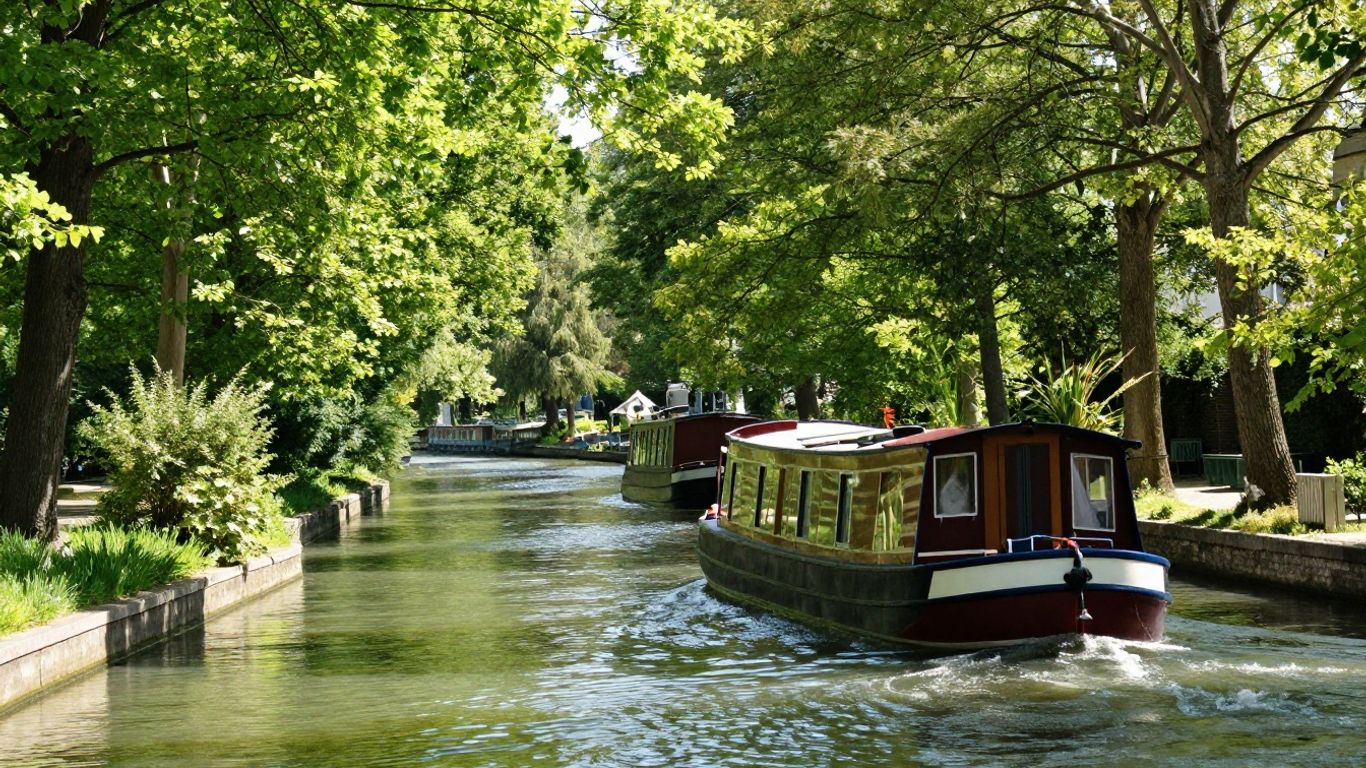
Exploring the Canal de Garonne: A Complete Travel Guide

This Canal de Garonne travel guide kind of explores a lovely waterway in southwest France, giving you a calm run along it through quaint villages and scenic country side, also historic towns, which feels surprisingly relaxing. No matter if you choose cycling, strolling, or even a Canal de Garonne boat trip, this Canal de Garonne travel guide is made to help you really taste the region’s natural beauty, local culture, and those little hidden gems you would not notice at first.
Traveling the Canal de Garonne is a great way to see a different side of France. Here are some highlights you shouldn’t miss:
Key Takeaways
- The Canal de Garonne links Toulouse and Bordeaux, passing through many quiet towns.
- It’s known for unique engineering like aqueducts and the Montech Water Slope.
- The route is perfect for cycling, with flat paths and pretty countryside.
- Food and wine along the canal are a big part of the experience.
- You’ll find both big cities and small villages, each with their own charm.
Discovering the Canal de Garonne: A Historic Waterway
The Canal de Garonne: An Overview
The Canal de Garonne, kind of a big deal waterway in the southwestern part of France, runs for roughly 120 miles. It starts right where the Canal du Midi runs out in Toulouse, then it trails west, and it keeps going until it reaches the tidal Garonne River near Castets-en-Dorthe. That link was historically really important, because it let barges get to the lively port of Bordeaux, but they often had to linger, just waiting for the proper tide to make that last push, and well, you know how river timing can be.
Construction on this impressive feat of 19th-century engineering didn’t start until 1838, quite a bit after its older cousin, the Canal du Midi, had already been in use for decades. Like many canals across France, its commercial importance for moving goods eventually lessened with the rise of the railway.
Connecting Two Seas: The Canal des Deux Mers
This canal is pretty much a key slice of a bigger system, the Canal des Deux Mers, which I mean it sounds fancy but it’s real enough. Basically the route lets boats move from the Mediterranean to the Atlantic without having to swing around the Iberian Peninsula. That old trip, you know, it was once all sorts of shaky and risky, what with pirates hanging around, or at least that’s how people tell it.
The whole Canal des Deux Mers route, joining the Canal du Midi and the Canal de Garonne, runs close to 370 miles, so the Canal de Garonne part becomes a rather distinctive way to wander through the south of France. It’s not just travel either, it links lively cities, and you get this slow peek into local history, and the culture too.
19th Century Engineering and Its Legacy
Built in the mid-19th century, the Canal de Garonne showcases some remarkable engineering for its time. Unlike the more winding Canal du Midi, this canal features many straighter sections, often running parallel to the railway line between Toulouse and Agen. This region is known for its abundant fruit orchards, and in early summer, the canal banks are often lined with bright yellow irises. The canal is also home to some unique structures, including the world’s first “water slope” at Montech, built in 1974 to replace a series of locks.
Additionally, impressive aqueducts carry the canal over the Tarn River near Moissac and the Garonne River itself at Agen, demonstrating the ingenuity of its creators. Exploring these structures provides a tangible connection to the past and the ambition behind this waterway. You can find more information about cycling routes along this historic path.
Navigating the Canal: Engineering Marvels and Natural Beauty

Aqueducts and Water Slopes: Innovative Crossings
The Canal de Garonne isn’t only a strip of water, it feels more like a proof of 19th-century ingenuity,with those neat little fixes for stubborn terrain. Along the way you see remarkable aqueducts that lift the canal across rivers,so the boats can float over the water beneath them. One of the most eye-catching examples is the aqueduct close to Moissac, it crosses the Tarn River, and it really stands out.
It’s quite a sight to see the canal seemingly floating in the air. Then there are the water slopes, like the one at Montech, which were designed to overcome significant elevation changes, acting as a sort of elevator for boats. These structures show how engineers tackled challenges to create a continuous waterway.
The Montech Water Slope: A Unique Bypass
The Montech Water Slope is a really unique piece of engineering. Built in 1974, it was designed to bypass a series of five locks that were spread out over a mile and a quarter. Imagine a giant, inclined bathtub that slides uphill, carrying a boat with it. That’s essentially what it did, lifting boats by about 43 feet. It was a fascinating alternative to traditional locks.
Unfortunately, it had some mechanical troubles back in 2009, and it’s been out of service since then, though there’s talk of bringing it back to life or reawakening it. Honestly it’s worth checking out if you get the chance, even if it’s only for admiring the design, the whole arrangement, and how it looks.
Riverside Scenery and Flora
Beyond the impressive structures, the canal banks themselves are a big part of the experience. As you keep going, especially between Toulouse and Agen, you’ll notice the landscape feels pretty fertile, like unexpectedly so. It’s a large fruit growing zone, so you can probably expect a lot of orchards. By early summer, the canal banks really start to “wake up” with bright yellow irises, and that small burst of color kind of follows you along the way. It is a calm contrast to all those engineering feats, and it gives you a moment to absorb the natural charm of the French countryside. Honestly it makes for a really agreeable trip, whether you’re on a boat, or cycling alongside, just at your own rhythm. You can even look for pretty cycling itineraries along the towpaths, for instance the ones connected with the Canal des Deux Mers route.
Walking along the Canal de Garonne feels like a mix of human doing and quiet nature’s charm, kinda, you know. You’ll see the big aqueducts, and then right after that, there is this simple beauty, with little wildflowers showing up along the banks. Honestly there’s a lot to take in, and it keeps going.
Bordeaux: The Northern Gateway to the Canal
Bordeaux. Saying the name kind of brings up these images of grand architecture, world-class wine, and this polished, rather sophisticated vibe. It’s no surprise that this lively city acts as the official starting point for all kinds of trips along the Canal de Garonne. Before you even think about, setting off on the waterway, pause a moment and really absorb what makes Bordeaux feel so special. It’s one of those places that fully lives up to its reputation as a gateway, if you know what I mean.
Exploring the UNESCO World Heritage City
Honestly, just walking around Bordeaux is kind of an experience on its own. The city center, it’s a UNESCO World Heritage designated zone, and you see why pretty quickly. Picture elegant 18th-century architecture along those broad boulevards, then mixed in with older medieval lanes that basically nudge you to explore, right then and there. Also the Garonne River waterfront has had this full-on revitalization, so you get lovely promenades and those striking views, especially as the sun is dropping. You could stay for days just drifting along, stumbling on little tucked-away squares, and staring at the raw architectural grace, it’s almost unreal.
- Place de la Bourse: Famous for its reflecting pool, it’s a photographer’s dream.
- Grand Théâtre: An absolute masterpiece of neoclassical architecture.
- Saint-André Cathedral: A significant historical and religious landmark.
- The Chartrons district: Known for its antique shops and wine merchants.
Bordeaux is a city that wears its history kind of proudly, blending a rich past with a lively modern pulse. It’s a place where you can feel the centuries of trade and culture that have kind of shaped it, from Roman origins to being a global wine capital, and there’s always this restless, almost current vibe in the air.
A Taste of Bordeaux: Wine and Gastronomy
Let’s be honest, you kinda can’t arrive in Bordeaux without, at least, indulging in its most famous export: wine. The area around the city is among the best known wine-producing regions in the world. And whether you’re a hardcore oenophile or you just like a decent glass, there are, basically endless chances to taste local vintages. Think Saint-Émilion, Pomerol, and the different Côtes de Bordeaux.
But, beyond the wine, the food atmosphere is really great too. You should absolutely go for the cannelé, a little caramelized pastry with a thick custardy center, and it’s often infused with rum and vanilla. It’s the perfect bitty treat to enjoy with coffee or, naturally, alongside a glass of local wine. Wander through the markets and the bistros and it turns into a proper culinary adventure.
Starting Your Journey from the Garonne River
Your trip on the Canal de Garonne really starts when it links up with the Garonne River. The harbor zone, especially near Castets-en-Dorthe, used to feel like a lively hub, where barges would sit and listen for the right tides, so they could go farther. Even if the regular trade has shifted over the years, the tie to the river still matters a lot.
Many cycling routes, like those offered for exploring wine regions, start right here, utilizing the towpaths that run alongside the canal. It’s a great place to get your bearings, maybe rent a bike, and kind of get set for the calm journey ahead. The move from the broad, tidal Garonne to the smaller canal feels like a soft intro to the water route that’s coming next.
Toulouse: The Southern Terminus and ‘The Pink City’
Toulouse, usually called ‘La Ville Rose’(The Pink City) because the red brick buildings look so distinct, basically sits at the southern end of the Canal de Garonne. This energetic place, France’s fourth biggest city, is right on the banks of the Garonne River and it has a past that goes back to ancient times, so you kind of feel layers everywhere. It feels like old world charm mixed with a more lively, modern momentum and yeah it’s a great stop to finish up your canal journey, or if you prefer, to kick off exploring the wonders of southwestern France.
Architectural Splendors of Toulouse
Toulouse’s architecture kinda tells a story about its rich past, like really. You’ll notice the city is dotted with some stunning examples of Romanesque and Renaissance styles, if you look for them. The Basilica of Saint-Sernin is a must see, it’s the biggest Romanesque church in Western Europe and also a major stop along the pilgrimage route to Santiago de Compostela. Another great piece is the Jacobins convent, with that special palm-tree-like vaulted ceiling, it’s honestly a bit mesmerizing. And then there are lots of beautiful “hôtels particuliers” (grand private mansions) from the Renaissance era, showing the wealth and the influence the city once had, long ago. If you just wander around the streets, you’ll be surprised again and again, by how beautiful those historic buildings are.
Cultural and Commercial Hub
Beyond its historical places, Toulouse is like a hectic point for culture and trade, you know. It’s also a big university city, so the energy stays young and kinda fast moving, or so it seems. In the daytime you can wander through lively squares, like the Place du Capitole, good for watching folks and just absorbing the local mood, in a relaxed way. And then there are gardens here and there, it’s nice to slip away, a quiet little pause between everything. Toulouse also carries an artistic kind of flair, maybe because of that student crowd, plus its role as a center for innovation, it all mixes together a bit, somehow.
Toulouse has this special mix of history, culture, and everyday modern rhythm, all hanging around the background of its well known pinkish buildings. It’s kinda the sort of place that asks you to wander, even if you’re after old religious structures, animated markets, or just sitting with a coffee in some bright sun soaked square.
The Airbus Aeroscopia Museum
If you’re into aviation at all, you might really want to stop by the Aeroscopia Museum, because honestly it’s pretty remarkable. It sits not far from the Toulouse-Blagnac airport and it kinda covers the history of flight, but with an extra emphasis on what Airbus has achieved. There’s a chance to get right up close with several impressive aircraft, like the famous Concordes, and also the rather unusual Super Guppy transporter. The whole place feels like a window into how flight works and why Toulouse is such a major aerospace hub, it’s kind of a quiet but strong reminder of that role. You can spend a solid afternoon there, especially if you’re traveling with family, or even if you just want something calm and interesting. Also, if you plan to push on further south, you can look up more info about traveling to Cap d’Agde.
Charming Towns and Villages Along the Waterway
As you drift along the Canal de Garonne, you’ll encounter a string of delightful towns and villages, each with its own unique character and history. These aren’t just places to stop for supplies; their destinations offering a glimpse into the region’s past and present.
Agen: Prune Capital and Rugby Hub
Agen, the provincial capital, is a good-sized town with a notable feature: the Pont-Canal d’Agen. This impressive stone aqueduct, stretching nearly a third of a mile, gracefully spans the Garonne River with 23 arches. Agen holds the unofficial title of France’s prune capital, thanks to its vast orchards of plum trees, a legacy brought back from the Middle East centuries ago. For sports fans, Agen is also a major rugby center, with its local team, SU Agen, often competing at the highest professional level.
Moissac: Abbey and Floral Locks
Many consider Moissac to be one of the most captivating stops on the canal. Its charm is amplified by the staircase of locks, which are beautifully decorated with flowers. The town is also home to the ancient Abbey of St-Pierre, dating back to the 7th century. This architectural marvel showcases both Romanesque and Gothic styles, featuring a particularly striking carved doorway on its south side. It’s also the birthplace of M. de la Mothe Cadillac, the founder of Detroit. You can find accommodations in Sète if you plan to explore further afield.
Auvillar: Historic Port and Grain Market
Auvillar, a village that feels like a step back in time, was once a bustling port. Its most distinctive feature is the circular grain market, a unique structure where you can still see old metal and stone grain measures. The Church of St-Peter, originally built in 1186, has been rebuilt after damage during the Revolution and is recognized as a historically significant monument. Wandering through Auvillar offers a peaceful experience, far from the usual tourist crowds.
During a Canal de Garonne boat trip, travelers can discover canal towns that preserve elements of their past, from ancient fortifications to traditional markets, offering a rich blend of history and culture.
Exploring Historic Bastides and Riverside Communities
As you journey along the Canal de Garonne, you’ll encounter a string of charming towns and villages, many of which are historic bastides. These fortified towns, often built in the Middle Ages, offer a glimpse into the region’s past with their well-preserved architecture and unique character. They’re not just historical relics, though; many are still vibrant communities with local markets and traditions.
Nérac: Royal Residence and Literary Inspiration
Nérac, nestled on the banks of the Baïsse River, has a rich history tied to royalty and literature. It was once the childhood home of King Henri IV, and some even suggest its riverside setting inspired Shakespeare’s “Love’s Labor’s Lost.” Wandering through Nérac, you’ll find a mix of half-timbered and stone houses lining its quaint streets. Don’t miss a stroll through the beautiful Parc Royal of Queen Margot, a lovely spot to relax.
Vianne: Fortified Town and Glassmaking Heritage
Another gem on the Baïsse River is Vianne. This fortified town, established in 1284, still boasts its original walls, complete with corner towers and gatehouses. Vianne gained fame for its glassworks, which spurred related crafts like earthenware production and glass blowing. The town’s commitment to preserving its heritage is evident as you explore its historic center.
Buzet-sur-Baïsse: Roman Roots and Viticulture
While not a bastide in the strictest sense, Buzet-sur-Baïsse holds its own historical significance, with roots tracing back to Roman times. Today, it’s more widely recognized for its viticulture, producing wines that are a staple of the region’s gastronomy. The area around Buzet offers a look at traditional French rural life, with vineyards stretching across the landscape.
These riverside communities offer more than just picturesque views; they are living museums, each with a story to tell about France’s medieval past and its enduring connection to the waterways. Taking the time to explore them provides a deeper appreciation for the region’s cultural tapestry.
Here’s a quick look at some key features:
- Nérac: Royal history, literary connections, charming streets, Queen Margot’s park.
- Vianne: Medieval fortifications, historic walls and gates, renowned glassmaking.
- Buzet-sur-Baïsse: Ancient origins, significant wine production, rural landscapes.
Exploring these towns is a fantastic way to break up your journey and experience the authentic Southwest France beyond the canal itself.
Cycling the Canal de Garonne: Routes and Experiences
Cycling along the Canal de Garonne is a fantastic way to see the South of France. The towpaths, often shaded by plane trees, offer a peaceful and relatively flat route, making it accessible for many cyclists. You can choose to do the whole stretch from Bordeaux to Toulouse, or just a section. It’s a journey that connects history, nature, and delicious food.
Linear Routes from Bordeaux to Toulouse
This is the classic route, covering the entire length of the canal. It’s typically done over 7 days, giving you time to enjoy the scenery and stop in the charming towns along the way. You’ll start in Bordeaux, a city known for its wine and beautiful architecture, and end in Toulouse, the ‘Pink City’. The path is mostly flat, with some gentle inclines, making the Canal de Garonne route easy to follow while enjoying the surrounding countryside. It’s a great way to experience the diversity of the region, from vineyards to agricultural lands.
| Day | Start | End | Distance (approx.) |
| 1 | Bordeaux | Cadillac/Podensac | 48 km |
| 2 | Cadillac/Podensac | Meilhan-sur-Garonne | 45 km |
| 3 | Meilhan-sur-Garonne | Agen | 70 km |
| 4 | Agen | Moissac | 47 km |
| 5 | Moissac | Castelsarrasin | 40 km |
| 6 | Castelsarrasin | Toulouse | 70 km |
| 7 | Departure from Toulouse | – | – |
Cycling Through Vineyards and Countryside
As you pedal, you’ll pass through areas famous for their wine production. Keep an eye out for vineyards stretching out on either side of the canal. The landscape changes as you move south, offering rolling hills and open fields. You’ll encounter small villages that seem untouched by time, where you can stop for a coffee or a local pastry. The air is often filled with the scent of fruit trees, especially in the Agen region, known for its prunes and other produce. It’s a very different experience from the more rugged terrain you might find elsewhere, like the Gorges du Verdon.
Family-Friendly and Easy Cycling Options
Many sections of the Canal de Garonne are perfect for families or those looking for a more relaxed cycling experience. The towpaths are generally well-maintained and free from car traffic. You can opt for shorter day trips or choose a tour that includes luggage transfer, which makes the journey much easier. Many companies offer bike rentals, including electric bikes, which can be a great help on longer stretches or if you encounter a slight incline. The flat nature of the canal path means you can focus on enjoying the views and the atmosphere, rather than worrying about strenuous climbs. It’s a wonderful way to introduce children to cycling holidays, with plenty of opportunities for picnics and breaks.
The beauty of cycling the Canal de Garonne lies in its simplicity and accessibility. The path is largely dedicated to cyclists and pedestrians, offering a safe and serene environment. You’re not just cycling; you’re traveling through a living landscape dotted with historical sites and agricultural richness.
If you’re looking for a different kind of French waterway adventure, you might also consider the Canal du Midi, another historic route in the south of France.
Gastronomic Delights of the Southwest
Southwestern Cuisine: Cassoulet and Local Flavors
When you travel along the Canal de Garonne, you’re not just seeing beautiful scenery and historic towns; you’re also stepping into a region with a seriously delicious food scene. The Southwest of France is famous for its hearty, comforting dishes that are perfect after a day of exploring. Think rich flavors and ingredients that really speak of the land.
One dish you absolutely have to try is cassoulet. It’s a slow-cooked casserole made with white beans, duck confit, pork sausages, and often lamb. Each town and even each family might have their own slight variation, but the core idea is a deeply satisfying, savory meal. It’s the kind of food that warms you up from the inside out.
Beyond cassoulet, keep an eye out for other local specialties. Duck is a big deal here, often prepared as confit (slow-cooked in its own fat) or magret (a thick duck breast steak). You’ll also find plenty of charcuterie, local cheeses, and fresh produce depending on the season. Don’t be afraid to ask locals for their recommendations – they’re usually very proud of their regional food.
The culinary traditions of this area are deeply tied to the agricultural bounty of the region, emphasizing slow cooking and robust flavors that have been passed down through generations.
Bordeaux’s Cannelé: A Sweet Treat
No trip to Bordeaux, the northern gateway to the canal, would be complete without sampling its signature sweet treat: the cannelé. These small, dark, cylindrical pastries have a unique texture – a thick, caramelized crust on the outside and a soft, custardy interior. They’re flavored with rum and vanilla, giving them a distinctive aroma and taste.
Originally, these pastries were made by nuns using leftover egg yolks from winemaking and flour. The distinctive fluted copper molds they’re baked in are key to achieving that perfect crust. You can find cannelés in bakeries and patisseries all over Bordeaux. They make a fantastic breakfast item or an afternoon pick-me-up with a coffee. While they are a specialty of Bordeaux, you might find variations elsewhere, but the authentic taste is best experienced right in the city.
The Wine Culture of the Garonne Region
It’s impossible to talk about the Garonne region without mentioning its world-renowned wines. Bordeaux, of course, is a name synonymous with fine wine. The vineyards stretch out on either side of the river, producing a vast array of reds, whites, and rosés. You’ll see famous appellations like Saint-Émilion, Pomerol, and Médoc mentioned frequently.
As you travel along the canal, you’ll often cycle through or pass by vineyards. Many wineries, or châteaux, welcome visitors for tours and tastings. It’s a great way to learn about the winemaking process and sample some of the local produce. Even if you’re not a huge wine connoisseur, understanding the importance of wine to the local economy and culture adds another layer to your journey. Consider visiting a local vineyard for a tasting; it’s a quintessential Southwest France experience.
Here are some key wine regions to be aware of:
- Bordeaux Supérieur: Often offers good value with richer flavors.
- Côtes de Bordeaux: A collective term for several appellations producing diverse styles.
- Saint-Émilion & Pomerol: Famous for their Merlot-dominant red wines.
- Graves & Pessac-Léognan: Known for both powerful reds and elegant dry whites.
Don’t forget that wine is often paired with local food. A hearty cassoulet goes wonderfully with a robust red from the region, while lighter dishes might pair well with a crisp white or rosé.
Practicalities for Your Canal de Garonne Adventure

Accommodation Options: Hotels and B&Bs
Finding a place to stay along the Canal de Garonne is pretty straightforward. You’ll find a mix of options, from cozy bed and breakfasts (chambres d’hôtes) run by locals to more standard hotels. Many places are geared towards cyclists and boaters, so they often have secure storage for bikes or easy access for boats. Booking ahead, especially during peak season (late spring to early autumn), is a good idea. Some accommodations are right on the canal path, while others might be a short walk or bike ride into a nearby village. Don’t be afraid to ask your hosts for local tips; they often know the best spots for a meal or a scenic view.
Travel Logistics: Luggage Transport and Support
If you’re cycling, one of the biggest conveniences is luggage transport. Many tour operators offer this service, meaning your bags are moved from one accommodation to the next while you cycle with just a daypack. This makes a huge difference, especially on longer days or if there are hills involved. The weight limit is usually around 20kg per person, so pack smart. For those traveling independently, you might need to arrange this yourself, perhaps by using local taxi services or asking your accommodation if they can help. A 24/7 bilingual emergency hotline is also often provided by tour companies, which can be a lifesaver if you run into unexpected trouble with your bike or need assistance.
Best Times to Visit: Spring to Autumn
The canal is generally accessible and enjoyable from spring through autumn.
- Spring (April-May): This is a beautiful time with wildflowers blooming along the towpaths and pleasant temperatures for cycling or boating. It’s less crowded than the summer months.
- Summer (June-August): Expect warm to hot weather, perfect for cooling off on the water. This is also the busiest period, so booking accommodation and services in advance is highly recommended.
- Autumn (September-October): The fall colors are lovely, and the temperatures are usually mild and comfortable. The crowds thin out after August, making it a more relaxed experience.
Avoid the very early spring or late autumn if you prefer warmer weather, as temperatures can be cooler and some services might have reduced hours.
Here’s a quick look at typical conditions:
| Month | Average Temperature (°C) | Crowds | Notes |
| April | 10-18 | Low | Blooming flowers, cooler evenings |
| May | 15-22 | Medium | Pleasant weather, good for activities |
| June | 18-26 | High | Warmest, ideal for water activities |
| July | 20-28 | Peak | Hottest, busiest period |
| August | 19-27 | Peak | Still very warm, busy |
| September | 16-24 | Medium | Milder, beautiful autumn colors |
| October | 12-19 | Low | Cooler, fewer crowds, some closures |
Beyond the Canal: Exploring the Garonne River
While the Canal de Garonne offers a wonderfully serene journey, it eventually meets the Garonne River, opening up a different kind of exploration. This isn’t just any river; it’s a significant waterway with its own history and character, especially as it flows towards the Atlantic.
The Tidal Garonne River and Bordeaux Port
The Garonne River, particularly the stretch near Bordeaux, is tidal. This means its flow direction and water level change with the ocean’s tides. For centuries, this tidal nature was key to commerce. Barges coming from the Canal de Garonne would wait at Castets-en-Dorthe for the right tide to carry them the rest of the way to Bordeaux. The port of Bordeaux itself is a massive hub, historically vital for trade and still active today. It’s a place where you can really feel the pulse of the region’s connection to the wider world.
Historical Significance of River Navigation
Long before canals were even a dream, rivers were the highways of France. The Garonne has been used for transport since Roman times. Goods, people, and ideas traveled along its currents. This river played a huge role in the development of towns and cities like Bordeaux and Toulouse. It connected inland areas to the sea, making them prosperous centers.
- Ancient Trade Routes: Evidence suggests early settlements thrived due to river access.
- Medieval Commerce: Guilds and merchants relied heavily on river transport.
- Industrial Era: Steamships and larger vessels increased capacity, though eventually faced competition from railways.
Garonne’s journey from the Pyrenees to the Atlantic is a story of natural power shaped by human ingenuity, a constant flow of life and trade that has defined southwestern France for millennia.
Connecting to the Atlantic Ocean
Ultimately, the Garonne River flows into the Atlantic Ocean. This connection is what makes the Canal des Deux Mers route so significant – it provides a way to travel between the Mediterranean and the Atlantic without having to sail all the way around Spain. The river’s mouth is a gateway to vast maritime possibilities. Exploring this connection offers a broader perspective on the region’s geography and its historical role in exploration and trade. It’s a reminder that the canal is just one part of a much larger, ancient network of waterways that have shaped history. For those interested in the broader waterways of France, understanding the role of rivers like the Garonne is key.
Conclusion
The Canal de Garonne is a surprising find in southwest France. It’s not as famous as other waterways, but it has a lot going for it. You get a mix of history, tasty food, and quiet towns. Whether you’re cycling, boating, or just walking along the banks, there’s always something interesting to see or do. From the big cities like Bordeaux and Toulouse to the small villages and markets, this canal lets you slow down and enjoy the simple things. If you want a trip that’s both relaxing and full of discoveries, the Canal de Garonne might just be the perfect route.
Frequently Asked Questions
Where does the Canal de Garonne start and end?
It starts in Toulouse and ends near Bordeaux, connecting the two cities.
Can I cycle the whole length of the canal?
Yes! There are bike paths along the canal, and many people cycle from Bordeaux to Toulouse.
Is the Canal de Garonne good for families?
Yes, the paths are mostly flat and safe, making it great for families with kids.
What towns should I visit along the way?
Agen, Moissac, and Auvillar are popular stops. Each has something different to see.
When is the best time to travel the canal?
Spring to autumn is best, when the weather is nice and the scenery is colorful.
Do I need to book hotels in advance?
It’s a good idea, especially in summer. There are hotels and B&Bs along the route.
Can I try local food and wine on the trip?
Yes! The region is famous for wine, cannelé cakes, and dishes like cassoulet.
Is the canal busy with boats?
It’s quieter than other French canals, so you won’t see too many boats at once.


