

Things to Do in Aix-en-Provence: Markets, Fountains and Day Trips

Key Takeaways
Aix-en-Provence is easy to explore at a relaxed pace, with much of the old town, its markets, and several Cézanne landmarks close together. Plan a little ahead if you want to add countryside or coastal excursions.
- Walk the Cours Mirabeau, Mazarin Quarter, and old town lanes.
- Visit a market for produce, antiques, flowers, or crafts.
- Look for fountains as you move between squares and streets.
- Make time for Cézanne’s studio, city landmarks, or a museum visit.
- Choose day trips and transport based on how much time you have.
Explore the old town on foot
Aix-en-Provence is a rewarding city to explore without a rigid route: its grand boulevard, compact lanes, and lively squares sit close together. Start with the main sights, then leave space to turn down a street that catches your eye. For a broader overview of the city’s neighborhoods and practical details, see this Aix-en-Provence travel guide.
Start at the Cours Mirabeau
The Cours Mirabeau is a natural place to begin, with a broad, tree-lined promenade and handsome façades that give the boulevard its distinctive scale. Walk it at an easy pace, looking up at the architecture as well as toward the cafés and shops at street level. It also makes a useful reference point for finding your way between the old town and the Mazarin Quarter. The avenue is more than a route across town; it is a place to pause and watch daily life pass by.
Wander the lanes of the Mazarin Quarter
South of the Cours Mirabeau, the Mazarin Quarter has a more regular street plan and a quieter feel than the winding lanes of the older center. Its historic buildings and small squares reward a slow walk, especially if you enjoy noticing doorways, stonework, and details that are easy to miss at a faster pace. Keep the route flexible rather than trying to see every street. The neighborhood is best appreciated in short, unhurried stretches.
Visit Saint-Sauveur Cathedral and its cloister
Saint-Sauveur Cathedral brings together different architectural periods, making it a worthwhile stop for visitors interested in the city’s history as well as its streetscape. Step inside if it is open, and give yourself time to look around rather than treating the cathedral as a quick photo stop. The cloister offers a quieter contrast to the surrounding lanes. Opening arrangements can vary, so check locally before making it the anchor of a tight schedule.
Pause at a café on Place de l’Hôtel de Ville
Place de l’Hôtel de Ville is a pleasant place to take a break between walks, with the town hall and surrounding streets close at hand. A café stop gives you time to watch the square change through the day and decide what to explore next. A slower pace works well here: Aix is a city where the small pauses often become part of the visit. If you are planning lunch, check opening hours and menus before settling in.
Browse Aix-en-Provence’s markets
Markets are a practical way to see what is in season and get a feel for the city’s everyday rhythm. Depending on the day, stalls may focus on fresh food, flowers, or secondhand finds, so it helps to know what you are hoping to browse. Bring a reusable bag and allow time to wander rather than arriving just before you need to leave. Discover France Beyond Paris provides destination guidance for travelers exploring places across France, including Aix-en-Provence.
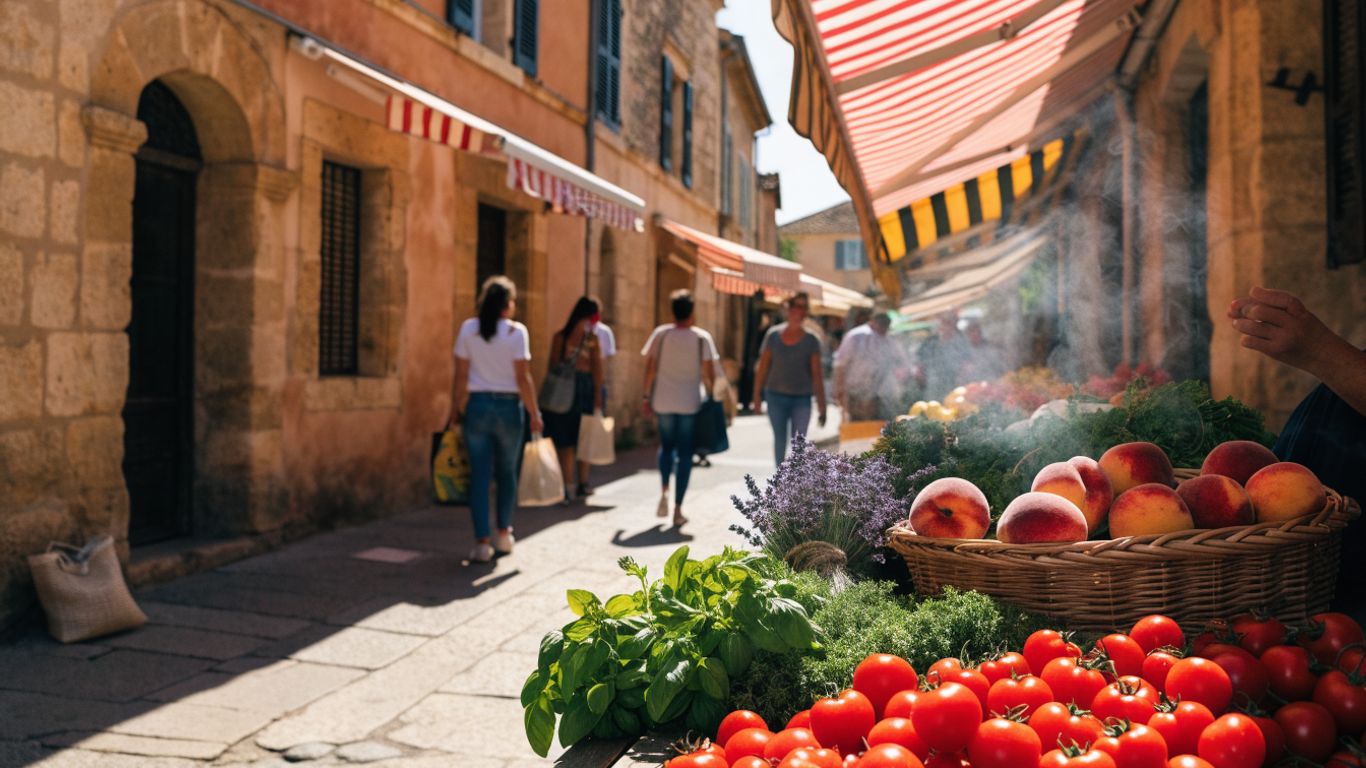
Find produce and local specialties at the daily markets
Produce stalls are a good reason to visit early in the day, when there is time to browse before lunch plans or sightseeing take over. Look for seasonal fruit and vegetables alongside regional specialties, then ask politely about unfamiliar items if you are curious. Market offerings change with the season and the individual stall, so treat this as a chance to explore rather than a fixed shopping list. The table below gives a simple way to match your market visit to what you want to find.
| What you are looking for | Where to focus | A useful approach |
|---|---|---|
| Fresh fruit and vegetables | Produce stalls | Choose what looks seasonal |
| Regional food items | Specialty vendors | Ask about ingredients or storage |
| Flowers | Flower stalls | Browse before choosing a bouquet |
| Secondhand treasures | Brocante and antique stalls | Take time to compare condition |
A little flexibility makes the visit easier: stall selection and availability can change from one market day to another. If you want to explore beyond Aix, this guide to markets across Provence offers ideas for other stops in the region.
Shop for antiques and brocante finds
Antique and brocante stalls invite a slower kind of browsing. You may come across household objects, decorative pieces, or small items with signs of a previous life, but stock is unpredictable and prices vary. Check an item carefully before buying, and consider how you will pack or transport it before committing. If antiques are a main reason for your visit, leave enough time to browse without rushing to another appointment.
Look for textiles and crafts at the flower market
A flower market adds color to a walk through the center, and nearby stalls may offer textiles or handmade items depending on the day and location. Take a moment to look closely at materials and workmanship instead of choosing the first souvenir you see. Lightweight purchases are easier to carry as you continue sightseeing. For a broader look at market variety in France, browse these local market ideas.
Check market days and opening hours before you go
Market schedules and hours can vary, so check current local information before setting out, especially if a particular market is the focus of your morning. A few simple preparations can make the visit more comfortable and help you avoid a last-minute change of plans:
- Check which market is operating on the day of your visit.
- Confirm the location and expected opening hours.
- Bring a reusable bag and a small amount of cash.
- Leave room in your schedule for a relaxed browse.
With the basics checked, you can decide whether to shop first or build the market into a longer walk through the center. For a few more ideas about the city’s main sights and lanes, see this Aix-en-Provence guide.
Seek out the city’s fountains
Fountains are part of Aix-en-Provence’s street life, from formal landmarks to quieter features tucked into squares. You will likely encounter several naturally while walking between neighborhoods, so there is no need to plan a dedicated route for every one. A little attention to the sound of running water can lead you to details you might otherwise pass. Treat the fountains as small pauses within a broader walk around town.
See the moss-covered Fontaine des Quatre-Dauphins
In the Mazarin Quarter, the Fontaine des Quatre-Dauphins is a memorable stop for its sculpted form and the greenery that gathers around the water. It sits in a square where you can pause without stepping far from the neighborhood’s streets. Take a moment to view it from different angles and notice how the setting changes with the light. It is an easy addition to a walk through the quarter rather than a destination that needs a long detour.
Admire the Fontaine de la Rotonde at the edge of the old town
The Fontaine de la Rotonde stands at a major approach to the old center, where traffic and pedestrian routes meet. Its scale makes it a useful landmark when arriving in Aix or finding your bearings after a walk. Visit from the surrounding public space and take care when crossing nearby roads. From here, you can continue toward the Cours Mirabeau and the lanes beyond.
Spot fountains along the Cours Mirabeau
As you walk along the Cours Mirabeau, look for fountains that offer brief moments of shade and calm beside the bustle of the boulevard. Their settings differ, so it is worth noticing how each one relates to the nearby trees, buildings, and street activity. You do not need a detailed checklist; simply keep an eye out as you move along. A short stop can make the walk feel less like a passage from one sight to another.
Learn why Aix is known as the City of a Thousand Fountains
Aix is often associated with its many fountains, which appear across squares and streets in different forms and settings. Rather than counting them, notice how water features help give individual places their character. Some are prominent landmarks, while others are easy to overlook until you slow down. This is one reason a wandering route can be more satisfying than trying to see the city only through a list of major attractions.
Discover Cézanne’s Aix-en-Provence
Paul Cézanne’s life and work are closely connected to Aix and the landscapes around it. You can follow that connection through places associated with the artist, views toward Mont Sainte-Victoire, and collections in the city. The best approach depends on whether you prefer a studio visit, a self-guided walk, or time in a museum. Discover France Beyond Paris offers destination guidance for planning visits beyond Paris, including ways to make time for cultural stops and nearby scenery.
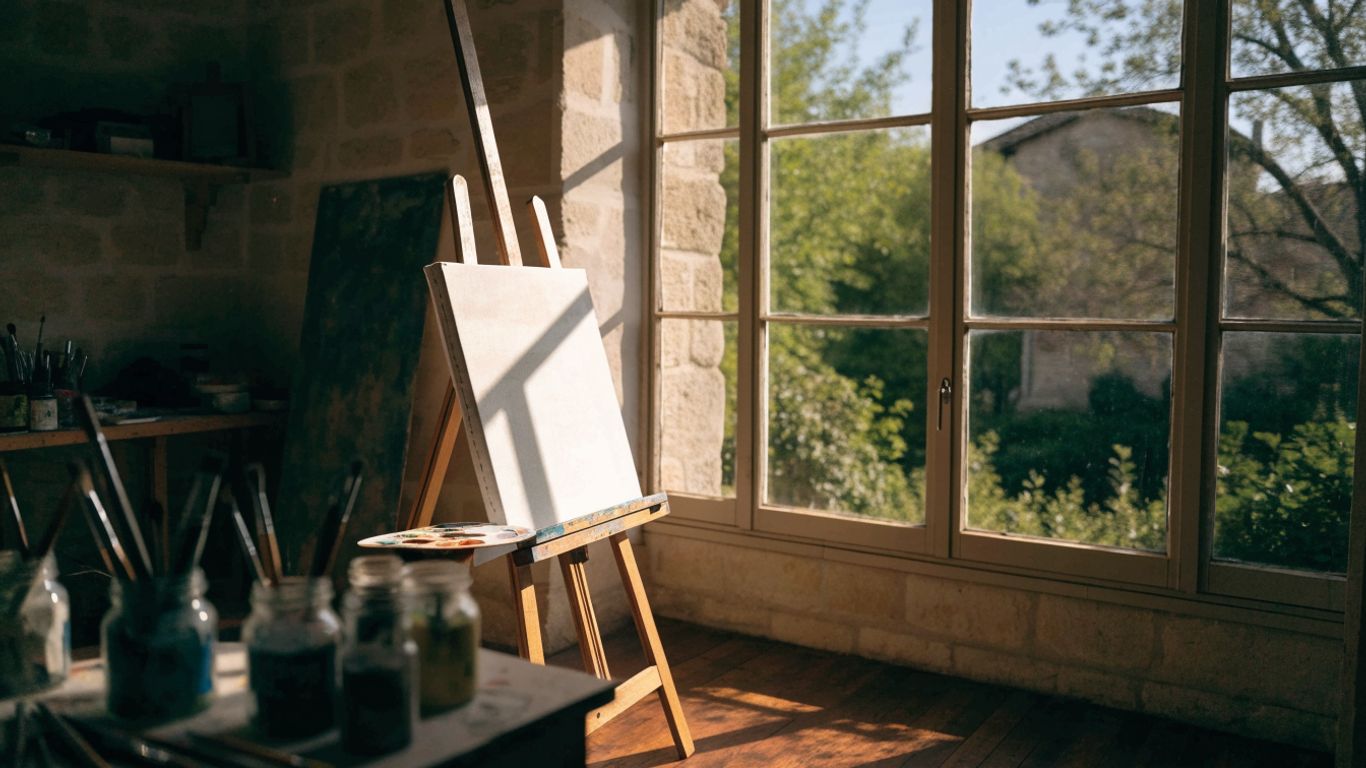
Visit the Atelier de Cézanne
The Atelier de Cézanne offers a chance to visit the artist’s former workspace and see a more personal setting connected with his life. Check current visiting arrangements and opening hours before you go, since access can depend on the season and schedule. If the studio matters most to you, plan around its visit rather than assuming you can fit it in at any time. Allow a little breathing room before and after so the visit does not feel hurried.
Follow the painter’s route through the city
A walking route linked to Cézanne can connect places associated with his life and Aix’s historic center. You might follow it in full or select a few stops that fit naturally into your day. A map or local visitor information can help you identify the route and confirm where it begins. Walking gives the city context to the story, making the landmarks easier to remember than a collection of isolated addresses.
See Mont Sainte-Victoire from a favorite viewpoint
Mont Sainte-Victoire rises beyond the city and is a familiar presence in Cézanne’s work. The view changes with the weather, season, and viewpoint, so check conditions before setting out beyond the center. If you have limited time, choose a readily accessible outlook rather than trying to combine a distant viewpoint with too many city stops. For a day in town, the landscape can still be part of the experience even when you only see it from afar.
Browse works and exhibitions at the Musée Granet
The Musée Granet is a useful stop for visitors who want to spend time with art in the city itself. Check the current exhibition schedule and collection information before visiting, as displays and arrangements can change. Give yourself enough time to explore at a comfortable pace, especially if you are pairing the museum with a studio visit. This works well as a quieter counterpoint to walking through busy streets and markets.
Take a day trip from Aix-en-Provence
Aix makes a convenient base for seeing more of Provence, but different outings call for different amounts of time and transport planning. A hike, a village visit, a coastal day, and a winery stop each have their own pace. Consider travel time as carefully as the destination itself, particularly if you plan to rely on public transport. Discover France Beyond Paris provides destination guidance for travelers looking to explore beyond the country’s best-known urban stops.
Hike or sightsee around Mont Sainte-Victoire
Mont Sainte-Victoire offers a change of scenery from the city, whether you are interested in hiking or simply seeing the landscape. Routes and access points vary, so check current conditions, weather, and transport options before heading out. Bring water and suitable footwear if you plan to walk on trails, and avoid assuming that every viewpoint is close to a bus stop. A shorter outing can still give you a sense of the terrain without turning the day into a demanding hike.
Visit the Luberon villages
The Luberon is known for hilltop villages, countryside roads, and market towns, making it a good choice for a day focused on scenery and local life. Decide whether you want to spend most of your time in one village or travel between several; trying to cover too much can leave little time to explore. A car can make a multi-stop day easier, while a guided outing may simplify logistics. For more ideas on the region, see this Luberon travel guide.
Explore Marseille and the Calanques
Marseille and the Calanques offer a contrast to Aix, with a larger city, a Mediterranean harbor, and coastal landscapes nearby. Check transport times and any access or weather guidance for the Calanques before you go, as conditions may affect plans. If you want to include both city sights and time outdoors, choose a realistic itinerary rather than trying to see everything in one visit. The best option depends on how early you can start and how much time you want by the coast.
Choose a wine tasting in the Côtes de Provence
A wine tasting can make a relaxed countryside excursion, but it takes some planning if you are not driving. Check in advance whether a winery requires reservations, what the visit includes, and how you will get back to Aix. If you are traveling with others, agree on a transport plan before the tasting begins. A single well-chosen stop often makes for a more comfortable day than fitting several appointments into a tight schedule.
Plan your visit to Aix-en-Provence
Aix can work as a short city break or as a base for exploring the surrounding region. The right plan depends on the season, your preferred pace, and whether you want to spend more time in museums, markets, or the countryside. The visitor resources of Discover France Beyond Paris focus on practical destination guidance for exploring France beyond Paris. Before booking, compare the location of your accommodation with the places you expect to visit and the transport you plan to use.
Pick the best season for markets and outdoor sightseeing
Spring and fall can be comfortable seasons for walking, while summer brings longer days and stronger heat; conditions vary from year to year. Check seasonal opening arrangements for museums and attractions as well as market schedules, especially if you are traveling outside the busiest months. In warmer weather, plan outdoor walks for earlier or later in the day and keep water with you. The Aix-en-Provence one-day itinerary can help you prioritize if your time is limited.
Get around on foot, by bus, or with a rental car
The historic center is well suited to walking, while buses can help with journeys beyond it. A rental car is useful for some countryside day trips, but parking and access in central areas may require extra planning. Match your transport choice to the actual itinerary rather than renting a car for the city portion by default. If you are considering an overnight stay, check hotel location and access details before booking.
Decide how much time to spend in the city
One full day can cover a compact walk, a market visit, and a selected museum or Cézanne stop, but it leaves less room for a slow lunch or a change of plans. Two or more days make it easier to explore the city without squeezing everything together and to set aside time for a day trip. Use the table below to sketch a realistic pace before committing to activities.
| Time available | A practical focus | What to keep flexible |
|---|---|---|
| One day | Old town, market, one cultural stop | Extra museum time |
| Two days | City sights and Cézanne landmarks | Meal and café breaks |
| Three or more days | City visit plus a day trip | Weather and transport |
Think of the schedule as a guide, not a reservation list. If you want additional trip ideas elsewhere in France, the site also has guides to Metz’s historic sights, a show-cause hearing, painting miniatures, website visibility in France, and medical assistant training.
Book popular tours and attractions ahead of time
Check whether the studio, museums, guided tours, or any special events require advance booking during your travel dates. Confirm the current schedule directly before building the rest of the day around a specific entry time. It is also sensible to leave a little space between timed visits, especially if you are walking across town. For accommodation planning, compare current hotel prices for Aix-en-Provence here.
Conclusion
Aix-en-Provence is best explored with a mix of simple plans and unhurried time: walk the old streets, stop at a market or fountain, and choose the Cézanne sites that interest you most. With a little advance checking for opening hours and transport, it is easy to add a countryside or coastal day trip without rushing the city itself.
Frequently Asked Questions
What are the best things to do in Aix-en-Provence?
Walk through the old town and Mazarin Quarter, browse a market, visit the fountains, and choose a Cézanne-related stop such as the Atelier de Cézanne or Musée Granet.
Is Aix-en-Provence easy to explore on foot?
The historic center is compact enough for many visitors to explore on foot. Buses or a rental car can be useful for destinations farther from the center or countryside excursions.
How many days should I spend in Aix-en-Provence?
One day is enough for a brief introduction to the center, while two or more days allow a less hurried visit and time for a museum or day trip.
When is the best time to visit Aix-en-Provence?
Spring and fall are often comfortable for outdoor sightseeing, while summer offers long days but can be hot. Check current conditions and seasonal opening schedules before traveling.
What can I find at Aix-en-Provence’s markets?
Depending on the market and day, you may find fresh produce, local food specialties, flowers, textiles, crafts, antiques, or brocante items.
Can I visit Mont Sainte-Victoire from Aix-en-Provence?
Yes. It can be visited as a day outing for hiking or sightseeing, but check access, weather, route conditions, and transport options before you go.
Do I need to book attractions in Aix-en-Provence ahead of time?
Advance booking may be useful for popular tours and attractions, especially during busy periods. Check current opening hours and reservation requirements for each place you plan to visit.


