

Paragliding Over the Gorges du Verdon: Booking Your First Flight

Part of our Gorges du Verdon travel guide
Key Takeaways
A first paragliding flight over the Verdon is easiest to enjoy when you plan for changing conditions and allow time around the activity.
- Tandem flights are the simplest option for first-time visitors.
- Weather, wind, and operator availability can change the schedule.
- Compare flight style, meeting arrangements, requirements, and policies before booking.
- Wear practical layers and leave room in your itinerary for delays.
- Pair the flight with viewpoints, villages, hiking, or time on the lake.
Understand what a first paragliding flight involves
A first flight is usually a tandem experience, with you attached to an experienced pilot who manages the paraglider. You do not need to arrive with technical knowledge, but you should understand that the activity depends on wind and terrain. The day may include travel to the launch site, a safety briefing, the flight itself, and a wait if conditions are not suitable.
Tandem paragliding versus solo training
Tandem paragliding is designed for passengers who want to experience free flight without learning to control the wing on their first outing. The pilot handles the launch, flight path, and landing while explaining what is happening. Solo training is a longer learning process involving instruction, practice on adapted slopes, and progressive development of takeoff, steering, and landing skills. For most travelers visiting the Gorges du Verdon, tandem flying is the practical starting point.
What the flight experience feels like from takeoff to landing
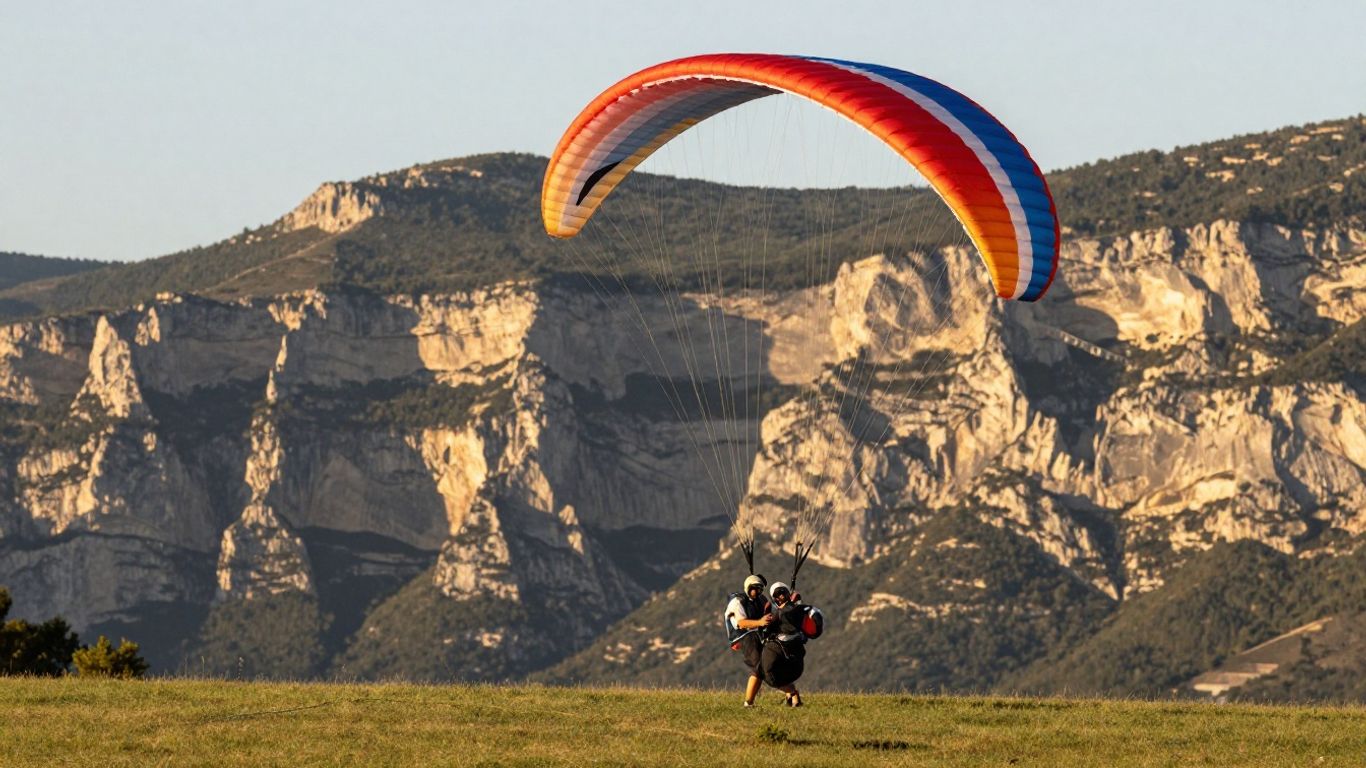
After a briefing, you will usually walk or jog a few steps with the pilot as the wing rises behind you. Once airborne, the sensation is less like a sudden jump and more like sitting in a suspended harness while the landscape opens below. The ride can be calm or more active depending on the air, and the pilot should explain the movements and tell you how to help during launch and landing.
How long to allow for the full activity
The time in the air is only one part of the booking. Allow extra time for meeting the team, checking equipment, reaching the takeoff area, waiting for a suitable window, and returning to the meeting point. A short scenic flight can still take a meaningful part of the day, particularly when access roads are winding or several passengers are scheduled together.
Who can usually participate
Eligibility varies by operator, flight type, and current conditions. Age, passenger weight, mobility, and health may affect whether a particular flight is appropriate, so check the stated requirements before paying. People who are uneasy with heights can still enjoy a tandem flight, since the view is often broad and the movement is different from standing on a cliff, but an honest conversation with the pilot is worthwhile.
Choose the right gorges du verdon paragliding experience
There is no single best gorges du verdon paragliding booking for every traveler. Some people want a quiet panorama, while others are curious about longer airtime or more dynamic movement. Start by deciding how much time you want in the air and how adventurous you want the experience to feel, then compare the practical details around the flight.
Scenic tandem flights for first-time visitors
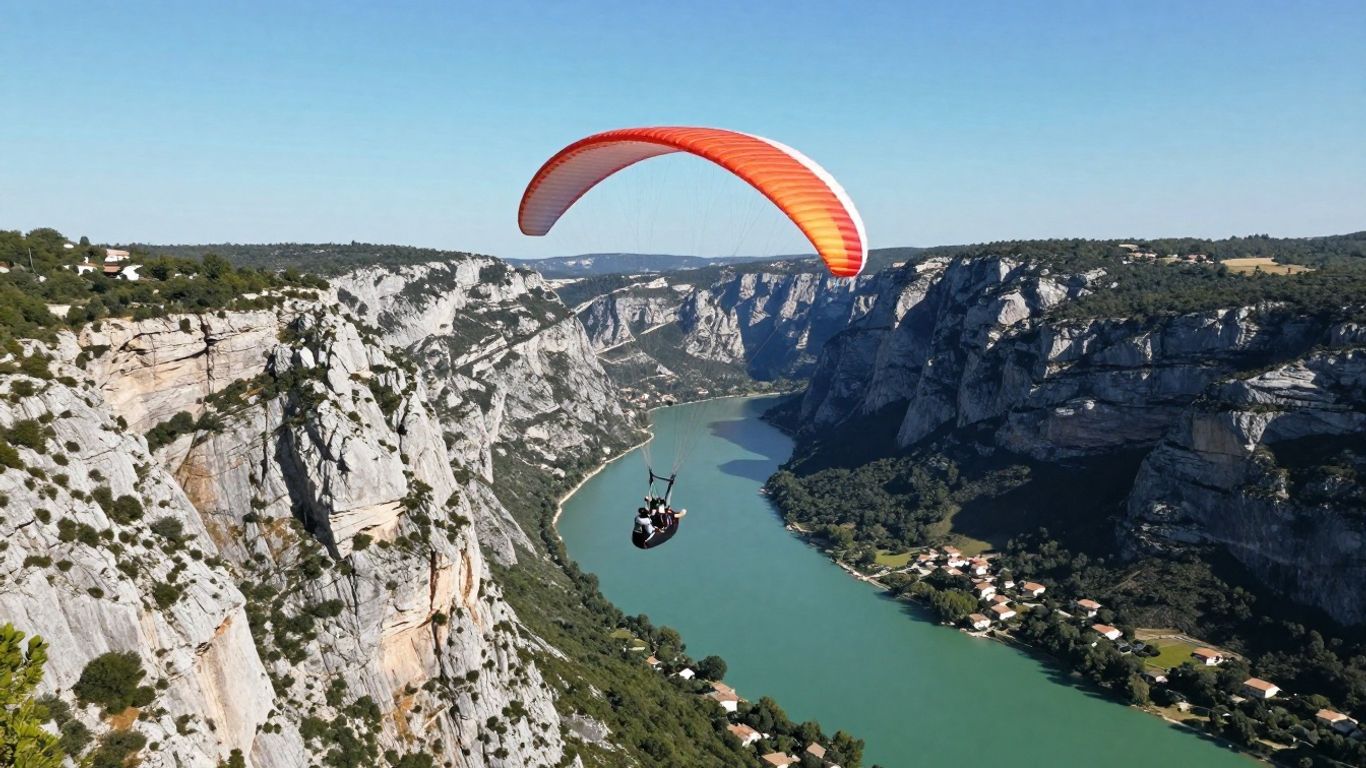
A scenic tandem flight generally suits visitors whose priority is seeing the gorge, plateaus, lake, and surrounding countryside from above. Ask whether the flight is described as a discovery, panoramic, or introductory option, and confirm what those terms mean locally. A calmer flight may be a better first memory than choosing the most dramatic-sounding option without knowing how active it can feel.
Flight options for different ages, fitness levels, and comfort zones
Operators may offer different flight lengths or styles, but names and conditions are not standardized. A shorter flight can work well for someone uncertain about heights, while a longer flight may suit a traveler who wants more time to observe the landscape. Mobility concerns should be discussed in advance because the launch and landing areas can involve uneven ground, a short run, or a particular seated position.
Launch sites and viewpoints around the Verdon Gorge
The launch site affects both the scenery and the logistics of your day. Flights may be associated with areas around Moustiers-Sainte-Marie, Aiguines, Lac de Sainte-Croix, or other nearby viewpoints, and the pilot may choose the site according to the conditions. Do not assume that the meeting point, launch site, and landing area are the same place; ask how you will travel between them.
How to compare operators and instructors
A useful comparison focuses on clarity rather than on the most dramatic photograph. Look for current information about qualifications, passenger requirements, meeting instructions, equipment, flight descriptions, and weather decisions. The same checklist also helps when using practical Verdon travel advice to build a wider route around the activity.
Pick the best time to fly
The Verdon changes noticeably with the season, and flying is especially sensitive to local weather. A date that looks perfect on a calendar may still produce a postponement if wind direction, cloud, visibility, or thermic activity is unsuitable. Build your booking around flexibility rather than treating the flight as an appointment that must happen at a precise hour.
Seasonal conditions in the Verdon region
Spring and fall can offer comfortable temperatures for sightseeing and hiking, while summer brings longer days and strong demand for outdoor activities. Conditions vary with elevation and exposure, so a warm afternoon at the lake does not guarantee that the launch site will be suitable. Winter may bring quieter roads but fewer operating dates and more limited services. Check the operator’s active season instead of relying only on general regional climate information.
Morning and afternoon flight differences
Morning flights may offer cooler air and a calmer start, depending on the site and forecast. Later flights can provide different light and may allow the day to warm, but wind can also become less predictable. The best time is the window the pilot considers safe and appropriate for the selected flight, not necessarily the hour with the most attractive itinerary on paper.
How wind and weather affect scheduling
Pilots may postpone a flight when conditions exceed their operating limits or when visibility makes the experience unsuitable. This is a normal part of free-flight planning, not a sign that your reservation was mishandled. Keep your phone available on the day, read the operator’s messages carefully, and avoid scheduling a nonrefundable transfer immediately after the flight.
What happens when the operator postpones your booking
A postponement usually leads to a conversation about moving to another available time or date, subject to the operator’s policy and the remaining weather forecast. Before booking, find out how much notice is typical and whether you need to contact the team or wait for them to propose alternatives. If you have only one day in the region, understand the refund or credit terms before committing.
Book your tandem flight with confidence
Booking online is convenient, but a good reservation contains more than a date and a price. You should be able to identify the operator, understand what the flight includes, and see how weather decisions are handled. Read the practical information slowly, especially if the website uses translated text or several similar flight categories.
What to check on the operator’s website
Confirm the meeting location, approximate total duration, passenger requirements, available languages, and what happens if the weather changes. Check whether transport to the launch or return from the landing area is included. Photos, videos, or souvenirs may cost extra, so look for a clear explanation rather than assuming they are part of the base booking.
Questions to ask before paying a deposit
A short message can resolve details that are unclear on a booking page. Ask which flight is most suitable for a first-time passenger, how long you should remain available, and whether the launch or landing requires a run. Also confirm the latest arrival time and what footwear or clothing the pilot recommends. Clear answers are useful evidence that the booking process is organized.
Understanding availability, cancellation, and rescheduling policies
Read the cancellation wording before selecting a date, with particular attention to weather cancellations, late arrival, passenger illness, and operator changes. Policies can differ between a voluntary cancellation and a flight that cannot proceed safely. Save the confirmation email and keep the meeting instructions offline, since rural coverage can be inconsistent.
Booking directly versus using an activity marketplace
A marketplace can make it easier to compare dates, while direct booking may give you a more immediate conversation with the local operator. Whichever route you choose, identify who is responsible for the booking, who will contact you about weather, and where support is provided if plans change. A confirmation that clearly names the operator and activity is more useful than a low price with vague logistics.
Prepare for your paragliding day
Preparation is mostly practical: arrive rested, wear clothing that allows movement, and leave enough time to reach a rural meeting point. The launch area may feel cooler or more exposed than the village where you had breakfast. Small details such as shoes, phone storage, and a charged battery can make the day simpler.
What to wear and bring
Choose secure athletic shoes, comfortable trousers, and layers that can handle changing temperatures. Bring water, sunscreen, sunglasses if they can be secured, and a small amount of cash if the operator requests payment for extras. Loose hats, scarves, and bulky bags are usually inconvenient in the harness, so ask what can remain in a vehicle before takeoff.
Arrival times, meeting points, and transport
Read the meeting instructions as if you were navigating them for the first time. Some locations are reached by narrow roads, and a pin on a map may not explain where to park or whom to find. Arrive early enough to park, use facilities, and complete the briefing without rushing. If the operator runs a shuttle, confirm the pickup point and return arrangements in advance.
Weight, age, and health requirements
Passenger limits and minimum ages are set by the operator and may differ by flight type. Tell the team about relevant health concerns, recent injuries, pregnancy, fainting, or medication that could affect participation. Do not wait until arrival to mention a limitation that could change the booking; an early discussion gives the operator a chance to suggest a safer alternative or explain why the flight is unsuitable.
Food, hydration, and motion-sickness considerations
Eat a light meal rather than arriving dehydrated or overly full. If you are prone to motion sickness, ask the pilot whether a gentler flight is appropriate and consider bringing any familiar remedy you normally use. Avoid alcohol before the activity. The goal is to arrive comfortable enough to listen carefully and enjoy the view.
Know what to expect during the flight
The experience usually feels more structured than first-time passengers imagine. The pilot checks the wing and harness, gives simple instructions, and waits for a suitable moment rather than forcing a launch. Once in the air, your role is mainly to stay attentive, follow directions, and tell the pilot promptly if you feel uncomfortable.
The launch process and first few minutes in the air
You will normally be connected to the pilot before the wing is fully prepared. When the air is right, the pilot will ask you to move forward or run for a few steps, then the harness will take your weight as the paraglider lifts. The first minutes are often spent settling into the seat, checking comfort, and confirming that you are ready to continue.
Flying over the Gorges du Verdon landscape
From the air, the relationship between the limestone walls, wooded slopes, plateau, and turquoise water becomes easier to understand. You may see roads tracing the rim and villages set apart from the canyon itself. Bring your attention back to the landscape rather than trying to photograph every second; the pilot’s route and the light will change quickly.
Optional maneuvers and how to communicate with your pilot
Some pilots may offer turns or more active maneuvers when conditions and passenger comfort allow. These are optional, and you can say that you prefer a smooth sightseeing flight. Agree on simple communication before launch, including how to signal discomfort, nausea, cold, or a need to slow down. Your comfort comes first, even when other passengers are seeking a more energetic ride.
Landing, photos, and post-flight arrangements
The landing is usually explained beforehand and may involve lifting your legs or following a simple instruction as you approach the ground. Afterward, check where personal belongings, transport, and any optional photographs will be handled. Give yourself a little time before driving on, especially if you feel excited, chilly, or mildly unsettled after the flight.
Plan the rest of your Verdon trip around the flight
A flight works best as one part of a broader Verdon itinerary. The region is spread out, roads are winding, and attractions that look close on a map can take longer to reach than expected. Use the flight as an anchor, then keep the surrounding plans adjustable so a weather change does not disrupt the whole trip.
Where to stay near the launch areas
Choose accommodation according to the launch area and your other priorities, not just the shortest apparent distance. Moustiers-Sainte-Marie, Aiguines, La Palud-sur-Verdon, and villages near the lake offer different combinations of restaurants, roads, viewpoints, and activity access. A guide to where to stay in the Verdon can help you compare bases before you choose a flight date.
Combining paragliding with hiking, kayaking, or sightseeing
Avoid placing the flight immediately after a strenuous hike or a long drive. A relaxed walk through a village, a viewpoint stop, or time by the lake can complement the aerial activity without leaving you exhausted. If you plan to kayak, review Verdon kayaking options separately because water access, equipment pickup, and operating conditions follow a different schedule from paragliding.
Allowing flexibility for weather-related changes
Keep at least one open block in your itinerary when the flight matters to you. You might use it for a scenic drive, a village visit, or a short walk if the first weather window disappears. This approach is especially useful on a short trip, when a postponed flight could otherwise collide with transport or accommodation check-in times.
Making the most of viewpoints and photography opportunities
The best photographs are not limited to the flight itself. Viewpoints along the rim, roads near the lake, and village streets offer different perspectives and give you time to appreciate the scale of the gorge. For a compact route, a two-day Verdon itinerary can help balance driving, viewpoints, water activities, and time to wait for suitable flying conditions.
Conclusion
A first flight over the Gorges du Verdon is easiest to enjoy when you treat it as a weather-dependent outdoor activity rather than a fixed transfer between two points. Choose a flight that matches your comfort level, confirm the operator’s practical details, and leave room for a change of plan. With that preparation, the flight can fit naturally into a wider visit built around the gorge, lake, villages, and viewpoints.
Frequently Asked Questions
Is paragliding over the Gorges du Verdon suitable for beginners?
Yes, tandem flights are commonly designed for first-time passengers, with a pilot managing the wing and explaining the basic process. You should still confirm the operator’s age, weight, mobility, and health requirements before booking.
How long does a tandem paragliding flight usually last?
The airtime depends on the selected flight and conditions, while the full activity also includes arrival, briefing, preparation, travel to the launch, and landing arrangements. Allow several hours unless the operator gives a more precise schedule.
What should I wear for a paragliding flight?
Wear comfortable layers, secure athletic shoes, and clothing that allows you to move during launch and landing. Conditions can feel cooler at altitude, so an extra layer is useful even on a warm day.
Can paragliding be canceled because of weather?
Yes. Strong or unsuitable wind, poor visibility, cloud, or other local conditions can lead to a postponement. Ask in advance whether the operator offers rescheduling, credit, or a refund when the pilot cancels for safety reasons.
What if I am afraid of heights?
Tell the pilot before launch. Many passengers find that sitting in a harness and looking across a wide landscape feels different from standing near a drop, but the flight should remain within your comfort level and you can discuss a calmer option.
Can I take photos during the flight?
That depends on the operator and the equipment arrangement. Ask whether phones, cameras, or pilot-provided photographs are permitted, and follow instructions about securing anything that could fall or interfere with the harness.
Should I book paragliding at the start or end of my trip?
Booking earlier in your stay gives you more opportunity to reschedule if weather changes. It is also wise to keep the following activity flexible, since the flight may run late or be moved to another time.
Planning a trip to the Gorges du Verdon?
Compare hotels, guided tours, car hire and flights in one place.


