
Cycling Around Lake Annecy: The Full Loop, Rated

Key Takeaways
The full circuit of Lake Annecy is a manageable day ride, but it is not completely flat or traffic-free.
- Allow roughly 38 km (24 miles), plus extra time for stops and short detours.
- Ride clockwise to make the main climb more manageable and keep the lake closer on key sections.
- Expect a useful mix of separated cycleways, greenway, shared paths, and short road sections.
- Start early, carry water and weather protection, and plan swimming or café stops in advance.
- Shorten the ride if heat, traffic, tiredness, or changing weather makes the remaining shore uncomfortable.
Annecy cycling lake route at a glance
The loop is one of the most accessible ways to see the lake and its surrounding villages in a single outing. Clear water, steep mountain backdrops, beaches, and old railway greenway sections make the ride varied rather than repetitive. It works as a half-day ride for a confident cyclist, or a relaxed full-day excursion with stops.
Distance, elevation, and realistic ride time
The complete circuit is about 38 km (24 miles), although your recorded distance will increase if you ride into villages or search for beaches. It is often described as mostly flat, but that should not be read as completely level: the eastern shore includes the principal climb, and the loop has smaller rises elsewhere. A strong rider may finish in around three hours without stopping, while most visitors should allow four to six hours for photos, food, and time beside the water.
A simple planning table is more useful than a single promised completion time:
| Riding style | Moving time | Practical day plan |
|---|---|---|
| Fast and experienced | About 3 hours | Minimal stops, early start |
| Comfortable recreational pace | 3.5–4.5 hours | A café, viewpoints, and short breaks |
| Leisurely sightseeing | 5–7 hours | Swimming, lunch, and village visits |
| Family or mixed-ability group | Flexible | Use a shorter out-and-back if needed |
Treat these figures as planning ranges, not targets. The route feels much more enjoyable when you leave room for a swim, a missed turn, or a slower section through a busy village.
Best direction for the full loop
Clockwise is the sensible default for most riders. It tackles the notable rise on the eastern side in a more manageable direction and generally makes the lakeside position more favorable after Talloires. The choice is not only about elevation; it also helps the route unfold naturally from Annecy through the northern villages, around the southern end, and back along the greenway.
That said, strong riders may prefer counterclockwise travel for personal reasons, such as a preferred café stop or a desire to reach the southern greenway first. Check the day’s wind before setting off, since a headwind can matter more than a modest gradient.
What the route surface is like
Surface quality changes throughout the loop. Annecy and the western shore offer separated cycleways and smooth shared paths, while the southern section uses a broad greenway built along a former railway alignment. The eastern shore is less uniform, with road riding, crossings, narrower stretches, and more attention required near Menthon-Saint-Bernard and Talloires.
A hybrid, touring bike, or e-bike is a good fit for the mixed conditions. Road bikes can manage the route, but riders should be comfortable slowing for pedestrians and dealing with less predictable surfaces away from the dedicated path.
Who the loop suits best
The circuit suits visitors who can ride for several hours and are comfortable sharing space with walkers. It is a particularly good first longer ride in the French Alps because the scenery is dramatic without requiring a mountain pass. Families and casual cyclists can enjoy selected sections, though young children may find the eastern shore and the total distance tiring.
For trip planning beyond the ride, an Annecy escape can help combine the circuit with the Old Town, lake transport, and nearby mountain viewpoints. The key is to match the day’s ambitions to the group rather than treating the full loop as compulsory.
Planning the full loop around Lake Annecy
A little preparation makes this route substantially easier. Annecy is busy in warm weather, bike hire can become limited, and the most attractive swimming places are not always next to a shop or public restroom. Build the day around an early start and a few dependable resupply points rather than assuming that every village will be convenient when you arrive.
Where to start and how to reach the lakeside
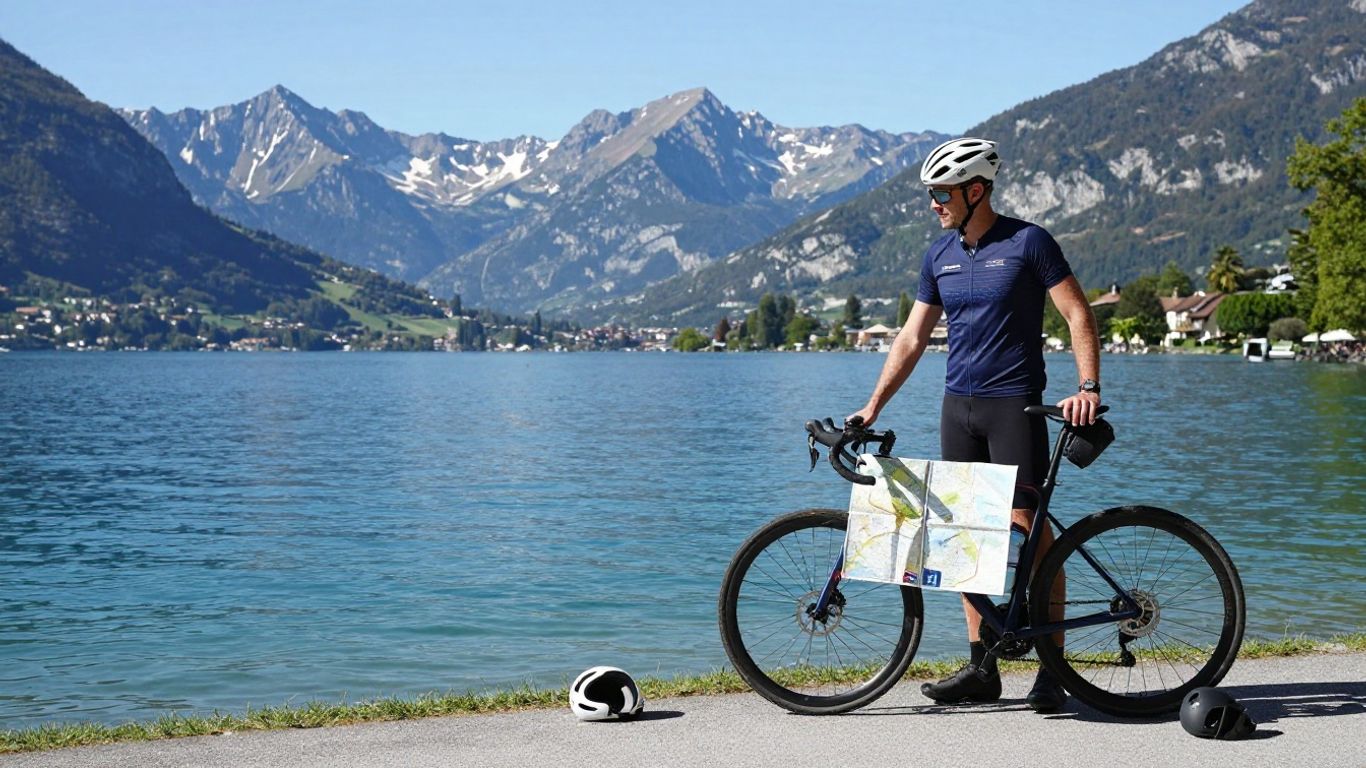
The obvious starting point is Annecy, where the lakefront is close to the historic center and major visitor services. Riders staying in the center can reach the cycleway on foot with a bike, while those arriving by car should confirm parking arrangements before committing to a busy morning. The Pâquier and nearby waterfront areas provide an intuitive orientation, but the first shared sections can be crowded.
Annecy is also practical for travelers arriving by train or bus from elsewhere in France. For a wider overview of getting to Annecy, compare the arrival options before booking accommodation, especially if you are traveling with a rented bike or heavy luggage.
When to ride for better weather and fewer crowds
Morning is usually the most comfortable starting window. Temperatures are lower, the waterfront is quieter, and you have more flexibility if the eastern shore takes longer than expected. Summer weekends bring the greatest pressure on paths, beaches, and cafés, so an early weekday start is noticeably calmer when your schedule allows it.
Spring and early fall can be excellent for cycling, but conditions change quickly around the mountains. Carry a light rain layer even when the forecast looks settled, and remember that a cool start can become a hot ride by the southern shore.
Bike hire, e-bikes, and essential equipment
A standard hybrid bike is enough for the loop for most recreational riders. An e-bike is useful for mixed-ability groups, riders carrying children, or anyone who wants energy left for stops, but it still requires sensible battery planning. Ask the rental shop about lights, a lock, repair support, helmet fit, and whether the bike is suitable for brief road sections.
Bring a phone with a charged battery, water, snacks, sunscreen, a compact rain jacket, and swimwear if you want to use the beaches. A small repair kit is worthwhile even on a popular route, since a puncture can turn a pleasant ride into a long wait.
Navigation, water, toilets, and other practical needs
The route is straightforward in broad outline, but local detours and shared paths can make navigation less obvious than the map suggests. Download an offline route, watch for cycleway signs, and do not rely on a single phone battery for the entire day. Water and toilets are available in settled areas, but facilities are not evenly distributed around the lake.
Before leaving Annecy, organize the small details that prevent unnecessary backtracking:
- Fill bottles before reaching the quieter southern sections.
- Carry a card and a small amount of cash for cafés or seasonal facilities.
- Mark likely toilet, food, and swimming stops on your offline map.
- Check the last practical return point before taking a long detour.
These simple checks are especially helpful for visitors unfamiliar with French opening hours or rural services. Discover France Beyond Paris takes the same practical approach to travel planning: basic logistics, timing, and regional conditions matter as much as the headline attraction.
The northern shore from Annecy to Talloires
The northern and eastern side delivers some of the most memorable lake views, but it also asks for more concentration than the western greenway. The ride leaves Annecy through an urban lakeside setting, then becomes quieter as it passes elegant residential villages and wooded slopes. Keep the pace moderate; stopping often is part of the experience here.
Leaving Annecy on the lakeside cycleway
From the waterfront, the route initially feels easy and sociable. Cyclists share space with walkers, runners, families, and people taking photographs, so speed is less important than communication. The lake is close, and the first stretch gives you an immediate sense of the scale of the circuit without demanding much effort.
As you move toward Veyrier-du-Lac, the path and road arrangement changes. Follow local cycleway signs rather than assuming that the shoreline will remain continuously separated from traffic. This is a good place to settle into clockwise travel before the route becomes more undulating.
Highlights around Veyrier-du-Lac and Menthon-Saint-Bernard
Veyrier-du-Lac brings clear water, wooded hillsides, and frequent glimpses across the lake toward the western mountains. Menthon-Saint-Bernard adds a more village-like atmosphere, with places to pause away from the busiest waterfront. The scenery changes subtly as the mountains feel closer and the shore narrows.
A detour into the village can be worthwhile, but account for extra climbing and return distance. Travelers who want more history after the ride can use a practical guide to Annecy’s medieval canals rather than trying to combine every Old Town visit with the loop itself.
Where the route becomes hillier and more demanding
The approach to Talloires is the section that changes the character of the ride. The road is more exposed to traffic, gradients become more noticeable, and the descent toward the village requires particular care. This is not a technical mountain ride, but it can feel demanding after a hot start or an overlong stop earlier in the day.
Stay patient on the climb and leave space for vehicles on narrow stretches. E-bikes help with the effort, but they do not remove the need to descend slowly or anticipate bends. The hardest section is short, which is reassuring, but it still deserves your full attention.
Scenic stops near Talloires and the eastern shore
Talloires is a natural pause point, with a compact lakeside setting and dramatic views in both directions. The shore near the village is attractive for a drink, a swim, or a short walk, though peak-season space can disappear quickly. After Talloires, the lake periodically opens into broad views before the road turns inland or behind trees.
Do not judge the remaining distance solely by the map. Stops, road conditions, and the desire to photograph the eastern shore can make this part slower than expected, so leave enough daylight for the southern return.
The southern and western shores back to Annecy
After Talloires, the loop settles into a more relaxed rhythm as it curves toward Doussard and the southern end of the lake. The landscape becomes quieter, and the route offers longer stretches where the water, reeds, and mountain silhouettes share the view. The western shore then brings the most consistent cycling surface of the circuit before the final approach to Annecy.
Riding from Talloires toward Doussard
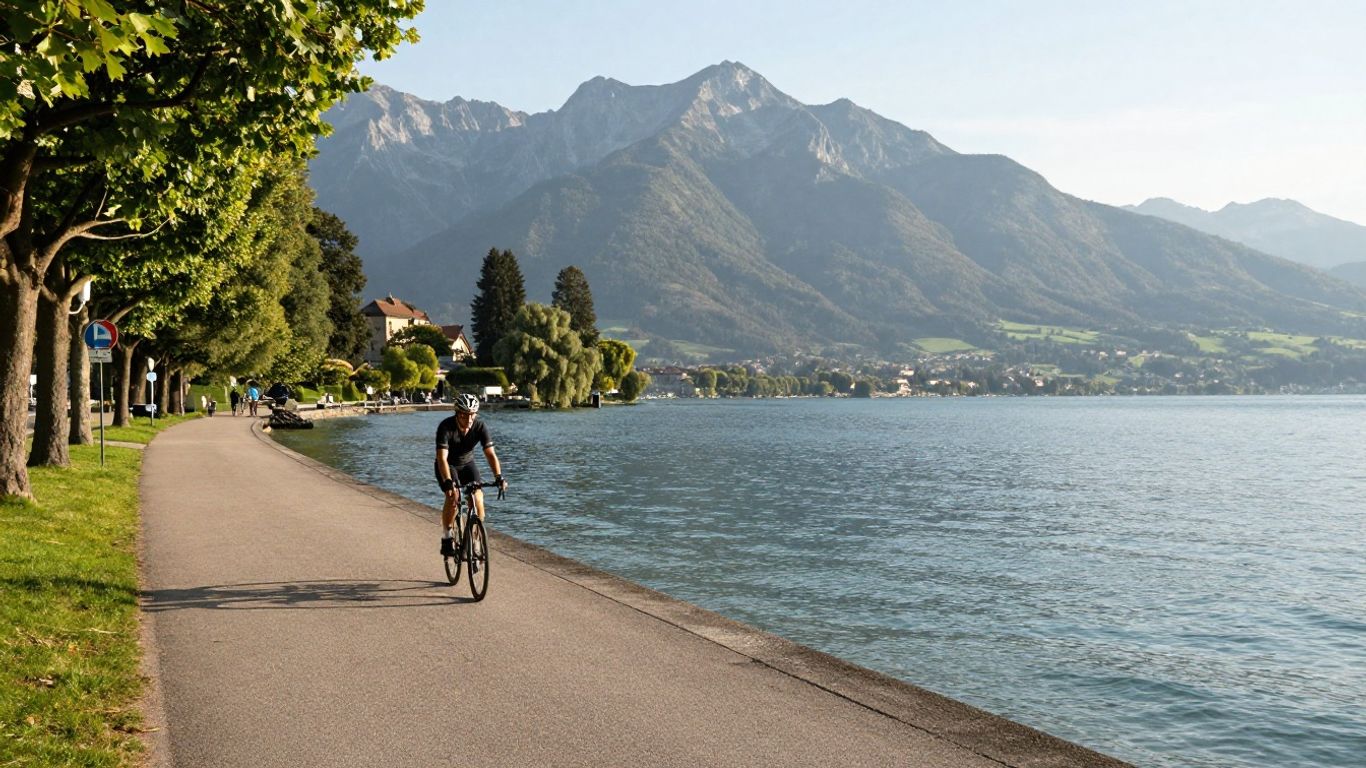
The road south of Talloires rewards a steady pace. Some sections sit close to the water, while others pass through trees or villages, so the lake does not remain visible every minute. That variety is part of the appeal: you move between open panoramas and sheltered lanes rather than following a single uniform promenade.
Doussard marks an important decision point. Riders can continue the full loop, connect with routes heading farther into the valley, or stop for a shorter day if time and energy are running low. Check your supplies here rather than assuming the next quiet stretch will provide everything you need.
The quieter lakeside sections near the nature reserve
Near the southern end, the pace often becomes calmer and the landscape more natural. Wetland habitats and low-lying shoreline create a contrast with the built-up northern villages. Keep to marked routes and avoid treating the reserve as an informal shortcut; wildlife areas need a quieter, more deliberate style of travel.
This section is well suited to a picnic or a short pause with binoculars. It is also where heat can become apparent, since shade and commercial services may be less frequent than around Annecy.
Returning through Saint-Jorioz and Sévrier
The western shore is the route’s most dependable recreational section, using a broad greenway along the old railway corridor for much of the way. Saint-Jorioz offers a useful place to rest, eat, or refill bottles, while Sévrier brings you closer to the activity and traffic of Annecy. The surface makes it tempting to accelerate, but pedestrians and slower cyclists remain part of the route.
As the ride nears the city, the lakefront becomes busier and the final kilometers require renewed patience. A relaxed finish is better than arriving stressed after trying to turn the last section into a sprint.
Road crossings, shared paths, and busier stretches
Even on the greenway, expect crossings, junctions, and places where different users meet. Slow before blind corners, signal clearly, and pass only when there is enough room. The route’s popularity is a strength for orientation, but it also means that comfort depends on cooperation rather than uninterrupted speed.
Follow marked cycle infrastructure where it exists and avoid drifting onto pedestrian-only areas. Discover France Beyond Paris is designed for travelers who need practical guidance beyond major urban hubs, and that same awareness applies here: local signs and everyday road behavior deserve more attention than a simple line on a map.
Rating the Lake Annecy cycling experience
The ride deserves a high rating for scenery and accessibility, with a small deduction for the unevenness of the eastern shore. It is not a fully protected circuit, and visitors expecting a flat, car-free promenade may be surprised. For riders who understand that distinction, the combination of mountain views, villages, beaches, and greenway is unusually rewarding.
Scenery and lakeside viewpoints
Scenery: 5/5. The lake is the clear star, but the experience is more than blue water. Each shore offers a different perspective: the northern end feels more urban and framed by mountains, the eastern side is dramatic and enclosed, and the southern and western stretches feel open and spacious.
The best views do not always come from formal overlooks. A quiet pull-off, a beach edge, or a bend in the greenway may offer a better moment than a crowded landmark. Allow time to stop rather than trying to record the entire view while moving.
Surface quality and route continuity
Surface and continuity: 4/5. Much of the western and southern route is smooth and easy to follow, while the eastern shore is more variable. The contrast keeps the ride interesting, but it prevents a perfect score for riders seeking uninterrupted dedicated infrastructure.
A suitable bike and moderate expectations solve most of the problem. The route does not need racing equipment; it needs control, reliable brakes, and a willingness to share space.
Traffic, navigation, and rider comfort
Comfort: 3.5/5. Annecy’s waterfront, village centers, and eastern road sections can be busy. Navigation is manageable, but the route is not so simple that you can ignore signs or surrounding traffic. Early starts make a meaningful difference, especially in summer.
The result is comfortable for attentive adults and experienced families, but less suitable for a nervous rider who wants a completely separated path from start to finish.
Overall difficulty and value for a day out
Overall: 4.5/5. The distance is reasonable, the scenery is exceptional, and the route offers enough stops to suit different travel styles. The main limitation is the eastern section, where traffic and climbing require more concentration than the promotional image of a gentle lakeside ride might suggest.
For a single active day in the region, the loop offers excellent value. It combines transport, exercise, sightseeing, and access to swimming without requiring a complicated itinerary.
Stops and detours worth adding
The full loop can be completed without major diversions, but its best additions are small and intentional. Choose one or two stops that match your pace rather than filling the day with every possible village and viewpoint. A good ride leaves some flexibility for weather and appetite.
Beaches and swimming spots along the route
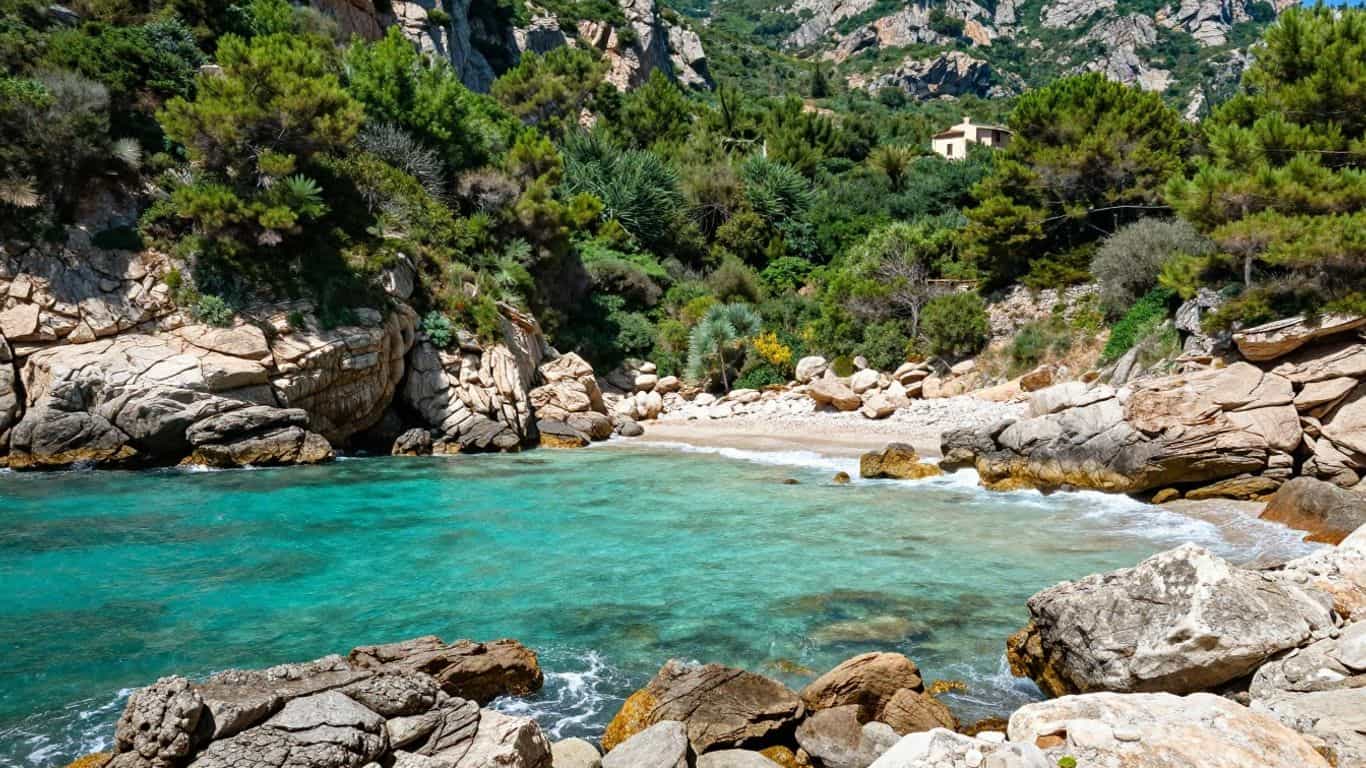
Lake Annecy’s clear water is one of the strongest reasons to carry a towel and swimwear. Beaches and lake access appear around several villages, with the eastern and southern shores offering particularly appealing pauses. Water conditions, facilities, and access rules vary, so use designated areas and watch children closely.
A swim can reset the day, but it also adds drying time and makes the return ride more exposed to the sun. Pack a light layer for the next section instead of assuming wet clothing will be comfortable for hours.
Villages, cafés, and places for lunch
Talloires, Menthon-Saint-Bernard, Saint-Jorioz, and Sévrier all provide opportunities to pause, although opening hours and availability vary by season. Lunch in a village is more pleasant than carrying a complicated meal plan, but busy weekends may require patience. Keep a snack in reserve so a full café does not determine whether the group can continue.
The Old Town is another option before or after the circuit. A guide to Annecy’s lake boat tours can also help if one person in the group would rather replace part of the cycling day with time on the water.
Short walks and viewpoints near the cycleway
Brief walks add variety without turning the outing into a second full activity. Try a lakeside promenade, a village lane, or a short path to a beach viewpoint, keeping track of where you leave the bikes. Secure them properly and avoid blocking narrow entrances or busy pedestrian routes.
The most useful detours are those that return you to the main circuit easily. If a viewpoint requires a long climb, decide whether the panorama is worth spending energy needed for the far side of the lake.
Optional climbs for stronger riders
The loop itself should not be confused with the harder mountain rides around Annecy. Strong cyclists can add a climb toward La Forclaz, Semnoz, or another local pass, but these are separate undertakings with very different gradients and time demands. Only add one after checking daylight, water, weather, and the ability of everyone in the group.
For most visitors, the full lake circuit is enough. The surrounding Alps offer plenty of reasons to return for a dedicated climbing day rather than forcing a major ascent into an already satisfying loop.
Safety and route decisions
The route is popular and generally practical, but popularity does not make every kilometer predictable. People walking three abreast, sudden road crossings, hot pavement, and changing mountain weather can all affect the ride. Make decisions early and conservatively, particularly when traveling with children or riders who are new to road cycling.
Managing mixed-use paths and pedestrians
Shared paths work best at a moderate speed. Ring a bell or call politely before passing, leave generous space, and expect walkers to change direction without warning. Near Annecy and the western shore, the path may be crowded enough that stopping is more enjoyable than trying to maintain a fixed pace.
Groups should ride in a compact line when the path narrows. Keeping conversation low and attention high helps everyone use the same space safely.
Handling exposed roads, tunnels, and narrow sections
The eastern shore deserves the most caution because road sections can be narrow, winding, or exposed to passing vehicles. Descend at a speed that lets you see around bends, use lights in tunnels, and never assume a driver has seen you. Stay predictable and avoid stopping on the traffic line for photographs.
If the road feels beyond your comfort level, dismount and walk a short section or turn around. A scenic route is not a test of nerve, and there is no penalty for choosing a quieter alternative.
What to do in heat, rain, or strong wind
Heat is easier to manage with an early start, regular drinking, and breaks in shade. Rain can make painted road markings and metal surfaces slippery, while strong wind may be tiring on exposed lakeside sections. Mountain clouds can also change the feel of the ride quickly, even when Annecy begins bright and warm.
Check the forecast shortly before departure and keep a simple fallback plan. A café stop, a shorter out-and-back, or a return by local transport may be more sensible than pushing through deteriorating conditions.
When to shorten the loop or turn back
Turn around or shorten the circuit if a rider is struggling to control the bike, supplies are running low, or the group has lost too much daylight. Doussard and Saint-Jorioz are useful points for reassessing the plan, but any safe village or staffed facility can serve the same purpose. Do not wait until everyone is exhausted to make the decision.
The best annecy cycling lake route is the one that fits the day you actually have. Finishing fewer kilometers with good memories is preferable to completing the loop while overtired, overheated, or anxious about the road.
Conclusion
Cycling around Lake Annecy combines an achievable distance with genuinely varied scenery, from Annecy’s waterfront and eastern villages to the quieter southern shore and smooth western greenway. Ride clockwise, start early, carry practical supplies, and treat the eastern road sections with respect. With those choices, the full loop becomes a flexible and rewarding way to experience the lake at your own pace.
Frequently Asked Questions
How long does it take to cycle around Lake Annecy?
Most riders should allow four to six hours including ordinary breaks, although a strong cyclist moving continuously may finish in about three hours. Swimming, lunch, photographs, and detours can turn it into a full-day outing.
How far is the cycle around Lake Annecy?
The circuit is approximately 38 km, or about 24 miles. Your exact distance will vary according to your starting point and any village, beach, or viewpoint detours.
Which direction is best for cycling around Lake Annecy?
Clockwise is the usual choice because it makes the principal eastern-side climb more manageable and offers favorable lakeside positioning on important sections. Wind and personal preferences may justify another direction.
Is the Lake Annecy loop suitable for beginners?
It can suit beginners who are comfortable riding for several hours and sharing paths with pedestrians, but the loop is not entirely flat or separated from traffic. New riders may prefer a shorter western-shore outing first.
Can children cycle around Lake Annecy?
Older children with good endurance may manage selected sections, particularly the flatter greenway. For younger children, consider a shorter route, an e-bike with appropriate supervision, or a planned return before fatigue becomes a problem.
Can you swim during the cycle around Lake Annecy?
Yes, designated beaches and lake-access points make swimming a practical addition in warm weather. Carry swimwear and a towel, follow local rules, and remember that a swim adds time to the ride.
What should you bring for the lake loop?
Carry water, snacks, sun protection, a rain layer, a charged phone, basic repair supplies, and a lock. Lights are useful for tunnels and low-light conditions, while a small towel is helpful if you plan to swim.