

Surfing in Biarritz: Best Breaks, Surf Schools and When to Go

Key Takeaways
Biarritz has several surf beaches, but the right choice depends on the day’s conditions and your experience. Use local forecasts, tide information, and beach access details to plan a safer session.
- Côte des Basques is known for its scenic setting and long rides, while Grande Plage is close to the town center.
- Marbella and Milady offer other beach-break options, each with its own access and conditions.
- Summer is generally busier; autumn and winter can bring larger or more powerful surf.
- Check swell, wind, tide, and lifeguard information before choosing a beach.
- Beginners can benefit from a lesson and should match the spot to the conditions rather than relying on reputation.
What to know before surfing in Biarritz
Biarritz sits on France’s Atlantic coast, where conditions can shift between beaches and from one part of the day to the next. A good plan starts with understanding the local surf culture, then checking the tide and forecast before choosing a beach. The town is compact enough to explore on foot, but each beach has a different setting and access route. For a broader introduction to the area, this Biarritz travel guide covers beaches, seasonal travel, and practical trip planning.
How Biarritz became a surf destination
Surfing took root in Biarritz in the late 1950s and became part of the town’s identity over the decades that followed. Its mix of Atlantic coastline, urban beaches, and nearby surf options drew both local surfers and visitors. You’ll still see boards carried through town on the way to the water, a simple sign of how closely the sport is woven into daily life. For a concise history and overview of local beaches, Biarritz’s surf origins offer useful context.
What Atlantic conditions mean for surfers
The Atlantic brings changing swell, wind, and weather, so a beach that looks manageable one day may feel quite different the next. Waves can vary in size and power, and the water may be challenging even when the shoreline seems calm. New surfers should avoid assuming that a popular beach is automatically suitable for their level. Conditions matter more than reputation, so check the day’s forecast and ask local instructors or lifeguards when available.
How tides and beach breaks shape your session
Biarritz’s surf beaches are shaped by sandy bottoms, rocky areas, and changing water levels. As the tide rises or falls, the shape and location of breaking waves can change, affecting where it is practical to enter and surf. Some beaches may become narrow or harder to access around high tide, so it is worth checking tide times before setting out. If you are unfamiliar with a beach, observe from shore first and choose a safe entry point rather than following other surfers blindly.
Where the main surf beaches are located
The main beaches sit along Biarritz’s waterfront, with Grande Plage close to the center and Côte des Basques farther south. Marbella and Milady are also to the south, offering alternatives beyond the busiest central stretch. Walking between beaches can involve steps, slopes, and changes in shoreline access, so allow time to reach your chosen spot. Discover France Beyond Paris provides destination guidance and logistical information for visitors to France, including practical details that help travelers plan time beyond the capital.
Best surf breaks in and around Biarritz
Biarritz’s beaches are close together, but they do not all suit the same plan. Consider the beach’s location, the tide, and the conditions on the day rather than choosing only by name. The options below offer a starting point, not a promise about wave quality; conditions can change quickly along this coast.

Côte des Basques for scenic, long rides
Côte des Basques is known for its striking coastal views and the possibility of longer rides when conditions line up. The beach is particularly affected by the tide, and the usable sandy area can shrink substantially as the water rises. Check access and tide times before carrying a board down, and leave enough time to get back off the beach safely. It is a beautiful place to watch the surf, too, even when the conditions are not right for your session.
Grande Plage for a central surf session
Grande Plage is the most central option, convenient for visitors staying near the town center or waterfront. Its position makes it easy to combine a surf session with other plans, but the waves can be powerful and the beach can be busy. Look for lifeguard information and observe the surf before entering. If you want to stay close to the water, Biarritz accommodation options compares areas such as Grande Plage, Port Vieux, and the town center.
Marbella for a less central beach break
South of the central beaches, Marbella offers a less central setting and a beach-break feel. Like the other spots, its character depends on the day’s swell, wind, and tide; waves may break closer to shore at some stages of the tide. Check the route and access before heading over, especially if carrying equipment. Visitors looking beyond Biarritz can also explore other Basque Coast surf options, including nearby areas outside the town.
Milady for a spacious beach and nearby facilities
Milady has a broad stretch of sand and facilities nearby, making it a practical choice for a longer beach visit. The beach can still have strong or shifting conditions, so space on the sand should not be mistaken for gentle surf. Take time to assess the waves from shore and confirm whether the conditions match your ability. If you are unsure, choose a lesson or a different activity for the day rather than forcing a session.
When to surf in Biarritz
Surfing is possible across much of the year, but the experience changes with the season. Summer brings more visitors and often more lesson activity, while cooler months can bring stronger surf and require suitable equipment. No season guarantees a particular wave size or wind direction. Plan around the forecast and your comfort in the water, not just the month on the calendar.
What to expect from the surf season
Biarritz’s surf season has no single start or finish: conditions shift with Atlantic weather systems throughout the year. Warmer months can make a beach day easier to organize, while the shoulder seasons may offer a different balance of weather, crowd levels, and surf. A forecast is still essential in any season. If surf is not suitable, a general guide to visiting Biarritz can help you plan other beach and town activities.
How summer conditions compare with autumn and winter
Summer tends to bring warmer air and water, more people on the beaches, and a busy schedule of lessons. Autumn and winter are cooler, and they can bring larger or more powerful surf, so they are often better approached with more experience and appropriate equipment. These are broad patterns, not guarantees; a calm summer day and a rough winter day are both possible. The table below gives a general seasonal comparison to help set expectations.
| Season | General feel | Planning consideration |
|---|---|---|
| Summer | Warmer and busier | Book lessons or equipment ahead where possible |
| Autumn | Cooler, with changing surf | Check swell and wind before selecting a beach |
| Winter | Cold and potentially powerful | Use appropriate equipment and be conservative |
| Spring | Conditions can vary | Recheck the forecast close to your session |
Treat the season as background, then make the final call using current conditions. If waves are beyond your comfort level, postpone or choose a supervised lesson instead of relying on a seasonal average.
How swell, wind and tide affect the waves
Swell provides the energy for waves, while wind can smooth or disturb the surface and alter how a session feels. Tide changes the depth and shape of the beach break, so the same beach can behave differently over a few hours. Together, these factors determine whether conditions are manageable for your experience. Check all three rather than using a single wave-height number as your only guide.
How to check forecasts before heading out
A useful pre-surf check takes only a few minutes, but it should cover more than the headline forecast. Look at current swell, wind direction and strength, and the tide window, then confirm beach access and any lifeguard notices. A compact routine helps avoid making a decision based on a single appealing snapshot:
- Check swell size and direction for the intended beach.
- Review wind strength and direction, including how they may change during your session.
- Confirm tide times and whether the beach remains accessible.
- Look for local safety guidance and lifeguard information.
Use that information to decide whether to surf, switch beaches, or sit the session out. Discover France Beyond Paris offers practical destination guidance for travelers planning their time in France, alongside the local checks needed for an individual surf day.
Surf schools, lessons and board rentals
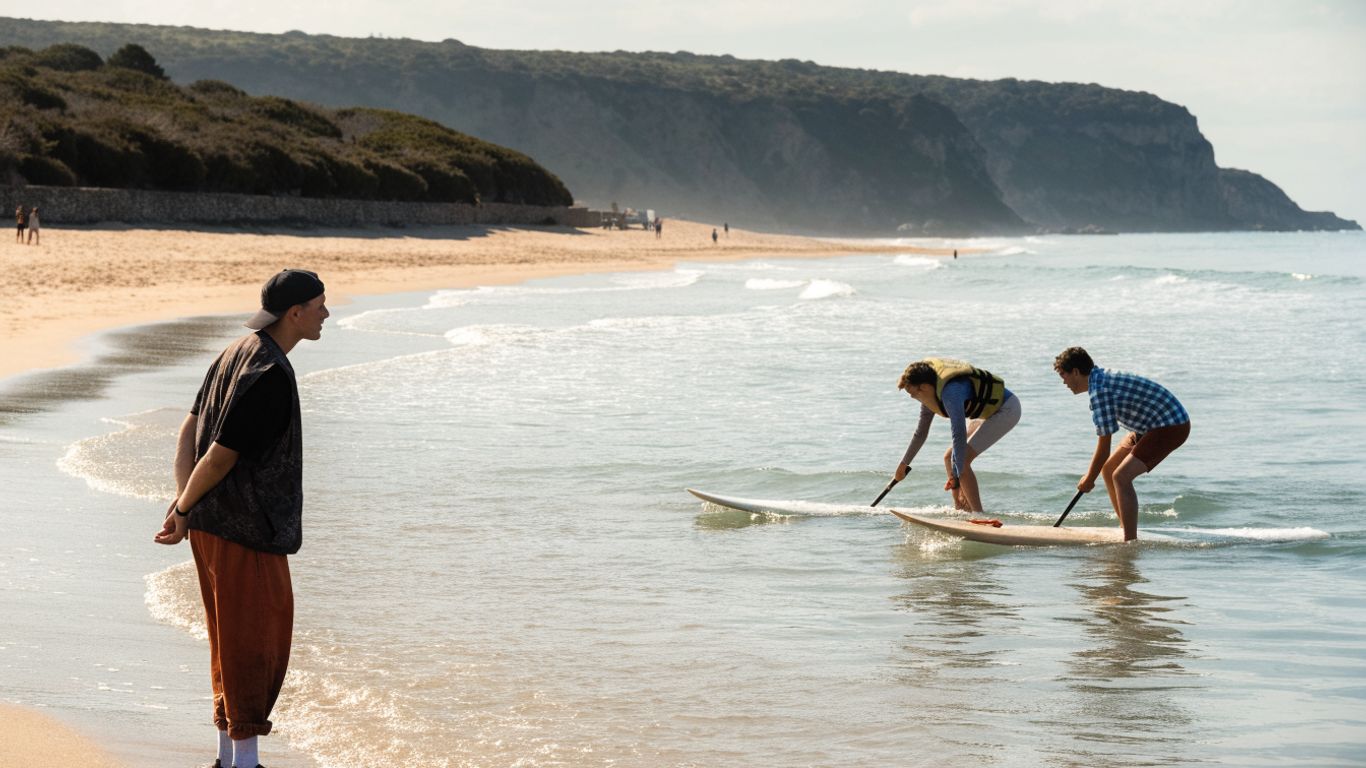
A lesson can help visitors understand local conditions and learn the basics in a supervised setting. Before booking, check what the price includes, where the lesson takes place, and how the school responds if conditions change. Equipment availability and lesson arrangements may vary by season. Ask direct questions before committing, especially if you are new to surfing or traveling with children.
What to look for when choosing a surf school
Look for clear information about instructor qualifications, group size, equipment, and the way lessons are adapted to changing conditions. A school should be able to explain where it plans to teach and what happens if that spot is unsuitable on the day. Read the terms carefully, including cancellation or rescheduling details. A local lesson at Côte des Basques is one option; Côte des Basques surf lessons describe instruction for different experience levels.
How to choose between group and private lessons
Group lessons can suit travelers who enjoy learning alongside others and are comfortable sharing instructor attention. Private lessons may offer more individual feedback, but the best fit depends on your goals, budget, and comfort in the water. Ask how many students are in a group and whether participants are divided by ability. For a first session, clear supervision and suitable conditions matter more than choosing the most intensive format.
Where to rent boards and wetsuits
Rental options are generally found near the surf beaches and in town, though opening times and stock can vary with season and demand. Ask whether the rental includes a leash and wetsuit, what board type is suitable for your experience, and where equipment can be used. Check the return time and the process for damage before leaving the shop. If you are taking a lesson, confirm whether equipment is already included so you do not pay twice.
What to ask about lesson locations and conditions
Before booking, ask which beach the instructor expects to use and whether the location can change with the tide or surf. Find out how the school communicates the exact meeting time, what to bring, and how it handles unsuitable conditions. For travel logistics beyond the lesson, compare current hotel prices for Biarritz here. Knowing where you are staying can make it easier to reach the meeting point on time.
How to choose a break for your skill level
The best beach for a session is the one that matches your ability and the conditions, not necessarily the most famous one. Beginners should prioritize supervision and manageable surf, while more experienced surfers still need to assess local hazards and changing waves. If you are uncertain, ask a qualified instructor or lifeguard rather than taking a guess. A flexible plan makes it easier to switch beaches or skip the water altogether.
Beginner-friendly conditions and lesson spots
New surfers should look for a supervised lesson and conditions that the instructor considers suitable for learning. A beach’s reputation as a place for beginners does not mean every tide or swell will be gentle. Ask the school to recommend the location for that day, and do not paddle out alone if you are still learning basic water awareness. Choosing a smaller, manageable session is a sound start.
Where intermediate surfers can build confidence
Intermediate surfers can use Biarritz’s range of beaches to practice adapting to different settings, but should first assess the surf from shore. A spot that feels familiar in small waves can become demanding when swell or wind changes. Pick a session with a clear entry and exit plan, and avoid crowded peaks if you are unsure of the lineup. Gradual progress is more useful than chasing a difficult wave.
What experienced surfers should consider before paddling out
Experience does not remove the need to check tide, currents, and access. Rocky areas, shifting sand, and crowded water all deserve attention, particularly when conditions are larger or changing. Watch a few sets before entering and identify where you can safely come ashore. If a beach is beyond your comfort level on the day, choosing another break is good judgment, not lost time.
How to match your plans to the day’s conditions
Make the beach choice after checking the forecast, then remain open to changing plans. A small travel kit can also make the day more comfortable, though it does not replace appropriate surf equipment: a travel neck pillow may help on the journey, while electrolyte packets are a separate hydration option to consider according to their instructions. Neither affects wave conditions, so keep the surf decision grounded in the actual forecast and your ability.
Surf safety and getting around the beaches
Safe access is part of planning a surf session in Biarritz. Beaches are exposed to changing Atlantic conditions, and routes between town streets and the water may include steps or steep paths. Keep an eye on local warnings and lifeguard guidance, and avoid entering water that is beyond your ability. Discover France Beyond Paris focuses on practical destination information for visitors to France; for a surf day, that means pairing travel logistics with current beach conditions.
How to spot rip currents and changing conditions
Rip currents can appear as channels of water moving away from shore, sometimes where the surface looks unusually calm between breaking waves. They can be difficult to identify, and conditions may change as sets arrive or the tide shifts. If you are unsure what you are seeing, stay out and ask a lifeguard. If caught in a current, avoid exhausting yourself by fighting directly against it; signal for help and follow local safety guidance.
When to use lifeguarded areas
Use lifeguarded areas when they are operating, and follow the flags and instructions displayed on the beach. The presence of a lifeguard does not make every condition safe for every surfer, but it provides a useful source of local information. Check seasonal operating times rather than assuming supervision is available. If no lifeguard is present, be more conservative and avoid surfing alone.
How to reach the beaches and plan for access
The central beaches are convenient from town, while the southern beaches may require a longer walk and a descent to the shore. Check the route before leaving, especially if you are carrying a board or visiting near high tide. For a broader trip checklist, the town guide can help with local transport and seasonal planning. Other general travel purchases, such as a water filtration system or omega-3 supplement, are unrelated to surf access and should not distract from checking beach conditions and your route.
Surf etiquette and protecting the coastline
Give other surfers room, wait your turn, and avoid dropping in on someone already riding a wave. If you are learning, choose a place where you will not put others at risk, and listen to instructors and lifeguards. Keep litter with you and use marked access routes to avoid damaging the coastline. If you need general trip-planning help, an AI travel-planning tool is a separate resource; it does not replace local surf judgment or official safety information.
Conclusion
Biarritz makes it possible to pair a surf session with an easy-to-explore coastal town, but conditions vary by beach, tide, and season. Check the forecast, choose a break that suits your ability, and ask local instructors or lifeguards when in doubt. A flexible plan is often the best way to enjoy the coast safely.
Frequently Asked Questions
Is Biarritz good for beginner surfers?
It can be, especially with an instructor who selects a suitable beach and conditions for the day. Surf ability and weather still matter, so beginners should not assume every spot is appropriate.
What is the best beach for surfing in Biarritz?
There is no single best beach for every surfer or every day. Côte des Basques, Grande Plage, Marbella, and Milady each have different settings, and conditions should guide the choice.
When is the best time of year to surf in Biarritz?
Surf is possible throughout the year, but weather, crowds, and wave power vary by season. Summer is generally busier, while cooler months can bring more demanding conditions.
Do I need a wetsuit to surf in Biarritz?
Water temperature changes through the year, so the right wetsuit depends on the season and your comfort. Ask a local rental shop or instructor what is appropriate for current conditions.
Does the tide affect surfing at Côte des Basques?
Yes. The tide changes the usable beach area and how waves break, so check tide times and access before heading down to the water.
Can I rent a surfboard in Biarritz?
Rental options are available in the area, but stock and opening times can vary. Confirm equipment, use restrictions, and return details before renting.
Are Biarritz’s surf beaches lifeguarded?
Supervision depends on the beach and season. Check current beach notices and flags, and do not assume lifeguards are present outside posted hours.


