Brittany coastal village with colorful boats and stone houses.
· ·

How to spend a week in Brittany: the perfect slow travel itinerary

Planning a trip to Brittany, France, and want to really soak it all in? This guide is for you. Forget rushing from one spot to the next; we’re talking about a real slow travel approach. This Brittany France one week itinerary slow travel plan is all about enjoying the journey, the food, and the unique culture of this beautiful corner of France without feeling like you’re on a race. We’ll cover charming towns, dramatic coastlines, and ancient history, all at a pace that lets you actually relax and appreciate where you are.

Key Takeaways

  • Brittany is perfect for slow travel, offering a unique Celtic culture and stunning landscapes that are best enjoyed without a packed schedule.
  • A week allows for a good taste of Brittany, focusing on specific regions like the historic Saint-Malo or the dramatic Pink Granite Coast.
  • Renting a car is highly recommended for exploring Brittany’s diverse attractions at your own pace.
  • Embrace the local food scene, from countless varieties of crêpes and fresh oysters to the famous kouign-amann.
  • Consider basing yourself in a few strategic locations to minimize travel time and maximize exploration of surrounding areas.

Embracing Slow Travel in Brittany France

Why Brittany is Ideal for Leisurely Exploration

Brittany. Just the name conjures up images of rugged coastlines, ancient forests, and a culture that feels distinctly separate from the rest of France. And honestly, it lives up to the hype. I’ve visited a few times now, and each trip has reinforced my belief that this region is practically designed for slow travel. It’s not a place you rush through; it’s a place you soak in. The pace of life here feels different, more deliberate. You’ll find yourself lingering over a coffee in a sun-drenched square, taking an extra hour to walk along a coastal path, or getting lost in the stories whispered by centuries-old stones. This is a destination that rewards patience and presence.

When you’re planning a trip, especially if you’re coming from afar, it’s easy to fall into the trap of trying to see everything. But Brittany invites you to do the opposite. Think of it as a collection of experiences rather than a checklist. The winding roads, the charming villages that seem to appear out of nowhere, the sheer beauty of the natural landscape – it all encourages you to slow down. It’s a place where you can truly disconnect and reconnect with yourself and your surroundings. For solo travelers, this region offers a wonderful sense of freedom and safety, allowing for genuine self-discovery Traveling alone in France provides a unique opportunity for self-discovery and a deeper connection with its culture and beauty.

Crafting Your Perfect Brittany France One Week Itinerary Slow Travel

So, how do you actually do slow travel in Brittany for a week? It’s all about intentional choices. Instead of trying to cover vast distances, I recommend picking a couple of bases and exploring outwards. For instance, you could spend three or four days in the historic walled city of Saint-Malo, using it as a launchpad for nearby coastal towns and islands. Then, perhaps move south for the remaining days, settling into a charming town like Vannes or Quimper to explore the southern coast and its prehistoric sites. This approach minimizes packing and unpacking, allowing you to truly settle into each location.

Here’s a way to think about structuring your week:

  • Days 1-3: Northern Charm. Base yourself in or near Saint-Malo. Explore the ramparts, take a day trip to the oyster town of Cancale, and perhaps visit the medieval gem of Dinan. This gives you a taste of the historic north.
  • Days 4-7: Southern Exploration. Relocate to a town like Vannes or Quimper. From here, you can explore the Quiberon Peninsula, the mysterious Carnac alignments, and the picturesque villages of the south.

This structure allows for deeper immersion without feeling rushed. Remember, the goal isn’t to tick off sights, but to experience the atmosphere.

Brittany rewards slow travel. It’s a region that unfolds gradually, revealing its magic to those who take their time. Don’t be afraid to deviate from a strict plan; some of the best discoveries happen when you least expect them.

Understanding the Pace of Breton Life

One of the most important aspects of slow travel in Brittany is understanding and respecting the local pace. Things here often move at a more relaxed rhythm. Shops might close for a longer lunch break, and service in restaurants can be more leisurely – and that’s perfectly okay. It’s part of the charm. Embrace it. Instead of getting frustrated, see it as an opportunity to slow down yourself. Sit back, enjoy a glass of local cider, and watch the world go by. This is especially true outside of the peak summer season. In the shoulder months, like September, you’ll find an even more tranquil atmosphere, with fewer crowds and often better prices on accommodation.

Where to Stay:

For a slow travel experience, consider staying in smaller guesthouses (chambres d’hôtes) or self-catering cottages (gîtes) rather than large hotels. This offers a more authentic connection to the region. Look for places slightly outside the main tourist hubs for a truly peaceful retreat. Websites like Booking.com or local tourism sites can be great resources for finding these hidden gems. For example, if you’re exploring the north, a quiet village near Saint-Malo could be ideal. If heading south, a rural gîte near Vannes offers a perfect base. You might even consider a place along one of the many scenic drives Discover France’s hidden scenic drives beyond Paris and the Riviera. The key is to choose a location that feels like a home base, not just a place to sleep.

Discovering the Historic Walled City of Saint-Malo

Saint-Malo is one of those places that just grabs you the moment you arrive. It’s a city that feels like it’s been plucked straight from a history book, with its imposing walls and salty sea air. I remember my first visit; I was immediately struck by how the city is completely surrounded by water, and how the tides dramatically shape the landscape around it. It’s a port city, and you can really feel that maritime spirit everywhere you go.

Exploring the Ramparts and Old Town

Walking the ramparts of Saint-Malo is an absolute must-do. These ancient walls encircle the entire old town, and you can stroll along them for miles, taking in incredible views of the English Channel on one side and the charming, tightly packed buildings of the city on the other. It’s free to walk the ramparts, and I found myself stopping every few minutes just to soak it all in. You can access different parts of the old town from here, and also get down to some of the beaches like Plage de l’Éventail. Inside the walls, the old town itself is a maze of narrow, cobbled streets, lined with granite buildings. It’s easy to get lost, but honestly, that’s part of the fun. You’ll stumble upon little squares, historic churches like the Saint-Vincent Cathedral, and plenty of shops and cafes. Keep an eye out for the memorials to Jacques Cartier, the famous explorer who set sail from here.

  • Walk the full circuit of the ramparts for panoramic sea views.
  • Wander through the old town’s narrow streets, discovering hidden squares.
  • Visit the Saint-Vincent Cathedral to admire its stained glass.
  • Look for historical markers and monuments, especially those related to Jacques Cartier.

The sheer scale of the ramparts is impressive, a testament to the city’s long history of defense. Standing atop them, you can almost imagine the ships sailing in and out of the harbor centuries ago.

Culinary Delights at La Maison du Beurre Bordier

If you’re a fan of butter, or even if you’re just curious, you absolutely have to visit La Maison du Beurre Bordier. This place is famous for its incredible, artisanal butter. They have so many different kinds, all churned with traditional methods. I tried a few different flavors, and it was a revelation – butter can be so much more than just… butter! It’s a small shop, but the quality of their products is outstanding. It’s a perfect spot to pick up a unique souvenir or just treat yourself to something delicious. It’s a great example of the local produce you can find in Brittany.

Day Trips from Saint-Malo

Saint-Malo is a fantastic base for exploring the surrounding area, and I highly recommend staying here for a few nights to take advantage of its location. It’s easy to get around by car, and many of the most beautiful spots in northern Brittany are within a short drive. I found that basing myself in Saint-Malo for about five nights worked really well for my itinerary, allowing for relaxed day trips without constantly packing and unpacking. It’s also a good place to find a range of accommodations, from hotels to apartments.

  • Cancale: Just a short 20-minute drive away, Cancale is famous for its oysters. Even if you’re not an oyster lover, the harbor and the market are worth a visit. It’s a charming coastal town with a really authentic feel.
  • Brocéliande Forest: If you’re interested in Arthurian legends, this is the place to go. It’s a mystical forest filled with ancient trees and sites associated with King Arthur and Merlin. It’s a bit further out, but a truly magical experience.
  • Dinan: This medieval town is absolutely stunning, with its half-timbered houses and cobblestone streets. It feels like stepping back in time. You can easily spend a day just wandering around its picturesque lanes and enjoying the atmosphere. You can find some great places to stay in Dinan if you decide to spend a night or two there, like Maison La Tour, which offers apartment-style rooms.

Where to Stay:

Saint-Malo itself offers a good range of accommodation options. I’d recommend looking for places within or very close to the old walled city for the best atmosphere and convenience. There are hotels and apartment rentals available. Booking in advance is usually a good idea, especially during peak season. You can use online maps to compare hotels and apartments in Saint-Malo to find something that suits your budget and style.

Coastal Charms and Arthurian Legends

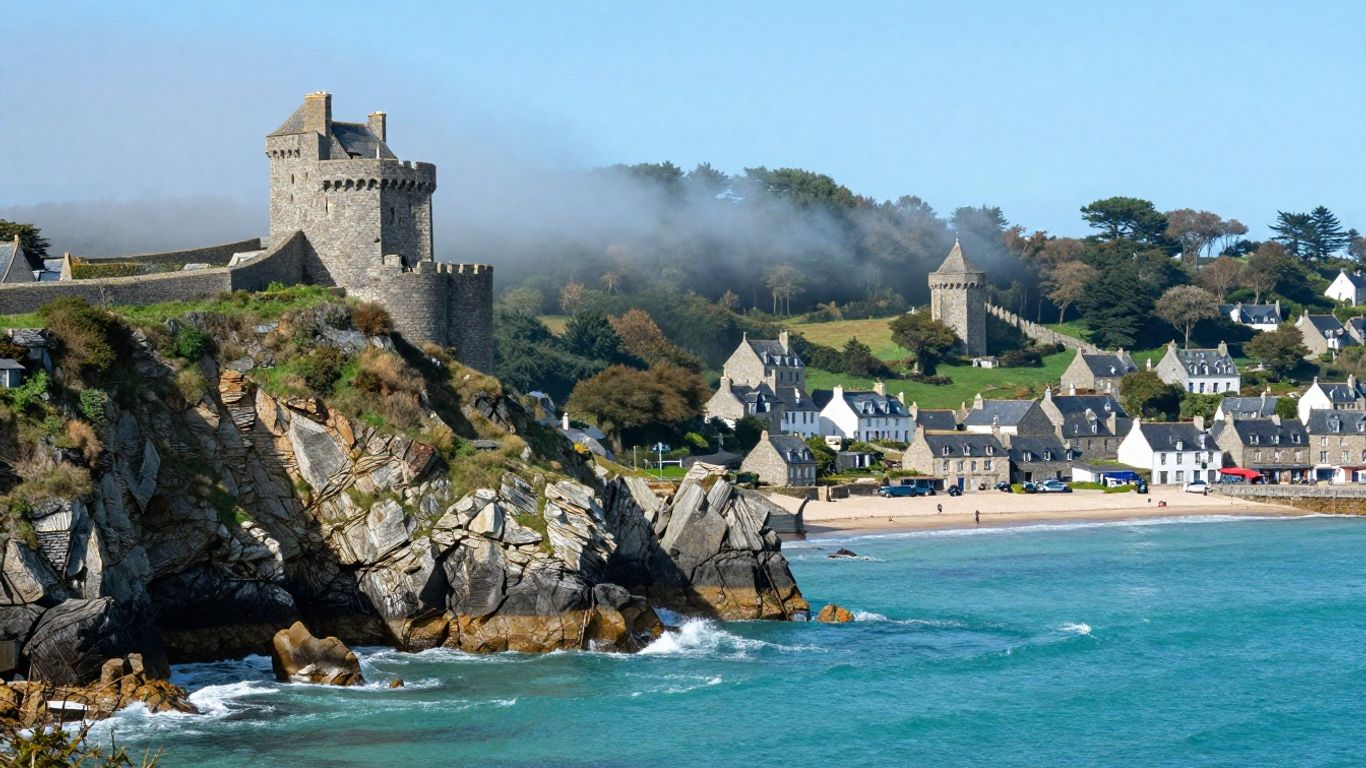
Brittany coastline with cliffs, castle, and charming village

Brittany has this captivating edge where wild coasts brush up against deep-rooted legends. My time there was spent wandering through harbors full of local life, gnarly old forests tied to Arthurian myth, and cobbled streets that feel like a movie set. The slow pace lets you actually notice all the salty air and mossy trails under your feet. Here’s how I recommend soaking it all in:

A Visit to Cancale and its Oysters

Cancale might be a small harbor town, but it ended up as one of my most vivid travel memories in Brittany. The whole vibe is about oysters—fresh, cheap, and enjoyed right on the sea wall. At the Marché aux Huîtres, I easily found locals selling their morning’s oyster haul. I’m not the biggest seafood fan but, honestly, tossing empty shells towards crying seagulls is fun for anyone. If you do happen to enjoy oysters, go for a dozen on the spot with a pinch of lemon and a cup of white wine—nothing fancy, just pure oceanic flavor.

A few tips to make the most of Cancale:

  • Start with oysters on the harbor wall in the morning. The earlier you arrive, the more atmosphere.
  • Pop into a crêperie for a smoked fish galette. Chez Odette is a cozy spot with local cider and friendly staff.
  • Take the short walk (or drive) to Pointe du Grouin. The views are wild and windswept, with jagged rocks meeting the sea.

If you visit on a weekday morning, you’ll catch fishermen hauling crates onto shore, and the town will feel like it belongs just to you.

Where to stay: For staying nearby, many simple guesthouses and B&Bs line the coast, but I liked La Mère Champlain right on Cancale’s main square—excellent views and a reliable breakfast.

Journeying Through Brocéliande Forest

The Brocéliande Forest, known to locals as Paimpont, is a place where stories and landscapes overlap. You can really sense why writers picked it as the backdrop for King Arthur’s tales.

Here’s how I spent a full, satisfying day:

  1. Start at the Château de Comper – Arthurian Centre (small admission fee). I learned about Merlin, saw exhibits, and then walked shady trails around the ponds. There’s even a centuries-old tree called Merlin’s Oak that felt out of this world.
  2. Don’t miss the Barenton Fountain, said to have magical properties. It’s maybe a 20-minute walk from the nearest road—mossy, atmospheric, and straight from a legend.
  3. Paimpont Abbey is nearby, quietly standing since the 13th century. The village is tiny but has one or two places for coffee.

After a few hours, I had tired legs and a sense that time hits pause in these woods. Keep in mind, paths can be muddy in spring—wear boots you don’t mind getting dirty.

Where to stay: The town of Paimpont or Josselin (a little further west) both have charming guesthouses, like Auberge des Voyajoueurs, where you wake up with forest breezes through your window.

Exploring the Medieval Town of Dinan

Finishing my day with a stroll through Dinan felt like peeking inside Brittany’s storybook. The ramparts give wide river views, and the old stone houses are so well kept it’s honestly a bit surreal. Dinan can be touristy, but if you’re there early or late in the day, you’ll get streets nearly to yourself.

For best enjoyment:

  • Wander Rue du Jerzual, the steep cobbled street from the river port up into town.
  • Stop at L’Absinthe for a Breton cider—or if you’re feeling adventurous, a St. Breton Spritz.
  • Don’t skip the small art galleries. Local paintings of Brittany’s landscapes are all over.

Sometimes it’s worth grabbing a pastry, finding a bench, and just people-watching. Life slows down in the best way along Dinan’s riverfront.

Where to stay: Maison La Tour makes a convenient and warm home base, right in Dinan’s old center. There are several small hotels or B&Bs—perfect for a night or two of real medieval immersion.

For anyone considering which parts of Brittany to focus on, the north coast definitely stands out for its working harbors, historic towns, and sense of everyday magic. If you’re traveling with family, even kids will love the stories and wild nature—there’s plenty more inspiration among France’s underrated coastal family adventure destinations too.

The Dramatic Beauty of Brittany’s Coastlines

Experiencing the Pink Granite Coast

When I think about Brittany’s coastline, the Pink Granite Coast (Côte de Granit Rose) is the first thing that comes to mind. It’s just stunning. The rocks here are this incredible rosy hue, especially when the sun hits them just right. We spent a whole afternoon just wandering around Ploumanac’h, which is part of Perros-Guirec. The famous lighthouse, Phare de Ploumanac’h, is perched right on these amazing formations. It feels like another planet, honestly.

We followed parts of the GR34, also known as the Sentier des Douaniers (Customs Officers’ Path), which hugs the entire coast. It’s a fantastic way to see the scenery up close. You can find parking areas and then just hop on and off the path. The sheer scale of these sculpted rocks is something you have to see to believe.

Where to Stay:
Consider staying in Perros-Guirec or Trégastel for easy access to the Pink Granite Coast. There are hotels, gîtes (holiday rentals), and campsites available.

Adventures on the Cap Sizun Peninsula

The Cap Sizun Peninsula, way out west, feels wilder, more rugged. This is where you get those dramatic cliffside views that just take your breath away. Pointe du Raz is the absolute must-see here. It’s the westernmost point of mainland Brittany, and on a clear day, you can see the Île de Sein. It’s a place that really makes you feel the power of the ocean.

We also explored Pointe des Espagnols, which has these incredible cliffs and old fortifications. It’s a bit of a hike to get to the best viewpoints, but totally worth the effort. The wind can be fierce out here, so bring a jacket!

  • Must-See Spots: Pointe du Raz, Pointe des Espagnols, Baie des Trépassés (Bay of the Dead).
  • Activities: Coastal walks, photography, bird watching.
  • Getting Around: A car is pretty much essential to explore the peninsula properly.

The raw, untamed beauty of Cap Sizun is a powerful reminder of nature’s artistry. The constant battle between land and sea has carved a landscape that is both beautiful and a little bit intimidating.

Coastal Walks on the Crozon Peninsula

The Crozon Peninsula is another gem, offering a mix of sandy beaches, rocky coves, and high cliffs. We based ourselves in Morgat for a couple of nights, which was a great starting point. From there, we drove to Pointe de Penhir. The views from the cliffs here are spectacular, with sea stacks rising out of the water. It’s a popular spot for hikers and photographers.

We also loved exploring the smaller coves and beaches. Camaret-sur-Mer is a charming fishing port that’s perfect for a relaxed lunch. The whole peninsula has a really laid-back vibe, perfect for slow travel. You can spend days just exploring different stretches of coastline, finding hidden spots.

Where to Stay:
Morgat and Camaret-sur-Mer offer a good range of accommodations, from hotels to apartments. If you prefer something more rustic, there are also campsites.

Unveiling Brittany’s Prehistoric Mysteries

Brittany feels ancient, and nowhere is this more apparent than in its prehistoric sites. It’s like stepping back thousands of years. I remember my first visit, expecting just a few old stones, but what I found was a landscape dotted with the remnants of a civilization that lived here long before written records. It’s a humbling experience to stand among these megaliths and wonder about the people who erected them.

The Enigmatic Alignments of Carnac

The star attraction has to be the Carnac alignments. Honestly, pictures don’t quite capture the sheer scale of it. We’re talking about thousands of standing stones, or menhirs, stretching across fields for miles. It’s organized into different sections, like Kermario, Kerlescan, and Le Manio. Walking through them, especially when it’s quiet, you can almost feel the energy of the place. It’s one of the most extensive prehistoric sites in Europe.

  • Kermario: This is the largest and most impressive section, with rows of stones that seem to go on forever.
  • Kerlescan: Smaller but densely packed, offering a different perspective on the layout.
  • Le Manio: Features a large quadrangular enclosure and a solitary, impressive menhir.

It’s a bit mind-boggling to think about how these massive stones were moved and placed with such precision. The theories range from astronomical observatories to religious sites, and honestly, the mystery is part of the allure.

Where to Stay: For exploring Carnac, staying in the town of Carnac itself is convenient. There are hotels and gîtes (holiday rentals) available. Alternatively, the larger town of Vannes, about a 40-minute drive away, offers more accommodation options and is a good base for exploring the wider Gulf of Morbihan area.

Exploring the Quiberon Peninsula

Just south of Carnac, the Quiberon Peninsula offers a different kind of prehistoric experience, mixed with dramatic coastal scenery. Here, you can find more megalithic sites, like the dolmen of Mané-Groh. But it’s also a place where the wild Atlantic coast really shows off. The drive along the peninsula is stunning, with rugged cliffs and sandy beaches.

The wild beauty of the coast here is captivating, and it’s easy to imagine ancient peoples drawing inspiration from this powerful landscape.

Discovering Megalithic Sites Near Carnac

While Carnac gets most of the attention, the surrounding area is rich with other prehistoric finds. You don’t need to go far to find more dolmens (burial chambers) and menhirs. I found that picking up a local map from a tourist office was incredibly helpful. It pointed out smaller, less-visited sites that were just as fascinating. It felt like a treasure hunt, stumbling upon these ancient markers in quiet fields or along coastal paths. It’s a great way to experience France’s hidden hiking gems if you enjoy a bit of exploration off the beaten path.

Tips for Visiting:

  • Wear comfortable shoes, as you’ll be doing a lot of walking.
  • Check the opening times for any visitor centers or guided tours, especially outside of peak season.
  • Respect the sites; these are ancient monuments and should be treated with care.

Exploring these prehistoric sites really adds a unique layer to a trip to Brittany. It’s a journey into deep history that stays with you long after you’ve left.

Charming Towns and Breton Culture

Beyond the dramatic coastlines and ancient stones, Brittany is dotted with towns and villages that feel like they’ve stepped right out of a storybook. These places are where you can really slow down and soak in the local atmosphere. I found that spending time just wandering through their streets was one of the best ways to experience the region.

Wandering Through Quimper’s Old Town

Quimper, often called the cultural heart of Brittany, is a place I always look forward to visiting. The Odet River winds through the town, and it’s crossed by so many charming, flower-draped bridges – it’s really quite picturesque. The star of the show is definitely the Cathédrale Saint-Corentin, Brittany’s oldest cathedral, with a spire that looks like it was designed by a lace maker, which makes sense given the region’s famous lacework. Right next door, the Musée Départemental Breton is packed with artifacts that go way back, even before Roman times, and displays traditional Breton furniture. Across the square, you’ll find a great art museum showcasing local artists, including those from the Pont-Aven school. There’s a fantastic, sprawling cafe on one corner of the main square that’s perfect for people-watching. Deeper into the town, a lively food market offers fresh produce, and countless shops beckon. You can find all sorts of places to stay here, and the train station (gare) connects you to the rest of France.

Where to Stay in Quimper:

  • Budget-friendly: Look for small hotels or guesthouses just outside the immediate city center for better value.
  • Mid-range: Many charming hotels are located within the old town, offering easy access to sights.
  • Luxury: Boutique hotels in historic buildings provide a more upscale experience.

The Picturesque Village of Rochefort-en-Terre

Rochefort-en-Terre is one of those places that truly lives up to its reputation as one of France’s most beautiful villages. I remember walking its cobblestone streets, lined with shops selling local crafts and art, and feeling like I’d stepped back in time. It’s small, so you can explore it quite thoroughly in a few hours, but it’s the kind of place you might want to linger longer, perhaps with a coffee at one of the small cafes. It’s a designated ‘Petite Cité de Caractère,’ and you can see why. Even when I visited outside of peak season, it had a quiet charm that was really appealing.

This village feels remarkably preserved, as if time has gently passed it by. The architecture is stunning, with many buildings dating back centuries, and the flower boxes adorning windowsills add a cheerful touch.

Experiencing the Maritime Heritage of Roscoff

Roscoff is a working port town with a distinct character, famous for its seafaring history and, historically, its onion trade. I enjoyed walking around the old port, admiring the granite buildings that speak of its prosperous past. It’s a town that feels very connected to the sea. You can learn about its maritime heritage at the Musée de Roscoff, or simply enjoy the atmosphere of the bustling harbor. It’s also a great place to sample some of the local seafood.

Getting to Roscoff:

  • By Train: Roscoff has a train station, with connections usually requiring a change in Paris or another major city.
  • By Car: Easily accessible by road, with parking available in designated areas.
  • Ferry: Roscoff is also a port for ferries to the UK (Plymouth and Cork).

These towns, each with its unique flavor, offer a wonderful counterpoint to the wilder landscapes of Brittany. They are perfect spots to slow down, enjoy a leisurely meal, and truly appreciate the local culture.

Culinary Adventures in Brittany

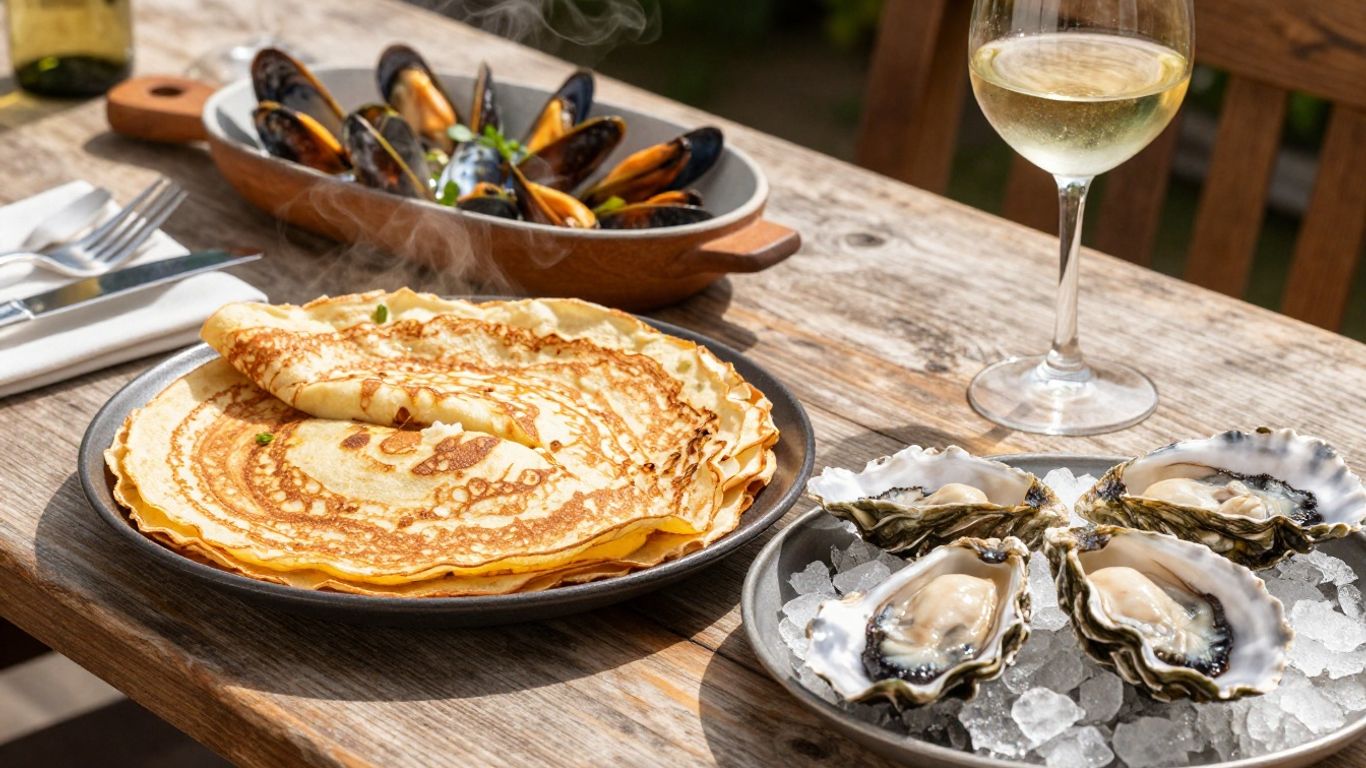
Brittany food spread with crepes, mussels, and oysters.

When I think back to my time in Brittany, the food is definitely one of the first things that comes to mind. It’s not just about sustenance; it’s a whole experience, a big part of the slow travel vibe they have going on there. You can’t rush a good meal, right?

Savoring a Thousand Varieties of Crêpes

Seriously, you’ll find crêpes everywhere, and not just the sweet kind for dessert. They have savory galettes made with buckwheat flour, which are a staple. I remember one little place in Dinan where I had a galette with ham, cheese, and an egg – simple, but so good. And then there are the sweet crêpes, made with wheat flour, in all sorts of flavors. You could probably eat a different kind of crêpe every day for a week and still not try them all. They’re perfect for breakfast, lunch, or a snack. Don’t be afraid to try some of the more unusual fillings; sometimes those are the best discoveries.

Indulging in Fresh Oysters from Cancale

If you’re near the coast, especially around Cancale, you absolutely have to try the oysters. They’re famous for a reason. I went down to the port, and you could just see them being harvested. The taste of the sea is so fresh, it’s unlike anything you get inland. They have different types, like the flat oysters and the more common hollow ones. I found I preferred the hollow ones, but honestly, both were amazing. It’s a real treat to sit by the water with a dozen fresh oysters and a glass of local cider. It’s a simple pleasure, but it feels so luxurious.

Tasting the Famous Kouign-Amann

This is the one sweet treat you cannot miss. Kouign-amann is this incredible, buttery, caramelized cake that just melts in your mouth. It’s made with layers of dough, butter, and sugar, and when it bakes, the sugar gets all gooey. I first tried a small one from a bakery in Saint-Malo, and I was hooked. They’re often sold as individual portions, which is perfect because they are quite rich. I saw some places that offered them with apples added, which sounded good, but I stuck to the classic version. It’s the kind of thing that makes you want to slow down and just savor every bite.

Where to Stay:

While you can find great food in most towns, basing yourself in a coastal town like Saint-Malo or Cancale will give you the freshest seafood. For crêpes and kouign-amann, any charming town like Dinan or Quimper will have excellent bakeries. If you’re looking for a truly immersive food experience, consider staying in a smaller village where local markets are a big part of life. Many small inns and guesthouses offer breakfast featuring local pastries and jams, giving you a taste of Breton culture right from the start of your day.

Navigating Brittany by Car

Having a car really opens up Brittany. I found that relying solely on public transport would have made it tough to see some of the more remote coastal spots and charming villages I loved. Renting a car gave me the freedom to stop whenever a view caught my eye or to explore a tiny hamlet that wasn’t on the main tourist trail. It’s definitely the way to go if you want to experience the region at your own pace.

Renting Your Vehicle for a Breton Road Trip

When I planned my trip, I booked my rental car in advance. It’s a good idea to do this, especially if you’re traveling during peak season. I used a comparison site to find the best deal, and it saved me a bit of money. Most major rental companies operate out of the larger airports like Rennes or Nantes, but you can also find options in bigger towns. Make sure you understand the insurance options; I always opt for the full coverage to avoid any surprises.

  • Book in advance: Especially for summer travel.
  • Compare prices: Use rental comparison websites.
  • Check insurance: Understand what’s covered.
  • Inspect the car: Note any existing damage before you drive off.

Tips for Driving in Rural Brittany

Driving in Brittany is generally pretty straightforward, but there are a few things to keep in mind. The roads can be narrow, especially in the countryside and leading into smaller villages. Many are lined with stone walls or hedges, so take your time and be aware of oncoming traffic. Speed limits are clearly posted, and they are enforced, so stick to them. I found that using a GPS or a good mapping app on my phone was a lifesaver for finding my way around, particularly on the winding coastal roads. Navigation apps are incredibly helpful.

Be prepared for slower speeds than you might be used to, especially on the smaller roads. It’s all part of the charm of exploring Brittany, allowing you to soak in the scenery without feeling rushed.

Maximizing Your Itinerary with a Rental Car

Having a car really lets you tailor your trip. Instead of being tied to train schedules, you can create your own adventure. For example, if you’re based near Saint-Malo, a car makes it easy to pop over to Cancale for oysters in the morning and then explore the medieval town of Dinan in the afternoon. It also allows you to easily visit places like the Pink Granite Coast or the prehistoric sites of Carnac without needing to book separate tours. I found that staying in one or two central locations and using the car for day trips worked best for a slow travel approach. This way, you avoid the hassle of constantly packing and unpacking while still seeing a lot of the region.

Where to Stay:

When I visited, I found that basing myself in a couple of strategic locations worked really well. For exploring Northern Brittany, I stayed a few nights near Saint-Malo, which was perfect for day trips to Dinan and the coast. Later in the week, I moved south and found a lovely gîte (a self-catering holiday home) near Vannes, which was ideal for exploring the Quiberon Peninsula and the Carnac alignments. Look for accommodations that offer parking, as it can be limited in some of the older towns.

Basing Yourself for Day Trips

Figuring out where to stay in Brittany can really shape your trip, especially if you’re planning on doing a lot of day trips. I learned this firsthand; trying to cover too much ground from one spot can turn a relaxing vacation into a bit of a driving marathon. For a week-long slow travel experience, I’d really suggest picking two, maybe three, bases. This way, you spend less time on the road and more time actually soaking in the atmosphere of each area.

Strategic Locations for Exploring Northern Brittany

If you’re focusing on the northern coast, which is packed with historic towns and dramatic coastlines, I found that basing myself near Saint-Malo or Dinan worked wonders. These towns are charming in themselves, but they also put you in a prime position to explore places like Mont Saint-Michel, the aforementioned Dinan, and the lively port of Saint-Malo. You could even venture out to Cancale for some fresh oysters. I stayed in a small gîte just outside of Dinan once, and it was perfect – quiet, but only a ten-minute drive to the medieval ramparts. It felt like a real escape.

  • Saint-Malo: Great for exploring the walled city and taking day trips east towards Mont Saint-Michel or west along the coast.
  • Dinan: Offers a deep dive into medieval history and is a good jumping-off point for the Rance River valley and nearby coastal towns.
  • Dol de Bretagne: A smaller, more central option if you want to be equidistant from Saint-Malo and Mont Saint-Michel, with a lovely cathedral.

Where to Stay: Look for "chambres d’hôtes" (B&Bs) in the countryside surrounding these towns for an authentic experience. Many historic manor houses have been converted into lovely accommodations.

Choosing a Base for Southern Brittany Exploration

Heading south opens up a different kind of magic – think prehistoric sites and rugged peninsulas. For this part of the trip, I’d recommend looking at bases around Vannes or Quimper. Vannes is a beautiful historic city on the Gulf of Morbihan, making it ideal for exploring the megalithic sites of Carnac and the Quiberon Peninsula. It’s also a great spot to just wander and enjoy the atmosphere. On another trip, I based myself near Quimper, which was fantastic for exploring the western coast, including the Cap Sizun Peninsula and the charming town itself.

  • Vannes: A historic port city, perfect for exploring the Gulf of Morbihan and the Carnac alignments.
  • Quimper: Known for its pottery and cathedral, it’s a good hub for exploring the western coast and Finistère.
  • Auray: A smaller, picturesque town that’s conveniently located near Carnac and the coast.

When choosing your base in southern Brittany, consider what kind of atmosphere you prefer. Vannes offers a city feel with plenty of history, while towns closer to the coast might provide a more relaxed, seaside vibe. Both have their own unique charm.

Enjoying Multiple Nights in Key Towns

Honestly, trying to pack too many moves into one week can be exhausting. Instead of changing hotels every night or two, I found that staying put for three or four nights in each chosen base made a huge difference. It allowed me to really get a feel for the place, discover hidden gems without rushing, and even have a lazy morning or two. For instance, spending a full week in Saint-Malo, as some people do, means you can really explore the ramparts, enjoy the beaches, and still have time for day trips without feeling pressured. It’s all about embracing that slow travel pace.

  • Reduce travel fatigue: Fewer hotel changes mean more relaxation time.
  • Deeper exploration: Allows for spontaneous detours and revisiting favorite spots.
  • Local immersion: More time in one area helps you connect with the local culture and rhythm.

Where to Stay: Consider apartments or gîtes if you’re staying for multiple nights. Having a small kitchen can be nice for preparing simple breakfasts or picnics, adding to the slow travel feel.

Beyond Brittany: Nantes and Paris

Leaving Brittany always stings a little bit, but as someone who likes to drag out the magic as long as possible, I always find a couple of last stops can really cap off the trip. Whether you’re heading home or just looking to squeeze a bit more out of France, both Nantes and Paris have their own energy and charm. Here’s how I’d recommend ending your journey:

A Glimpse of Nantes’ Unique Attractions

Nantes isn’t technically in Brittany anymore, but it certainly feels like it if you ask the locals. I spent a laid-back day here, and it felt like a perfect bridge between the relaxed coasts and the buzz of Paris. Nantes has a quirky, creative feel that stands out immediately.

Here’s how I made the most of my visit:

  • Brunch at Dînette: Portions were massive, but what really stood out was the banoffee pie—hands down the best dessert I had on the trip.
  • Walk the Château des Ducs de Bretagne ramparts: I loved exploring the moat and learning about the city’s old ties to Brittany.
  • Pop into the Passage Pommeraye: This covered mall rivals anything in Paris and is great on a rainy day.
  • Watch the giant mechanical elephant at Les Machines de l’Île: Whether you go inside or not, the sight of this massive steampunk elephant is a must-see.
  • Trentemoult: Hopping over to this colorful riverside village for an evening drink made me feel miles away from the city.

Make sure you go to Talensac Market in the morning (but not on Mondays). The produce is fresh, the wine is cheap, and it’s full of local character.

Where to stay in Nantes

If you’ve got an early train or want to take your time before heading to Paris, hang your hat here for a night. I’ve found there’s plenty of choice:

Accommodation Type Price Range (per night) Location
Hostel $45-60 Near train station
Budget hotel $65-90 City center
Boutique hotel $100-160 Historic quarter

Try to stay close to the castle or near Place Royale if you want to enjoy Nantes on foot.

Planning Your Return Journey to Paris

From Nantes, it’s pretty easy to get back to Paris, but you’ve got options on how to break up the trip. I resisted the urge to rush—it helps to give yourself a little leeway for a final adventure. Take the train if you’re ready for city life, or road trip it and stop at some classic French towns:

  • Angers: Home to the apocalypse tapestry, the château here is impressive. The town has just the right amount of bustle for a lunch stop.
  • Le Mans: Yes, there’s the famous racetrack, but even if you’re not into cars, the old medieval streets are worth wandering.
  • Chartres: Chartres Cathedral is one of the most beautiful I’ve ever seen—it was worth a quick detour.

Recommended Stops (Driving from Nantes to Paris)

Stop Distance from Nantes Highlights
Angers 90 km (1 hr) Château, Apocalypse Tapestry
Le Mans 160 km (1.5 hrs) Medieval Cité Plantagenêt
Chartres 300 km (2.5 hrs) Chartres Cathedral
Paris 385 km (3.5-4 hrs) City of Light

Optional Stops En Route to the Capital

If you have extra time and are up for detours, I’ve found a few worthwhile additions:

  • Stop in the Loire Valley for a castle crawl—pick a château or two to explore.
  • See if there’s a local market day in any of the towns above for a final taste of French town life.
  • If winter’s your season, places like Paris or Colmar in Alsace become a fairytale setting (France’s underrated winter destinations) with their festive lights and warm cafes.

Don’t let the end of your Brittany trip feel like a goodbye—think of it as a chance to see a different side of France before heading home. I was already planning my return as the train rolled out of Nantes.

Wrapping Up Your Brittany Adventure

So, that’s a wrap on our week exploring the beautiful region of Brittany. We’ve seen charming towns, walked along rugged coastlines, and tasted some truly amazing food. Remember, this itinerary is just a suggestion – feel free to linger longer in places you love or skip others that don’t quite fit your vibe. The real magic of Brittany lies in its slower pace, so take your time, soak it all in, and let the unique culture and stunning landscapes work their charm. You might find, like we did, that a week is just enough to get a taste of Brittany, leaving you eager to plan your return trip.

Frequently Asked Questions

How many days should I spend in Brittany for a relaxed trip?

A week is a great amount of time to enjoy Brittany without rushing. If you have less time, focus on one area, like the north or south. Even with just a few days, you can still see some amazing places.

What’s the best way to get around Brittany?

Renting a car is the easiest way to explore Brittany. Many towns and sights are spread out, and having a car lets you visit small villages and coastal spots at your own pace.

When is the best time to visit Brittany?

Summer is the most popular time because the weather is warmer and there are more activities. Early fall is also nice, with fewer crowds and good prices. Winter can be quiet, but bigger towns still have things to do.

Are there any must-try foods in Brittany?

Yes! Brittany is famous for its crêpes, fresh oysters from Cancale, and the sweet, buttery kouign-amann cake. Seafood is also a big part of the local cuisine.

Can I visit Brittany without speaking French?

Yes, you can get by with basic English in most tourist areas. Learning a few French words and phrases will help, but many people in hotels and restaurants speak some English.

Is Brittany suitable for families or kids?

Absolutely. There are plenty of beaches, walking paths, and fun towns to explore. Many places, like the Pink Granite Coast and Crozon Peninsula, are great for outdoor activities with kids.

Should I book my accommodations in advance?

It’s a good idea, especially in summer or if you want to stay in popular towns. Booking ahead gives you more choices and better prices, especially for unique places like bed and breakfasts or beachside cabins.

What are some good bases for day trips in Brittany?

Saint-Malo, Dinan, and Vannes are all great towns to stay in while you explore nearby sights. Choosing a couple of bases and doing day trips helps you see more without changing hotels every night.

Similar Posts