

Cycling the Loire Valley: The Best Self-Guided Bike Routes Along the River

Key Takeaways
The Loire Valley is well suited to a self-guided cycling holiday, with riverside paths, quiet roads, historic towns, vineyards, and château detours. The route can be tackled in sections or as a longer journey from the Atlantic toward Orléans.
- Ride in manageable stages and leave time for château visits.
- Expect mostly gentle terrain, with occasional roads and short climbs.
- Nantes, Tours, Blois, and Orléans are useful transport gateways.
- Book accommodation and popular château visits ahead in busy months.
- Carry water, snacks, navigation tools, and a plan for rural services.
1. Nantes to Saint-Brevin-les-Pins: The Loire Valley cycling route to the Atlantic
Nantes is a practical starting point for a Loire Valley cycling route, especially for travelers arriving by train or spending a few days in the city. From here, the Loire widens as it approaches the Atlantic, and the landscape gradually shifts from urban waterfronts to open marshes, industrial heritage, and coastal scenery. The ride is more about the river’s changing character than about grand château architecture.
Leaving Nantes, follow the river west through a landscape shaped by ports, islands, and broad floodplains. Saint-Nazaire brings a distinctly maritime atmosphere, while the crossing toward Saint-Brevin-les-Pins places you close to beaches and the river mouth. Because the scenery and services vary along the way, check distances and water stops before setting out rather than assuming every village will have an open café.
This stage works well as the beginning or end of a longer trip, depending on your direction of travel. Riders who prefer shorter days can split the journey and use Nantes or nearby riverside communities as overnight bases. The Atlantic section also provides a useful contrast with the quieter vineyard and château country farther inland.
2. Nantes to Ancenis: Riverside scenery, vineyards, and historic towns
The ride east from Nantes to Ancenis introduces the calmer rhythm associated with the Loire’s inland valley. The river remains broad and changeable, with sandy islands, wooded banks, and open views that reward an unhurried pace. Historic settlements and vineyard country add reasons to stop beyond the cycling itself.
Clisson makes a worthwhile detour for travelers interested in medieval-inspired architecture and a distinctly different townscape from Nantes. Farther east, the route passes through wine-growing areas connected with Muscadet, where tasting visits should be planned in advance because opening hours can be limited. Ancenis is a convenient overnight stop, with a riverfront setting and access to the next stretch toward Angers.
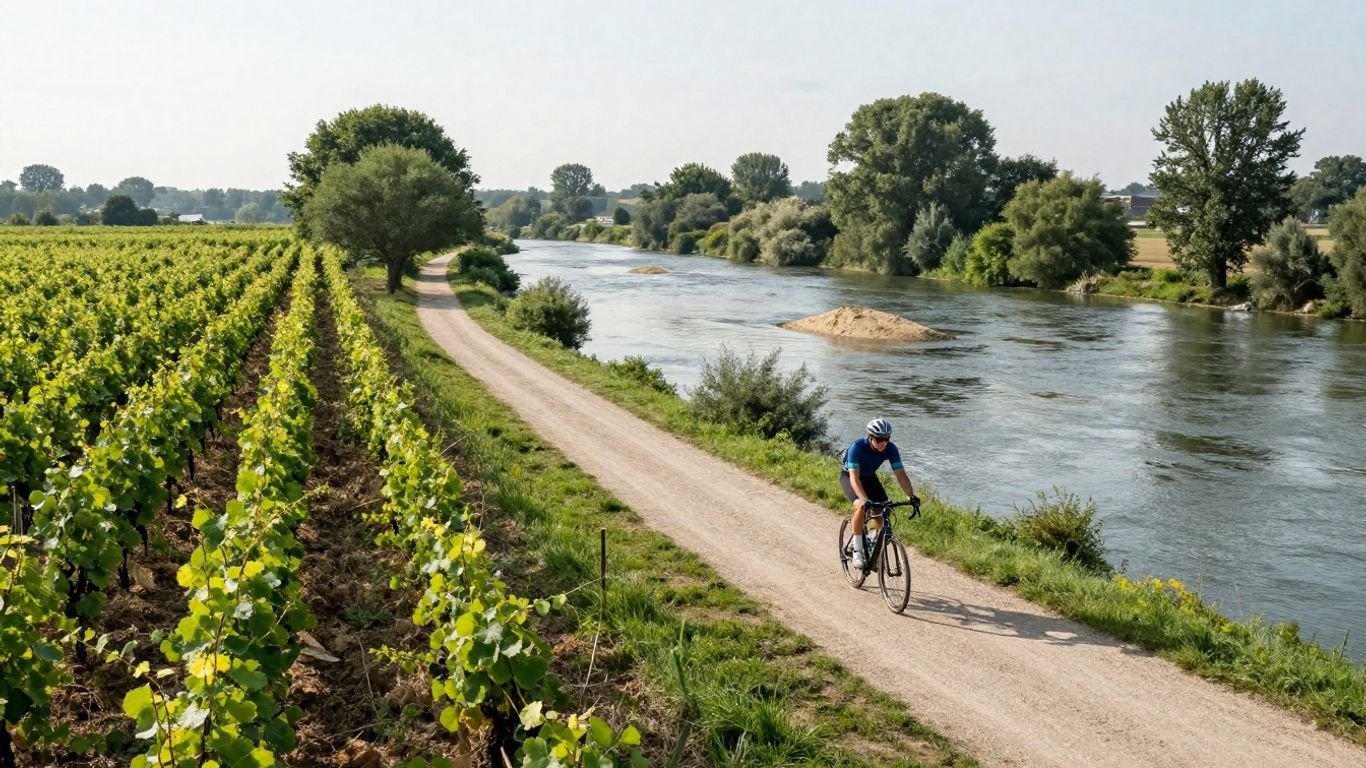
Keep this section flexible if you want to explore side roads or local markets. A slower schedule gives you time to compare the river’s exposed floodplain with the more sheltered lanes among vines. For broader planning, this Loire Valley travel guide can help place the cycling route within a larger trip through the region.
3. Ancenis to Angers: Castles and quiet paths through the Loire countryside
From Ancenis, the route turns toward Angers through a countryside of levees, fields, small villages, and water meadows. The cycling is generally relaxed, but the route is not simply a straight riverside track, so reliable mapping and attention to route signs are useful. Angers provides a natural pause, with strong rail connections and a lively historic center.
The Château d’Angers is the major urban attraction, known for its substantial medieval walls and tapestry collection. Along the approach, smaller heritage sites and rural churches create a quieter counterpoint to the city. Riders should allow extra time for detours, since the most interesting stops are often just beyond the main cycling line.
This is also a stage where weather can affect comfort. Open stretches offer little shade on hot days, while wind along the river can slow progress even when the terrain is flat. Start early, carry enough water, and treat the listed distance as a framework rather than a strict timetable.
4. Angers to Saumur: A scenic route through the heart of Anjou
The journey from Angers to Saumur passes through one of the Loire Valley’s richest mixtures of vineyards, farmland, river views, and historic architecture. The landscape feels cultivated but not crowded, with villages appearing at regular intervals and long stretches where the river sets the pace. Saumur’s hilltop château eventually provides a dramatic arrival point.
Anjou is especially rewarding for cyclists who enjoy combining active travel with food and wine. Chenin Blanc and Cabernet Franc are among the grapes associated with the wider Loire wine landscape, although individual appellations and producers vary considerably. A useful way to organize the day is to choose one vineyard visit, one substantial meal, and one heritage stop rather than trying to fit in every possibility.
Before leaving Angers, decide whether your priority is the most direct route or a more exploratory day among the vineyards. Quiet lanes can add distance but often offer a more personal view of the countryside. Saumur itself is well suited to a rest day, with accommodation, restaurants, bike services, and several nearby attractions.
5. Saumur to Montsoreau: Troglodyte villages and riverside château views
The short ride from Saumur to Montsoreau is one of the easiest sections to enrich with stops. Limestone cliffs, carved dwellings, village lanes, and the river’s reflective surface create a landscape that feels more intimate than the broad spaces farther west. Montsoreau’s château sits beside the Loire and makes a memorable destination for the day.
Troglodyte architecture is a defining feature of the area, although the sites differ in scale and access. Some former dwellings are private homes, while others operate as museums, wineries, or visitor attractions. Stay alert on narrow approaches and avoid treating every cave opening as an accessible stop.
Montsoreau is close to other notable places, including the abbey at Fontevraud and the village of Candes-Saint-Martin. These detours can turn a modest cycling stage into a full day, so an overnight stay is worthwhile for travelers who prefer not to rush. The combination of river, stone, and vineyards makes this one of the route’s most visually concentrated sections.
6. Montsoreau to Tours: Vineyards, abbeys, and the Loire’s most iconic landscapes
Between Montsoreau and Tours, the route moves through celebrated wine country and a series of landscapes that define many travelers’ image of the Loire. Vineyards near Chinon, Bourgueil, and other appellations sit among woods, fields, and historic settlements. The river itself is often visible in broad glimpses rather than continuously, which makes route planning and occasional detours part of the experience.
Chinon is a strong optional stop, with a historic core beneath its fortress and a setting that rewards a little extra climbing. Farther east, Villandry is known for its formal gardens, while Tours offers museums, restaurants, accommodation, and transport connections. The best itinerary depends on whether you want more time in vineyards, more château visits, or simply longer stretches in the saddle.
The following comparison can help shape the day without turning the route into a rigid checklist:
| Stop or area | Best reason to pause | Planning consideration |
|---|---|---|
| Chinon | Fortress, old town, and nearby vineyards | Allow time for a detour and hills |
| Bourgueil | Wine-focused countryside | Check producer opening times |
| Villandry | Formal gardens and château visit | Reserve several hours |
| Tours | Transport, dining, and services | Useful base for a rest day |
These stops are close enough to combine selectively, but not always in a single relaxed day. Tours is a sensible place to reset, repair a bike, or arrange the next overnight stay. For travelers planning several château visits, this Loire Valley itinerary offers another way to balance sightseeing with travel time.
7. Tours to Amboise: A relaxed ride between royal towns and château country
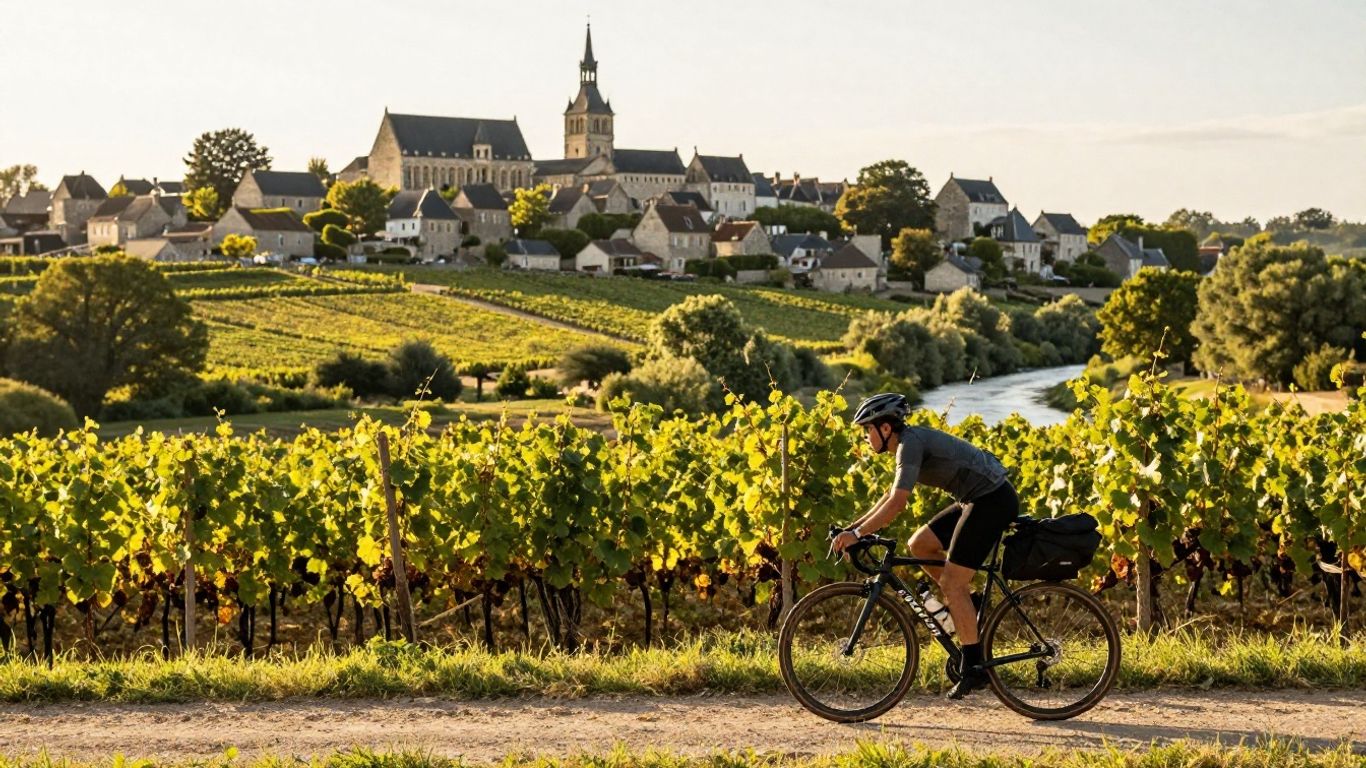
Tours and Amboise are connected by a manageable ride through a fertile stretch of the Loire Valley. The route combines riverside paths, quiet local roads, and occasional urban sections as it moves between two historic centers. It is a good choice for riders who want a relatively easy day with plenty of options for meals and sightseeing.
Amboise’s château rises above the town and the river, while the Clos Lucé offers a separate visit associated with Leonardo da Vinci. The town can become busy in peak season, particularly around the central streets and major attractions. Arriving earlier or staying overnight makes it easier to see the sites without compressing the cycling into the middle of the day.
This section is also convenient for less experienced riders because the distance can be adjusted with local stops. A picnic near the river may be more appealing than a formal lunch, but carry supplies if you plan to ride outside the main towns. Accommodation fills quickly in summer, so reserve a room before relying on Amboise as an improvised stop.
8. Amboise to Blois: Forest trails and the castles of Chenonceau and Chaumont-sur-Loire
The ride from Amboise to Blois offers several of the valley’s most recognizable château landscapes, but it requires careful choices about detours. Chenonceau lies away from the Loire on the Cher, while Chaumont-sur-Loire sits closer to the main east-west journey. Visiting both in one day can make the route feel rushed, especially if you want time for gardens and interiors.
Chenonceau is famous for its galleries spanning the river, and the approach through woodland and small roads is part of its appeal. Chaumont-sur-Loire combines a historic château with extensive garden programming, making it a destination where visitors often spend longer than expected. Treat either site as the main event of the day and plan the ride around its opening hours.
Blois is a practical finish because it has a substantial historic center and good onward transport. The route can include uneven surfaces or traffic near attractions, so touring tires and a comfortable pace are preferable to a racing setup. A short rest in Blois also leaves more energy for the next day’s ride toward Chambord.
9. Blois to Chambord: The best self-guided bike route for château sightseeing
Blois to Chambord is one of the most rewarding self-guided sections for travelers whose main goal is château sightseeing. The distance is accessible, and the surrounding forest and estate roads create a clear sense of arrival as the château appears among the trees. Even riders with limited touring experience can enjoy the day if they allow enough time away from the bike.
Chambord is the central attraction, with an enormous scale that is best appreciated from both the approach and the grounds. Plan for secure bike parking or a designated storage area, and check visitor information before setting out because access arrangements can change. The château’s size means that a quick exterior photograph and a short interior visit rarely tell the whole story.
For a wider list of possible detours, consult this guide to Loire Valley châteaux, then choose selectively rather than collecting destinations. Forest roads can feel quiet and shaded, but services are less frequent than in Blois. Bring food and water, and return to Blois or continue only after checking accommodation and transport options.
10. Blois to Orléans: A peaceful final stretch through wetlands and riverside villages
The ride from Blois to Orléans forms a quieter northern section of the journey, with wetlands, islands, wooded banks, and small riverside communities. It has fewer headline attractions than the château country around Chambord, which is precisely why it suits cyclists wanting a calm finish. The changing width of the floodplain keeps the scenery varied even when the route feels gentle.
Orléans makes a useful endpoint with rail links, restaurants, and services for travelers finishing their trip. Along the way, villages and riverfront paths invite short pauses rather than lengthy sightseeing stops. Keep an eye on weather and local conditions, since wetland paths can feel different after heavy rain and exposed sections may be windy.
A final day should leave some margin for mechanical problems, missed turns, or a longer lunch. The Loire is not a backdrop that can be reduced to a single landmark; its appeal comes from the repeated shifts between water, farmland, woodland, and built heritage. Ending in Orléans gives the route a practical conclusion while preserving that slower rhythm.
Conclusion
A self-guided Loire cycling holiday works best when the route is treated as a sequence of flexible stages rather than a race between landmarks. Choose the sections that match your interests, build in time for food and château visits, and prepare for changing services between the larger towns.
Frequently Asked Questions
How long does it take to cycle the Loire Valley?
A complete journey requires roughly a week or more for most leisure cyclists, while shorter trips can focus on sections such as Tours to Blois or Saumur to Tours. The right duration depends on daily distance, château visits, and planned rest days.
Is the Loire Valley suitable for beginner cyclists?
Much of the route is accessible to beginners because the terrain is generally gentle and many sections use cycle paths or quiet roads. Beginners should still plan carefully around traffic, uneven surfaces, wind, and the extra distance created by sightseeing detours.
What is the best time of year to cycle the Loire Valley?
Spring and early fall usually offer comfortable temperatures and fewer visitors than the height of summer. Summer can also work well, but accommodation, popular attractions, and restaurants may be busier.
Where should I start a Loire Valley cycling trip?
Nantes, Tours, Blois, and Orléans are practical starting points with transport connections and bike services. Choose based on whether you want Atlantic scenery, vineyards, château country, or a shorter central itinerary.
Do I need to reserve château visits in advance?
Advance reservations are sensible for the best-known châteaux during busy periods, especially if you are organizing several visits around fixed cycling stages. Check opening times and admission arrangements before committing to a long detour.
What kind of bike is best for this route?
A comfortable hybrid, touring, or gravel-style bike is suitable for most travelers, provided it has reliable brakes, useful gearing, and room for water and layers. The ideal choice depends on luggage, surface conditions, and whether you plan to use nearby unpaved paths.
How should I plan accommodation along the route?
Book ahead in popular towns and during summer, particularly around Amboise, Blois, Saumur, and major château areas. In quieter stretches, confirm that your chosen village has food, supplies, and a place to store bicycles before setting out.


