

A 2-Day Mont Saint Michel Itinerary: Abbey, Bay Walks, and Where to Sleep

Key Takeaways
A well-paced mont saint michel itinerary 2 days leaves room for both the abbey and the wider bay. Plan around the tides, walking conditions, and where you spend the night rather than trying to fit every sight into one long day.
- Visit the abbey and ramparts on your first day.
- Check tide times before arranging a bay walk.
- Choose lodging based on atmosphere, transport, and luggage.
- Wear sturdy shoes and treat the mudflats seriously.
- Keep the schedule flexible for weather and crowds.
Plan your 2-day Mont Saint-Michel itinerary
Mont Saint-Michel is easier to enjoy when the itinerary accounts for practical details before arrival. The island, its abbey, and the surrounding bay each require a different pace, so avoid treating the visit as a quick stop. Two days give you enough time to explore the medieval village and leave the busiest paths for a quieter period. Start by checking seasonal opening information, transport schedules, and the tide calendar.
Choose the best season and tide conditions
Spring and early fall often offer a useful balance of manageable temperatures and fewer visitors than the height of summer, although conditions can change quickly. The tides shape the character of the visit, but the most dramatic dates may also bring more people and tighter access arrangements. Check the official tide information for your dates, then compare it with daylight and the opening hours of the abbey. A practical tide-viewing guide can help you understand high-water times, low-water times, and the best places to watch the change.
Decide how to reach Mont Saint-Michel
Driving gives you flexibility for nearby villages and viewpoints, while train and bus combinations can work well if you prefer not to navigate rural roads. From Paris, routes commonly involve a connection through Rennes or Dol-de-Bretagne, followed by onward transport. Build in extra time for transfers, especially when your arrival coincides with a busy weekend. This guide to reaching Mont Saint-Michel from Paris is useful when comparing train, bus, car, and organized-tour options.
Allow time for parking, shuttles, and the causeway
Cars do not travel directly into the historic island village, so drivers need to allow time to park on the mainland and continue by shuttle or on foot. The approach itself is part of the experience, but it can take longer than expected when lots are busy or luggage slows you down. Arrive earlier than your first reservation and keep a little margin for the walk across the causeway. That buffer makes the first afternoon calmer and protects your abbey entry time.
Pack for changing weather and uneven terrain
The village has steep lanes, steps, polished stone, and uneven surfaces, while the bay can feel exposed even on a mild day. Pack layers, a light waterproof jacket, and shoes that remain comfortable after several hours of walking. A small day bag is more practical than a large suitcase on the island. Bring water and sun protection as well, since shade is limited on parts of the ramparts and causeway.
Spend your first day exploring the island
Use the first day for the places that make Mont Saint-Michel distinctive: the village, the abbey, and the fortified walk around the island. Arriving before the heaviest visitor flow gives you a better chance of moving comfortably through the narrow streets. Keep the route uphill and save the ramparts for changing views across the bay. The following plan works whether you arrive in the morning or early afternoon, provided the abbey booking is fixed.
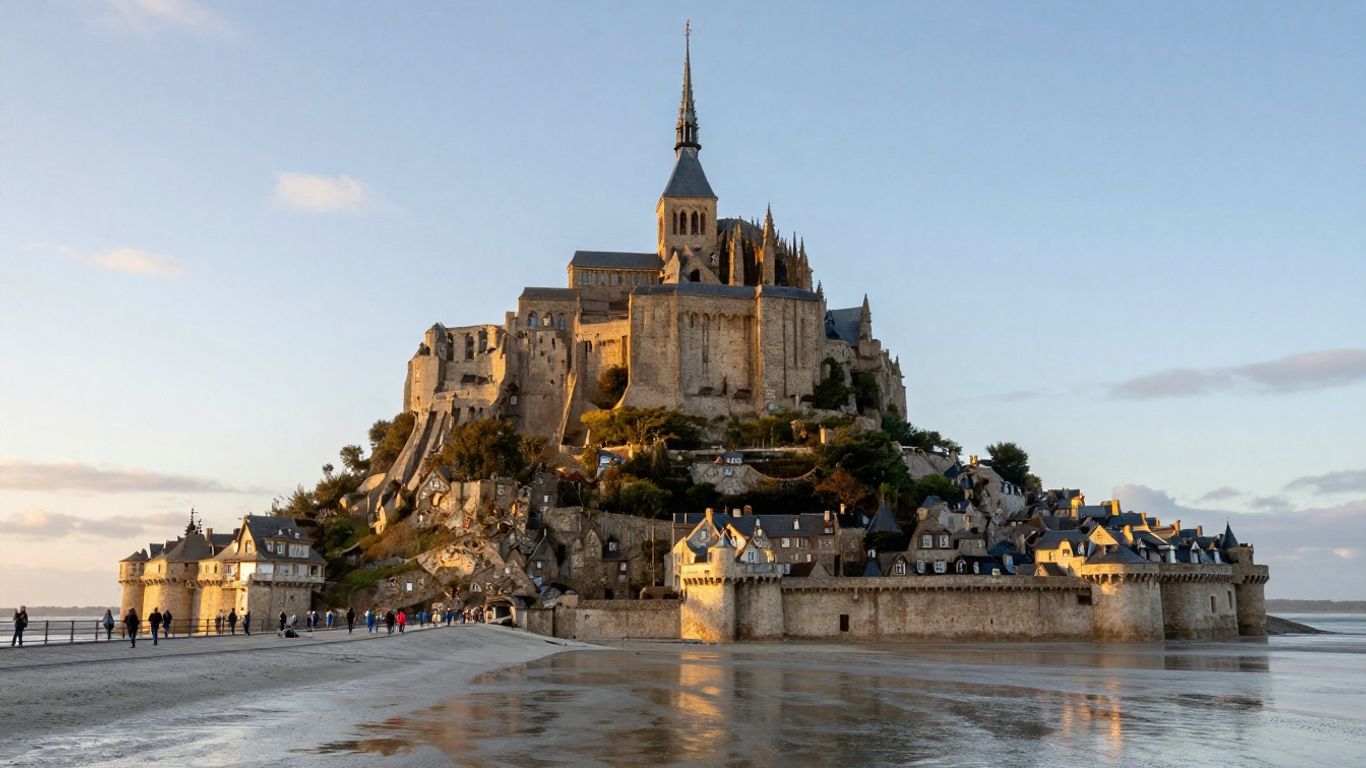
Arrive and settle into the medieval village
After crossing the causeway, enter through the historic gates and take a few minutes to orient yourself before climbing toward the abbey. The main street is compact but crowded, with small shops, museums, and places to pause along the way. If you have luggage, drop it at your accommodation or arrange storage before beginning the steep ascent. The slower approach helps you notice details that are easy to miss when everyone is moving toward the same landmark.
Tour Mont Saint-Michel Abbey
Set aside at least 90 minutes for the abbey, and longer if you like architecture or want to read the historical displays. The complex rises over several levels, with halls, stairways, terraces, and religious spaces that make comfortable shoes especially useful. Book an entry time that does not collide with your travel arrival, since delays at the parking area or shuttle can ripple through the day. Treat the visit as the central appointment rather than something to squeeze between meals.
Follow the ramparts and scenic viewpoints
Once outside the abbey, follow the ramparts at an unhurried pace and look back toward the island’s roofs, towers, and defensive walls. The views shift as you round each section, from open water to the causeway and the mainland horizon. This is also a good place to slow down after the interior visit, especially if the village streets feel congested. Take care near edges and narrow steps, since the stone can be slippery after rain.
Have dinner and experience the island after day-trippers leave
An overnight stay changes the rhythm of the visit: after the main daytime departures, the village usually feels less hurried and the silhouettes are more visible from the shore. Reserve dinner where possible because the island has limited seating and popular hours fill quickly. You can also walk the lower lanes after the meal, when the abbey is lit and the causeway takes on a different appearance. For more ideas on choosing an overnight visit, compare the practical trade-offs in this day trip or overnight guide.
Build your second day around the bay
The second day should be less tightly scheduled than the first. The bay is the reason timing matters, and a walk can involve wet sand, shifting channels, and changing weather rather than a simple marked trail. Choose one main bay experience, then use the remaining time for mainland viewpoints or a relaxed meal. This approach keeps the day enjoyable even when conditions do not match the original plan.
Check the tide schedule before planning your walk
Never select a bay crossing from a generic timetable alone. Confirm the date-specific tide information, the meeting time for any tour, and whether weather conditions could change the plan. Low tide does not automatically mean that every part of the bay is safe to cross, and returning water can move faster than visitors expect. Write down the meeting point and allow time to reach it from your accommodation.
Choose between a guided bay crossing and a coastal walk
A guided crossing is the appropriate choice for visitors who want to walk across the bay itself, since local knowledge is needed to interpret channels, quicksand, and the returning tide. If you prefer a simpler outing, choose a coastal path or viewpoint on firm ground instead. Guided tours vary in length and walking difficulty, so check what is included before booking. A selection of guided Mont Saint-Michel tours can help you compare early visits, family-friendly formats, private options, and bay-walk requirements.
Visit the surrounding viewpoints and countryside
The mainland offers perspectives that are difficult to get from the island, particularly when you want the entire mount framed by open water. Choose a viewpoint according to your transport and energy rather than attempting several distant stops. Nearby countryside and villages can make a good contrast with the dense medieval lanes, and the wider area includes historic towns, museums, and coastal places worth considering. This overview of things to do near Mont Saint-Michel is a useful starting point for extending the day without overloading it.
Leave time for lunch and a relaxed departure
Plan lunch with the return journey in mind, especially if you need a shuttle, a train connection, or a long drive. A late morning bay activity may make an early restaurant reservation unrealistic, so leave a broad window rather than committing to back-to-back times. Before departing, collect luggage, check the parking area or station route, and allow one final pause for the view. Ending gently is preferable to turning the last hours into a race against transport schedules.
Decide where to sleep near Mont Saint-Michel
Accommodation determines how much of the island you experience outside peak visiting hours. Staying on the mount is atmospheric and convenient for early or late walks, while mainland lodging often offers easier parking, more space, and a wider restaurant choice. Pontorson and nearby villages can be sensible bases if your wider trip includes Normandy or Brittany. Compare the options by transfer time, not just by the distance shown on a booking map.
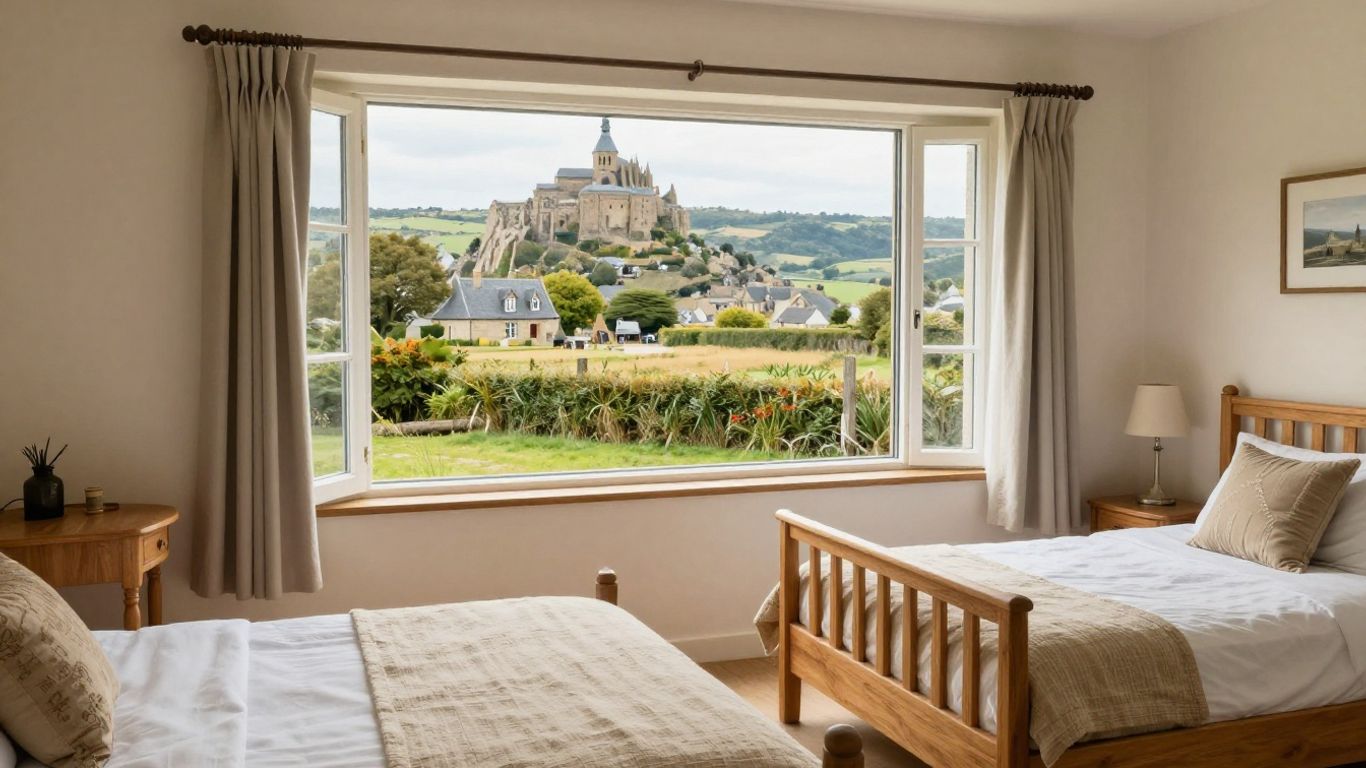
Stay on Mont Saint-Michel for atmosphere and convenience
An island room lets you remain close to the abbey and avoid a second transfer after dinner. The trade-offs are narrow access routes, limited parking convenience, and accommodation that may be less spacious than mainland alternatives. Pack a smaller overnight bag if possible and confirm how the property handles luggage before arrival. This choice suits travelers who value atmosphere and want to walk the village after the largest crowds have gone.
Choose a mainland hotel near the shuttle stop
The mainland area near the shuttle connection is practical for a short visit, particularly when you are driving or carrying full-size luggage. You can leave the car, use the transport system, and return to a quieter room without navigating the island’s steep lanes at night. Check the final shuttle times and walking distance from the hotel before booking. For a broader comparison of island and mainland choices, see this guide to places to stay near Mont Saint-Michel.
Compare accommodation in Pontorson and nearby villages
Pontorson can work well when you want access by road or train and a broader selection of everyday services. Smaller villages may offer a more rural setting, but they usually require a car or a carefully timed taxi arrangement. Consider whether a lower room rate is offset by extra travel, parking, or dinner logistics. The best base is the one that supports the rest of your route, not necessarily the one closest to the landmark.
Consider what changes for drivers, families, and couples
Drivers may prioritize secure parking and an easy departure route, while families often benefit from larger rooms, simple meals, and fewer changes between transport modes. Couples may prefer an island stay for evening atmosphere, but a mainland base can provide more quiet and flexibility. Travelers with mobility concerns should ask about steps, shuttle access, and the walking distance from parking before confirming a room. Choose for your travel style, not only for the most photogenic setting.
Experience Mont Saint-Michel Bay safely
The bay is beautiful because it is active, open, and tidal, but those same features make it less predictable than an ordinary beach walk. Water can cover familiar-looking ground, and soft sediment can make progress tiring. Keep the bay as a planned activity rather than an improvised shortcut between the mainland and the island. When in doubt, stay on established routes or ask a qualified local guide.
Understand why the tides can change access quickly
Tide movement is affected by the shape of the bay, the channels, weather, and the date’s tidal range. A route that appears clear at one moment may become divided by water later, while mud can conceal uneven surfaces. Watch the tide schedule and local conditions together instead of relying on a photograph or a previous visit. The causeway and shuttle route are the dependable access options when a crossing is not specifically planned.
Know when a guide is essential for crossing the bay
Use a guide for an actual crossing, particularly if you do not know the bay, cannot read its channels, or are traveling with children. A guide can adapt the route to conditions and explain where the ground is firm enough to walk. This is different from taking a casual shoreline stroll, which may be suitable on a maintained path. Do not follow strangers across the mudflats simply because they appear to know the way.
Follow footwear and walking recommendations
Wear shoes that can cope with wet, abrasive ground and that stay secure when your feet sink slightly into mud. Leave sandals, smooth soles, and anything you cannot clean easily at the hotel. Bring a spare layer and consider carrying water in a small pack. A bay walk can feel more strenuous than its distance suggests, so plan recovery time afterward.
Avoid common safety mistakes on the mudflats
The most avoidable problems come from setting off without checking the return time, separating from a group, or assuming a visible channel is shallow. Keep phones protected from water and tell someone your plans if you are walking independently on a firm coastal route. Turn back early when visibility, wind, or ground conditions deteriorate. A memorable bay experience should end with enough margin to return comfortably.
Make the itinerary easier and more enjoyable
Small reservations and timing decisions can remove most of the friction from a two-day visit. The aim is not to control every minute, but to protect the few activities that have fixed entry times or depend on the tide. Keep open space around those appointments for transport, meals, photographs, and ordinary delays. That balance is especially helpful in a place where weather and visitor numbers can change the feel of the day.
Reserve the abbey and popular tours in advance
Book the abbey ahead when your dates are busy or your travel schedule is tight. Do the same for a guided bay crossing, since the safest tours may have limited departures and specific meeting points. Record confirmation details offline in case mobile reception is inconsistent around rural transport connections. Once those fixed elements are secured, leave the village walks flexible.
Plan meals around limited island dining options
The island has a concentrated dining area, and popular lunch and dinner periods can become difficult without a reservation. Carry a simple snack for the approach, especially if you arrive between meal services or have an afternoon abbey entry. Ask about closing days and service hours rather than assuming every restaurant follows a late schedule. Eating earlier can also make the evening walk quieter and less rushed.
Use luggage storage and shuttle services strategically
Large bags make the causeway, shuttle, and steep village lanes harder than they need to be. Leave luggage at your hotel or use an available storage option before beginning the sightseeing route, then keep only essentials with you. Drivers should verify where the shuttle departs and how long the walk from the parking area takes. These small choices preserve energy for the abbey and ramparts.
Adjust the schedule for rain, crowds, or mobility needs
Build a simple backup plan before you travel: move the abbey indoors during a rainy period, shift the ramparts to a clearer hour, or replace a bay crossing with a mainland viewpoint. Families may need more breaks, and visitors with limited mobility should confirm steps and surfaces in advance rather than relying on distance alone. If crowds are heavy, explore quieter lanes and return to the main route later. Flexibility is what turns a detailed plan into a workable mont saint michel itinerary 2 days.
Conclusion
Two days at Mont Saint-Michel are enough to combine the abbey, village, ramparts, and bay without reducing the visit to a rushed photo stop. Check the tides, choose lodging that matches your transport and pace, and reserve the activities that have limited availability. With those basics handled, the rest of the itinerary can remain pleasantly open to weather, light, and the changing rhythm of the island.
Frequently Asked Questions
Is two days enough for Mont Saint-Michel?
Yes. Two days allow time for the abbey and village on the first day, followed by a bay activity or mainland exploration on the second. The visit feels more relaxed when you stay overnight rather than trying to combine everything with a long same-day transfer.
Should I stay on Mont Saint-Michel or on the mainland?
Stay on the island for evening atmosphere and immediate access to the village. Choose the mainland for easier parking, larger rooms, and a wider choice of restaurants. Pontorson is another practical option when your trip includes nearby destinations.
When is the best time to visit Mont Saint-Michel?
The best time depends on your priorities. Spring and early fall can offer comfortable walking conditions, while quieter periods may be preferable for exploring the lanes. Always check tide times, weather, daylight, and seasonal opening schedules for your specific dates.
Do I need a guide to walk across the bay?
You should use a qualified guide for a true bay crossing. Channels, mud, and returning water make the route unsuitable for casual improvisation. A firm coastal path or viewpoint is a safer alternative if you do not want a guided crossing.
How much time should I spend at the abbey?
Allow at least 90 minutes, with additional time if you enjoy architectural and historical details. Add time for entry procedures and the walk uphill from the village. Booking a timed visit helps keep the rest of the day manageable.
Can I visit Mont Saint-Michel without a car?
Yes. Train and bus connections can reach the area, although they may involve transfers and seasonal timetable changes. Plan the final shuttle or walking connection carefully and allow extra time for delays, especially when you have a fixed abbey reservation.
What should I wear for a visit?
Wear comfortable, supportive shoes and layers that suit wind and rain. The island has steps and uneven stone, while the bay requires different footwear and preparation. Carry water, sun protection, and a light waterproof layer regardless of the forecast.


